Wisteria blooms are a sight to behold, turning any garden into an enchanting space. If you’re like me, springtime has you dreaming about lush greenery and vibrant flowers. That’s why I’ve put together this post on wisteria trellis ideas. Whether you’re looking to create a stunning outdoor living space or seeking shade with a touch of elegance, these ideas will inspire your vertical gardening journey. This guide is for garden enthusiasts, DIY lovers, and anyone who appreciates the beauty of climbing plants. If you enjoy transforming your outdoor area into a picturesque retreat, you’ll find plenty of practical tips and tricks here. You’ll learn how to incorporate wisteria into your garden designs effectively while gaining insights on wisteria plant care and vertical gardening techniques. Get ready to explore 12 unique trellis ideas that will not only give you dramatic blooms but also create inviting shade. From rustic wooden arches to wisteria-covered gazebos, this post is a treasure trove of inspiration. Each idea is crafted to help you make the most of your outdoor space, enhancing its beauty and functionality.
Key Takeaways
– Dramatic Blooms: Wisteria adds striking colors and depth to your garden, making it a centerpiece in any landscape design. – Versatile Designs: Explore various trellis options like pergolas and arches that can fit into different garden styles, from rustic to modern. – Climbing Support: Use sturdy structures to encourage healthy growth. A well-placed trellis can support the vigorous vine growth of wisteria. – Privacy and Shade: Wisteria can create beautiful privacy screens and shaded areas, making your outdoor spaces more enjoyable. – Maintenance Tips: Learn essential wisteria plant care methods to keep your plants healthy and blooming beautifully throughout the seasons.1. Rustic Wooden Arch Trellis
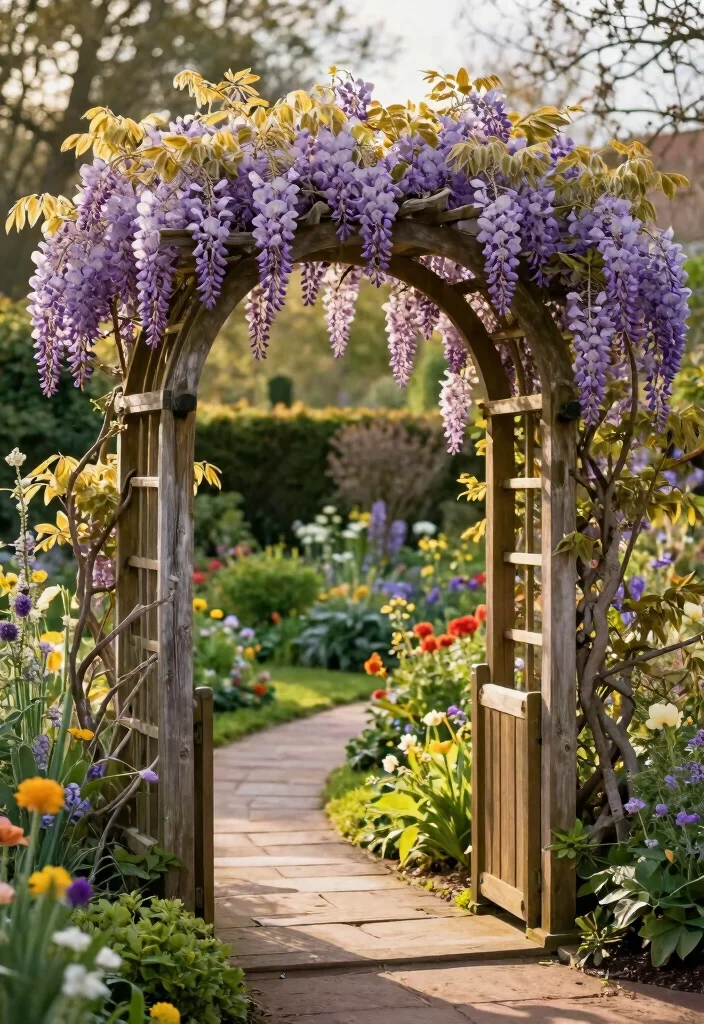
You want a beautiful way to showcase your wisteria while enhancing your garden’s charm. A rustic wooden arch trellis serves as the perfect support for these stunning vines. Made from untreated cedar or redwood, it naturally withstands the elements and adds a warm, inviting feel to your outdoor space. Picture vibrant purple blooms cascading over the arch, creating a picturesque entrance that draws the eye.
Begin by designing a minimalist arch that allows wisteria to take center stage. Ensure there’s enough space for the vines to flourish, encouraging a full display of enchanting flowers. Consider adding a stone pathway leading to the arch for an inviting touch.
Key features of your trellis:
– Material Choice: Go for rot-resistant wood like cedar or redwood.
– Design Elements: Keep it simple; let the wisteria shine.
– Regular Maintenance: Prune often for bushy growth and to prevent overcrowding.
– Soil Quality: Ensure well-draining soil and plenty of sunlight for healthy blooms.
This rustic arch not only supports your plants but also transforms your garden into a magical retreat, inviting you to enjoy nature’s beauty daily.
2. Vertical Garden Wall with Wisteria
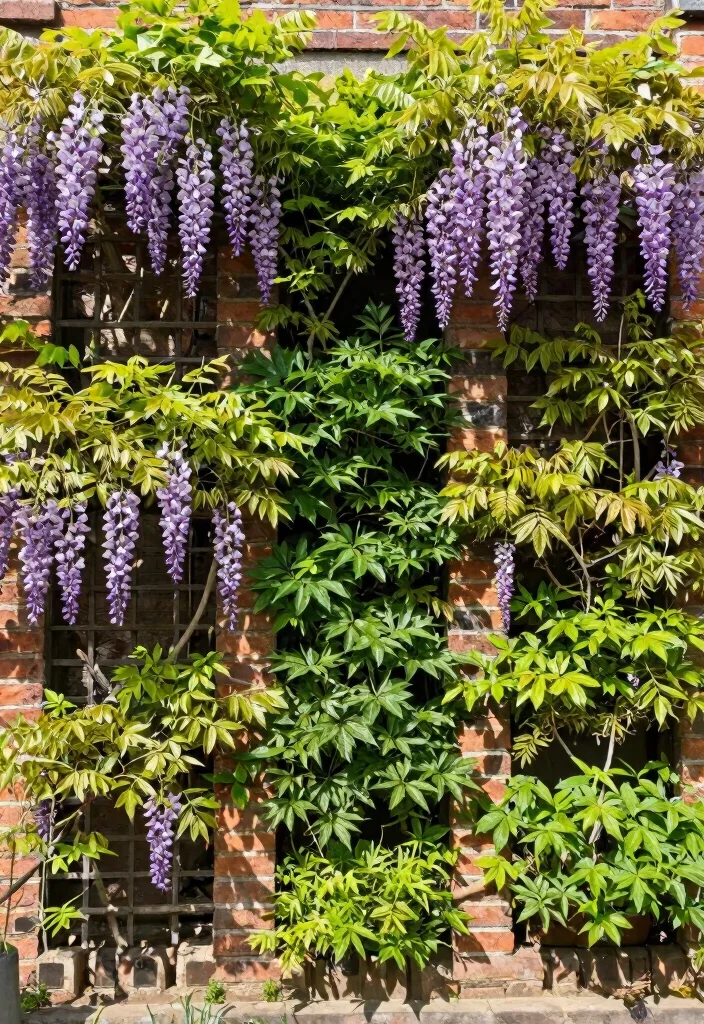
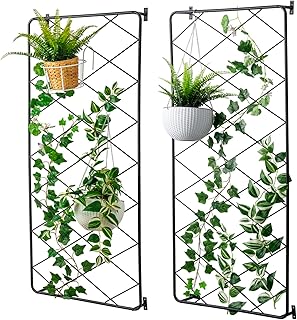
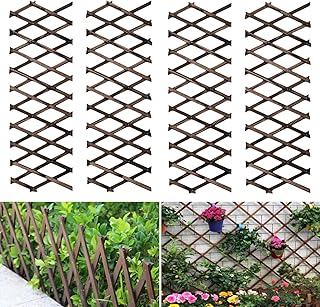
Are you looking to make the most of a small outdoor space? A vertical garden wall adorned with wisteria is a brilliant solution. It transforms an ordinary wall into a living canvas filled with stunning blooms while maximizing your available space. By attaching trellis panels or wire grids, you allow the wisteria to climb and drape over the structure, adding vertical interest to your garden.
Pair your wisteria with other climbing plants to create a vibrant and diverse display. Make sure to place your vertical garden in a spot that receives ample sunlight and water to promote healthy growth.
Steps to create a vertical garden:
– Space Utilization: Perfect for patios or small backyards.
– Layering Techniques: Combine various climbing plants for a fuller look.
– Moisture Checks: Regularly monitor soil moisture to keep plants hydrated.
– Support Structure: Use strong materials that can bear the weight of the wisteria.
This vertical garden not only beautifies your space but also allows you to enjoy the fragrant blooms from different angles, enhancing your outdoor experience.
Fact: A vertical garden wall can dramatically boost bloom density—wisteria trellis ideas come to life when trained on panels to cover a 6×6 ft space in one season. Want shade, space, and a living canvas? Pair wisteria with other climbers for instant color.
How To Choose the Right Wisteria Trellis
When selecting a trellis for your wisteria, consider several key factors. The right choice will support healthy growth and create a stunning visual impact in your garden. Here are essential criteria to guide your decision-making process: 1. SizeChoose a trellis that fits well in your space. Measure the area where you plan to install the trellis. Wisteria can grow very large, so ensure your trellis is tall enough to accommodate the plant’s mature height, which can reach up to 30 feet. Consider the width as well; a wide trellis will provide more support for spreading vines.
2. Material
The material of the trellis affects both durability and aesthetics. Common options include wood, metal, and vinyl. Wooden trellises offer a rustic charm but may require more maintenance, while metal ones are sturdier and resist rotting. Vinyl is low-maintenance and comes in many styles. Choose a material that complements your garden design and fits your maintenance preferences.
3. Design
The design of the trellis plays a crucial role in how your garden looks. Consider various styles, such as arched, flat, or climbing walls. An arched trellis can create an inviting entrance, while a flat trellis can function as a decorative wall. Ensure the design allows vines to climb effectively, giving the right support without restricting growth.
4. Stability
Stability is vital for supporting vigorous wisteria vines. Look for trellises with a strong frame that can withstand wind and the weight of mature plants. Ground anchors or deep-set bases will help keep your trellis stable. If you’re in a windy area, consider a heavier material or reinforced design to prevent toppling.
5. Height and Spacing
Ensure your trellis provides adequate height for vertical growth. A trellis of at least 6-8 feet high is often ideal for wisteria. Additionally, plan the spacing between the trellis and nearby structures to allow for proper airflow and sunlight. This spacing will promote healthy growth and blooming.
6. Budget
Set a budget before shopping for a trellis. Prices vary greatly based on material and complexity of design. Basic models can be affordable, while custom-built or designer trellises may be more expensive. Consider your budget but also think about investing in quality, as a good trellis can last for many years.
Pro Tip: If you’re unsure about the design or height, look at existing trellises in local gardens or online galleries for inspiration. Taking photos can help guide your decision and ensure you choose a trellis that perfectly fits your vision for your outdoor space!
3. Pergola Covered in Wisteria
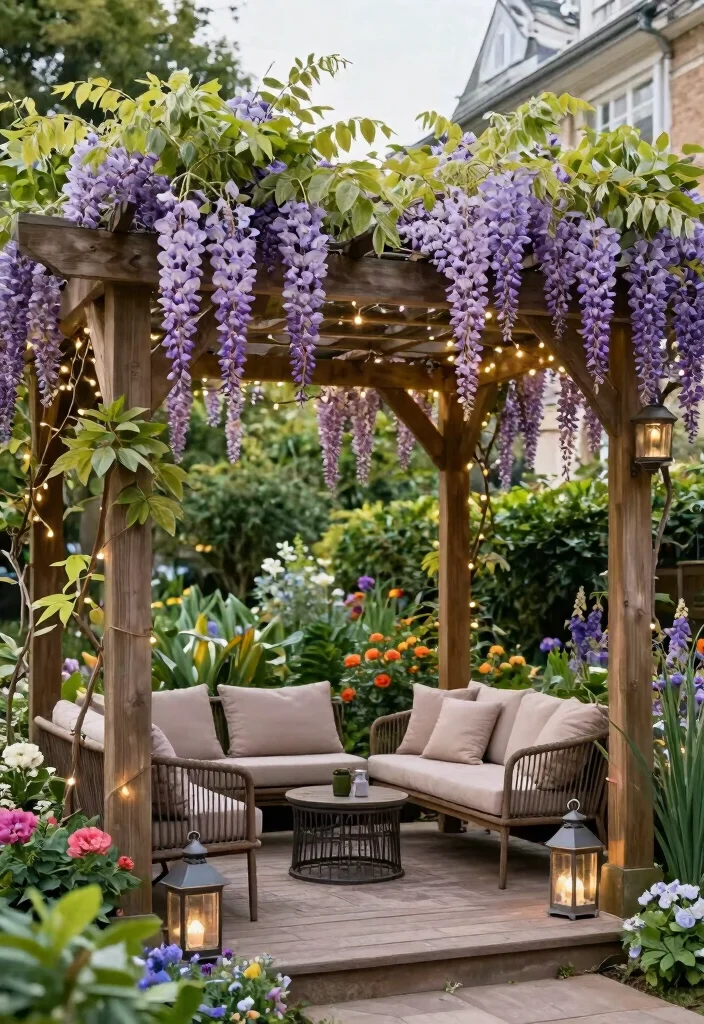
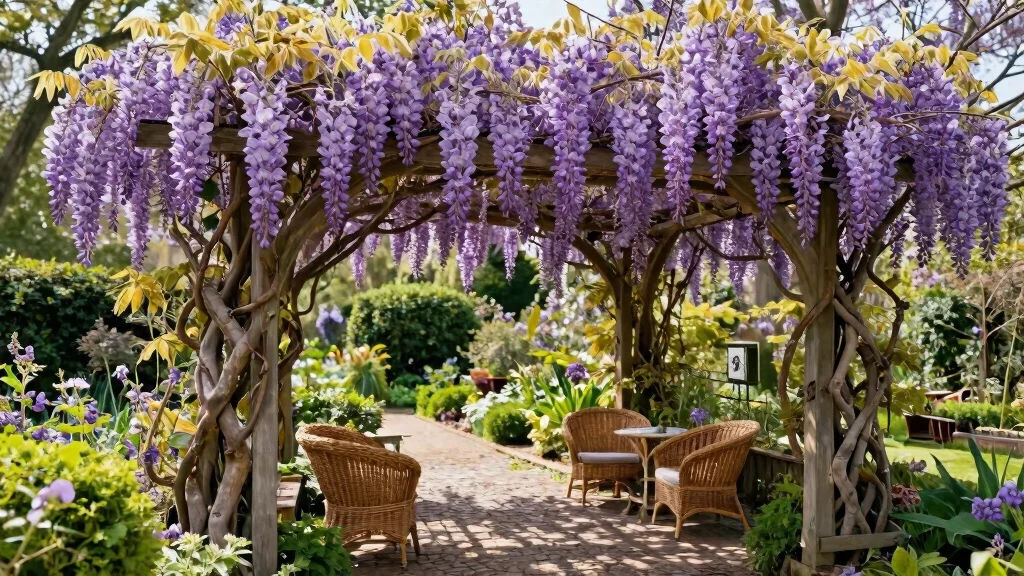
Imagine stepping into an elegant outdoor lounge area that’s draped in wisteria. Adding a pergola covered in these beautiful vines creates a stunning retreat perfect for relaxation or entertaining. The shade from the blooming flowers offers a cool escape during hot summer days. Choose between a classic wooden or an ornate metal pergola to match your garden’s style, and ensure the structure is strong enough to support the vigorous growth of wisteria.
Create an inviting atmosphere by adding comfortable seating, decorative pillows, and fairy lights. This will turn your pergola into a cozy gathering spot for friends or a quiet place to unwind with a book.
Tips for your pergola:
– Style Selection: Choose wood or metal based on your aesthetic.
– Seating Arrangement: Add comfortable chairs or a swing below.
– Lighting Options: Hang fairy lights for a magical evening ambiance.
– Vine Management: Regular pruning keeps the wisteria in check and protects the structure.
With a wisteria-covered pergola, you’ll create an enchanting outdoor space that invites relaxation and socializing year-round.
❝ Fun fact: A pergola cloaked in wisteria can become a year-round living canopy in 3–5 years, cutting summer heat by up to 40%. Start early, train young vines, and choose a sturdy frame to support vigorous growth. ❞
Pergola Covered in Wisteria
Editor’s Choice




4. Garden Archway with Wisteria
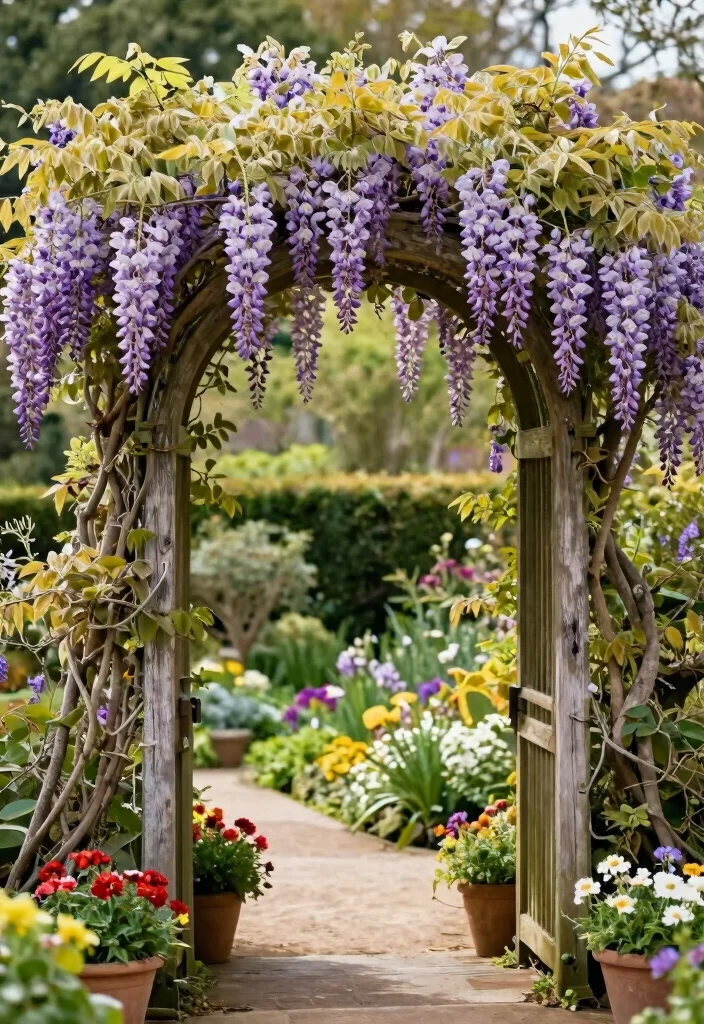
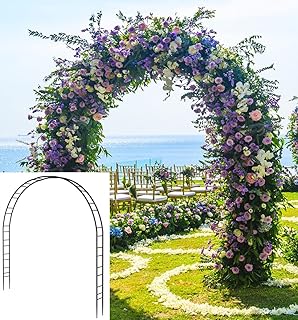
Enhance your landscape with a garden archway adorned with wisteria, creating a breathtaking focal point. As the vines bloom, they form a fragrant canopy that welcomes visitors into your garden oasis. Choose a design that complements your preferred style, whether traditional or modern. Make sure the arch is securely anchored to support the weight of the wisteria as it flourishes. Editor’s Choice
Consider adding potted plants at the base of the arch to draw attention and elevate the overall aesthetic. Seasonal blooms can add color throughout the year, making your archway a captivating feature in any season.
Key considerations for your garden arch:
– Design Style: Choose an arch that matches your garden theme.
– Sturdy Anchoring: Securely anchor the structure for support.
– Potted Accents: Include seasonal flowers or greenery around the base.
– Regular Care: Prune frequently to keep the arch healthy and visually appealing.
This garden archway will not only beautify your space but also create a welcoming atmosphere that invites exploration and enjoyment.
Garden Archway with Wisteria


5. Wisteria-Covered Balcony
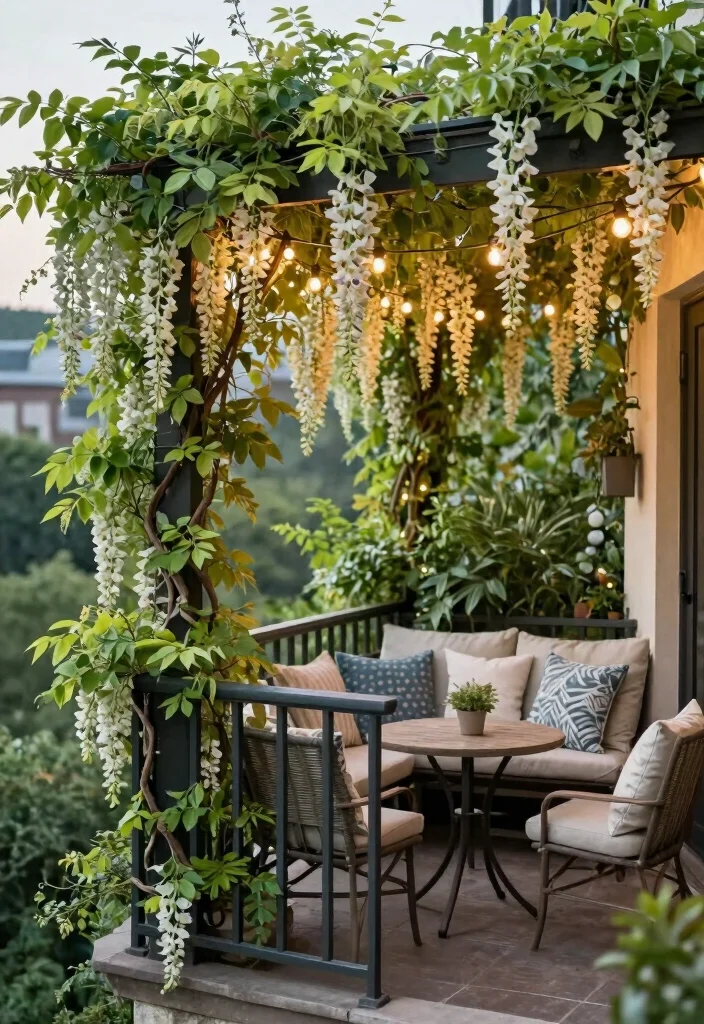
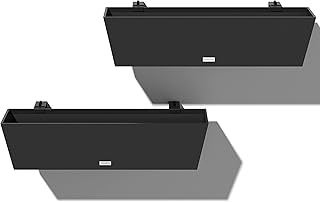
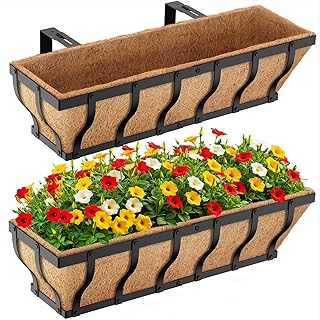
Transform your balcony into a lush retreat by using wisteria as a climbing plant. With the right trellis design and proper care, you can create a fragrant canopy that offers beauty and shade. Utilize railing planters or vertical trellises to encourage the wisteria to grow upwards, maximizing your balcony space. This setup creates a romantic atmosphere, perfect for sipping coffee or enjoying evenings under the stars. Editor’s Choice
To enhance your balcony’s charm, incorporate comfortable outdoor furniture, cushions, and soft lighting to create a cozy nook.
Essential elements for your balcony:
– Railing Planters: Maximize space while supporting plant growth.
– Vertical Structures: Use trellises for free upward growth.
– Furniture Selection: Opt for lightweight outdoor furniture for easy rearrangement.
– Lighting Ideas: Add soft lighting for a cozy vibe.
A wisteria-covered balcony will provide you with a delightful escape, making every moment spent outside a pleasure.
Wisteria-Covered Balcony



📹 Related Video: How to building a trellis. Support system for a wisteria. Building a trellis made of wood.
6. Wisteria Tree Form
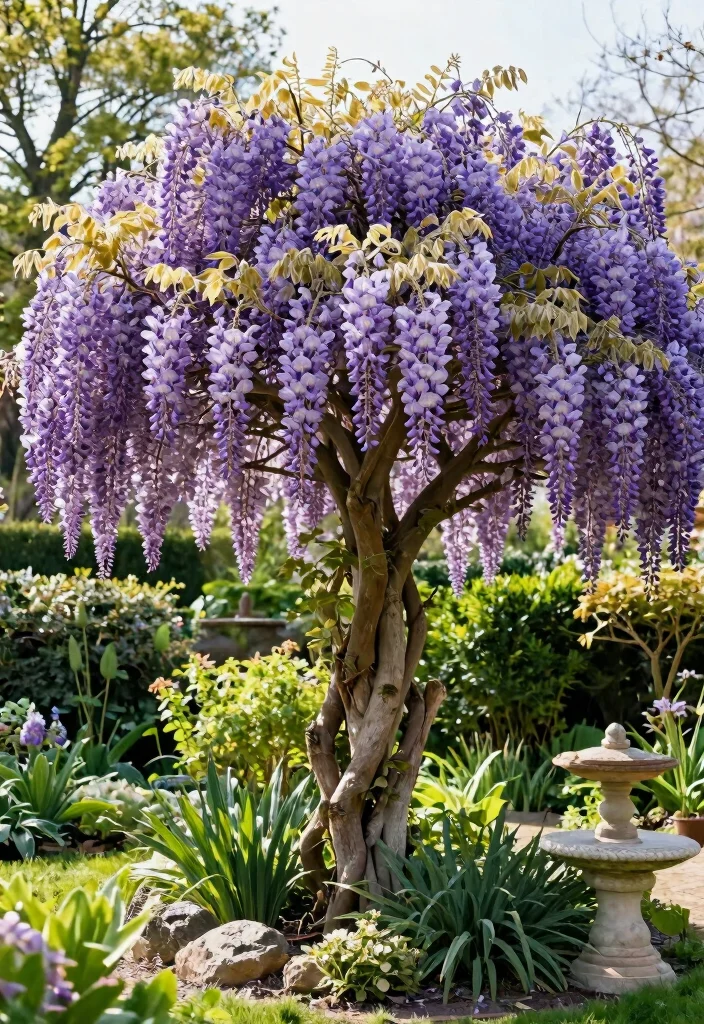
Create a stunning centerpiece in your garden by shaping a wisteria into a tree form. This unique approach allows the plant to grow into an impressive structure that captivates with its cascading flowers. As the tree blooms, it becomes a dramatic focal point, especially in full bloom. Ensure that you provide strong support for the trunk and branches during growth, and regularly prune to maintain the desired shape.
Pair the wisteria tree form with seating or decorative elements like a bird bath to enhance its visual appeal.
Important aspects to consider:
– Strong Support: Ensure a sturdy structure for stability.
– Pruning Practices: Regularly trim to maintain shape and health.
– Visual Enhancements: Add decorative items nearby for extra charm.
– Care Requirements: Provide enough sunlight and well-draining soil for optimal growth.
A wisteria tree form will not only beautify your garden but also serve as a unique conversation starter among your guests.
7. Wisteria Fence Cover
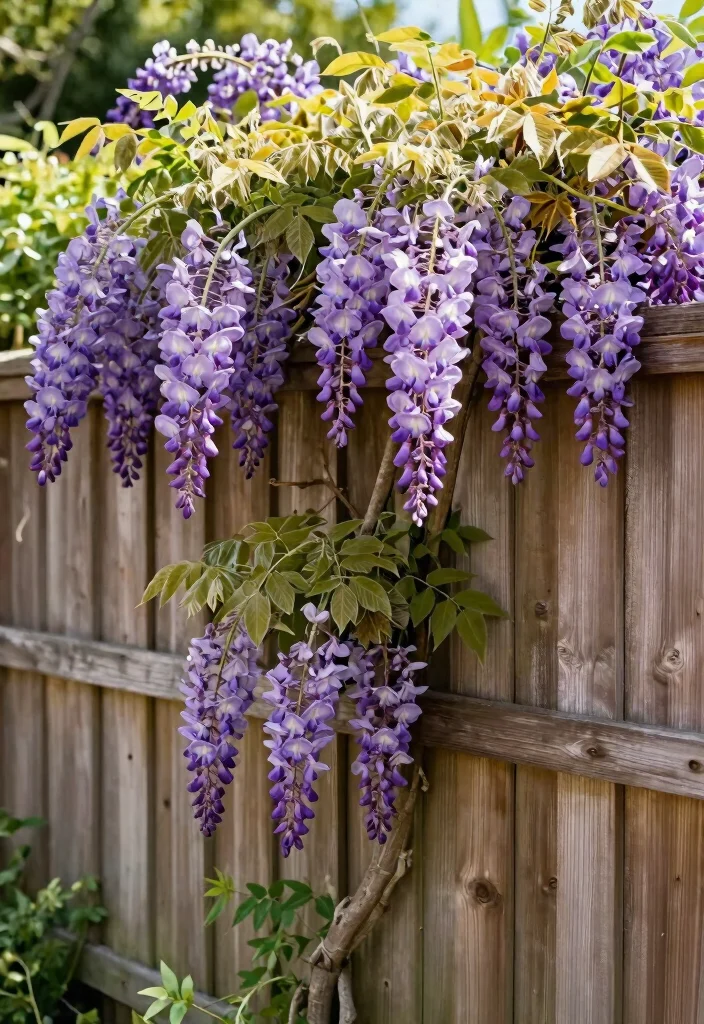
Transform an ordinary fence into a stunning backdrop with wisteria vines. This approach not only masks the fence but also creates a beautiful visual display. Train the wisteria to climb along the fence, allowing you to enjoy vibrant blooms while enhancing privacy in your outdoor area. Make sure to select a sturdy fence that can support the vines’ weight, and provide ample support as they grow.
Proper plant care is essential; ensure the wisteria receives enough sunlight and water while maintaining regular pruning to prevent overcrowding.
Key points for your wisteria fence cover:
– Sturdy Fencing: Ensure your fence can bear the weight of the vines.
– Regular Pruning: Maintain growth to prevent overcrowding.
– Privacy Benefits: Use wisteria to create beneficial privacy screens.
– Soil Consideration: Utilize well-draining soil for healthy growth.
With a wisteria-covered fence, you’ll enjoy both beauty and privacy, transforming your outdoor space into a serene oasis.
8. Wisteria in a Container Garden
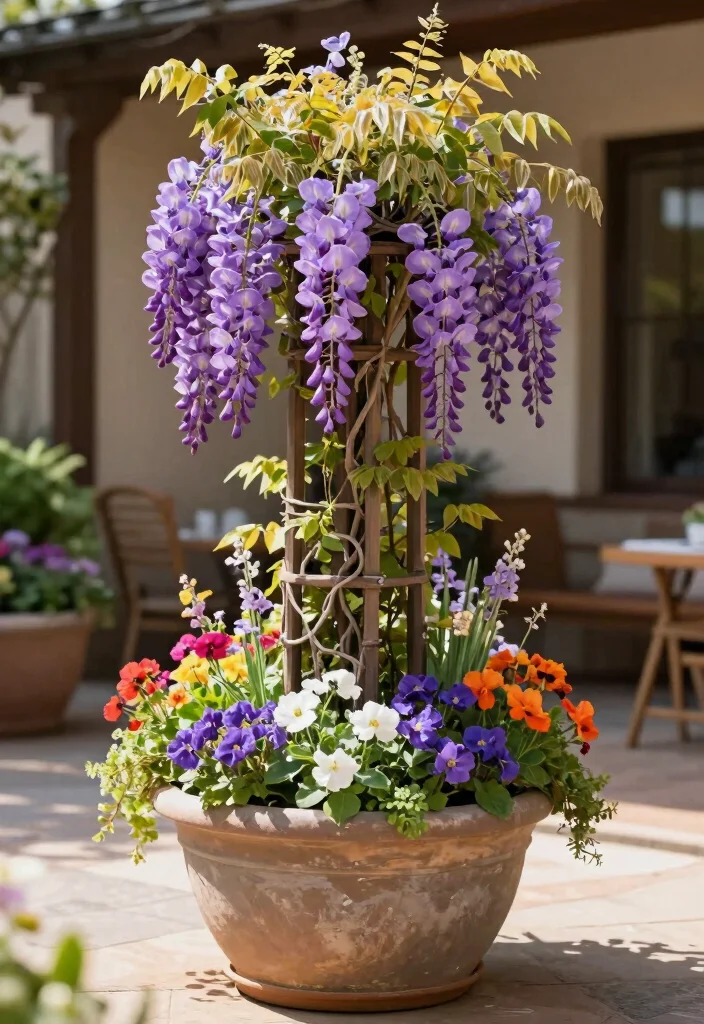
Container gardening with wisteria is an excellent option for those with limited space or in rental properties. By using large pots or containers, you can grow wisteria on patios, balconies, or small yards, allowing for controlled growth and easy mobility. Choose a sturdy pot with good drainage to support the wisteria’s extensive root system. Pair it with decorative climbing supports to encourage upward growth.
This approach adds beauty and makes maintenance a breeze, giving you easy access to care for your plants.
Container gardening essentials:
– Pot Selection: Use a large container with good drainage.
– Mobility Factor: Opt for lightweight pots for easy movement.
– Climbing Supports: Incorporate trellises or obelisks for added support.
– Care Tips: Regular watering and fertilizing encourage vibrant blooms.
Wisteria in containers allows you to enjoy these stunning plants while maximizing your space and creating a beautiful outdoor environment.
9. Wisteria Privacy Screen
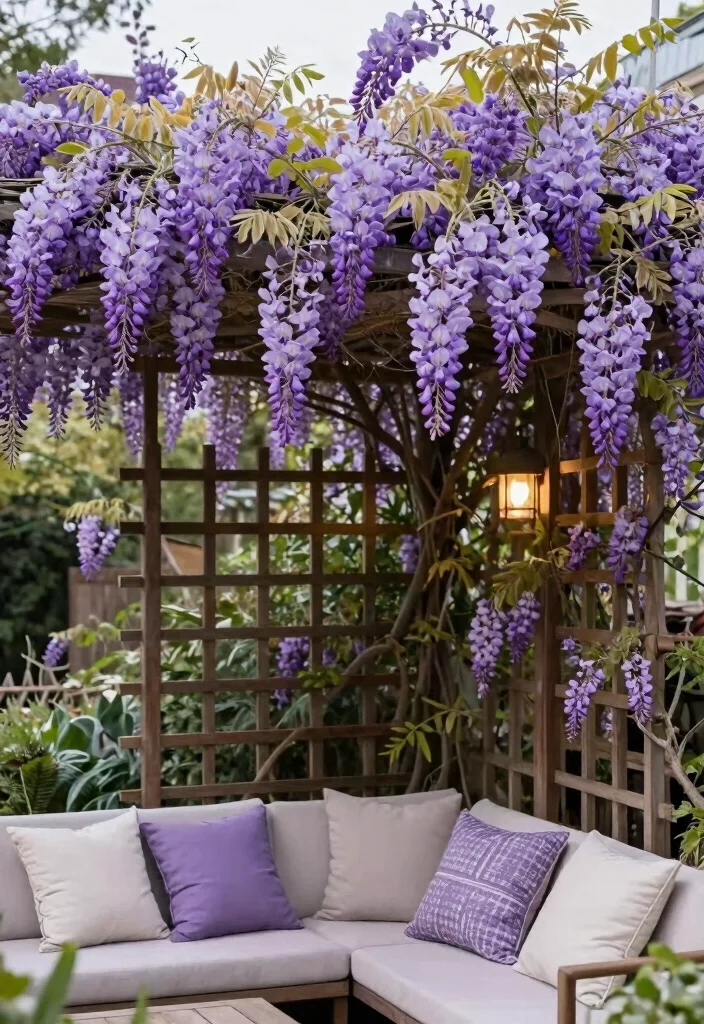
Create a secluded garden space with a wisteria privacy screen. By training the wisteria to grow along a trellis or fence, you can block unwanted views while filling your outdoor area with beautiful blooms. This technique not only enhances privacy but also serves as an attractive backdrop for outdoor furniture or dining spaces. Regular maintenance and pruning are crucial for keeping the vines healthy and thriving.
Complement your privacy screen with comfortable seating and decorative elements to further enhance the cozy vibe of your outdoor living area.
Essential features for your wisteria privacy screen:
– Support Structure: Use a trellis or fence for climbing support.
– Visual Appeal: Create a picturesque backdrop with blooming flowers.
– Secluded Space: Ideal for dining or relaxation spots.
– Maintenance Routine: Regularly check growth and prune as necessary.
A wisteria privacy screen will not only provide you with seclusion but also create a beautiful, fragrant environment for relaxation and enjoyment.
A wisteria privacy screen turns any patio into a private retreat. Train the vines along a trellis, prune regularly, and use these wisteria trellis ideas to create shade, drama, and a stunning backdrop for outdoor furniture.
Wisteria Privacy Screen
Editor’s Choice



10. Wisteria-Covered Gazebo
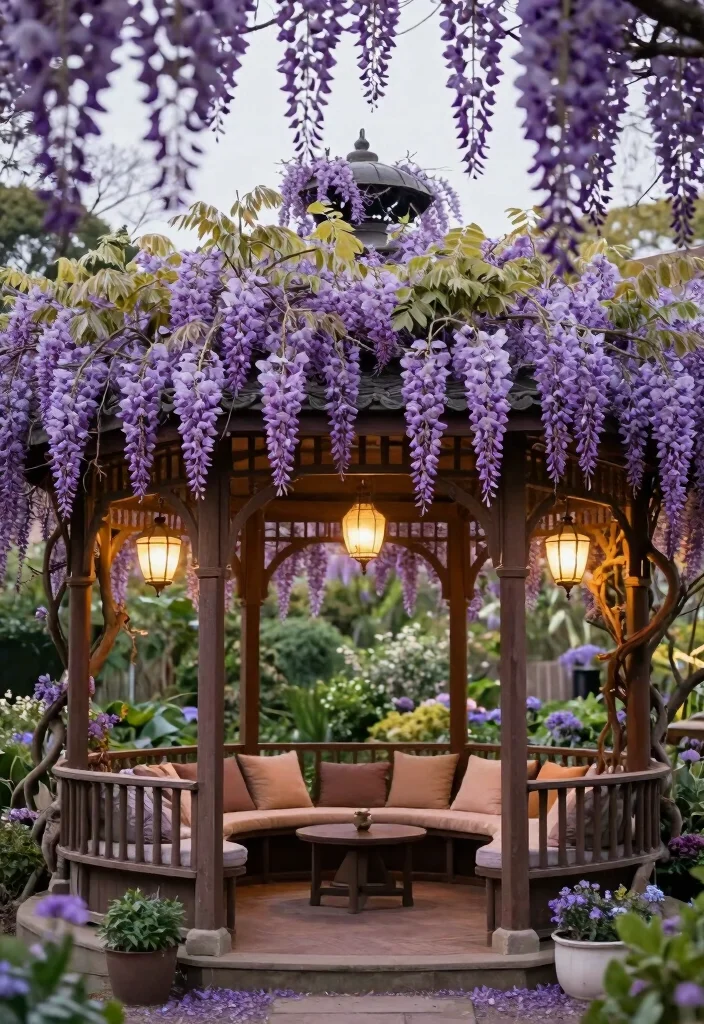
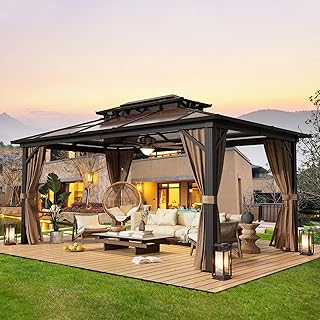
Imagine a gazebo draped in wisteria, becoming the centerpiece of your garden. This stunning structure provides a charming gathering space for family and friends. As the wisteria climbs and blooms across the gazebo, it creates a shaded retreat perfect for entertaining or enjoying quiet moments. Choose a gazebo that complements your garden style, whether it’s modern or classic, and ensure it has strong support for the vines. Editor’s Choice
Enhance your gazebo with comfortable seating, decorative accents, and soft lighting for enchanting evenings.
Considerations for your gazebo:
– Design Style: Pick a gazebo that matches your garden aesthetic.
– Support Structure: Ensure it can handle the weight of the vines.
– Seating Arrangements: Provide comfortable chairs and tables for gatherings.
– Lighting Choices: Hang outdoor lights for a cozy evening ambiance.
A wisteria-covered gazebo will create an inviting space that draws everyone together, making your garden the go-to spot for gatherings.
Wisteria-Covered Gazebo



11. Wisteria and Stone Wall Combo
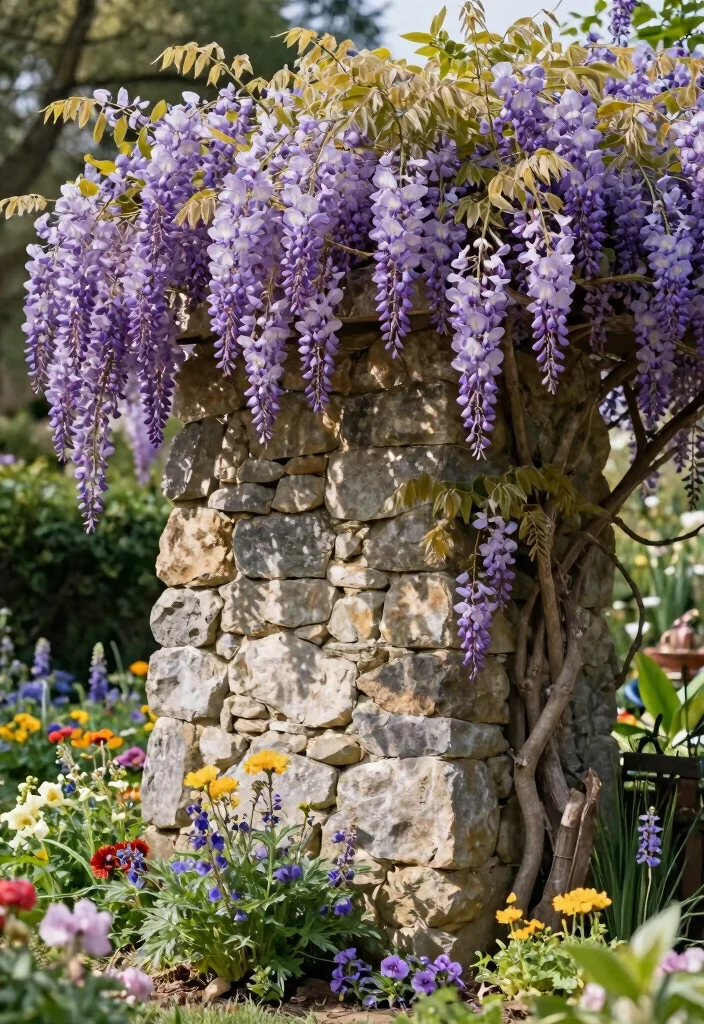
Combining wisteria with a stone wall adds a unique texture and visual interest to your garden. The rough stone contrasts beautifully with the delicate, cascading flowers, creating a stunning display. Train the wisteria to climb the stone wall for an organic look that enhances the garden’s aesthetic. This method provides excellent support for the climbing plants, ensuring they thrive while adding charm.
Incorporate surrounding plants or flowers to complement the wisteria, creating a cohesive design that draws the eye.
Key aspects of this combination:
– Support System: Utilize the stone wall for natural climbing support.
– Visual Contrast: Emphasize the contrast between the stone and flowers.
– Complementary Plants: Add surrounding flowers for a unified look.
– Maintenance Tips: Regular pruning and care will keep the wisteria healthy.
This combination of wisteria and stone creates an enchanting focal point that adds depth and beauty to your garden.
12. Wisteria as a Garden Centerpiece
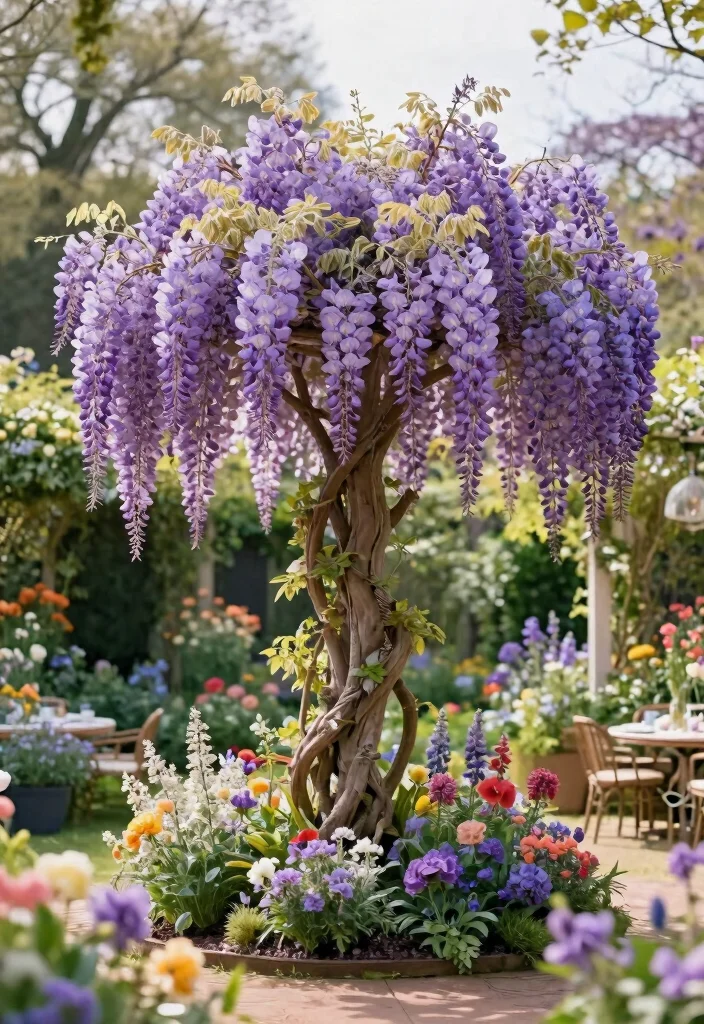
Use wisteria as a striking centerpiece in your garden design, capturing attention with its dramatic blooms. By planting a single wisteria tree or a large trellis at the heart of your garden, you create a focal point that inspires admiration. Surround this centerpiece with complementary plants and flowers that accentuate its beauty and color. Regular care is essential, as wisteria can grow rapidly; ensure to prune and maintain its shape for a stunning display.
This final touch will enhance your overall design while providing a breathtaking backdrop for gatherings and outdoor activities.
Important tips for showcasing your wisteria:
– Central Location: Plant in a visible area for maximum impact.
– Surrounding Plants: Choose complementary colors and textures to enhance visuals.
– Pruning Practices: Maintain shape and health with regular trimming.
– Showcase Ideas: Use lighting or seating around the centerpiece for added beauty.
A wisteria centerpiece will not only elevate your garden’s aesthetics but also create a stunning environment for relaxation and socialization.
Conclusion
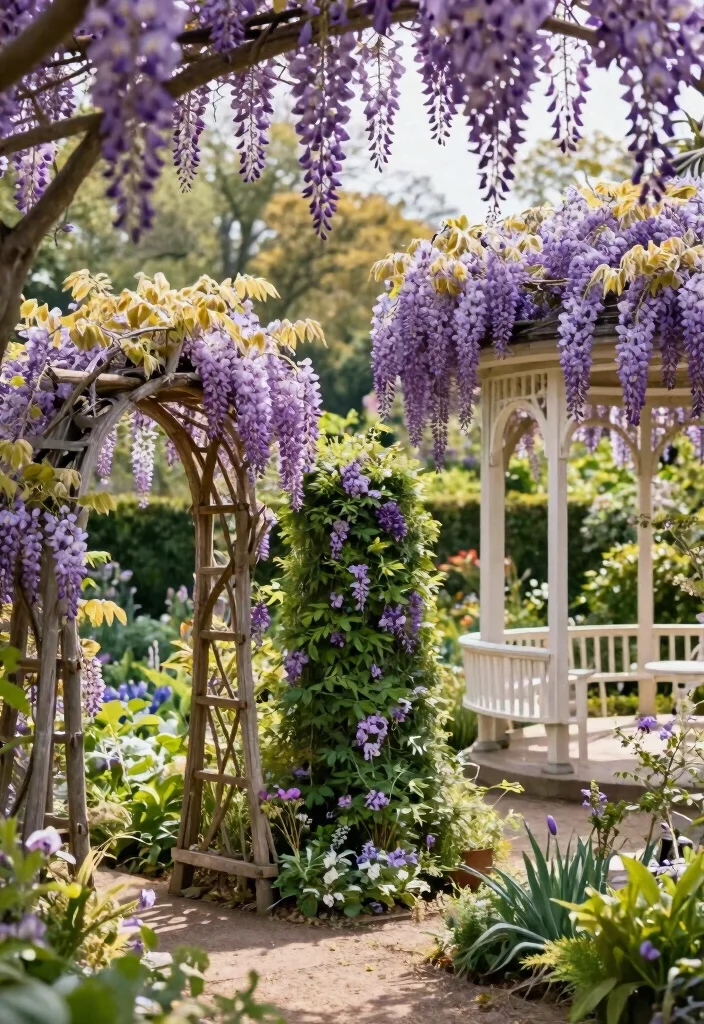
Incorporating wisteria into your garden design not only elevates the aesthetics but also adds layers of charm and beauty. From creating stunning trellises to transforming balconies and gazebos, the possibilities are endless. With the right wisteria plant care and garden design tips, you can cultivate a magical space that invites relaxation and enjoyment throughout the seasons. Embrace these wisteria trellis ideas and let your creativity bloom in your outdoor living spaces! Note: We aim to provide accurate product links, but some may occasionally expire or become unavailable. If this happens, please search directly on Amazon for the product or a suitable alternative. This post contains Amazon affiliate links, meaning we may earn a small commission if you purchase through our links, at no extra cost to you.
Frequently Asked Questions
What are the best wisteria trellis ideas to create dramatic blooms and shade?
Here are some bold wisteria trellis ideas to create dramatic blooms and welcome shade.
Start with a sturdy structure—a pergola, arch, or tall lattice—that can handle heavy vines and late-season pruning.
Train canes along horizontal wires or stepped slats to encourage a layered bloom display, and place the trellis where it will receive at least 6 hours of sun daily.
Choose a vigorous, reliable cultivar and plan space for future growth with proper climbing plants support.
How do I care for a wisteria on a trellis to keep it healthy and flowering?
To keep your wisteria thriving on a trellis, start with wisteria plant care basics: full sun, well-drained soil, and deep weekly watering during dry spells.
Prune annually to shape the vine, typically removing strategic shoots after flowering and limiting new growth to keep flowers coming the following season.
Feed sparingly with a balanced fertilizer in early spring; avoid high-nitrogen formulas that promote foliage over flowers.
Also secure canes to the trellis to prevent wind damage and regularly inspect ties and anchors for wear.
What garden design tips help integrate a wisteria trellis into outdoor living spaces?
Integrating a wisteria trellis into outdoor living spaces works best with clear garden design tips: scale the trellis to your space, position it to frame seating areas or walkways, and use complementary plantings for color and texture.
Consider vertical height and lines to guide the eye, and run seating fabrics and lighting to emphasize the bloom display at dusk.
For reliable flowering, place the trellis where it can anchor a larger landscape feature like a path or fenced boundary, tying the vertical garden into the rest of your design using vertical gardening techniques.
Which climbing plants pair well with wisteria on a trellis and how do I manage training them together?
Pairing with other climbers can extend season and create lush layers, such as pairing wisteria with clematis or roses for contrasting bloom times.
Plant companions carefully so roots don’t compete; install root barriers if needed, and train all plants along the same trellis or create separate tiers.
Use climbing plants support to keep growth organized and reduce crowding, and prune to balance flowering across species without crowding the main wisteria.
What is a practical maintenance plan for a wisteria trellis throughout the seasons?
A practical maintenance plan keeps a wisteria trellis thriving year after year. In winter, prune hard to remove older wood and encourage new flowering shoots; tie in any loose canes.
In spring, apply a light feeding and inspect for pests; in summer, monitor for wind damage and trim only after flowering to protect buds.
Each season, check trellis hardware, adjust ties, and remove any dead growth to maintain a safe, attractive focal point for outdoor living spaces.