
Yes, deer will eat your potato plants when food’s scarce. They’ll strip the foliage and dig up the tubers looking for a meal.
I’ve found that physical barriers work really well for keeping deer out. You can build wire cages around individual plants or dig trenches around your bed. If you go with trenches, I make them 18 inches deep and 12 inches wide, then fill them with pea gravel. I anchor everything down with tent spikes so the deer can’t push through.
I also mix up a DIY repellent spray that’s pretty simple. I combine two raw eggs with one gallon of water and one soap cake, then spray it on the plants. The smell keeps deer away, but I have to reapply it after it rains since the water washes it off.
For the best results, I combine a few methods. I put fencing around my beds and plant garlic or marigolds nearby. Deer don’t like the smell of either plant, so they tend to move on to easier targets. Using multiple defenses at once makes it much harder for them to get to your crop.
Yes, Deer Will Eat Your Potato Plants
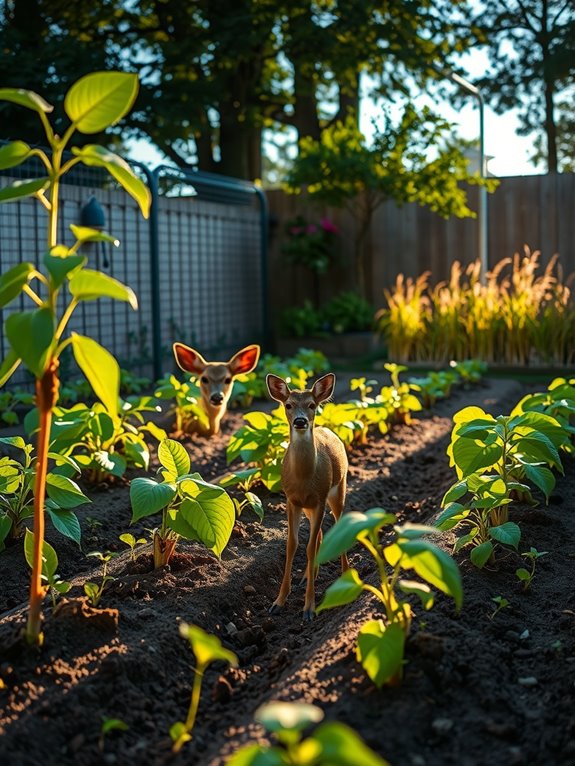
Yes, deer will eat your potato plants. I’ve seen them do it. When food gets scarce, they browse the foliage aggressively and eat the plants down to the stems. During high food competition seasons, your garden becomes their buffet.
The real problem is that deer often come back later. Even after they eat the tops, they may dig up or harvest the actual potatoes underground. I’ve found that potatoes can partly recover with new growth from below the soil. But that partial recovery isn’t enough protection on its own.
I learned the hard way that without some kind of defense, I’m basically inviting them back for round two. Understanding how deer behave helped me prepare better protections for my crops.
How Potato Plants Recover After Deer Damage?
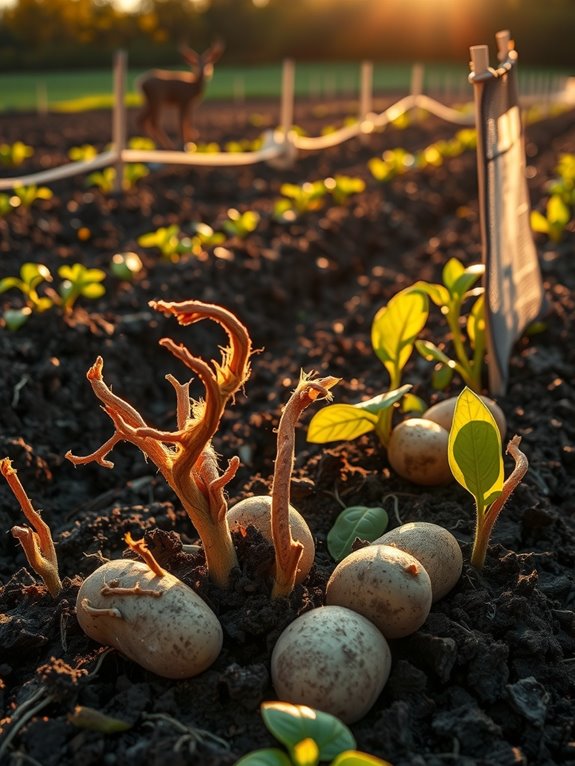
I’ve noticed that potato plants show real resilience after deer munch on their tops. They often bounce back with new shoots sprouting from below the soil. The timing of when the damage happens matters a lot. If your plant still has healthy underground parts, it can regrow leaves on remaining stalks and potentially give you a harvest.
I help this recovery along by using protective barriers like cages to keep deer away while my plants heal and develop new growth. A standard 4-foot tall wire cage works well for most potato plants. I set the cage around the plant early in the season, before deer damage occurs. This gives my plants the space they need to bounce back without getting eaten again.
Resilience After Foliage Loss
When deer eat down my potato plants to the stems, I used to think the crop was finished. But I’ve learned that potatoes bounce back pretty well from this kind of damage. New shoots come up from the stalks that are left behind, and they also regrow under the soil. The tubers stay alive underground and can feed the new growth that appears.
I can do a partial harvest to see which plants made it through. Some tubers will still reach full size even after getting chewed up pretty badly. While they’re recovering, I put wire cages around the remaining plants to stop the deer from eating them again.
The way potatoes handle this damage means I won’t lose my whole crop. Some plants will make it to harvest time no matter what the deer do.
Regrowth From Underground Shoots
How do potatoes come back after deer eat them down to nothing? The answer lies beneath the soil. When deer strip away the leafy tops, the underground shoots spring into action. I’m looking at nature’s built-in recovery system.
Here’s what happens underground:
- Underground buds activate and send up new shoots toward the surface
- Remaining stalks sprout fresh leaves even after significant damage occurs
- Below-soil growth continues while the plant rebuilds its foliage
The potato plant stores energy in its roots and underground structures. This means partial or mostly eaten plants won’t necessarily fail. I’ve seen potatoes bounce back well from deer damage. The underground shoots work quietly to restore what the deer removed above ground. It’s a process that happens without me doing much at all.
Harvest Timing and Viability
So your deer have munched on your potato tops. I don’t have to write off the whole crop. Here’s what I do.
I harvest a small section daily to check if the tubers are still growing underground. Even when deer eat the potato plants completely above ground, the potatoes below can still develop. I wait before doing a full harvest and let the remaining shoots regrow instead. The stalks usually put out new leaves.
This regrowth takes a few weeks, so I need to be patient. I protect the recovering plants with a wire cage or raised bed to stop more deer damage. I also monitor the progress and watch how the plants bounce back. Partial damage doesn’t mean I’ll lose everything. I’ll probably recover some tubers once the plants heal.
Deer-Proof Your Potatoes: Cages, Crates, and Trenches
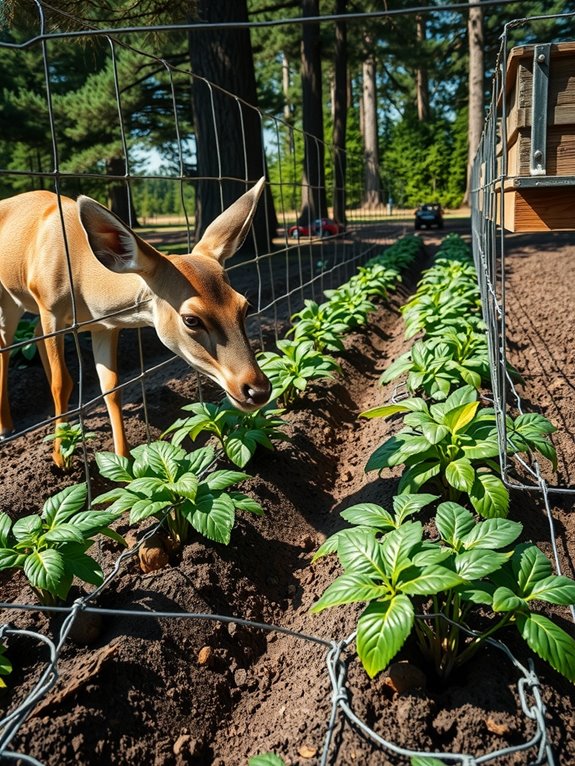
I’ve found that physical barriers work really well for keeping deer away from my potatoes. You can use wire cages, oversized freezer baskets, or dig trenches about 18 inches deep and 12 inches wide filled with small pebbles. The pebbles stop deer from digging under your plants.
The important part is securing everything so deer can’t tip or lift your protective enclosure. I use tent spikes or heavy weights to hold things down. Without proper anchoring, deer will just push the barriers aside and get to your potatoes anyway.
Wire Cages And Freezer Baskets
When deer start eating your potato plants down to nothing, wire cages and freezer baskets give you a straightforward way to stop them. I can repurpose an old freezer basket to cover my carrots or potatoes. Here’s why this works so well for me:
- Immediate protection – The cage blocks deer from reaching both the leaves and the tubers right away
- Simple setup – I just place it directly over my plants with no complicated installation needed
- Reusable design – I move these barriers around as my plants grow or when deer pressure changes
The trick is anchoring your cage so deer can’t lift or tip it over. I use tent-spike weights or ground anchors pushed through the cage edges into the soil. Without anchoring, a determined deer will just knock the whole thing aside. This method gives me solid protection while I can still water my plants and pull weeds underneath.
Trench Barriers With Pea Gravel
Why dig when you can create a barrier that makes deer work for their meal? I’ll dig an 18-inch deep by 12-inch wide trench around my potato beds. Then I’ll fill it with pea gravel or small pebbles. This physical barrier makes accessing potatoes way more difficult for deer and reduces the chances they’ll break through.
I need to anchor the trench edges with weights or tent spikes so the barrier stays intact despite weather and animal pressure. I can combine trenches with containerized or raised-bed plantings for serious protection. I might pair my gravel trench alongside wire cages or crates for extra layers of defense.
Once deer realize the effort isn’t worth it, they’ll move on to easier meals elsewhere.
Securing Edges With Weights
How do you keep deer from simply lifting or pushing aside your protective cages and crates? I’ve found that securing the edges is what really matters for effective deer-proofing containers.
I use tent-spike weights to anchor the cage corners directly into the soil. Heavy stones or sandbags also work well for holding down the perimeter edges. I make sure to stake my wire cages at multiple points around the base. This prevents deer from lifting or pushing the barrier aside and wedging underneath.
The stakes create a secure seal that deer can’t bypass easily. I stake everything at ground level where deer are most likely to test the cage. Anchoring takes just a few minutes but saves your entire crop. Without securing the edges, even sturdy cages become movable obstacles that deer can shift around.
I recommend checking your stakes after heavy wind or rain since weather can loosen them. Ground conditions matter too. Soft soil takes stakes more easily than hard, dry ground. If your soil is compacted, I water the area first to make it easier to drive the stakes in deep. This simple step turns your protection from temporary to reliable.
Strategic Planting: Fence Location and Deterrents
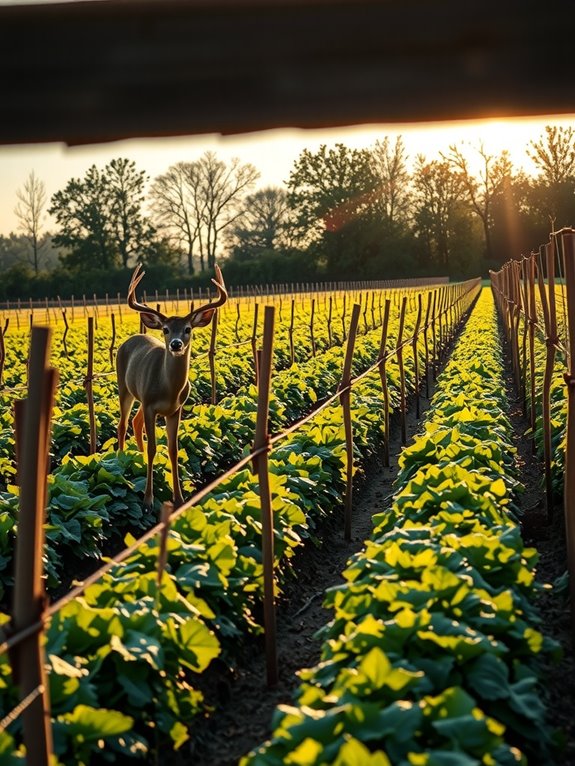
I put my potato beds inside the fenced area so deer can’t reach them. This placement is my first line of defense against browsing. While potato tops are poisonous and might discourage some deer, a hungry deer won’t care much about that. I combine the fence with companion plants like garlic or marigolds planted around the perimeter. These extra deterrents work together to keep deer away from my crop. By protecting my potatoes in an enclosed space, I’m reducing how much damage deer can do to what I’m growing.
DIY Deer Repellent for Potato Plants
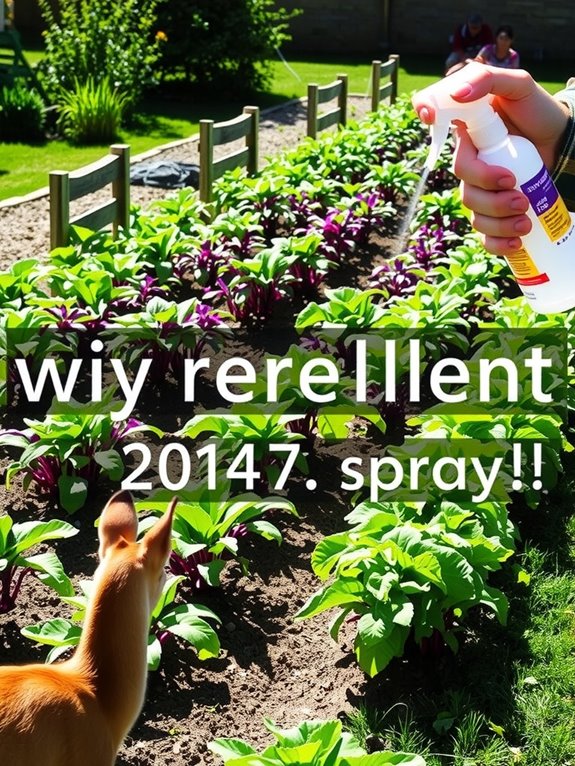
While fencing does most of the work to keep deer out, I’ve found that adding a homemade spray repellent gives me extra protection on my potato plants. I mix together two raw eggs, one gallon of water, and one whole cake of fragrant soap like Irish Spring. I let everything steep, then strain it into a spray canister. I spray this repellent directly on my potato foliage.
Water washes away the spray when it rains, so I reapply after each rainfall. I also spray around my garden’s perimeter for added coverage.
Rotating different repellent recipes works better than using just one. I check with my County Cooperative Extension office for localized recipes and recommendations. Combining this spray with my fencing creates a solid defense against deer eating my potato crop.
When to Harvest: Early Pick vs. Waiting Out the Deer
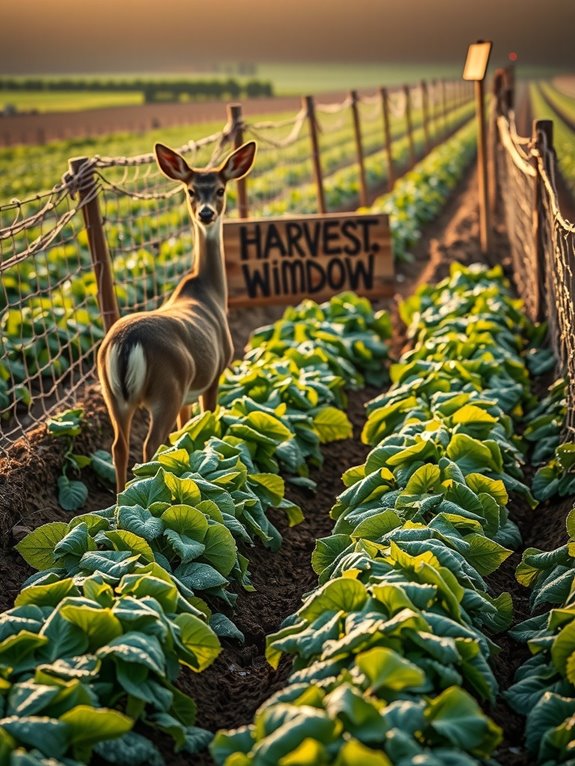
Should you dig up your potatoes early or wait and hope they recover from deer damage? I’ve tested both approaches. I harvested some potatoes as soon as they got large enough. I left others in the ground to see if they’d regrow. This way I could see what actually works.
Deer may eat potato plants down to the stems, but the potatoes underground can still come back. Your plants have shoots below the soil that can regrow even after the top part gets eaten away. New shoots may emerge and keep growing.
I recommend digging up potatoes when they’re large enough to harvest. This way I know I’m getting something. At the same time, I can watch the remaining plants to see if new shoots come up. If they do, I get bonus potatoes. If they don’t, I already have potatoes in my harvest basket.