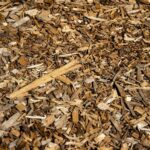
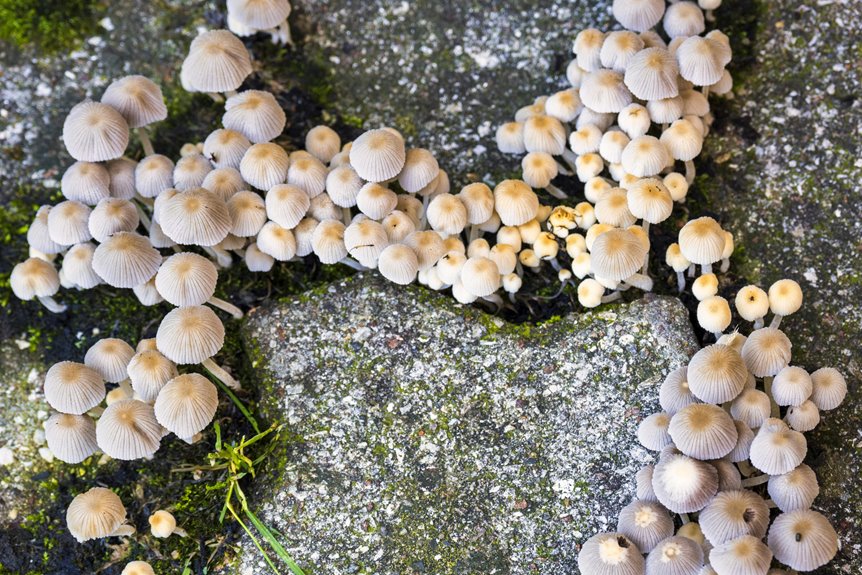
Mushrooms are popping up in my raised bed because I’ve created the perfect home for fungi. The organic matter I added—compost, mulch, wood chips—feeds the underground fungal networks called mycelium. When I water my plants or it rains, that moisture triggers the mushrooms to fruit and pop up above the soil. This actually means my soil is doing its job. The fungi are breaking down dead material and recycling nutrients that my plants need.
Most mushrooms won’t hurt my garden. But if they keep coming back, it tells me I’m probably watering too much. I can decide whether to pull them out or leave them alone. Either way, the fungi are still working beneath the surface to build healthy soil.
Why Mushrooms Thrive in Raised Beds
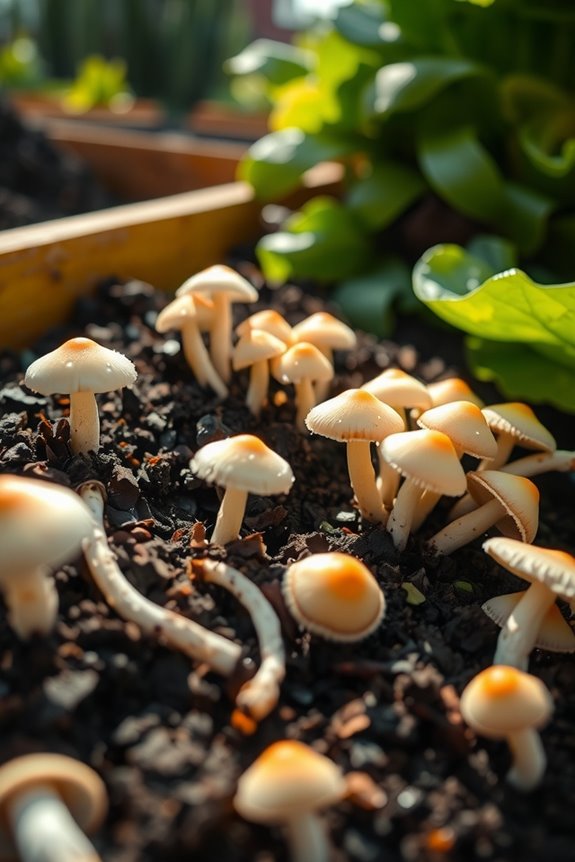
Ever notice mushrooms popping up in your raised bed and wondered what they’re doing there? I’ve spotted them in mine, and here’s what’s actually happening.
Mushrooms show up because I’m adding lots of organic matter like compost and mulch to my beds. When those materials start breaking down, they create the perfect living space for fungi. These fungi are doing important work—they’re breaking down the decomposing materials and putting nutrients back into the soil. I’m basically building a community of tiny organisms that keep my soil healthy and active.
The moisture I maintain in my raised bed keeps all this microbial activity going strong. Mushrooms actually signal that my soil’s got beneficial microbes working hard underneath the surface. When I see them pop up, I know my soil health is improving. The fungi are part of a larger system where everything works together to make my garden’s soil richer and more alive.
Are They Actually a Problem?
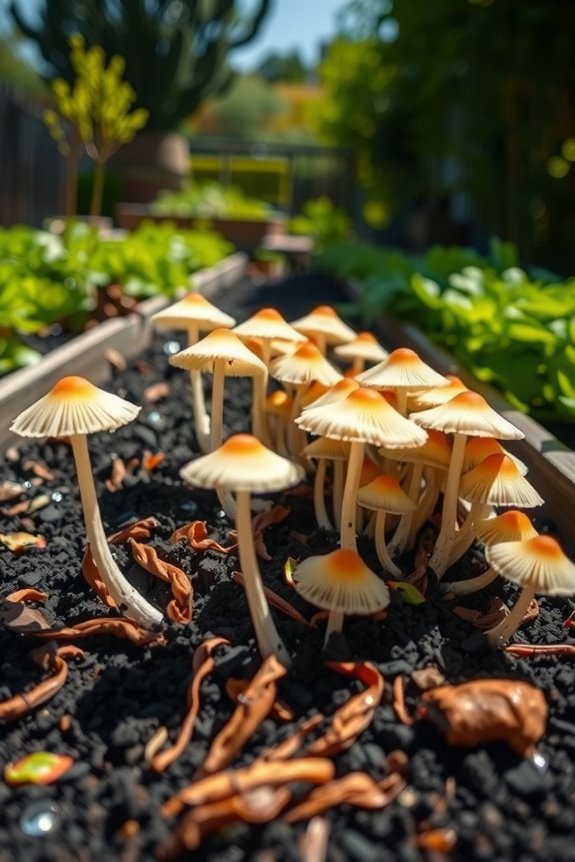
I’ve noticed that mushrooms in a raised bed actually mean your soil’s doing something right. There’s active decomposition happening underneath, which helps your plants get nutrients they need through good nutrient cycling.
You only need to remove them if they’re crowding together or spreading quickly. That usually signals your soil’s staying too wet. If mushrooms keep popping up all the time, I’d look at two things. First, check how often you’re watering. Second, make sure your bed has good drainage so water doesn’t sit around. That’s the real problem to fix.
Signs Of Healthy Soil
When mushrooms pop up in my raised bed, it might feel like something’s wrong—but it’s actually a sign that my soil is healthy. I see mushrooms and I know my soil is doing its job.
Here’s what’s happening underneath: mushrooms show me that decomposition is active. Organic matter is breaking down into nutrients my plants can use. That’s the whole point of building good soil.
I’ve got a mycelial network at work in there. That’s just a fancy way of saying fungi are spreading through my soil like a web. These fungi are part of my soil’s nutrient recycling system. Microbes are busy creating a living ecosystem—the kind I want in my garden beds.
If only a few mushrooms appear, I don’t need to worry. They’ll likely disappear as conditions change. When I see them, I’m seeing proof that my garden bed is becoming the fertile space I’ve been working toward.
When Removal Becomes Necessary
So do mushrooms actually hurt your garden? Not always. I find they’re often harmless signs that my soil is doing its job. But I need to remove them when they crowd my plants or block sunlight. Large mushrooms also tell me I have moisture problems that could hurt how well my bed produces.
Here’s what I’ve learned: persistent mushrooms mean my soil stays too wet. Before I remove anything, I check my soil moisture levels carefully. Overwatering or poor drainage triggers mushroom growth and mycelium (the white root-like threads of fungi) blooms underground.
If I decide to remove them, I dig out the entire fruiting body by the roots. I compost only the caps to avoid spreading fungal matter back into my bed.
The best approach I’ve found is maintaining consistent moisture and mulch depth. I keep my mulch layer at about 2 to 3 inches and water deeply but less frequently. Proper moisture management reduces mushroom growth while keeping my soil healthy.
When to Remove Mushrooms (and When to Leave Them)
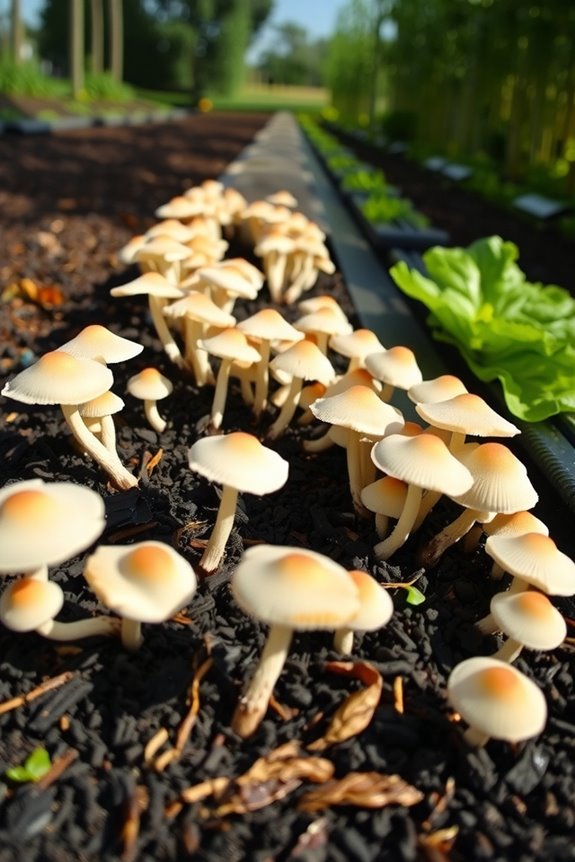
Should I pull out every mushroom that pops up in my raised bed, or can I let them stick around? A few mushrooms aren’t worth removing. They show me that soil life is thriving beneath the surface. The mycelium (which is the root network of mushrooms) actually helps my plants access nutrients more easily.
I only need to act when mushrooms start crowding my vegetables. That’s when I pull them out by their roots or dig them up completely. I toss them into my compost pile to recycle the organic matter back into my garden system.
If conditions dry out or temperatures drop, those mushrooms typically disappear on their own anyway. So I save myself effort by waiting it out first.
How Moisture and Organic Matter Feed Fungal Growth
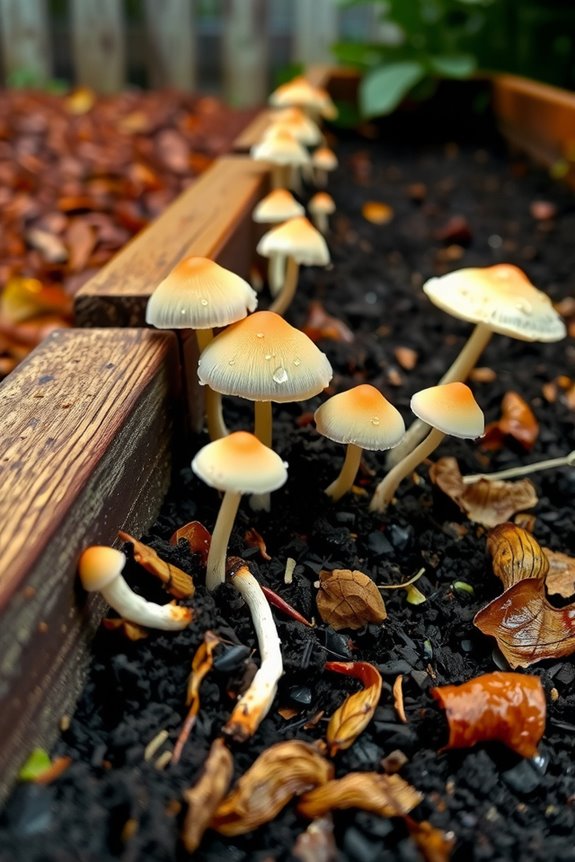
I’ve found that moisture and organic matter are the real culprits behind those mushrooms popping up in my raised beds. When I water my garden or get heavy rain, that extra moisture wakes up the mycelium—the underground fungal network that spreads through soil. This triggers the mycelium to send up mushrooms for reproduction. My wood chips and compost break down over time, creating the perfect food source for fungi to thrive and multiply.
Here’s what happens: fungi need two main things to grow. First, they need moisture. When I water my beds, the soil gets damp and stays that way for a while. Fungi love this environment because they can’t move around or get water like plants do. Second, they need organic matter to eat. My wood chips take months to break down completely. My compost does the same thing. As these materials decompose, they become food that fungi use to spread and reproduce.
The mycelium works underground where I can’t see it. It’s like a root system, but for fungi. When conditions are right—wet soil plus decaying organic matter—the mycelium sends up mushrooms above ground. Those mushrooms release spores, which are tiny seeds that spread the fungus to other areas.
If I want fewer mushrooms, I can reduce one of these two things. I can water less often and let the soil dry out between waterings. Or I can use less organic material when I’m building or refreshing my beds. If I’m adding fresh compost or wood chips, I should know they’ll feed fungi for months as they break down.
Moisture Triggers Fungal Blooms
When my raised bed stays consistently damp, I’m basically creating a mushroom factory. Fungi need moisture to trigger fungal blooms, and I’m giving them exactly that. Every time I water and the soil stays wet, I’m signaling the mycelium underground to start producing mushrooms.
| Moisture Level | Fungus Activity | Result |
|---|---|---|
| Consistently Damp | High mycelial growth | Rapid mushroom fruiting |
| Dry Spells | Dormant fungus | No mushroom blooms |
| Waterlogged | Aggressive fruiting | Heavy mushroom clusters |
Poor drainage makes this worse because the soil stays saturated longer. When I water after dry periods and my mulch traps moisture, mushrooms pop up again. I’m basically feeding the fungus the conditions it craves.
To control fungal blooms before they take over, I need to manage my watering schedule and improve drainage. I should water less frequently and let the soil dry out between waterings. I can also add drainage holes to my raised bed or mix in materials like perlite or coarse sand to help water move through the soil faster.
Organic Matter Fuels Mycelium
The organic matter in my raised bed is basically food for the fungi living underground. When I added mulch and wood chips, I created a buffet for mycelium—the thread-like network of fungus that breaks down complex materials into simpler nutrients. Fungi digest cellulose found in wood, pulling nitrogen and other nutrients from the soil.
Here’s what’s happening in my soil:
- Mycelium decomposes decaying organic matter like mulch and wood chips
- Fungi extract nitrogen and essential nutrients for plant growth
- Active fungal activity signals healthy soil is working
The more organic matter I add, the more food I’m giving the fungi. This accelerates mushroom fruiting. I’m not just growing vegetables. I’m building a living ecosystem where fungi and plants work together to create richer soil.
Wood Decomposition Requires Nitrogen
Why do mushrooms suddenly pop up when I’ve got wood chips breaking down in my raised bed? I’m witnessing wood decomposition in action. Bacteria and fungi break down cellulose from those wood chips. Here’s the catch: this process requires nitrogen.
The decomposers pull available nitrogen from my soil to fuel their work. That nitrogen gets diverted from my plants, potentially causing temporary deficiency. When moisture combines with nitrogen-rich wood material, fungal activity accelerates. Mycelium spreads through the bed. Mushrooms fruit as a result.
To combat this, I can add organic nitrogen sources like compost or well-rotted manure. I’d work in about 2 to 3 inches of compost into the top layer of my bed. These additions sustain plant health while fungi continue their breakdown work. Both my plants and the fungi can thrive together in my garden ecosystem.
What Mycelium Does for Your Raised Bed
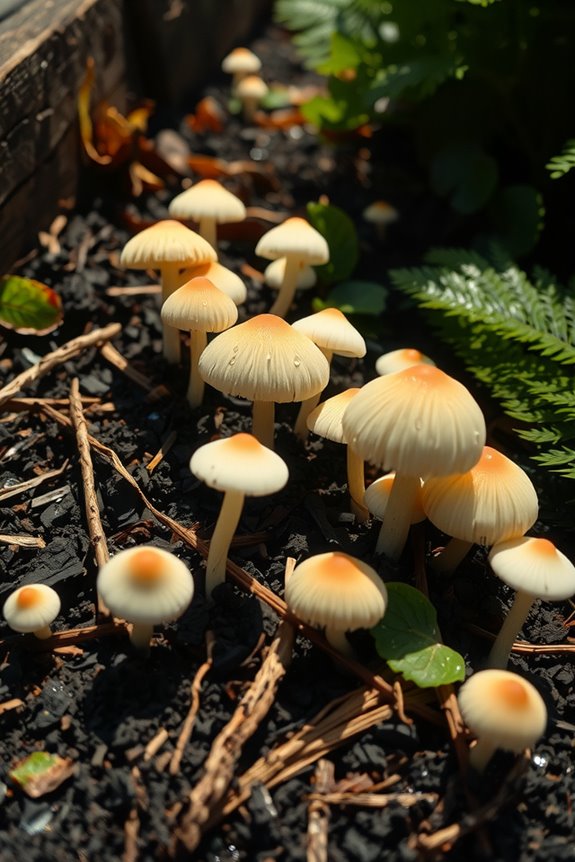
Because you’ve added organic matter to your raised bed, you’re creating the perfect environment for mycelium to work. I’m basically building a living soil engine that transforms my garden underground.
Here’s what mycelium does for me:
- Breaks down organic matter into nutrients my plants can actually use
- Improves soil structure so water and air move better through the bed
- Increases nutrient availability, especially when wood-based materials are present
My mycelium network thrives when I keep moisture levels balanced. Too much water encourages more fungal growth and fruiting. I’m watching a transformation happen underground. The mushrooms I see are just proof that my mycelial network is working hard, recycling organic matter and feeding my plants.
Sustain Fruiting With Annual Mulch Updates
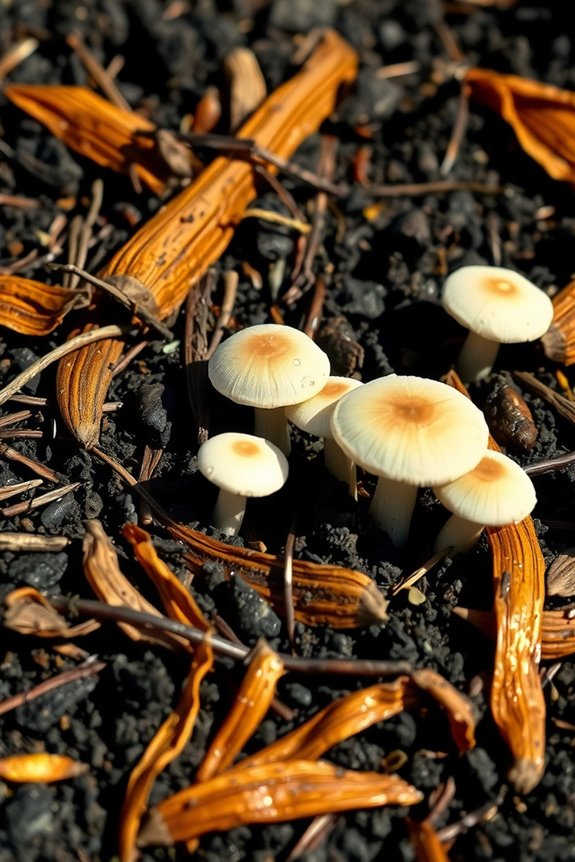
How do I keep my mushroom bed producing year after year? I refresh my mulch annually to sustain fruiting. Each spring, I add fresh wood chips to my raised bed. This yearly mulch update replenishes the woody material that feeds my fungal network, which is the living root system of the mushrooms.
I’ve found that moisture retention is the key to extended harvests. Without consistent moisture, fruiting slows dramatically. By top-dressing with new mulch during maintenance, I’m feeding my mycelium—the fungal threads that break down the wood chips. The fresh substrate gives these threads new material to colonize and work through.
I keep my mulch depth around three to four inches. This thickness maintains the moisture level my mushrooms need for continuous production cycles. The fresh chips also create a moisture-sealing layer that locks in the water my mushrooms require to fruit properly.