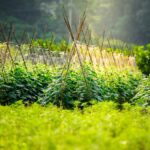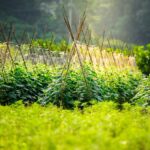
I’m going to grow sugar snap peas, snow peas, pole beans, fava beans, indeterminate tomatoes, cucumbers, tomatillos, and small squash varieties vertically to save space in my garden. Each plant climbs differently, so I need to match the support to how it grows. Peas use tendrils—those little curly parts that grab onto anything nearby. Beans wrap their stems around supports naturally. Tomatoes need figure-eight ties (looping the string around the stem and support in a figure-eight pattern) to keep them from breaking under their own weight.
I’ll pick sturdy trellises for heavier crops like melons. These need extra support underneath—I’ll use fabric slings or old t-shirts cut into strips to cradle the fruit as it grows. A basic wooden trellis runs about $25 to $50, while a sturdy metal one costs $40 to $80 depending on size.
Growing plants vertically gives me real benefits. Air flows better around the leaves, which means less rot and disease. The fruit and vegetables stay at a comfortable picking height instead of sprawled across the ground where pests find them easily. My harvests go up because I’m using vertical space instead of spreading plants out sideways. The right support structure makes a real difference in how much I can grow in a small area.
Sugar Snap and Snow Peas: Lightweight Climbers With Built-In Support
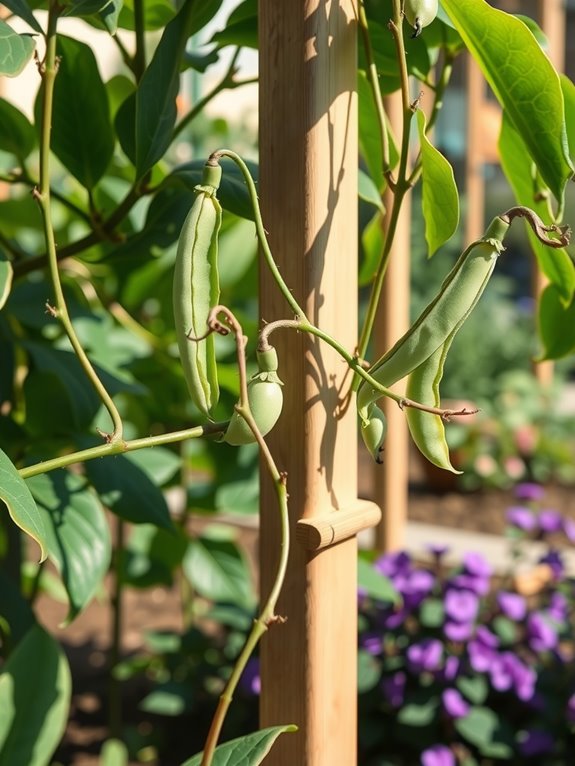
Sugar snap and snow peas are natural climbers that I can train up a trellis without much work. These lightweight varieties have slender tendrils that wrap around each rung as they grow. I’m looking at plants that’ll reach 6 to 8 feet tall when I give them proper support.
I like growing these peas vertically because I can fit more plants into my smaller garden space. Trellising keeps my pea plants upright and improves air circulation around the leaves. Better airflow means less disease risk for my plants. I also find picking much easier since the pods hang at convenient heights where I can reach them.
Regular harvesting encourages my peas to keep producing throughout the season. When I set up my trellis with tight rung spacing, I’m giving these peas the best setup from the start. My slender tendrils grab onto each rung easily and climb without any issues.
Pole Beans and Fava Beans: Continuous Harvests on Sturdy Structures
If I want continuous bean harvests, I need to set up a sturdy trellis that can handle the weight of mature vines and heavy pod clusters. Pole beans like Kentucky Wonder and Blue Lake climb slender supports and produce pods throughout the season. Fava beans also thrive when I train them vertically.
The stronger my trellis structure is, the more beans I’ll harvest from a compact garden space. A trellis made from sturdy materials like 2×2-inch wooden posts or metal conduit works well. I should space the posts about 8 feet apart and make the structure at least 6 feet tall so the vines have room to climb.
I’ll add horizontal strings or wires between the posts about 12 inches apart. This gives the beans plenty of places to latch onto as they grow. When I plant the beans at the base of the trellis, they’ll naturally climb upward and produce more pods because the vertical arrangement improves air circulation around the plants.
Vertical Support Requirements
When I’m ready to grow pole beans and fava beans vertically, I need to think about what’ll hold them up. I need sturdy supports that reach significant heights. Pole beans like Kentucky Wonder wrap around slender supports as they climb. Fava beans also benefit from structures designed for climbing growth.
| Support Type | Height | Best For |
|---|---|---|
| Wooden Trellis | 6-8 feet | Pole beans |
| Metal Frame | 7-9 feet | Fava beans |
| Twine System | 5-7 feet | Both varieties |
| Bamboo Stakes | 6 feet | Smaller spaces |
| Wire Mesh | 8 feet | Heavy producers |
I’ll want easy access for picking pods continuously. My trellis system should support ongoing growth without damaging the vines. Sturdy structures prevent collapse under the weight of mature plants. This setup maximizes my space while keeping harvesting straightforward.
Harvesting and Yield Benefits
How much can I actually harvest from a single trellis of pole beans? I’m talking about picking regularly throughout the entire growing season. Pole beans like Kentucky Wonder and Blue Lake produce continuously when I train them on a vertical trellis. I harvest regularly, and this actually encourages more flowering and pod development. My vertical trellis becomes a production machine.
Here’s what I’ve noticed: better air circulation around the vines means fewer diseases interrupt my harvests. Fava beans work similarly on sturdy structures, rewarding me with ongoing yields. When I pick consistently, the plants keep producing instead of stopping. A small seedling becomes a prolific producer over time. I’m maximizing my garden space while getting continuous fresh beans all season long.
Indeterminate Tomatoes: Which Trellis Handles the Weight?
When you’re growing indeterminate tomatoes, you need a trellis that can handle the weight because these plants get heavy and keep growing all season long. I’ll walk you through which trellis types work best, how to set them up so they stay stable in wind, and the training tricks that keep your vines healthy and your fruit easy to pick.
The main trellis options I consider are stakes, cages, strings, and trellises. Stakes are single wooden or metal poles that I drive into the ground. Cages are wire structures that surround the plant. Strings hang from above and I weave the plant through them. Trellises are frame structures made of wood or metal that the plant grows against.
For indeterminate tomatoes, I need something sturdy because the plant will reach 6 to 8 feet tall or more. A simple tomato cage from the garden store won’t cut it—those are made for determinate varieties that stop growing at a set height. I need either a strong cage rated for tall plants, sturdy stakes I tie the plant to, or a string or trellis system.
Wooden stakes should be at least 1.5 inches thick and 6 to 8 feet tall. I sink them 12 inches into the ground to keep them stable. Metal stakes work too and last longer, but wooden ones are cheaper. Cages for indeterminate varieties need to be 5 to 6 feet tall with wide bases so they don’t tip over in wind.
String systems work well if I set them up right. I run a horizontal line above the plants and tie twine to it. Then I loop the twine down around the plant stem and tie it off at the base. As the plant grows, I adjust the twine to support new growth.
For wind stability, I anchor stakes or cages by driving them deep into the ground. I also space plants at least 24 inches apart so air flows between them. Wider spacing reduces wind damage.
To train the plant, I remove suckers—the small shoots that grow where branches meet the main stem. This keeps one strong main stem instead of a bushy plant with lots of small branches. I pinch off the bottom leaves once the plant is 12 inches tall so air reaches the lower fruit and prevents disease.
Sturdy Support Structure Needs
Why do so many tomato growers end up with collapsed trellises mid-season? I’ve found that indeterminate tomatoes (the kind that keep growing all season long) demand serious trellis construction. These heavy fruiting vines need support systems that won’t quit when things get tough.
I’ve learned that reinforced metal trellises or strong wooden frames handle the load best. I’m talking about structures capable of supporting continuous fruit production. A 6-foot-tall trellis gives your vines room to grow without crowding. Lighter options like Clematis trellises simply can’t manage the weight.
Here’s what I do to make my trellises last. I use secure anchoring and resilient fasteners throughout. I anchor posts deep into the ground—at least 18 inches down. I check connections regularly throughout the season. These steps prevent sagging as vines mature. My investment in solid construction now pays off throughout the entire growing season.
Weight Capacity By Trellis Type
Now that you’ve got a solid structure in place, I need to know which trellis design actually handles the weight my indeterminate tomatoes will throw at it. Arch trellises win for weight-bearing capacity because they spread the load across a wider area. Panel and obelisk designs work okay, but they can sag under heavy fruit.
I’ve found that metal or heavy-duty wooden structures are my best bet for supporting those long, sprawling vines that grow 6 to 10 feet tall. I recommend using reinforced connections with galvanized hardware (the kind that won’t rust) and sturdy stakes to prevent vine collapse. Galvanized means the metal has a protective zinc coating on it.
I match my trellis weight rating to what my tomato variety produces. A broad base support and secure anchoring keep everything upright all season long. For example, if my tomato variety produces large fruit clusters, I’ll pick a trellis rated for at least 50 pounds of weight. I use at least two stakes per trellis driven 12 inches into the ground.
Training Methods For Heavy Vines
How I tie my tomato vines matters just as much as the trellis itself. I’ve found that slack figure-eight ties work best for heavy vines. These ties loop around the stem and trellis without squeezing, which prevents stem damage and disease as my indeterminate tomatoes grow heavy with fruit.
I tie my vines frequently as they develop to keep them upright and supported. I space my ties about 12 inches apart along the stem. I also make sure my trellis has strong anchoring at the base. A wide-based foundation prevents wobbling when the weight of the fruit gets heavy.
I recommend using 6 to 10 feet of trellis height for mature plants. This gives my heavy vines plenty of room to climb without crowding. Proper trellis training means I get an organized, productive garden with better access to my harvest.
Cucumbers: Strong Support Keeps Vines Off the Ground
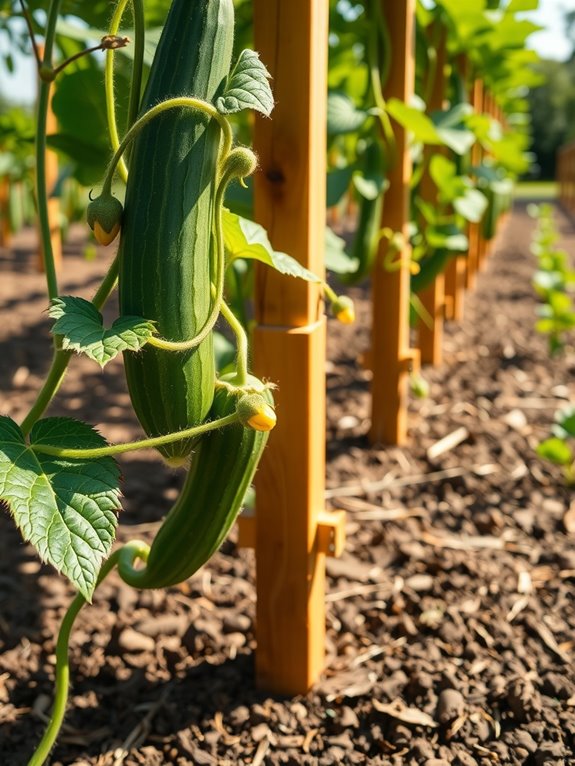
When you’ve got cucumbers sprawling across your garden bed, you’re inviting rot, pests, and fruit that’s hard to spot. I’ve found that a strong trellis changes how I grow them.
Here’s what happens when I trellis cucumbers:
- Fruit hangs at accessible heights so I can pick easily
- Vines stay off soil, which stops rot and pest damage
- Air circulates freely around leaves and flowers
I use A-frame or sturdy trellis designs for vertical growing. The tendrils grab naturally onto the structure, so they climb without much help from me. This keeps my harvest cleaner and healthier.
I grow cucumbers in zones 4–11, picking from early to late summer depending on the variety. A strong trellis keeps those vines up and away from ground trouble where they belong.
Tomatillos: Heat-Loving Vines That Thrive Vertically
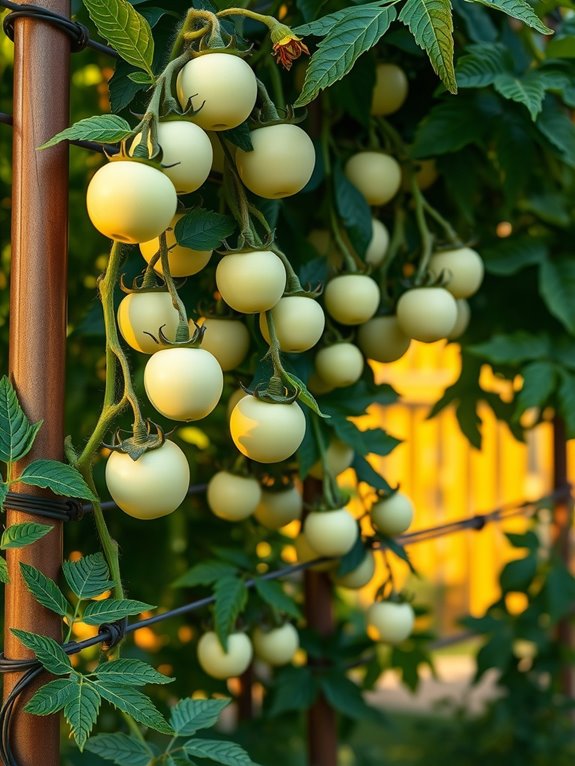
If you’re growing tomatillos, you’ll want to set up a sturdy trellis. These heat-loving vines thrive when temperatures get hot, and they produce a lot of fruit that needs vertical support to stay off the ground. A trellis keeps your developing fruits elevated, which improves airflow around the plants and cuts down on rot.
I’d recommend planting two tomatillo plants together since they cross-pollinate with each other. This means the plants exchange pollen to create fruit. When they’re growing side by side, you’ll get a better yield than planting just one plant by itself.
Thriving In Extreme Heat
Why stick with sprawling tomatillo plants that eat up your whole garden when you can grow them vertically on a trellis instead?
I’ve found that trellising really changes how tomatillos handle extreme heat. When temperatures spike, here’s what happens:
- Air moves better around the vines, which cuts down on rot and disease
- Fruit sits up off the hot ground, so it doesn’t get sun scald or damaged from touching soil
- Bees pollinate better because they can navigate between the vines more easily
I plant two heat-tolerant varieties together because they need cross-pollination to produce fruit. As the vines grow heavy with tomatillos, I tie them gently with soft loops so I don’t damage the stems. I use sturdy construction because vigorous growth creates serious weight.
Full sun is non-negotiable, and the soil has to drain well so water doesn’t sit around the roots. Vertical growing isn’t just about saving space. It’s actually how I get tomatillos to thrive when summer heat gets brutal.
Dual Planting For Pollination
Getting tomatillos to produce fruit on your trellis actually depends on something you might not expect—I can’t grow just one plant and hope for the best.
I need two tomatillo plants for proper pollination. Here’s why this matters:
| Factor | Single Plant | Dual Planting |
|---|---|---|
| Fruit Set | Poor | Excellent |
| Pollination | Unreliable | Consistent |
| Yield | Minimal | Abundant |
When I plant two tomatillos together on a sturdy trellis, they cross-pollinate naturally. Cross-pollination means the plants pollinate each other, which happens when bees and other insects move pollen between flowers. This pollination process produces more fruit for me to harvest. I’m basically creating the conditions these vines need to thrive vertically.
The dual planting strategy changes trellis growth from disappointing to productive. I space my two plants about 2 feet apart along the trellis base. This setup gives me the abundant harvest I’m hoping for this season.
Melons: Training Vertical Growth With Fruit Slings
How do you keep heavy melons from snapping their vines when you grow them upward? I use fruit slings. These fabric supports cradle developing melons and prevent damage from the weight pulling down on stems.
I attach a sturdy, high-truss trellis that’s designed to handle heavy fruit weight. Then I fashion cloth slings from old fabric scraps to support each melon as it develops. I position the slings under the fruits to minimize stem breakage and bruising.
This approach improves air circulation around my foliage and fruit. Better airflow reduces disease risk significantly. I need to plan ample space since mature vines spread widely along my vertical system. Growing melons upward saves space while protecting my harvest from damage.
Small Squash Varieties: Trellising Bush Types Vertically
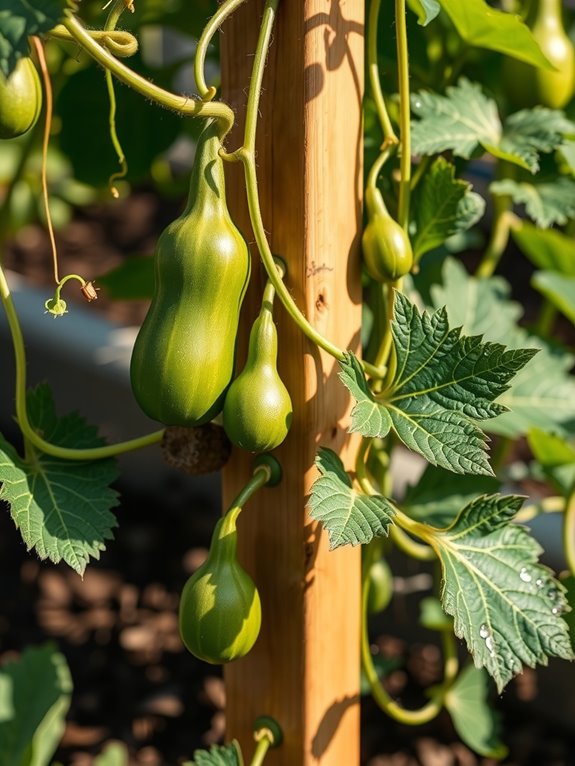
When I want to fit more plants into my garden, I train small bush-type squash varieties vertically on a trellis. This method lets me use my space better and gives me better air circulation around the foliage, which means fewer disease problems.
I use sturdy supports because squash fruits get heavy as they grow. Even the smaller varieties need solid backing. I prune the vines carefully to manage their growth and keep everything under control.
My trellis needs to be at least 5 to 6 feet tall and well-anchored into the ground so it doesn’t tip over when the plants get heavy. I pick bush-type squash for this method because they’re compact enough to handle vertical training. I skip the massive pumpkins or gourds since they’re too heavy for a trellis to support.
Tie Plants Safely to Trellises
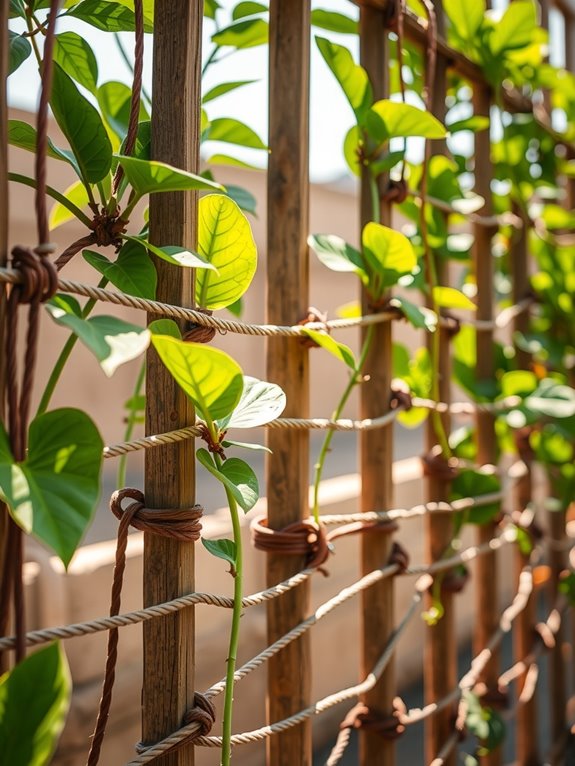
Once your plants start climbing, I need to tie them properly so they stay healthy and productive. I’ll use the right technique to support my vines without causing damage.
Here’s how I do it. I loop twine around a trellis rung and cross it. Then I wrap it around the stem in a figure-eight pattern. This creates a gentle cradle for my vines.
The key is leaving plenty of slack. I make sure the stem can grow without getting squeezed or rubbed. Tight ties invite disease and pests to my plants, so I keep things loose.
Proper tying keeps my plants upright. It also makes harvesting easier later on. When I tie loosely and support stems correctly, my vines stay healthy and productive.
Choosing the Right Trellis for Each Plant
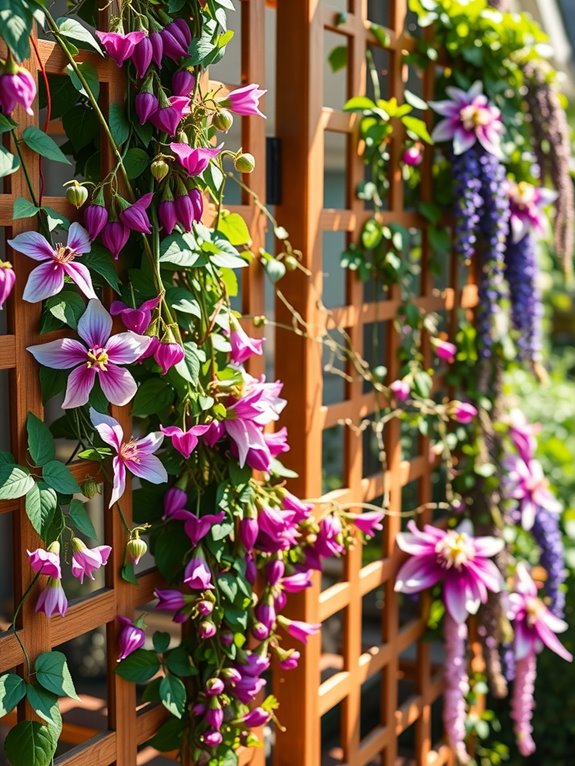
Now that you’ve got your plants tied up properly, I need to pick the right trellis structure for what I’m growing. Here’s how I match plants to supports.
Cucumbers need strong upright frames where tendrils can grip easily. Pole beans and peas climb slender supports and reach 6–8 feet tall with proper plant support. Heavy crops like large squash demand sturdy metal trellises. Lighter vines such as morning glory work fine with simple structures.
My trellis height should match my climbing vines’ mature size. I aim for 6 feet or taller to prevent overflow. Arch trellises give me more room than panels for tall vines in long seasons. This keeps my training manageable and improves airflow around my plants.
Trellis Types: Panels, Arches, and Obelisks Compared
Weigh the options of panels, arches, and obelisks as you set up your trellis system. I’ve got three main trellis types to consider, and each one brings something different to my garden.
Here’s what makes each special:
- Panels work great for compact layouts. They’re flat and don’t take up much space, perfect when I’m working with limited room.
- Arches give me the most vertical space. Vines grow over and back, which means I get more fruiting area during long warm seasons.
- Obelisks add focal points and vertical interest. They’re decorative and help me train vigorous vines while keeping things tidy.
I choose based on my space and what I’m growing. Heavier crops like tomatoes need sturdy metal arches. Lighter climbers do fine on standard panels or obelisks. I think about my garden’s style too.