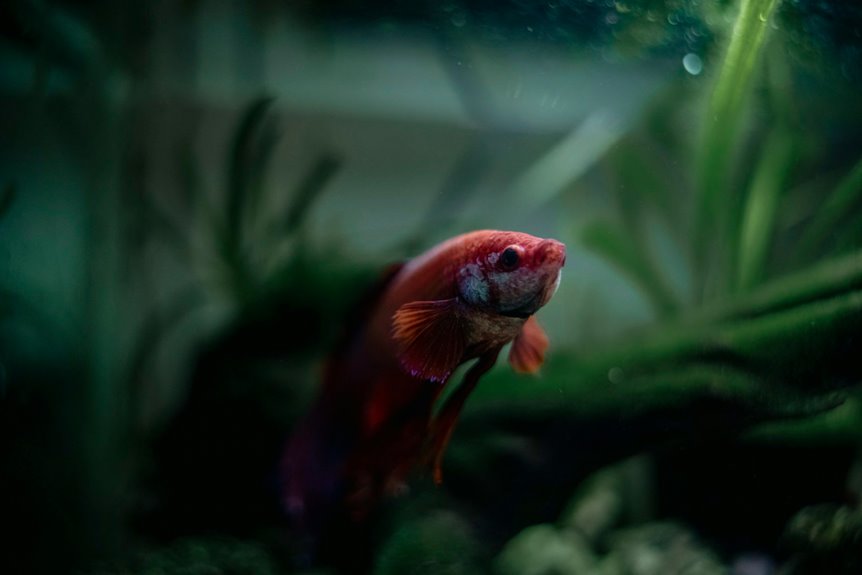
I’ve picked out seven plants that work well in betta tanks. Java Fern and Anubias don’t need soil to grow. I just tie them to rocks or driftwood with fishing line. Cryptocoryne is good for tanks with low light because it gets nutrients from the substrate, which is the layer of gravel or sand on the bottom. Water Sprite grows fast and makes thick areas where your betta can hide. Red Root Floaters float at the top and block some light, which bettas like. Sword plants grow tall and work as centerpieces in the middle of your tank. Vallisneria has long, thin blades that look like grass and fill the back area. Octopus Plant has thin, branching leaves that stick up in the water. Each one does something different for your tank setup and your fish’s health.
Java Fern and Anubias: Substrate-Free Plants for Betta Tanks
A Java Fern has a thick horizontal stem called a rhizome. This rhizome means I don’t need substrate—the material that goes on the bottom of the tank. Instead, I attach the plant directly to rocks or driftwood using super glue gel. Anubias works the same way. Both plants grow well in low-tech setups without any fancy equipment.
I can choose from several Java Fern varieties like needle leaf, trident, and Windelov. They look different from each other but grow just as hardy. My betta gets extra hiding spots from these plants.
To reproduce Java Fern, I can split the rhizome in half with a clean knife. I can also wait for baby plantlets to grow from the leaves. Once those babies develop good roots, I detach them and reattach them to new rocks or driftwood. This is how I build a substrate-free betta tank that feels natural.
Cryptocoryne: Hardy Mid-Tank Plants for Low-Light Setups
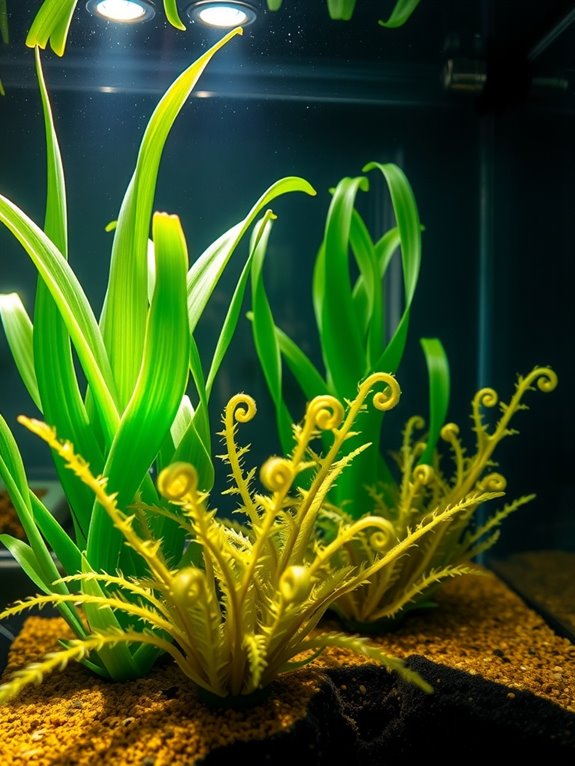
I’ve found that Cryptocoryne plants work really well in betta tanks because they’re low-maintenance and handle dim lighting to bright conditions without any fuss. What sets them apart is that they pull most of their nutrients from the substrate itself, so I add root tabs (small fertilizer pellets you push into the gravel) to support stronger growth.
If your new Crypts look sad or their leaves melt away after you first add them, that’s totally normal. Fresh leaves will grow back once the plant settles into your tank.
Undemanding Care Requirements
I’ve noticed that a lot of aquarists skip over cryptocorynes when they’re setting up betta tanks. That’s a missed opportunity because these plants don’t ask for much.
| Care Aspect | What You Get |
|---|---|
| Lighting | Low to high tolerance |
| Substrate | Nutrient-rich preferred |
| Fertilization | Root tabs optional |
| Maintenance | Minimal required |
Here’s what makes them work so well: cryptocorynes pull nutrients mainly from the substrate instead of the water. I can use quality substrate on its own or add root tabs for better growth. The plants handle low light just fine, and most betta tanks have dim lighting anyway.
I like planting them in the middle of the tank. My betta gets places to rest between the leaves, and the tank looks more natural. I don’t need special equipment or constant tweaking. That’s why I keep coming back to them for my betta setup.
Low-Light Adaptability Benefits
Since most betta tanks don’t get tons of light, cryptocorynes work well for your setup. I like them because they thrive in low-light conditions. Cryptocoryne wendtii and Cryptocoryne parva are good choices for mid-tank planting and foreground spaces.
These plants pull most nutrients from the substrate itself. I recommend using nutrient-rich substrates like Flourite or adding root tabs (products such as Thrive or Flourish Tabs) to keep them healthy. This means less maintenance for you since you won’t need to dose the water column as often.
Your betta gets resting spots and feels secure because of the leaf shelter cryptocorynes create. I’ve noticed that they adapt well to whatever light you have. They tolerate low to high light without issues. If crypt melt happens after you bring them home, don’t worry. New leaves recover when conditions stabilize.
Substrate Nutrition and Recovery
Below the water line is where your crypts really do their job. I focus on substrate nutrition because these plants pull most of their nutrients from the bottom rather than the water column. I use a nutrient-rich substrate like aquarium soil or add root tabs (small fertilizer pellets) underneath the plants. For Cryptocoryne wendtii variants and Cryptocoryne parva, this method works well without needing liquid fertilizers.
Crypt melt happens to most of us after bringing plants home. You’ll see melted or damaged leaves, but don’t stress about it. The roots anchor the plant and start pulling nutrients from your substrate right away. Within two to four weeks, new growth shows up as the plant adjusts to your tank conditions.
Water Sprite: Fast-Growing Dense Coverage for Betta Shelter
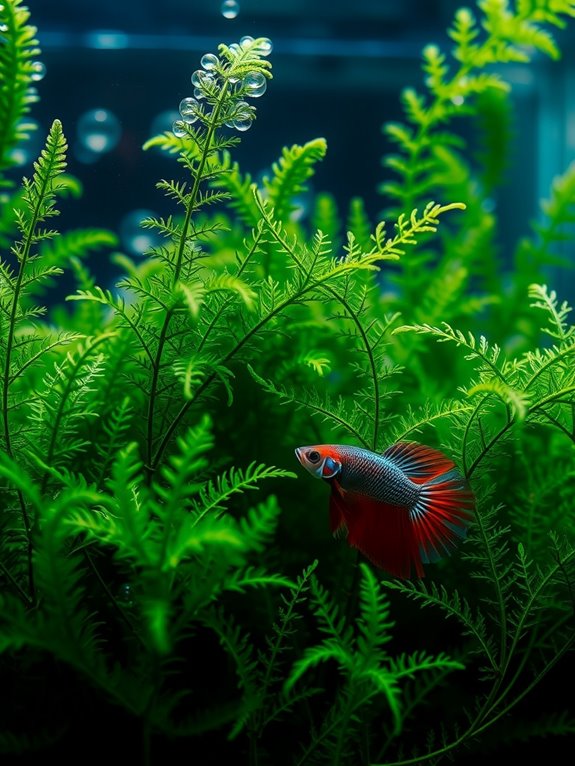
Water Sprite grows really fast and fills your tank with thick plants. This gives your betta lots of places to hide and rest during the day. As the plant grows, it soaks up extra nitrogen and waste from the water. This keeps your tank cleaner and healthier for your fish.
If you see the plant’s growth slow down, I dose mine with Easy Green fertilizer. This liquid fertilizer helps the plant stay full and keep growing strong. You just add it to the water according to the bottle’s directions, and the plant bounces back quickly.
Fast Growth And Coverage
I like Water Sprite because it grows fast and gives my betta immediate cover. I can use it floating or planted, and either way my tank changes quickly. Within weeks I see real results.
I plant it in bunches to create dense areas where my betta patrols and feels secure. The plant also absorbs nitrates, which helps keep my water clean without extra work on my part.
Here’s what I need to remember: I’ll need to prune it regularly. I trim my Water Sprite every two weeks to prevent it from getting too thick and blocking water flow or light to lower plants. With regular maintenance, my betta gets the jungle home he wants.
Nutrient Absorption And Waste Management
Why does my betta tank stay cleaner when I’ve got Water Sprite growing in there? The answer is nutrient absorption. Water Sprite’s dense canopy acts like a living filter. It pulls nitrates and waste directly from your water. Those nutrients would otherwise feed algae blooms. Instead, the plant uses them for growth.
Here’s how it works. Your betta produces waste that breaks down into nitrates (a compound fish create naturally). Water Sprite absorbs these nitrates before they become problems. Regular pruning keeps this system working smoothly. When I trim back the plant, I’m actually removing nutrients from the tank entirely.
I’m working with nature instead of against it. My tank stays healthier. My betta stays happier. That’s the whole point.
Floating Plants: Create Surface Shade and Resting Spots
Ever notice how bettas seem to relax more when they’ve got a shady spot to hang out? I use floating plants on the water’s surface to give my betta that exact environment. Plants like Dwarf Water Lettuce develop long hanging roots that create a nice labyrinth for swimming. Red Root Floaters spread across the surface with roots dangling downward, which adds some visual interest too.
I maintain about 50% open surface area for gas exchange so my fish gets the oxygen it needs. This means I’m not covering the whole tank with plants. The floating plants also absorb nitrates, which keeps the water clean. I prune them regularly so they don’t take over the tank.
The result is a comfortable habitat where my betta can rest under leafy cover and swim through the water column below.
Sword Plants: Large Centerpiece Plants With Broad Leaves
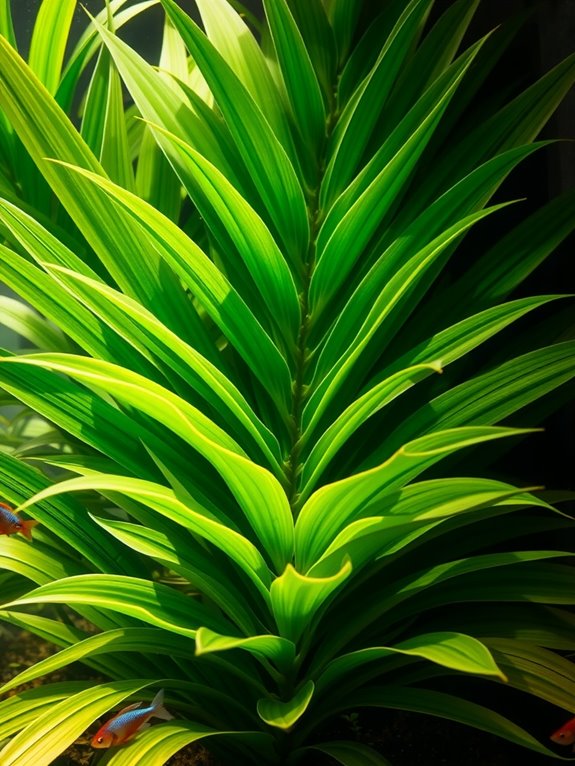
Floating plants shade your betta’s upper water column, but sword plants like Amazon Sword and Red Flame Sword work differently. I use these tall centerpieces to anchor my aquascape and give my betta resting and hiding spots with their broad leaves. I plant them in nutrient-rich substrate or add root tabs every month so they grow strong roots and healthy foliage.
What I find interesting is watching them develop long flowering spikes. These spikes add vertical structure to my setup and make the tank feel more dynamic. When my sword plants get large enough, they naturally produce plantlets—little shoots that grow from the main plant. I can cut these plantlets and share them with friends or use them to stock another tank.
Sword plants fit into my regular betta care routine without much fuss. They become focal points in my aquascape that I’m proud to show off.
Vallisneria: Tall Grass-Like Background for Tank Depth
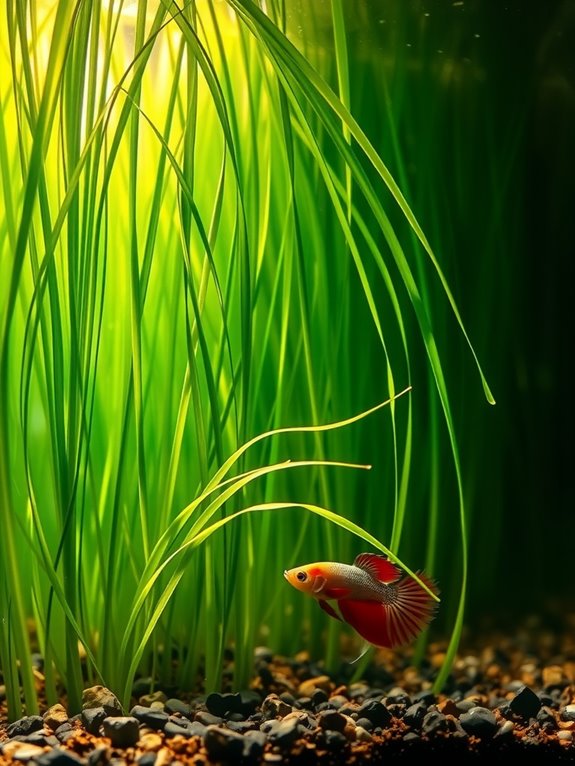
How do I create instant depth in a betta tank? I use Vallisneria, a tall grass-like background plant that fills shallow tanks with layers. This hardy plant adapts to most conditions, so it’s forgiving even for beginners like me.
Vallisneria spreads via runners, which means it produces new baby plants every few days. I get rapid fill without any extra effort. Here’s what I like about it:
- Dense vertical structure that frames my betta’s swimming space
- Natural line-of-sight barriers that reduce stress for my fish
- Thick forest appearance that balances mid- and foreground plants
I plant Vallisneria in the back rows where it reaches full height. The long blades create the tank depth I want. This background plant delivers serious impact with minimal maintenance, so it’s my go-to choice for betta tanks.
Octopus Plant: Wispy Stems for Vertical Structure
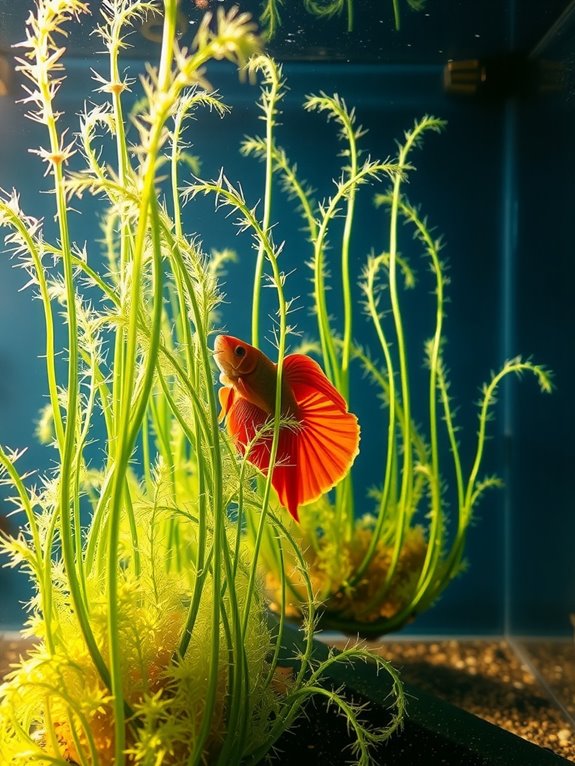
When I want height in my betta tank, the Octopus Plant does the job. Pogostemon stellatus ‘Octopus’ has wispy stems with nodes where long, tentacle-like leaves sprout out. I like how it creates vertical structure and movement in my aquascape.
The plant grows quickly, so it fills background space without much waiting. I can propagate it by trimming the top half and replanting the cut stem. New roots develop fast, which means I can expand my plant collection without spending extra money.
The flowing leaves give my betta shelter and add visual depth to the tank. I’d recommend it for larger tanks where I want that dramatic backdrop effect. My betta gets tall plants for resting spots and exploring.