
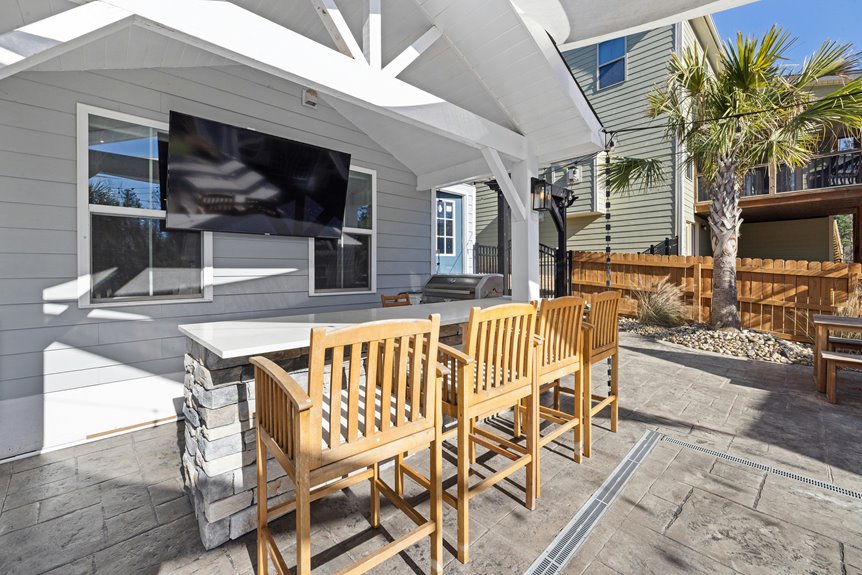
I’m going to help you figure out what patio size makes sense for your backyard. The right size depends on how you want to use the space and how many people you usually have over.
Small patios run between 49 and 168 square feet. I’d use this size if I wanted a cozy spot for two to four people to sit down for a meal. Think bistro-style dining with just a couple of chairs and a small table.
Medium patios fall in the 168 to 288 square foot range. This gives me room for six to eight people at a dining table plus some lounge chairs or a bench on the side. I can fit both dining and relaxing areas without feeling cramped.
Large patios measure 288 to 600 square feet. With this much space, I can set up three separate zones: one for cooking, one for eating, and one for sitting back and relaxing. I’m not bumping into things or tripping over furniture.
Here’s what I keep in mind when planning the layout. I budget about 25 to 30 square feet for each person I want to seat. I also leave 3 to 5 feet of clear space around all my furniture so people can walk without squeezing past chairs or tables. This makes the patio feel open and easy to move around in.
Right-Size Your Patio: The Guest-Count Formula
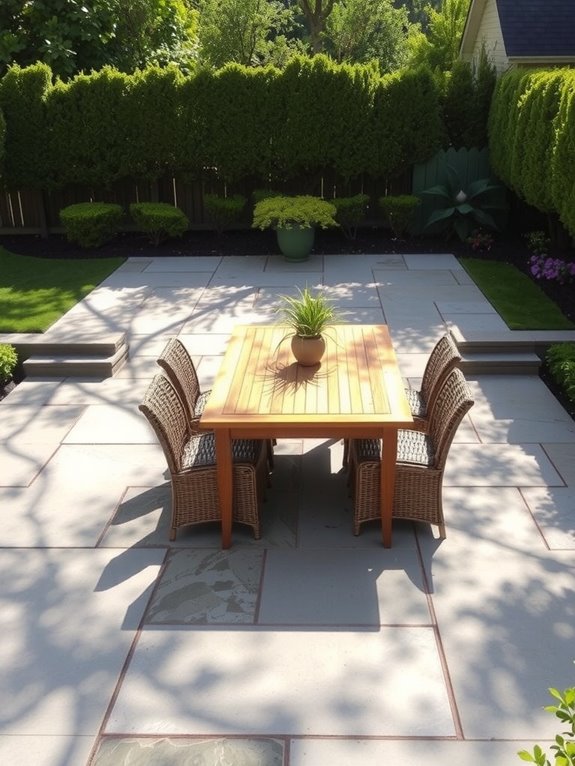
How big should your patio actually be? I use a simple guest-count formula to figure it out. I allocate about 25 to 30 square feet per guest. So if I’m hosting 15 people, I aim for roughly 375 square feet. For 20 guests, I plan 500 to 600 square feet instead.
This approach works because I need room for my seating area, dining space, and circulation clearance around furniture. Guests need 3 to 5 feet of clearance so chairs pull out easily and people can move around without bumping into things.
If I want a multi-zone patio with separate cooking, dining, and lounging areas, I go for 600 to 800 square feet. That size gives me good flow between zones and makes the whole space feel spacious and welcoming.
Small Patios (49–168 Sq Ft): Intimate Spaces and Bistro Dining
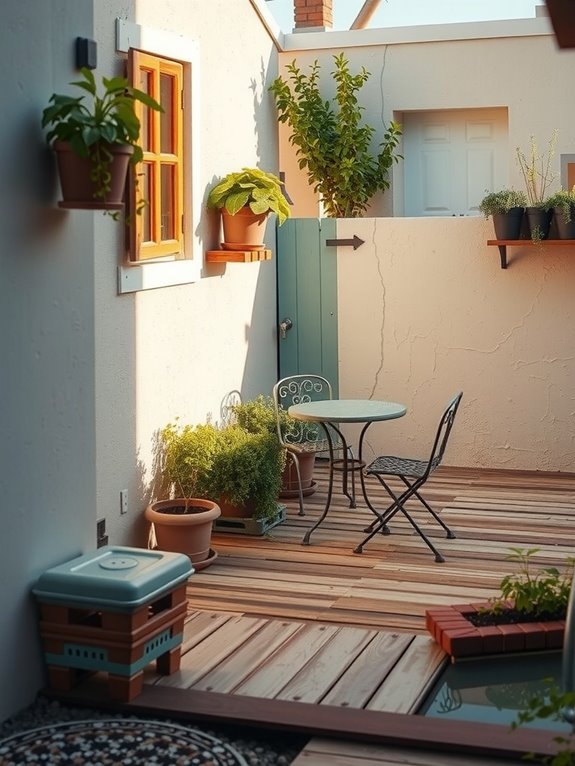
What if your backyard space is tight but you still want a dedicated patio? I can fit a bistro table with two chairs in a 49 sq ft area. This creates an inviting spot for patio dining without needing much room.
The key is choosing the right outdoor furniture for my backyard size. A 49 sq ft patio represents the minimum size for comfortable seating around a 6 ft table. When I expand to 168 sq ft, I gain flexibility. I can add more chairs or include a lounge area.
This approach works because I’m not trying to build sprawling decks. I’m creating cozy, intimate spaces where I’ll actually want to spend time with close friends and family. Even tight backyards can become functional gathering spots with smart space planning.
Medium Patios (168–288 Sq Ft): Family Entertaining and Flexible Layouts
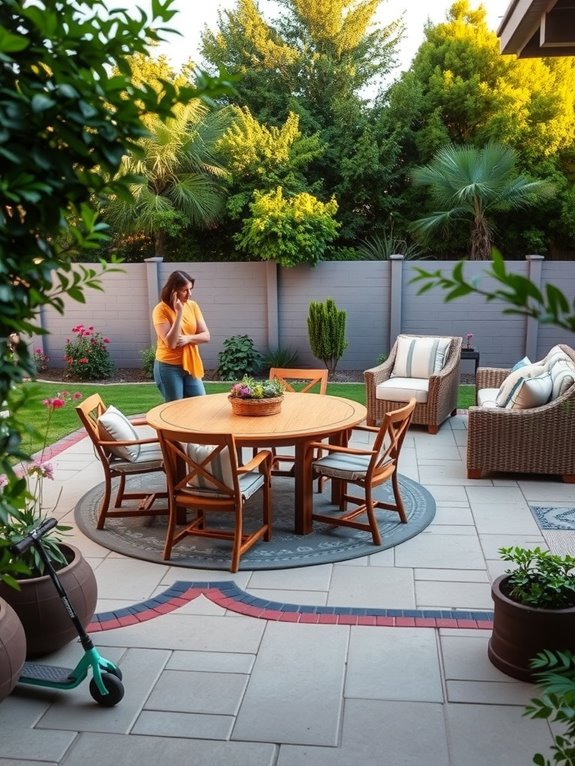
When I’m ready to move beyond an intimate bistro setup, a medium patio around 12×14 feet becomes my next step. This 168 square feet of space gives me real room to work with for family entertaining without feeling cramped.
A 12×14-foot patio fits a dining table with six to eight chairs. I can also add lounge elements like benches or outdoor seating that doesn’t block the flow of movement. Multiple furniture pieces work well when I arrange them with clear pathways so people can walk around easily.
The flexible layouts let me adjust based on what I’m doing. One day I might prioritize outdoor dining. The next day I might focus on conversation zones instead. Good circulation keeps everything moving smoothly between different areas.
The proximity to my house matters too. Being close to the house door creates natural connections between indoor and outdoor spaces. This 12×14-foot dimension hits that sweet spot for genuine versatility.
Large Patios (288–600 Sq Ft): Multi-Zone Living and Extended Gatherings
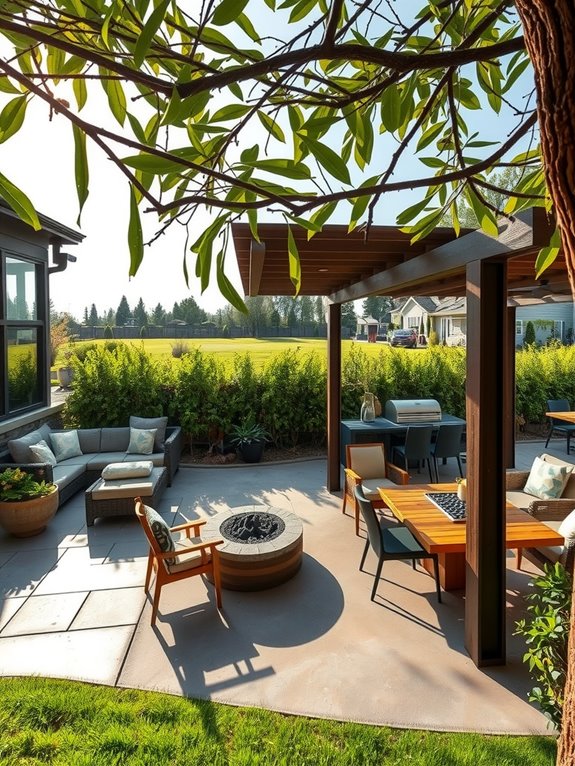
A large patio between 288 and 600 square feet gives me room to do things right. I can divide the space into separate zones that each have their own job. I’ll put a dining area in one spot for eating meals, a lounging area somewhere else for sitting and relaxing, and a grilling zone where I cook. When I set it up this way, my guests move naturally from one area to another without bumping into each other.
The key is building in circulation space. That’s the area where people walk and move around to socialize. I’m not limited to one single purpose anymore. Instead, I’m creating a real outdoor living room that serves multiple needs at the same time.
At this size, a Solace Louvered Roof works really well. It lets me expand how much area I can cover and gives me protection from sun and light rain. I place each zone thoughtfully so nothing feels cramped or random. A dining table might take up 60 square feet, while a seating area with a couch and chairs takes another 80 square feet. That leaves plenty of walking room and open space in between.
When I’m hosting bigger gatherings, everyone has somewhere to sit or stand comfortably. There’s no awkward crowding because the layout lets people spread out across the whole patio.
Patio Sizing Mistakes to Skip
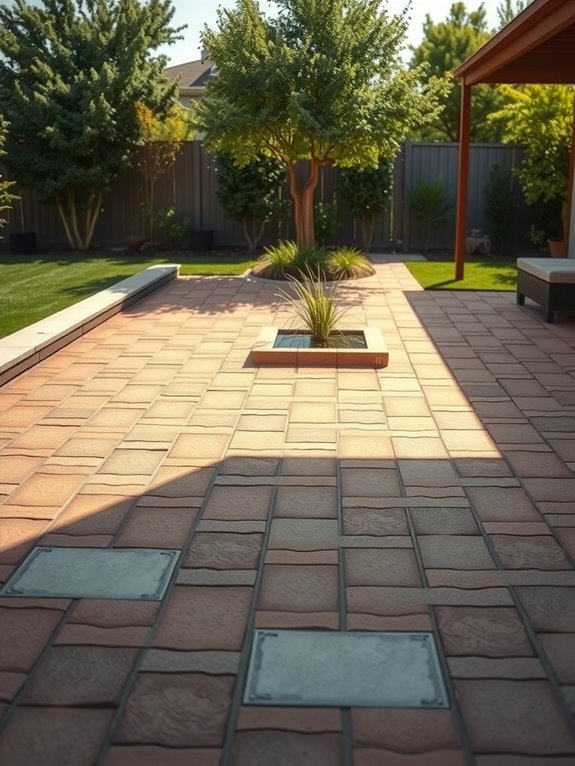
How do I know if I’m sizing my patio wrong? I often misjudge my space planning needs. Here’s what I should avoid:
- Ignoring the 25 to 30 square feet per person rule. I need this space so people can move around furniture and guests comfortably.
- Underestimating how many people I can entertain. A 500 to 700 square foot patio handles 20 people well. Anything smaller feels cramped.
- Forgetting movement clearance when I place furniture. I can’t squeeze a 48-inch round table into a tight patio without room for people to walk around it.
When I skip proper space planning, I create patios that feel crowded. My outdoor kitchen might not have enough room to work in. My seating areas might feel too close together. Smart patio sizing means I’ve thought about my guests’ comfort first, before I buy anything or break ground on the project.