I’ve found that picking the right climbing vine for my trellis comes down to a few key factors. Honeysuckle, clematis, climbing hydrangea, English ivy, coral honeysuckle, and passionflower all work well on trellises. The main thing is matching the plant to my specific conditions.
Light matters a lot when I’m making my choice. Honeysuckle does best in full sun, which means at least six hours of direct sunlight each day. Climbing hydrangea, on the other hand, prefers partial shade. I need to look at my trellis location before I pick my vine.
I also think about how tall my vine will get. If I have a 6-foot trellis, I want to pick a vine that grows 6 to 10 feet tall. This size range fits nicely without overwhelming the structure or leaving too much empty space.
Each vine needs different amounts of care once it’s established. Honeysuckle requires pruning once a year to keep it in shape. Clematis needs more frequent attention throughout the growing season. I pick the plant based on how much time I can spend maintaining it.
What Light Does Your Trellis Get?
Before I pick my climbing plants, I need to figure out how much sun my trellis actually gets. I’ll measure where I’m placing it and watch throughout the day to see the sunlight pattern.
Full sun means 6 or more hours of direct sunlight. Partial sun falls in the middle at 4 to 6 hours. Partial shade gets 2 hours or less of direct light.
Full sun requires 6+ hours of direct sunlight, partial sun needs 4-6 hours, and partial shade thrives with 2 hours or less.
Here’s what matters—afternoon sun is stronger than morning sun. It can burn leaves and prevent flowers from blooming well. If I can position my trellis where it gets gentle morning light instead, I’m starting with better conditions.
Once I know my sun exposure, I can pick the right vines. Full sun spots need sun-loving climbers like honeysuckle or bougainvillea. Partial shade areas work better with climbing hydrangea. Matching plants to the light they’ll actually get sets up my whole project to succeed.
Pick the Right Trellis Height
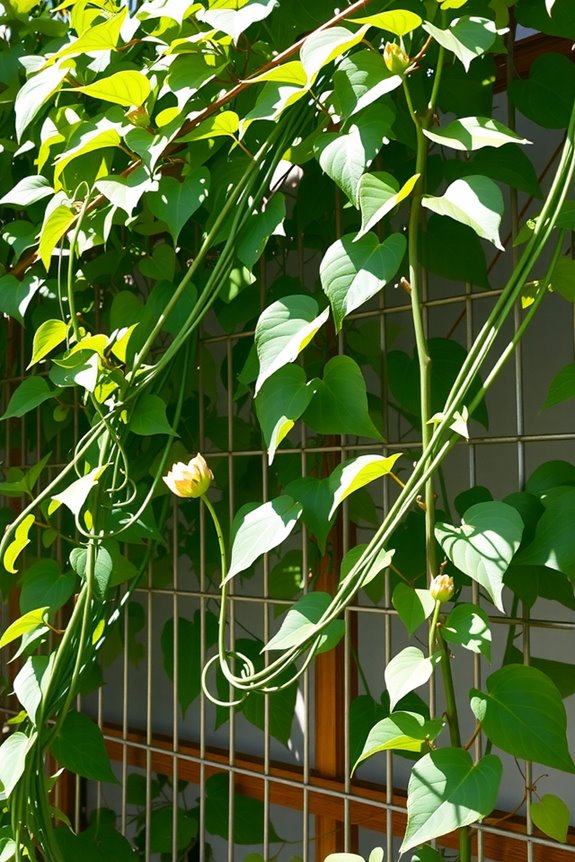
Now that I’ve picked a vine that loves the light my trellis gets, I need to make sure the structure itself is tall enough to support it. I check the vine’s mature growth by doing a quick search online. If my vine typically grows 6–10 feet tall, I’ll grab a 6-foot trellis to prevent overgrowth and keep maintenance manageable.
For smaller spaces, I choose compact vines like Clematis or cardinal climber since these handle pruning well. Heavier vines demand sturdy structures. I skip small round metal trellises because they’ll buckle under weight. A wooden trellis or sturdy metal frame works better for dense vines.
If my vine exceeds trellis height, I use pruning to control it or let growth spill gracefully over the top. Matching trellis height to mature growth prevents problems later on.
Honeysuckle: The Easiest Vine to Grow
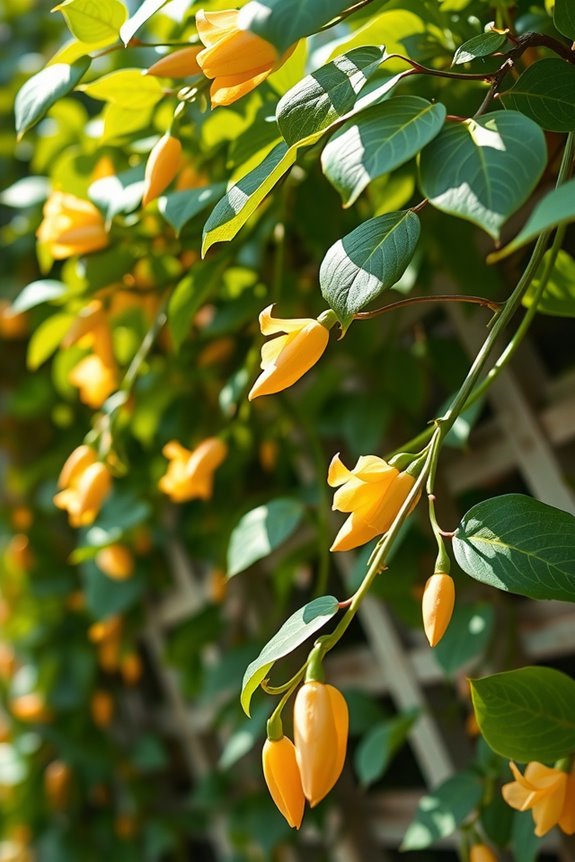
Why struggle with finicky vines when honeysuckle does most of the work for you? I’ve found that honeysuckle is an easy-climbing option that requires minimal training to get started. This flowering vine grows steadily with very little help from me.
The tubular flowers attract hummingbirds and butterflies, which means my garden becomes a space where wildlife shows up naturally. I can place honeysuckle in full sun or partial shade depending on where my trellis is located. Regular pruning keeps the vine neat and prevents tangled growth as it establishes itself.
Here’s the best part: honeysuckle lets me sit back and enjoy the show. I’m not constantly fussing with it or fighting stubborn growth patterns. If I want a reliable flowering vine that doesn’t demand much attention, honeysuckle delivers exactly what I need.
Clematis: Stunning Blooms for Year-Round Interest
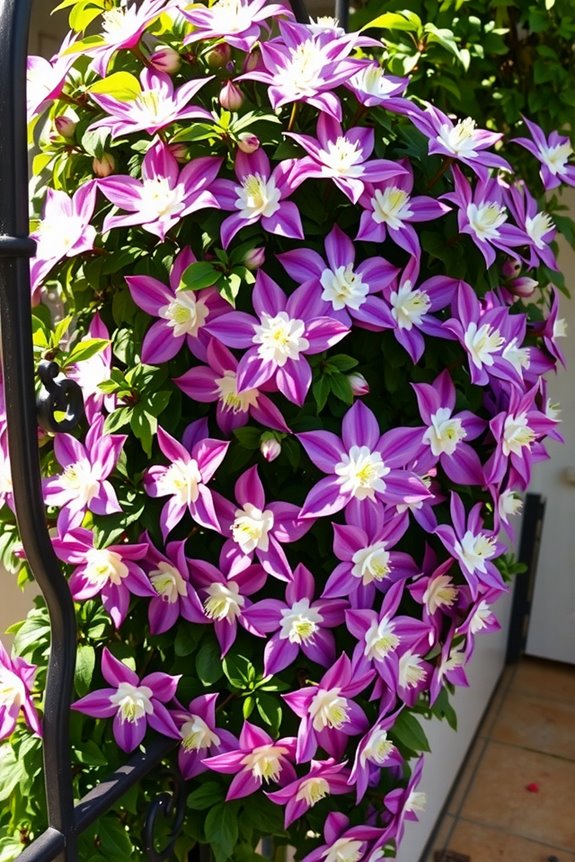
If honeysuckle sounds too laid-back for your garden style, clematis brings a different energy to your trellis. I’m talking vibrant blooms in multiple colors that cover your vertical space.
Here’s what makes clematis work well for me as a gardener:
Clematis works beautifully for gardeners who want multiple bloom times, natural climbing ability, and disease-resistant plants with minimal fuss.
- Multiple bloom times keep flowers coming from spring through fall
- Leaf petioles (the small stems connecting leaves to branches) twist naturally around supports, so I just need proper trellising
- Shaded roots and good air circulation prevent disease and keep plants healthy
- Regular pruning after flowering prevents tangled growth and encourages robust blooms
I deadhead spent flowers and mulch around the base with 2-3 inches of organic mulch. These climbing plants really shine on arbors and trellises. With the right care, clematis covers unsightly structures while delivering visual interest throughout the year.
Climbing Hydrangea: Best Choice for Part Shade
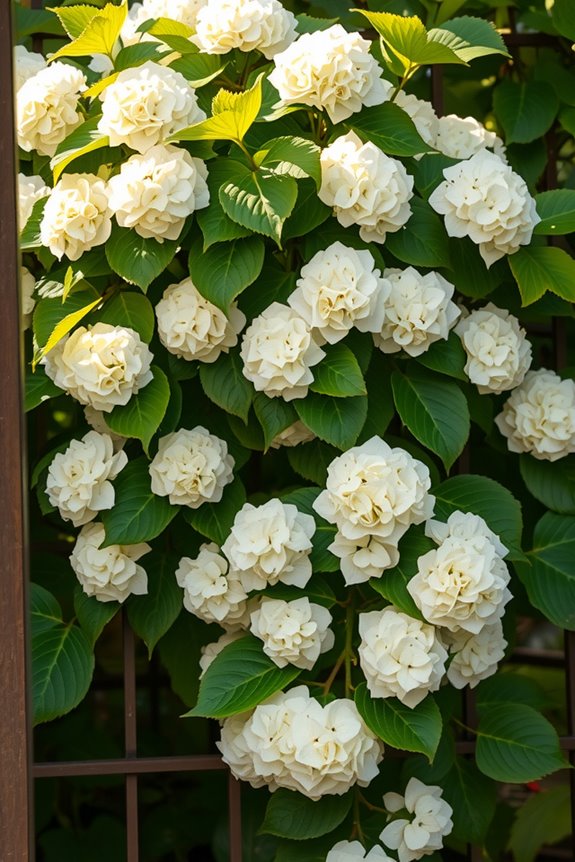
Patience pays off when I’m growing climbing hydrangea on a shaded trellis. I find this vine perfect for part shade areas where other climbers struggle. During establishment, it grows slowly, sometimes taking years to fill in densely. Once it settles in, I’ve got a low-maintenance plant for life.
The vine uses aerial rootlets to cling. That means my trellis needs to be sturdy enough for its eventual weight. I keep the roots shaded and water consistently during those early years. Come summer, delicate white lace-cap flowers appear above the foliage. These are flowers with a flat center surrounded by larger outer petals.
I recommend using a wooden or metal trellis that’s at least 6 feet tall and 3 feet wide. This gives the vine plenty of space to spread. I also space my hydrangea about 12 inches away from the trellis base so air can circulate around it.
During the establishment phase, I water my climbing hydrangea about 2 to 3 times per week. I check the soil by sticking my finger 2 inches down. If it feels dry, I water. Once the plant is established after 2 to 3 years, I reduce watering to once per week unless we have a dry spell.
My climbing hydrangea rewards my patience with years of blooms and steady growth on that vertical backdrop.
Wisteria: Breathtaking Spring Blooms (Plan for Weight)
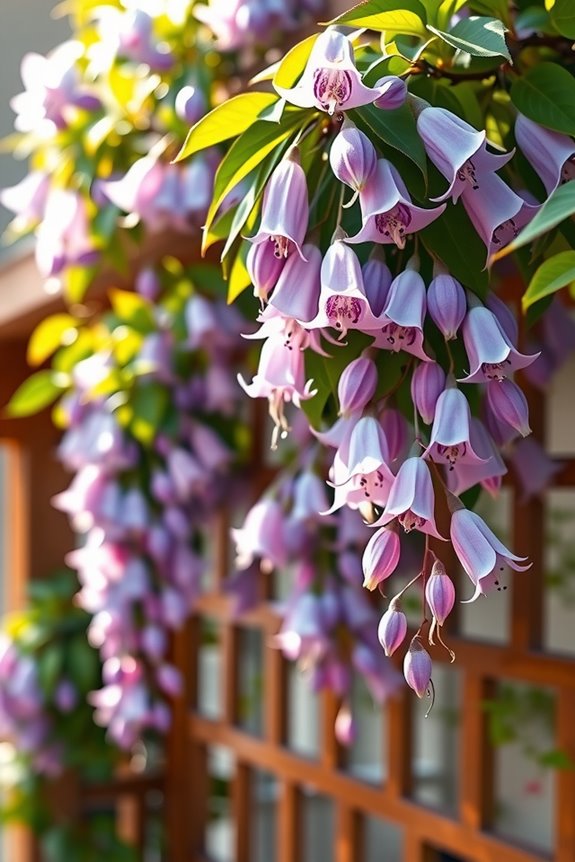
Every spring, wisteria vines cover a trellis with flowing purple, pink, or white flowers. The catch is that these woody vines get really heavy as they grow. A mature wisteria plant can weigh 100 pounds or more, so you need a sturdy support structure built to handle that weight.
Pick American wisteria varieties like ‘Amethyst Falls’ instead of Asian types. Asian wisteria spreads aggressively and can take over your yard. American wisteria grows more slowly and stays easier to control.
Your trellis needs real strength to support a mature plant. Use pressure-treated 4×4 wooden posts set 6 feet apart. Add 2×8 horizontal beams across the top and diagonal cross-bracing for extra stability. Metal arbors work too if they’re at least 1/4-inch thick steel.
Plant your wisteria in a spot that gets 6 to 8 hours of direct sun each day. More sun means more flowers. Space the plant about 2 feet away from the base of your trellis so the roots don’t compete with the support structure.
As your wisteria grows, the stems thicken and develop a trunk-like base over 3 to 5 years. This base can reach 6 inches in diameter, so plan for that size when you’re building your trellis.
Prune your wisteria twice a year to keep it in shape. Do a heavy pruning in late winter (February or March) by cutting back side shoots to 2 or 3 buds from the main stem. This encourages flower buds to form. Do a light summer pruning in July by trimming any shoots that stick out too far.
Regular pruning keeps the vine from getting wild and tangled. It also opens up the plant so air and light reach all the parts, which leads to more flowers and healthier growth.
Ivy: Evergreen Coverage and Winter Color
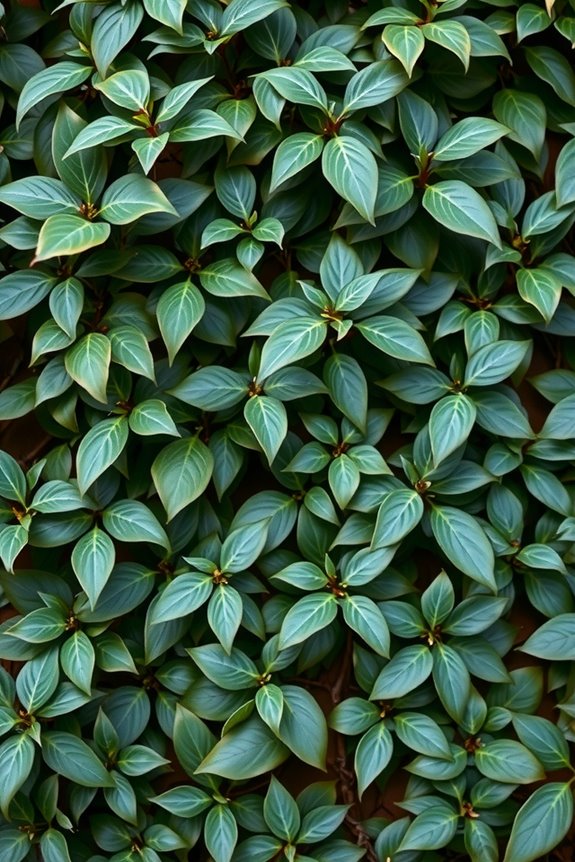
If you want a climber that stays green all year long, ivy does the job. It keeps its glossy leaves through winter when other vines lose theirs. I like that it gets going pretty fast and becomes tough once it’s settled in. You don’t need to baby it along while it establishes itself. The thick foliage fills in your trellis with solid coverage, so you get that full, finished look without waiting months for it to catch up.
Year-Round Foliage Beauty
Your garden doesn’t have to look bare once fall hits. I’ve found that English Ivy keeps my trellis and walls looking green all year long. This evergreen vine holds onto its glossy leaves even through winter when most other plants go dormant.
Here’s what I get from using it:
- Dense foliage gives my trellis constant visual interest
- Aerial roots (the tiny root-like structures) grip surfaces without causing damage
- The plant provides winter structure when climbing plants around it go to sleep
- Its layered texture works well next to flowering plants I add in spring
I do need to prune my English Ivy a couple times a year to keep it from getting out of hand. The vine grows fast, so I cut it back in early spring and mid-summer. I check where it’s heading and trim any shoots heading toward windows or siding. The growth builds up gradually over months, but by winter my garden looks full and defined while everything else has faded away.
Establishment and Hardy Growth
I’ll be honest—it takes a few years before my English Ivy looks full and impressive on a trellis. These hardy vines need time to get established and develop that dense winter coverage I’m after. But the wait pays off.
| Year | Growth Stage | Coverage Level |
|---|---|---|
| 1-2 | Initial rooting | Sparse and thin |
| 3-4 | Establishment phase | Moderate density |
| 5+ | Mature form | Full and lush |
Once my English Ivy takes off, I get consistent green year-round. The aerial roots—those small rootlets that grip onto surfaces—help the vines climb upward on the trellis. I’ll need to trim it regularly to keep it under control, but that’s part of the process. After a few years of regular maintenance, my trellis will have the full coverage I wanted.
Native Vines: Great for Trellises + Local Pollinators
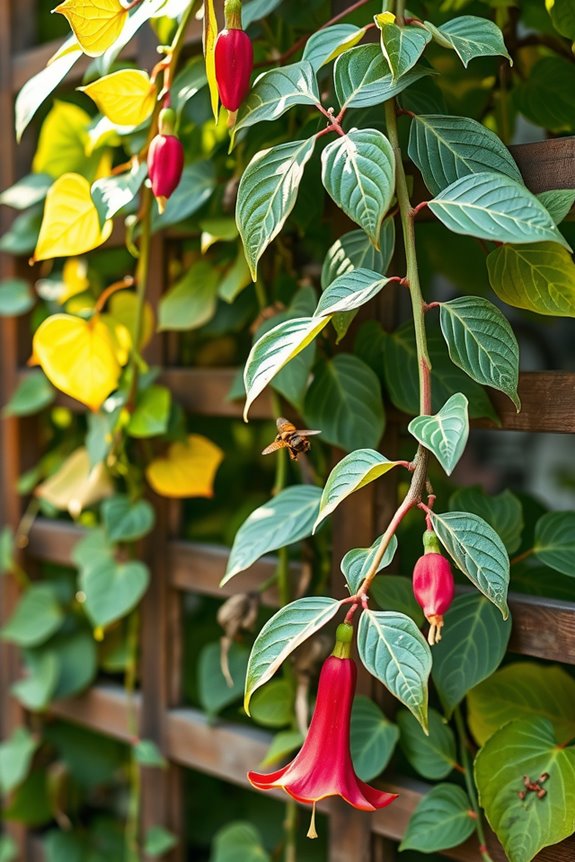
If you’re looking to support local pollinators while beautifying your trellis, native vines are your best bet. They’ve evolved alongside the butterflies, hummingbirds, and bees in your region, so they work well together naturally.
I’ll walk you through some top native options that thrive in different light conditions. You’ll learn how to pick the right one for your specific area based on how much sun or shade your trellis gets. These plants offer real benefits—year-round coverage, fragrant blooms, and a habitat that helps your local ecosystem thrive.
Native Species For Pollinators
Why settle for a trellis that just looks pretty when you can grow one that feeds hummingbirds and butterflies too?
I’ve found that native vines work really well for this. When I plant native species on my trellises, the pollinators show up fast. These plants establish quickly and don’t need much maintenance once they’re settled in.
Here are the vines I’ve had success with:
- Crossvine has tubular orange-red flowers that bloom year-round. Hummingbirds visit constantly.
- Coral Honeysuckle stays green all year and produces red blooms. Hummingbirds love it.
- Passionflower attracts Gulf Fritillary and Zebra Longwing butterflies. It also makes fruit you can eat.
- Climbing Aster grows purple flowers in the fall. Pollinators flock to it when the soil stays moist.
When I plant native species, I’m not just decorating my yard. I’m building an ecosystem that supports the insects and birds I want around. My garden becomes a sanctuary for these creatures.
Regional Vine Selection Guide
Now that you’ve picked vines to attract pollinators, I need to choose the right native species for my specific region. I’m matching Crossvine, Coral Honeysuckle, and Passionflower to my local conditions.
Crossvine thrives in full sun to partial shade and handles drought once established. Coral Honeysuckle performs year-round in similar light conditions. Passionflower needs sunlit, well-drained spots and sturdy support because it grows vigorously. These native climbers bring real ecological benefits to my garden.
I’m checking my regional growing zones first. Then I’m matching each vine to my soil moisture and sun exposure. This matters because selecting vines that fit my specific conditions makes the difference between a trellis that works and one that struggles.
My trellis becomes a thriving habitat that supports local butterfly and hummingbird populations. It fits seamlessly into my landscape because I picked species that belong in my region.
Black-Eyed Susan Vine: Extended Blooms With Minimal Fuss
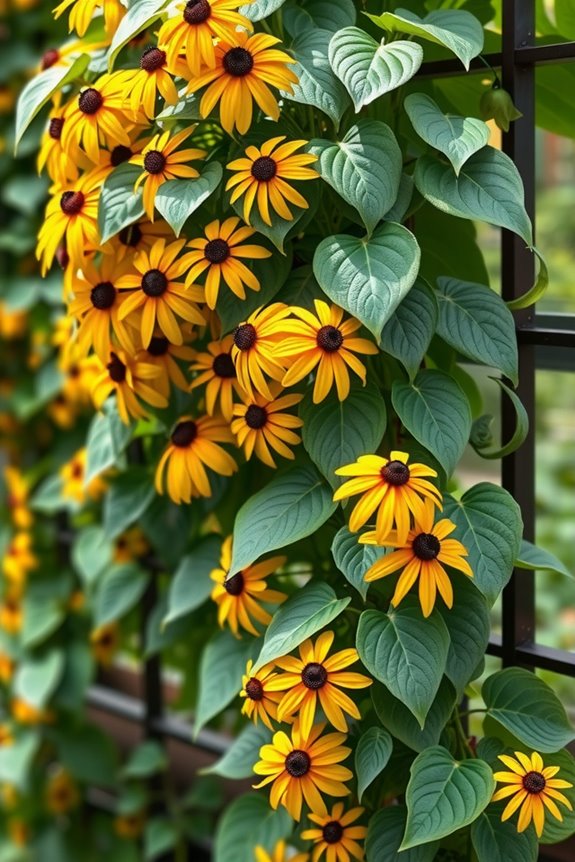
Looking for a climbing plant that grows fast and flowers all season long? The black-eyed susan vine is your answer. This rapid climber reaches 5-8 feet in just one season. I love its bright orange, yellow, or white flowers with dark centers.
Here’s what makes this low-maintenance option perfect for my trellis:
- Produces continuous bloom throughout the growing season
- Requires only initial guidance before twining stems climb readily
- Needs full sun and regular watering for best results
- Classified as an annual in zone 7
Setup is straightforward. I give the vine minimal support at first. Once established, it handles the climbing itself. I get extended bloom time with almost zero fuss.
Maintenance Reality: How Much Work Does Each Vine Require?
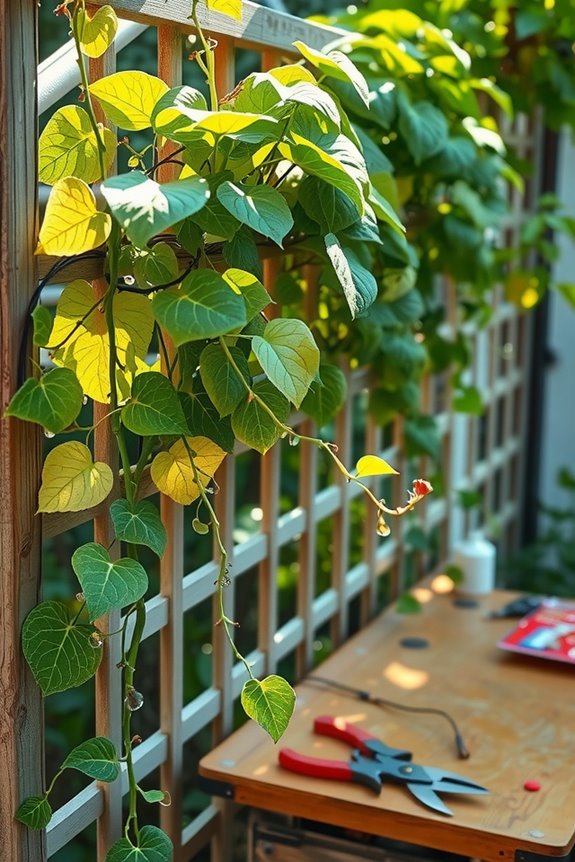
I’ll be honest—some vines demand way more attention than others. Climbing roses need regular tying, pruning, and air circulation to stay healthy and blooming. Honeysuckle and morning glory basically take care of themselves once they’re established.
The real question is whether I want to spend my weekends training canes and cutting back growth. Or I’d rather pick something that grows fast with minimal fuss. It depends on how much time I’m willing to put in. If I have a few hours each week, climbing roses work fine. If I barely have time to water, I should go with honeysuckle or morning glory instead.
Training and Pruning Demands
How much work you’ll actually put in depends on which vine you choose. I’ve got options ranging from low-maintenance to demanding, so let me break down what training and pruning really mean for your trellis project.
Climbing roses need regular tying and pruning to guide growth along your trellis structure. I tie the canes horizontally as they grow, which encourages flowering along the entire length instead of just at the top.
Honeysuckle requires minimal training but benefits from occasional pruning to keep it shaped. I prune mine once a year after flowering ends.
Clematis and wisteria demand structured training and frequent pruning due to their vigor. These vines grow fast and thick, so I guide them actively and cut them back multiple times during the growing season.
Morning glory grows rapidly with simple guiding but needs monitoring to prevent it from spreading where I don’t want it. I direct the stems weekly and deadhead spent flowers to slow its spread.
Native vines like coral honeysuckle strike a balance. They cover my trellis quickly without demanding constant attention. I’m looking at moderate pruning rather than intensive work. The time you choose to invest should match how much maintenance you’re willing to do each season.
Seasonal Care Requirements
When I’m picking a vine for my trellis, I need to think about what each season will demand. Morning Glory needs full sun and grows so fast that I’m pruning constantly through summer. Honeysuckle demands regular pruning year-round to stay manageable. Wisteria requires heavy pruning in late summer after flowering. Climbing roses need consistent pruning during the growing season to reach their 8–20 feet potential. Ivy’s evergreen nature means I’m managing it every season to prevent it from overtaking my trellis.
Most vines benefit from drought-tolerance once established, but they’ll need watering during dry spells. I’ve found that matching a vine’s seasonal demands to my available time makes the difference between a thriving trellis and an overwhelming project.