Raw linseed oil is your safest choice for garden beds since it’s 100% natural with zero additives that could leach into soil. Boiled linseed oil has chemicals added to speed up drying, so skip that for beds where you grow food.
Here’s how I do it. I sand the wood to 220 grit first, which gives the oil something to grip. Then I wipe away all the dust with a cloth. I apply thin coats following the grain direction of the wood. Each coat absorbs in 15–30 minutes, and I wipe off any excess with a clean cloth before applying the next one.
You’ll need to reapply every 1–2 years depending on your weather. If you get lots of rain or harsh sun, you’ll be doing it more often. If your climate is mild, you might stretch it to two years between applications.
Choose Your Oil Type: Raw vs. Boiled Linseed Oil
When I’m picking an oil to protect my garden bed wood, I have two main choices: raw linseed oil and boiled linseed oil. Raw linseed oil is 100% natural with no additives. It dries slowly but soaks deep into the wood, which means less risk of the oil leaching into my soil and plants. Boiled linseed oil dries much faster—it’ll be touch-dry in 12–18 hours—but it has added solvents and drying agents in it. These additives can leach metals into my soil.
For garden beds that touch soil or where I’m growing food, raw linseed oil is my better pick because it has fewer additives. Boiled oil works better for non-edible projects where I care more about quick drying than I do about safety.
Prepare and Apply Linseed Oil Safely
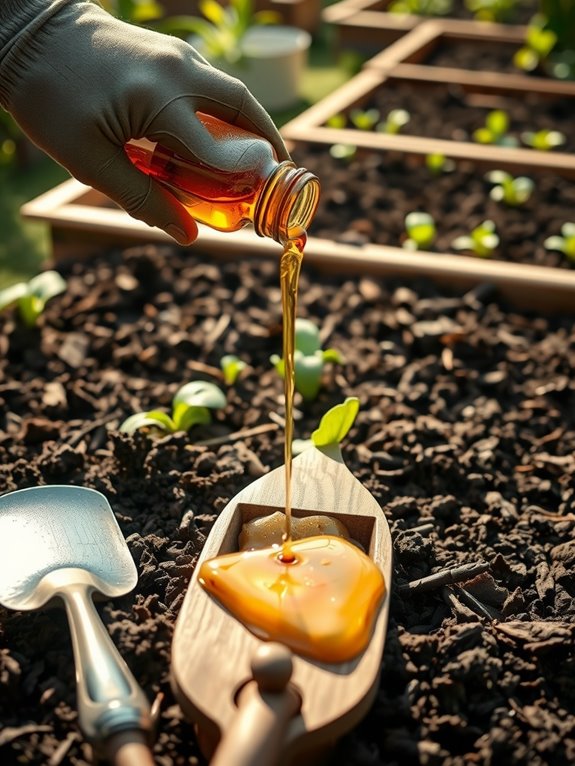
How you prep your wood really matters when you’re protecting a garden bed with linseed oil. I start by sanding the surface to 220 grit, which gives you smooth wood that the oil can soak into properly. Then I clean away all the dust and let everything dry completely before I do anything else.
Proper wood prep is essential—sand to 220 grit, remove dust, and ensure complete dryness before applying linseed oil.
When I apply the linseed oil, I use thin, even coats and go along the grain direction. Each coat takes about 15 to 30 minutes to absorb into the wood. After that, I wipe off any extra oil with a clean cloth so it doesn’t sit on the surface and get sticky.
I repeat this process several times to build up deep protection against moisture. Between coats, I wait until the previous coat is fully dry before adding more. This takes patience, but it’s worth it for results that actually last.
For disposal, I handle oily rags safely by soaking them in water first. Then I seal them in a metal container before I throw them away. This prevents the rags from creating a fire hazard since wet oil-soaked fabric can self-ignite if left in a pile.
How Often to Reapply Linseed Oil on Garden Beds
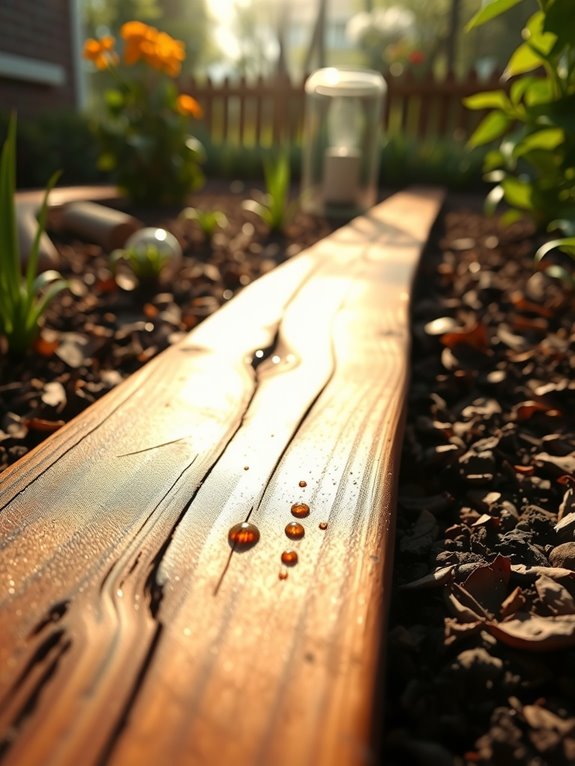
After you’ve built up those initial protective coats, you’ll need to think about maintenance. I typically reapply linseed oil every 1–2 years to keep my garden beds protected. If I live somewhere with heavy rainfall or intense sun, I might need to do it more often.
I inspect my beds regularly to figure out when it’s time for a fresh coat. I look for wood that’s dry, discolored, or rough to the touch. When I spot these signs, I know reapplication is needed.
I don’t retreat the entire surface every time. Instead, I spot-treat just the worn areas where the old coat has worn away. Before I apply new linseed oil, I make sure the previous coat is fully dried. This approach keeps my garden beds in good shape without overdoing the work.
Adding a Protective Liner (Optional Enhancement)
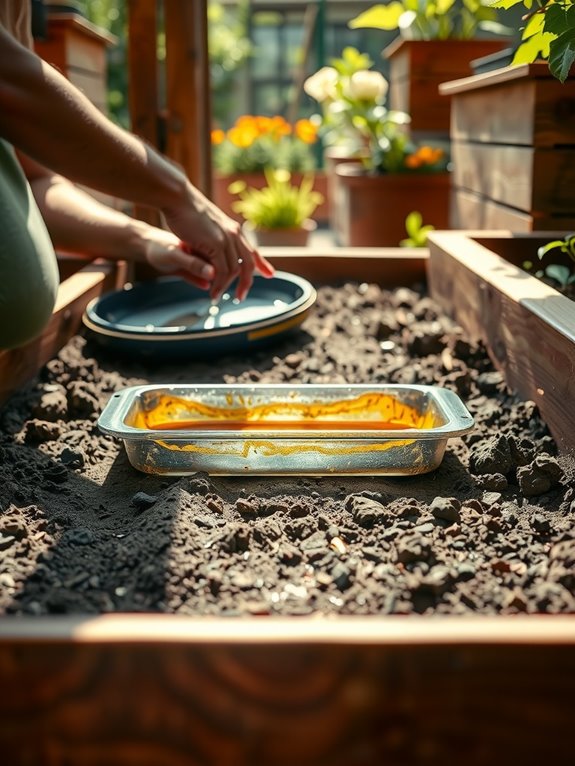
Beyond protecting the exterior with linseed oil, I can add an extra layer of defense on the inside of my garden bed. I’ll use a food-safe HDPE liner with proper food-safe certification. This keeps soil away from the treated wood underneath.
First, I cut the liner to fit my interior dimensions with a slight overlap. Then I press it flat against the wood and secure it above the soil line using staples or small tacks. I extend the liner 5–7 cm above the soil so it stays visible and protected.
For a finished look, I wrap the top edge with wood strips and fasten them with screws. When I pair boiled linseed oil on the exterior with this interior liner, I’m creating dual protection. This combo keeps my soil and plants uncontaminated while extending my timber bed’s lifespan.
Safe Handling of Linseed Oil–Soaked Rags
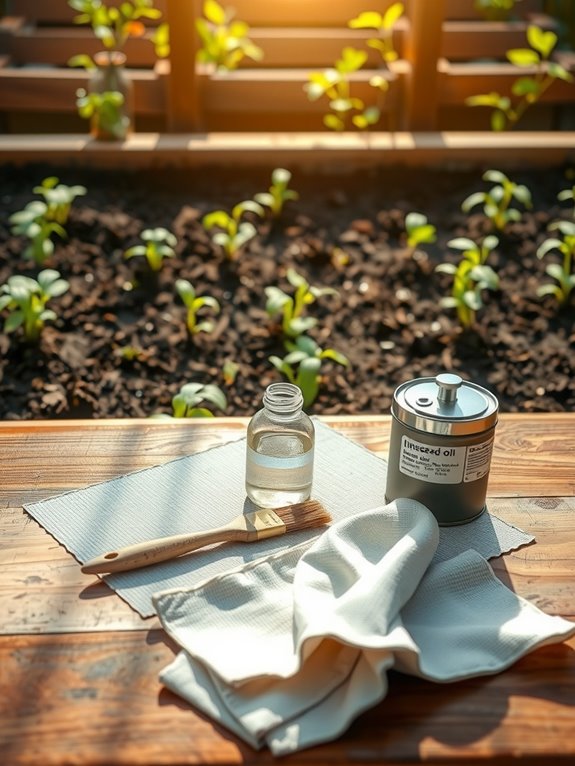
When I’m done applying linseed oil to my garden bed, I’ve got to handle those soaked rags carefully because they can actually catch fire on their own. This isn’t something to ignore.
Right after I use the rags, I soak them in water. Then I place them in a sealed metal container that’s also filled with water. This stops spontaneous combustion, which happens when oily rags heat up on their own. I keep this container away from heat and sunlight in my storage area.
Soak oily rags in water and seal in a metal container filled with water to prevent spontaneous combustion.
The fire risk comes from piling up oily rags or leaving them exposed to warmth. Keeping them wet and sealed stops this problem.
Once they’re ready to go, I dispose of them through controlled incineration or take them to an approved landfill. I check my local regulations first to make sure I’m following the right process. This keeps my garden and home safe.