Yes, galvanized steel beds are safe for your garden. The zinc coating protects the steel from rust for decades while leaching only tiny amounts into your soil—far below what would harm plants. Your soil pH matters most here. Neutral to alkaline soils (pH 6.5 to 8.0) limit how much zinc moves into the soil. Acidic soils increase the leaching slightly. If you want extra safety, I’d test your soil with affordable kits that cost $10–$30. You can also line the bed’s interior with food-safe plastic. If your bed is older than 60 years, test it before you grow edibles in it. The specifics of how you set up your bed can make a real difference for your particular garden.
What Galvanized Steel Is and Why Gardeners Choose It
So here’s what I’ve learned about galvanized steel raised beds. They’re made from steel sheets that get coated with zinc through a process called hot-dip galvanizing. What that means is the zinc bonds directly to the steel surface at a molecular level. I like them because they last a long time. The zinc coating acts like a shield that protects the steel underneath from rust and corrosion for many years. They also handle rot and pests better than wooden beds do, and I don’t have to maintain them much.
Now, I know some people worry about zinc leaching into the soil. It does leach a little bit over time, but we’re talking really small amounts. Zinc is actually something plants need in tiny quantities, so it acts as a micronutrient. As long as my soil pH is neutral to alkaline (meaning it’s not too acidic), there’s no health concern. That’s why I feel confident using galvanized steel for my garden beds. They’ll stick around for years without falling apart.
Does Zinc From Galvanized Steel Leach Into Your Soil?
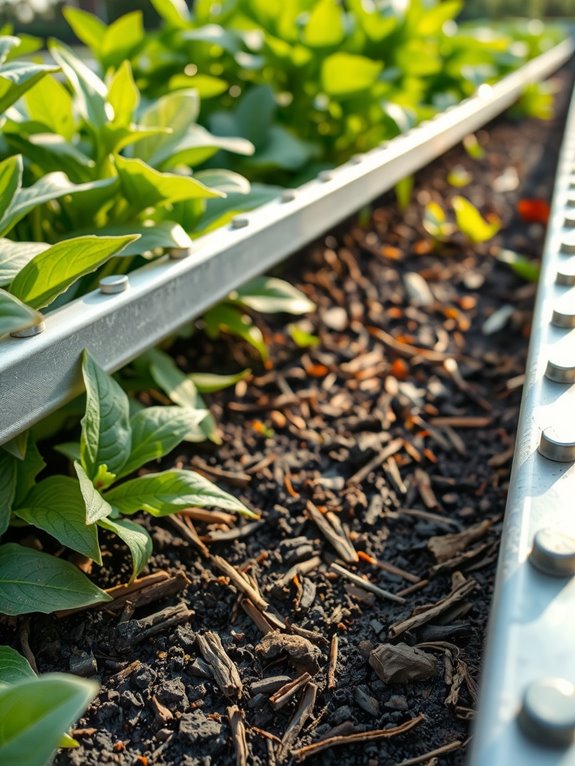
How much zinc actually leaks from your raised bed into the soil below? I’m talking minimal amounts under normal garden conditions. Zinc does leach from galvanized coatings, but it moves slowly and in tiny quantities. My soil’s pH matters most here. Neutral to alkaline soils keep zinc from moving much. More acidic soils increase leaching slightly, though it rarely reaches unsafe levels.
I’ve got built-in safety working in my favor. Most garden soils won’t accumulate dangerous zinc from galvanized beds. Actually, if my soil lacks zinc naturally, that small leaching helps my plants. Zinc supports enzyme function and growth regulation in plants. I’m looking at a situation where safety isn’t really the concern if I maintain my bed properly.
How Much Zinc Is Actually Harmful to Your Garden?
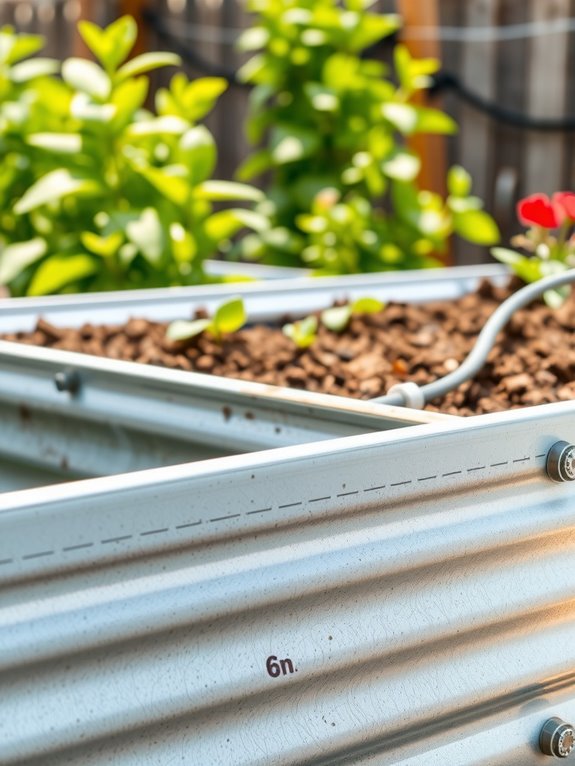
To figure out if galvanized beds are safe, I need to know what zinc levels actually damage plants and soil. Most plants only suffer harm when soil zinc goes above 300-400 parts per million (ppm). That’s way higher than what galvanized steel releases into the ground. My garden bed stays well below these toxic thresholds under normal conditions. The slow zinc leaching poses no real risk to my vegetables or soil health.
Zinc Toxicity Thresholds Plants
When’s the last time I worried about zinc poisoning my vegetables? Honestly, I don’t stress much about it. Plants only become toxic when soil zinc levels hit extreme highs. Those conditions rarely happen in home gardens. My galvanized beds leach zinc slowly and gradually over time.
| Soil pH | Zinc Availability | Risk Level |
|---|---|---|
| Acidic (below 6.5) | High uptake | Moderate |
| Neutral (6.5-7.5) | Moderate uptake | Low |
| Alkaline (above 7.5) | Low uptake | Very Low |
Small amounts of zinc leaching actually help my plants. They absorb what they need for enzyme function and growth. The zinc toxicity threshold in soil sits far above what I’d get from ordinary galvanized beds. I’m talking extreme conditions here. My neutral to alkaline garden soils naturally minimize zinc availability anyway. So I can relax about it.
Safe Leaching Rate Standards
So how much zinc actually leaches from your galvanized bed before it becomes a problem? I’m talking about really tiny amounts over many years. Under normal gardening conditions, zinc leaching happens so slowly that my soil zinc levels stay well within safe limits. I’d need extreme conditions—like highly acidic soil with a pH below 5.0 or constant flooding—to reach toxic levels that would harm my plants or me.
Most home gardens sit at a neutral to slightly acidic soil pH, which actually slows down zinc leaching quite a bit. I test my soil regularly to monitor zinc concentrations. A basic soil test kit costs between $10 and $30 and takes about a week for results. This simple step keeps me confident that my galvanized steel garden bed remains safe. The safe leaching rate from galvanized steel is naturally protective, so I can garden without worry.
How to Set Up Your Galvanized Steel Bed Safely
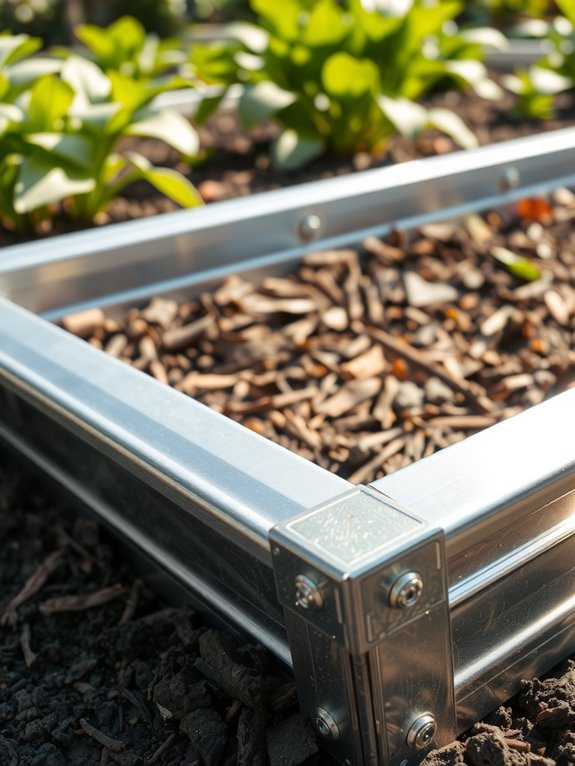
I’d start by testing your soil pH to hit that sweet spot between neutral and slightly alkaline (around 6.5 to 8.0). Pick up an affordable soil test kit from your local garden center, or send a sample to your extension office if you want exact numbers.
For an older bed or if you want extra protection, I line the interior with heavy-duty plastic or landscape fabric. Just cut drainage holes into it so water still drains through. This keeps the galvanized steel from touching soil directly, which helps it last longer.
Soil pH Testing Essentials
Why does soil pH matter so much when you’re using a galvanized steel bed? Here’s the thing: acidic soil below 6.0 triggers zinc leaching from your galvanized steel coating. Zinc leaching means the protective layer on your steel starts to wear away. Most vegetables thrive in neutral soil between 6.0 and 7.0 pH. Testing your soil pH is straightforward with a home kit. I monitor my levels regularly and adjust as needed through soil amendments like lime or sulfur. This protects both my coating integrity and plant health.
| pH Level | What It Means |
|---|---|
| Below 6.0 | Acidic, increases zinc leaching |
| 6.0-7.0 | Ideal neutral range |
| 7.0-7.5 | Slightly alkaline, safe |
| Above 7.5 | Too alkaline |
| Test frequency | Every 3-6 months |
I test my soil every three to six months using a basic pH test kit from the garden center. The kit comes with a small soil sample container and color-matching chart. I take soil from three different spots in my bed, mix them together, and follow the kit instructions. The color that develops tells me my current pH level. If I’m below 6.0, I add agricultural lime to raise the pH. If I’m above 7.5, I add soil sulfur to lower it. I wait two weeks after adding amendments and test again to check my progress.
Liner Installation Options
A galvanized steel bed works on its own, but I like to add a liner for extra protection. It creates a barrier between the soil and the metal coating. For beds taller than 14 inches, I line the sides and edges.
I use drainage-friendly liner material with lots of holes. This prevents waterlogging since water needs to drain out. I keep the bottom unlined so water escapes freely and roots get proper aeration.
I choose OMRI-listed or food-safe liners. These won’t emit toxins or break down under sun exposure. If I’m using salvaged galvanized steel panels, I add extra barrier layers. This stops metal leaching and keeps my garden safe for growing vegetables and herbs my family will eat.
Which Garden Conditions Demand Extra Precautions?
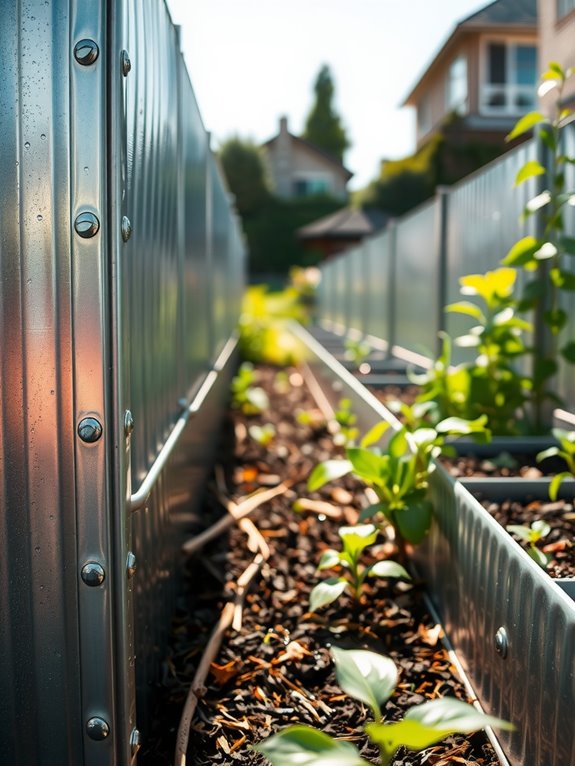
Not all garden situations need the same level of caution with galvanized steel beds. I need to pay closer attention when certain conditions exist in my growing space.
Acidic soil below pH 5.5 – I should test my soil first. Lower pH increases zinc leaching from galvanized steel. If my results show acidic conditions, I’ll want to consider lining or alternatives.
Older structures over 60 years – Aged galvanized steel poses higher contamination risks. I should perform soil testing near these beds before planting edibles.
High-safety organic settings – I might choose lining or composite materials for extra assurance. This removes any metal contact with soil entirely.
Testing my pH and evaluating my specific situation helps me grow with confidence.
Galvanized Steel vs. Other Garden Bed Materials
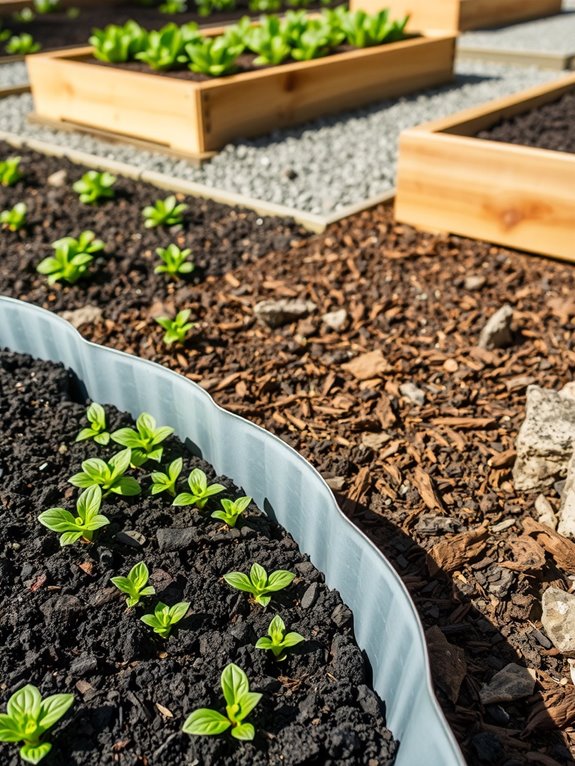
Once you’ve figured out your soil conditions and safety needs, you can compare galvanized steel to other popular bed materials. I find galvanized steel wins against wood because the zinc coating resists rot and termites without constant maintenance. Unlike plastic beds, the zinc coating gradually provides soil leaching of essential zinc—a micronutrient plants need. However, I verify safety certifications on any galvanized steel option to avoid heavy metals concerns. The corrosion resistance matters too, especially in wet climates where Zn-Al-Mg alloy coatings outperform traditional galvanized versions. Wood requires regular sealing and eventually rots. Plastic degrades under sunlight. Galvanized steel offers durability spanning decades with minimal upkeep, making it a solid choice for my growing space.