

Most climbing cucumbers need a trellis that’s 6 to 8 feet tall. I like to use sturdy materials like 2×4 wood or galvanized metal for the frame because they hold up well over time. I anchor my posts at least 24 inches deep in concrete so wind doesn’t knock everything over.
I space my cucumber plants 6 to 12 inches apart at the base of the trellis. When the vines are a few inches long, I start guiding them upward using soft ties at each node (that’s where the leaves branch out). I check all my connections regularly as the vines grow heavier because the weight adds up fast.
Different cucumber varieties need different heights, so I check what my specific seeds say before I build. Some compact types do fine at 4 feet, while bigger varieties really want that full 6 to 8 feet to spread out. The taller I go, the more I need to make sure my anchoring is solid. I use concrete footings for posts and I space them closer together if I’m building taller than 8 feet.
The Ideal Cucumber Trellis Height for Maximum Yield
How tall should your cucumber trellis be? I recommend building mine between 6 to 8 feet tall. This height gives me the best balance for getting lots of cucumbers without having to stretch too far when I’m picking them.
The height matters because taller trellises mean my cucumber vines get better sunlight and air can flow around them more easily. Both of these things help me grow more cucumbers and keep disease problems away. I’ve noticed that vine varieties like Armenian and Suyo Long need the full 6 to 8 feet, while dwarf types like Spacemaster do fine at shorter heights.
I can adjust the setup based on what works for my garden space. I can train vines sideways at 4 to 5 feet or let them climb vertically at 8 to 10 feet. The trick is finding the right height where my plants have room to grow but I can still reach the cucumbers easily.
Trellis Height for Different Cucumber Varieties and Garden Spaces
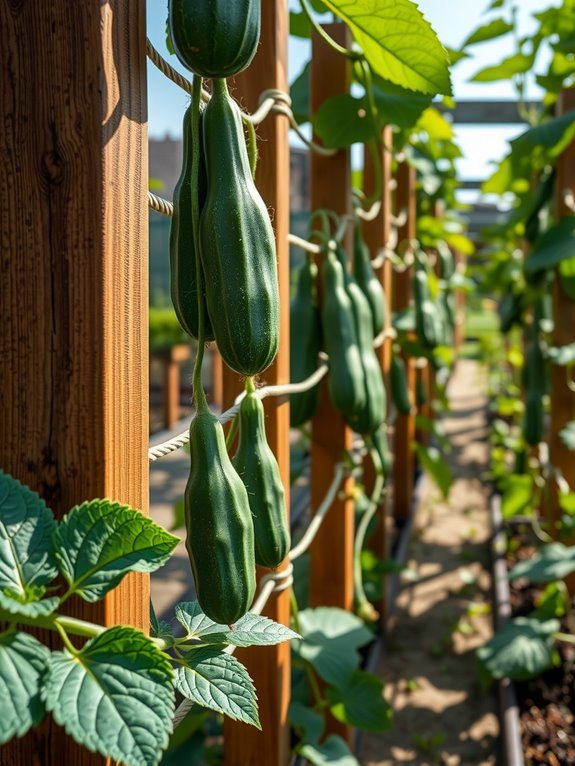
Not all cucumber varieties need the same trellis height, so I’ll match my plants to the right setup based on what I’m growing. Vine cucumbers like Armenian or English types grow tall and need 8 to 10 feet of vertical space. Bush or dwarf varieties stay more compact, so I can get by with 4 to 5 feet.
My garden space and how I plan to train the vines will help me decide the best height. I can grow them straight up a vertical trellis or guide them to the side depending on what works for my layout.
Standard Heights For Cucumbers
What’s the right height for your cucumber trellis? I recommend 6 to 8 feet for most climbing cucumbers. This range gives my vines plenty of room to grow upward while keeping harvest easy for me.
Tall varieties like Armenian and lemon cucumbers thrive at the higher end of this range. I’ve found that vining cucumbers need those extra feet to reach their full potential. If I’m working with compact varieties, I can go shorter—around 4 to 5 feet works fine with some side-training.
For arch or panel trellises, I aim for at least 5 to 6 feet tall. This height lets fruit hang freely without crowding. My trellis construction matters, so I pick sturdy materials that support my chosen height. I build smarter when I match my structure to my plant varieties.
Variety-Specific Height Requirements
Once I’ve settled on that 6 to 8 foot range, I narrow it down based on what I’m actually growing. Vine cucumbers need taller structures because they grow tall and climb a lot. Dwarf or bush varieties don’t climb as high, so I can use shorter trellises for those.
I match my trellis height to my specific variety. This keeps me from wasting space and makes my garden more efficient. I also get better access when I’m harvesting because the structure fits how my plants naturally grow.
Another benefit is that the right trellis height lets air flow better around my plants. Better airflow means fewer disease problems with my cucumbers.
My garden layout matters too. If I’m working with a tight space, I might use a 5-foot trellis instead of the full 8 feet. The key is picking a height that matches what I’m growing and fits my setup.
Space-Conscious Trellis Solutions
How do you maximize your garden when space is tight? I’ve found that shorter trellises work really well for vertical gardening in small areas. A 4–5 foot trellis fits perfectly in raised beds and small plots. I train the vines to grow laterally beyond the top, which gives me vertical gardening benefits without needing massive structures.
I use durable materials like galvanized steel or cedar for my trellises. These materials withstand wind and heavy fruit loads. The trellis height also improves airflow around my plants. Better air circulation means fewer diseases and healthier cucumbers.
When I’m growing multiple crops, I position these shorter trellises strategically to maximize sunlight. This setup lets me grow more food in less space without overcomplicating things.
Best Materials for Your Cucumber Trellis
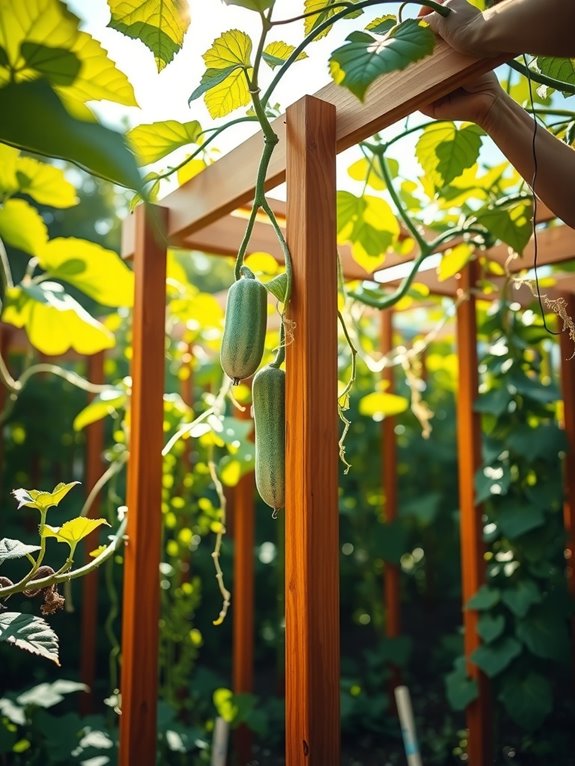
Picking the right material for your cucumber trellis really matters. I’ve found three options that work well for most gardeners.
Wood gives me that classic garden look, but I need to treat it with a wood preservative to stop rot. Metal like steel or aluminum is my go-to if I want something that lasts. These materials stay strong for years without much maintenance. Plastic or PVC works too, especially when I’m building an arch, panel, or A-frame design.
No matter what material I choose, I have to anchor it deep into the ground or a raised bed. I drive the support posts at least 12 inches into the soil or secure them to the bed frame with brackets. This keeps my trellis stable when the vines and heavy fruit start growing.
I check the stability regularly throughout the season. A loose trellis can collapse under the weight of a full crop. The right durable materials at the right height—usually 4 to 6 feet tall—keep my cucumber setup reliable.
How to Build a Durable Cucumber Trellis
Why rush into building without a solid plan? I’ll start by choosing materials like wood, metal, or coated PVC. These options last longer and handle cucumber vine weight better than cheaper alternatives.
Building a cucumber trellis requires choosing durable materials like wood, metal, or coated PVC to support heavy vine growth.
Next, I determine my trellis height based on the cucumber variety I’m growing. Vine types need 6 to 8 feet tall, though some gardeners go 8 to 10 feet for maximum space efficiency.
I secure the structure firmly to the ground using anchors or deep posts. This prevents the trellis from tipping over during wind. Before I plant anything, I check that everything’s level and stable.
I do regular stability checks throughout the growing season. A quick look every few weeks keeps my trellis reliable. When I build right from the start, I harvest cucumbers easily and successfully.
How to Secure Your Cucumber Trellis Against Wind and Weight
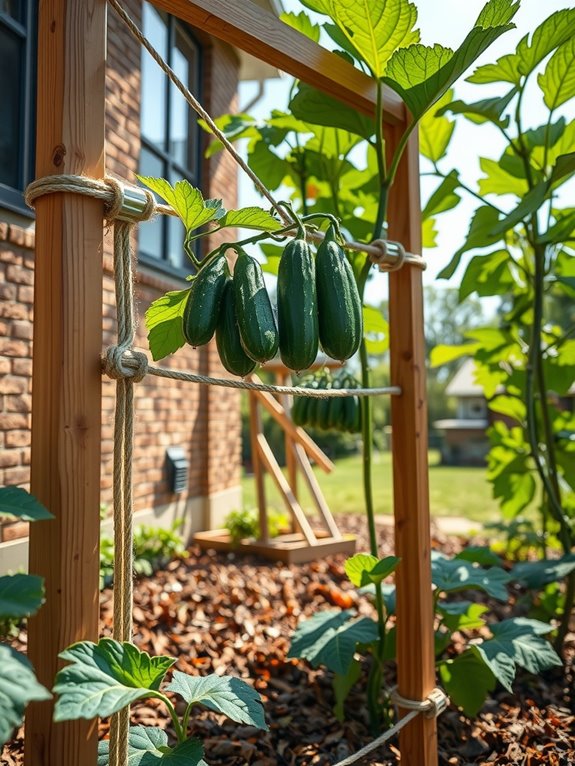
I’ve found that anchoring your trellis properly is what keeps your garden standing instead of getting flattened when strong winds hit. For tall trellises that are 8 to 10 feet high, I use multiple ground stakes or a fixed base to spread out the weight and prevent tipping.
As your cucumber vines get heavier over time, I check all the connections regularly and tighten the ties. This keeps the whole structure stable throughout the growing season. The key is inspecting everything before problems start, not after.
Anchoring Techniques For Stability
How you anchor your trellis really matters when wind picks up or your vines get heavy with fruit. I drive posts 1 foot deep into the ground and space them 3–5 feet apart. This gives me a solid foundation for the whole structure.
I use stakes or guy lines to keep things from tipping over. In windy areas, I add cross-bracing between the posts for extra support. I can also install ground anchors around the base if I need more holding power.
As my vines grow heavier, I check the trellis regularly to make sure it’s still stable. I tighten the zip ties and C-clips that hold any netting or panels in place. If wind is really a problem where I live, I reinforce everything with additional anchors. This keeps my trellis secure and my cucumber plants standing upright all season long.
Weight Distribution And Support
Once my posts are anchored deep in the ground, I need to think about how the weight of my vines and fruit spreads across the whole trellis. I’ll use sturdy materials like metal or treated wood because they handle the load without bending. I distribute that weight evenly across multiple posts or panels instead of loading everything on one side.
I set my trellis height at 6 to 8 feet for balanced growth and even weight distribution. I keep my posts about 1 foot deep in the ground to maintain stability. For wind resistance, I secure my frame to a solid structure like a fence or wall.
As my vines grow heavier through the season, I tighten my anchors regularly. This keeps everything standing strong and prevents shifting or sagging.
Training Cucumber Vines to Climb Your Trellis
When your cucumber vines are just a few inches long, I start guiding them toward the trellis. I use soft ties at each node to gently attach the vines without squeezing them. The ties stay loose so the plant can expand naturally as it grows.
Your vines have tendrils, which are the curly parts that naturally wrap around supports. I help them along by positioning the early growth toward the trellis. As new shoots appear, I adjust and tie them regularly to keep everything growing upward.
Training vines to climb keeps the fruit hanging above ground level. This improves air circulation around the leaves and fruit, which helps prevent disease. It also makes harvesting much easier since you’re not bending down to pick cucumbers off the ground.
I use a tall trellis—around 6 to 8 feet high—to prevent it from becoming top-heavy as the vines grow. At the base, I space my cucumber plants 6 to 12 inches apart. This spacing gives each vine enough room to climb the support structure without crowding its neighbors.
Common Mistakes to Avoid When Building Cucumber Trellises

I’ve learned the hard way that a solid trellis structure matters more than most people think. Even if your cucumber vines are growing well, a weak trellis will let you down when the fruit gets heavy or wind picks up.
The first thing I do is anchor everything deeply. I dig postholes at least 24 inches deep and set wooden posts or metal stakes in concrete. This keeps the whole structure from shifting when plants get loaded with fruit or bad weather hits. Shallow anchoring is the biggest mistake I see—gardeners think it’ll hold fine until it doesn’t.
Your trellis width is just as important as depth. I build mine at least 3 feet wide so I can move around to prune and pick cucumbers without reaching awkwardly or damaging vines. A narrow trellis makes harvesting frustrating and leaves you with blind spots where fruit hides.
Height depends on what you’re growing. Determinate varieties top out around 4 to 5 feet, while indeterminate types can climb 6 to 8 feet or more. Pick a height that fits your variety and make sure the structure can handle the weight at that size. A taller, thinner trellis needs more bracing than a shorter, wider one.
Materials matter too. I use sturdy wood like 2x4s or galvanized metal because they resist rot and rust. String or twine works for guiding vines, but the main frame needs real strength. Don’t skimp on the basic framework just to save money on materials.