
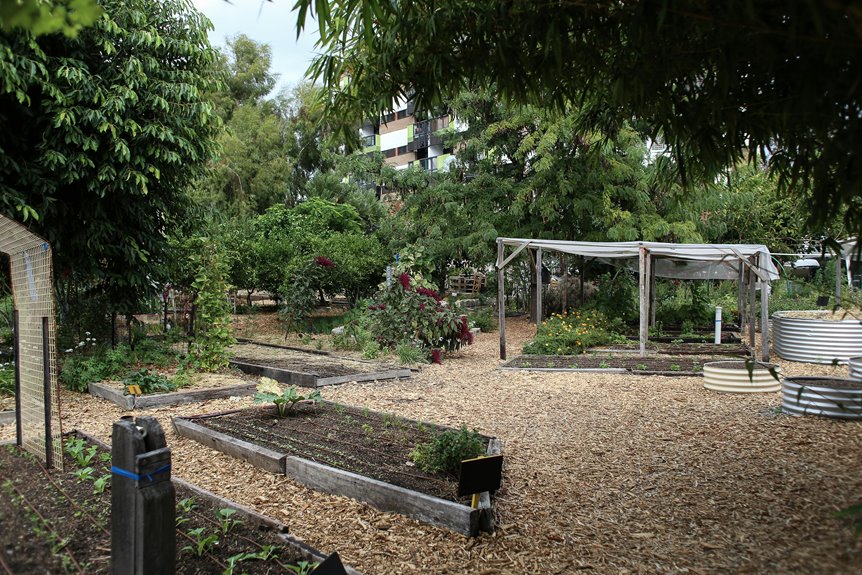
I space my rectangular beds 18–24 inches apart so I can reach the centers without stretching. This gap also keeps plants from creeping into my walkways.
L-shaped and U-shaped beds need more room—I go with 24–36 inches between them. The extra space gives better airflow around the plants and makes it easier to move around.
I keep my beds 12–24 inches away from fences. This distance reduces disease problems and lets sunlight reach the plants better. I also need 24–36 inches of clearance for wheelbarrows and hoses to move through without damaging anything.
In humid climates, I make the gaps wider. I’ll go up to 36 inches between beds since moisture breeds disease and wider spacing helps air circulate better. The right spacing makes my garden feel workable instead of cramped, and it keeps my plants healthier overall.
Spacing for Airflow, Accessibility, and Disease Prevention

How much space do you actually need between your garden beds? I recommend leaving 24–36 inches of space between beds. This width lets me move wheelbarrows through and turn around easily with tools. Wider gaps also keep plants from creeping into my paths and choking them off as seasons pass.
Good airflow prevents disease, and that’s where spacing really matters. When my beds sit too close together, moisture gets trapped between them. This creates the perfect environment for fungal problems like mildew. Those extra inches make a real difference in plant health.
I don’t squeeze my beds too tight. Narrow 12–18 inch gaps become impassable once plants fill out. I check my spacing regularly after setup to catch any issues early and give myself room to work.
Minimum Spacing: 18–24 Inches for Rectangular Beds
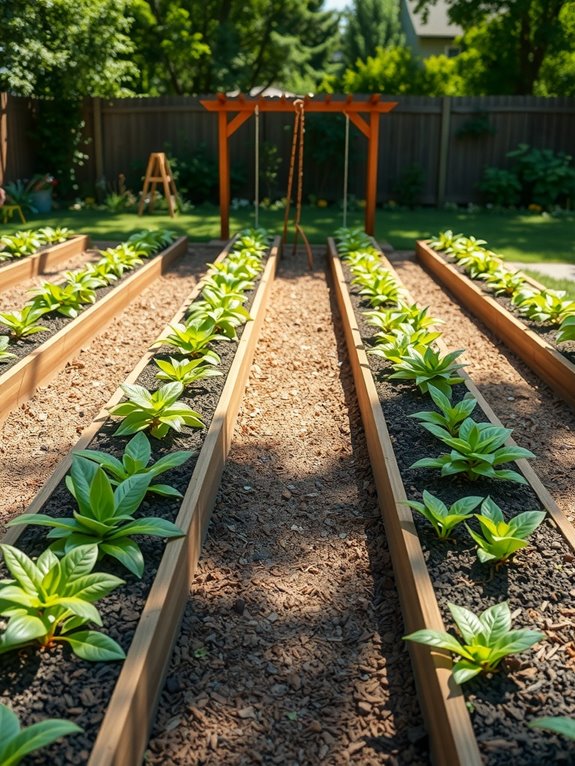
While wider spacing gives you room to work comfortably, I recommend leaving 18–24 inches between rectangular beds. This spacing hits the sweet spot for accessibility and maintenance.
Here’s why I stick with this measurement: it lets me reach the bed’s center from the edge without stretching too far. I can use my tools easily and move around without bumping into plants or structures. Narrower gaps make routine care harder. My shovel won’t have room to maneuver, and harvesting becomes frustrating when I’m cramped.
This 18–24 inch gap also prevents plants from creeping into my walkways. Cornell guidelines back this spacing standard. My garden becomes a workspace where I can actually accomplish tasks without struggling.
Special Bed Shapes: Why L and U Beds Need More Space
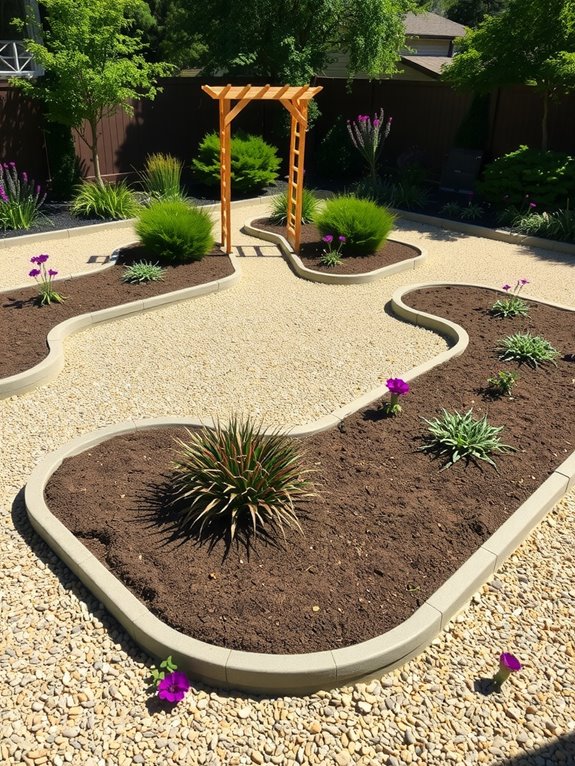
When I’m designing an L-shaped or U-shaped garden bed, I quickly find that the standard 18–24 inch spacing doesn’t work. I need 24–36 inches around these beds because the corners create real challenges. The inner corners need extra room so I can reach the center without stretching awkwardly, and the outer corners demand space for turning and moving equipment.
| Bed Shape | Recommended Spacing | Why It Matters |
|---|---|---|
| L-shaped beds | 24–36 inches | Inner and outer corners need access for easier maintenance |
| U-shaped beds | 24–36 inches | Central open area requires clearance for better reach to center |
| Rectangular beds | 18–24 inches | Straight edges simplify movement with standard spacing |
| Curved beds | 20–28 inches | Gentle curves need moderate space for flexible spacing |
This extra spacing prevents soil compaction in tight corners and keeps the pathway edges from getting damaged by foot traffic or equipment.
Distance From Fences: 12–24 Inches for Sunlight and Access
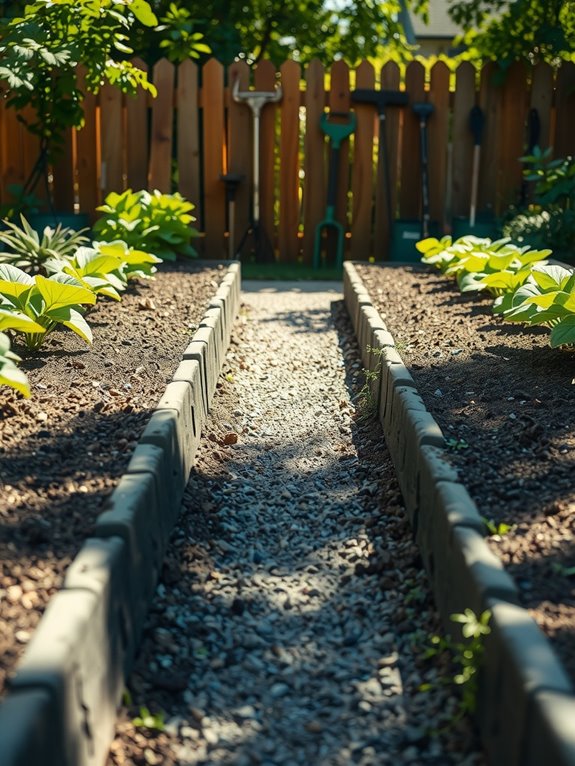
Why’s that gap between your garden bed and the fence so important?
I need proper spacing to keep my plants healthy. I’m going to leave 12–24 inches between my bed and fence. The minimum is 12–18 inches, but I prefer 18–24 inches so I can move around with my wheelbarrow and tools without squeezing through a tight space.
Fences block sunlight and stop air from moving freely around my plants. When that happens, moisture gets trapped and diseases start to spread. My plants also grow slower without enough light hitting them.
I’m putting landscape fabric between my wooden fence and bed. Wood can break down over time and leach chemicals into my soil, so the fabric acts as a barrier. This protects my plants from absorbing anything harmful.
I’m thinking ahead too. If I need to repair the fence or add more garden beds later, I’ll be glad I left that clear walking space instead of having to squeeze in or tear things up.
Tool Clearance: Why Wheelbarrows and Hoses Need 24–36 Inches
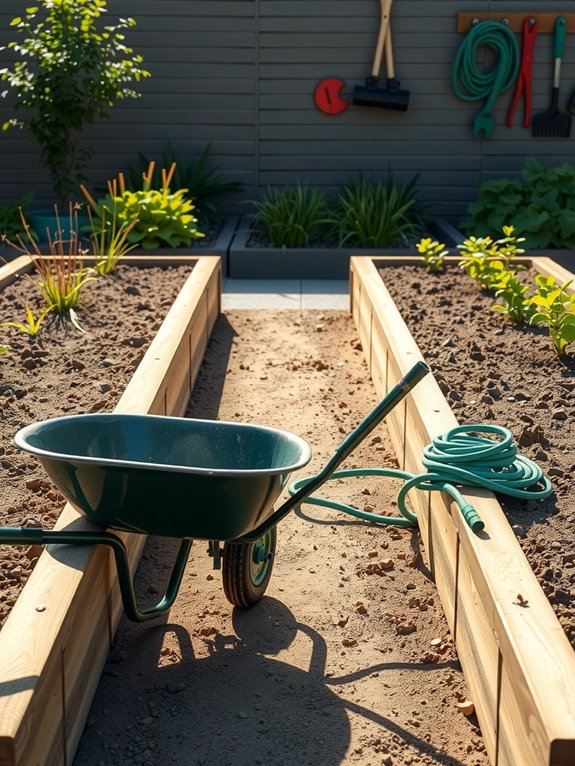
When you’re wheeling a loaded wheelbarrow through your garden, you’ll quickly realize that 18–24 inches feels tight and cramped. You need room to turn the wheelbarrow and position it alongside your beds without bumping plants or structures. The 24–36 inch range gives you enough space to maneuver smoothly and also run hoses without kinking them or getting them tangled around plants. Those extra inches matter when you’re moving soil, compost, or water through your garden beds on a regular basis.
Wheelbarrow Maneuverability and Access
Ever tried pushing a loaded wheelbarrow down a narrow garden path and gotten stuck? I’ve been there. That’s why spacing matters so much for wheelbarrow access. I need 24–36 inches between my beds to maneuver comfortably. Anything less than 18 inches and I’ll scrape my wheelbarrow sides and damage plants.
Here’s what I’m dealing with:
| Gap Size | Wheelbarrow Turns | Soil Compaction |
|---|---|---|
| Under 18″ | Difficult | High |
| 18–24″ | Possible | Moderate |
| 24–36″ | Easy | Low |
I should measure my wheelbarrow width first. Most standard wheelbarrows are about 26–30 inches wide. Then I add extra space for my turning radius. I need to account for how much room the wheelbarrow takes when I pivot it around corners or in tight spots. Wider gaps reduce compaction when I’m hauling heavy loads through my garden. I also get unobstructed access for planting, weeding, and harvesting. Smart spacing changes how I work in my garden.
Hose Routing and Irrigation Needs
How’d you like to drag a kinked hose around tight corners or trip over it while pushing a wheelbarrow through your garden. We’ve all been there, and it’s frustrating. That’s why I plan for proper hose routing and clearance between my beds.
I aim for 24–36 inches of space between my garden beds and pathways. This gap lets me maneuver my hose and wheelbarrow without snagging or stepping on my equipment. Narrower passages invite kinks and damage to my irrigation tools.
I consider my tool sizes carefully. My hose, sprinklers, and wheelbarrow all need room to move. I make sure I have continuous unobstructed access from all sides for watering and maintenance tasks.
This clearance makes a real difference in how I work. I move around my garden more efficiently. My equipment lasts longer because I’m not constantly bending it or rolling over it with heavy loads.
Spacing Trade-offs: Maximizing Plants vs. Comfortable Access
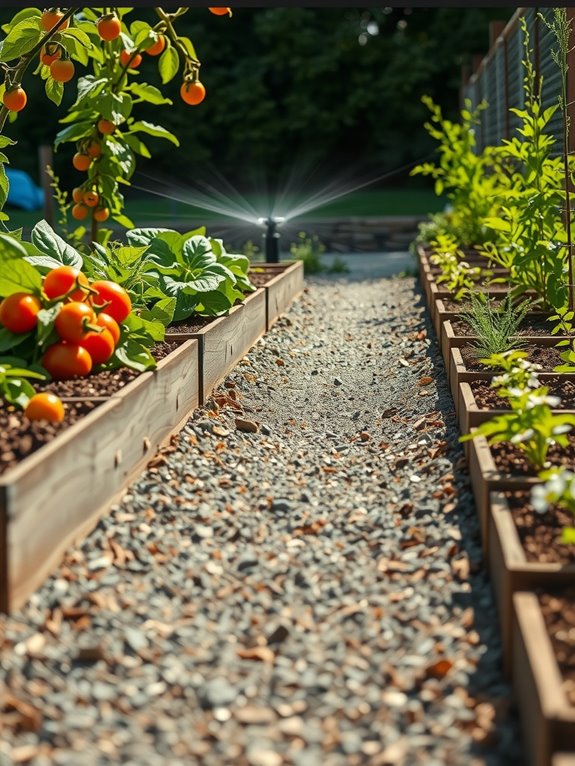
When I’m designing my garden layout, I have to decide between fitting more beds and leaving myself room to work comfortably. If I push my beds closer together to maximize growing space, I’ll find myself squeezing through tight gaps that make weeding, harvesting, and moving equipment frustrating and slow. The trick is finding my sweet spot—I space my beds about 3 to 4 feet apart. This gives me enough elbow room for my wheelbarrow and hoses without wasting too much valuable planting area.
Maximizing Growing Area
What’s the sweet spot between fitting more plants and actually being able to work in your garden?
I want to maximize my growing area with raised beds, but I can’t sacrifice functionality. Here’s the reality: narrower spacing between beds means more planting room, yet it creates problems. Gaps smaller than 3 feet let weeds creep into my pathways and make harvesting difficult. I’ll find myself stepping into beds constantly, compacting soil and damaging plants.
The answer is balancing both needs. I should aim for 3 to 4 feet between beds. This spacing lets me access all sides comfortably without stepping into growing areas. I can maneuver equipment like mowers and wagons easily. I’ll eliminate unnecessary row paths while keeping enough room for practical maintenance tasks. That’s how I grow more food without frustration.
Prioritizing Accessible Pathways
Finding the right gap width between your beds matters because I need to balance planting space with how easily I can move around. An 18–24 inch gap gives me more room for plants, but it gets tight during peak season when everything’s growing. I’m better off with 24–36 inches instead because I can push wheelbarrows through and turn equipment without crushing my crops.
Wider pathways let me reach my plants from one side during weeding and fertilizing. I don’t have to step into the beds, which keeps the soil from getting compacted and stays healthier.
After I set up my garden, I should walk around in summer when plants are full and reassess those gaps. I need to check that pathways stay clear and passable. I want my garden functional and manageable, not frustrating to work in.
Applying Spacing Rules: U-Shaped and Custom Planter Layouts
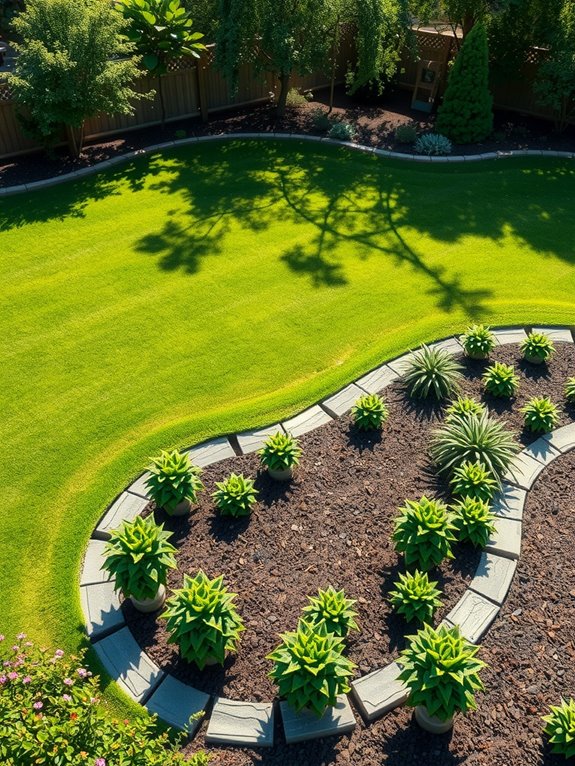
Once you’ve mapped out your garden layout, you’ll want to think through how spacing works differently in U-shaped planters. I’m dealing with unique challenges here that regular straight beds don’t have.
U-shaped planters demand different spacing strategies than traditional straight beds to maximize accessibility and plant health.
I need to consider a few key things:
- Space between beds: I maintain 24–36 inches in that central open area so I can actually move around and access plants easily.
- Reach principle: I use a 4-foot total reach to bed centers, which gives me comfortable access without stretching awkwardly.
- Corner clearance: I provide extra space at inner and outer corners to prevent crowding and keep maintenance manageable.
The 17 Tall U Shaped Planter Boxes let me adjust my layout as plants grow. I plant shade-tolerant varieties inside the U and sun-loving plants on the exterior edges. This setup maximizes both light and accessibility.
Climate and Seasonal Adjustments to Spacing Guidelines
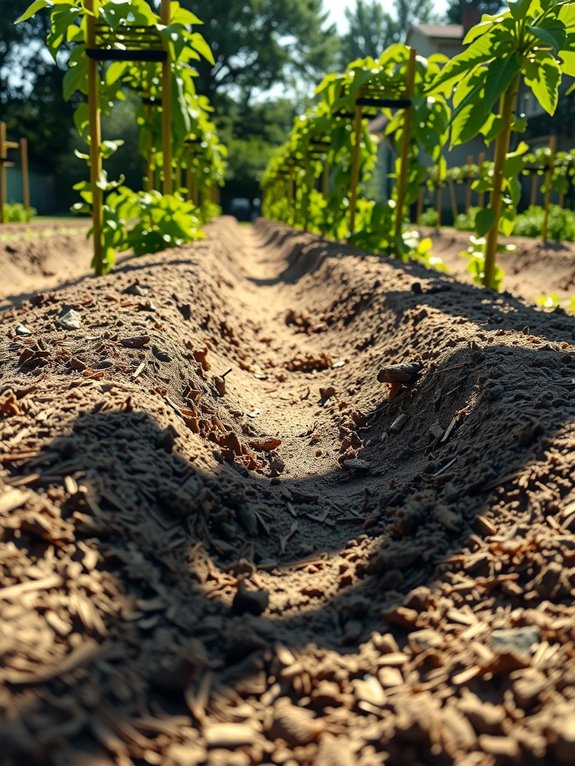
The spacing rules I follow aren’t fixed. They change based on where I live and what the weather’s like. In humid or rainy climates, I widen my spacing by up to 50%. This helps fight fungal disease and improves airflow around my plants. That standard 18–24 inch minimum becomes 27–36 inches when moisture is heavy in the air. Regional adjustments protect my crops from fungal issues and rot.
In drier regions, I can keep my spacing tighter since disease pressure drops. I also shift my spacing with the seasons. Spring rains might mean I need wider gaps between plants. Summer heat lets me plant closer together. I reassess spacing each season and match it to my local conditions for healthier garden beds.
Disease Prevention Through Strategic Gap Placement
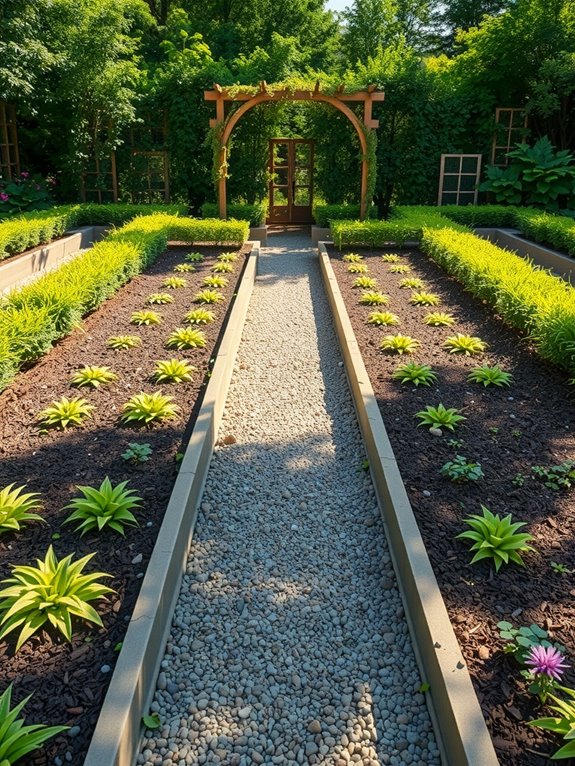
I’ve learned that spacing my garden beds right really helps stop diseases before they start. It comes down to two main things: letting air move around my plants and keeping moisture from building up.
I space my beds 24–36 inches apart and keep them at least 12–18 inches away from fences or walls. When there’s good space between everything, air flows freely around the plants. This dries out the leaves faster, which stops fungal diseases (infections caused by fungi, tiny organisms that spread through moisture) from taking hold.
Tight gaps between beds trap humidity and make it easy for pathogens (disease-causing germs) to spread from one bed to another. I check my spacing during the growing season to make sure nothing’s blocking that airflow. Even plants that grow out a bit can mess up the air circulation, so I trim back anything that’s creeping into those gaps.
Air Circulation and Moisture
How much space do you actually need between your garden beds? I’m talking about the gaps that keep your plants healthy. When I space my beds properly, air flows freely around the leaves. That air movement matters because it reduces humidity and moisture buildup. Diseases love wet conditions, so good airflow helps prevent them from taking hold.
Here’s what I recommend:
- Use 12–18 inches minimum spacing for basic airflow and so I can access my plants for maintenance
- Go for 18–24 inches ideally to maintain solid air circulation and make upkeep easier
- Try 24–36 inches in humid climates where extra ventilation keeps moisture problems from starting
I’ve found that narrow gaps trap moisture and create spots where foliar diseases (fungal infections on leaves) thrive. I also position my beds away from fences. Unobstructed sides let air reach all my plants evenly. This strategic placement turns disease prevention from guesswork into actual protection.
Pathogen Spread Prevention
I’ve learned that spacing between my garden beds makes a real difference in stopping diseases. When I leave gaps that are too narrow, humidity builds up and soil splashes from one bed to another. That’s how pathogens spread quickly.
I space my beds 24–36 inches apart. This distance gives me enough room to walk between them and lets air move freely around the plants. In areas where it rains a lot or stays humid, I actually make the gaps even wider—about 50% more space. Better airflow keeps the leaves drier, and that’s where diseases like to take hold.
Wider spacing also makes my cleanup easier. When I sanitize my tools and gloves between beds, I’m not squeezing through tight spaces or accidentally touching nearby plants. This stops soil-borne pathogens from traveling from one area to another. I’ve noticed that this simple spacing strategy cuts down my disease problems significantly.
Measuring Your Raised Bed Spacing: A Practical Layout Guide
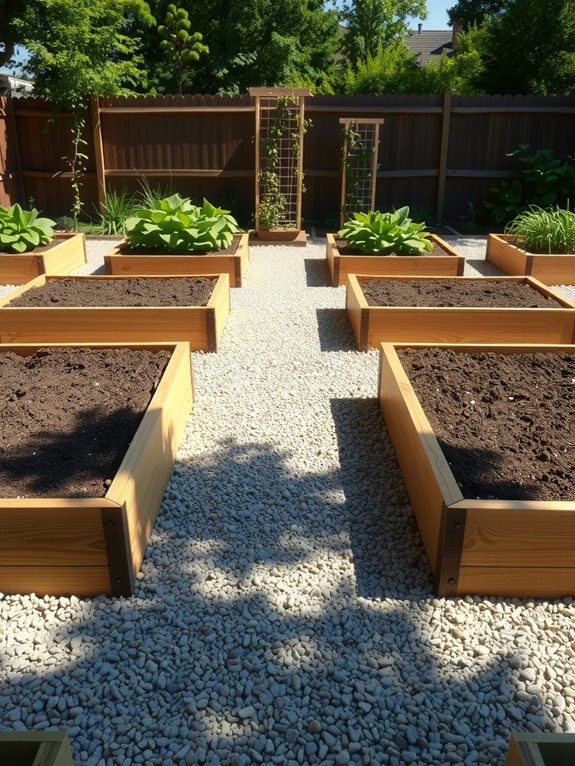
When I’m planning where to put my raised beds, the space between them matters just as much as the beds themselves. I need to measure carefully so I can actually work in my garden without constantly shuffling around obstacles.
Here’s how I approach measuring my raised bed spacing:
- I start with 18–24 inches between regular rectangular beds like my 8×2 ft and 8×4 ft designs for basic maintenance and harvest access
- I increase spacing to 24–36 inches for special-shaped beds like L-shaped and U-shaped designs that have inner corners requiring extra room
- I test my reach by standing at the bed edge and confirming I can touch the center comfortably within 4 feet
I adjust these measurements based on whether I’m using wheelbarrows or mowers in my garden pathways.
Common Spacing Mistakes and How to Avoid Them
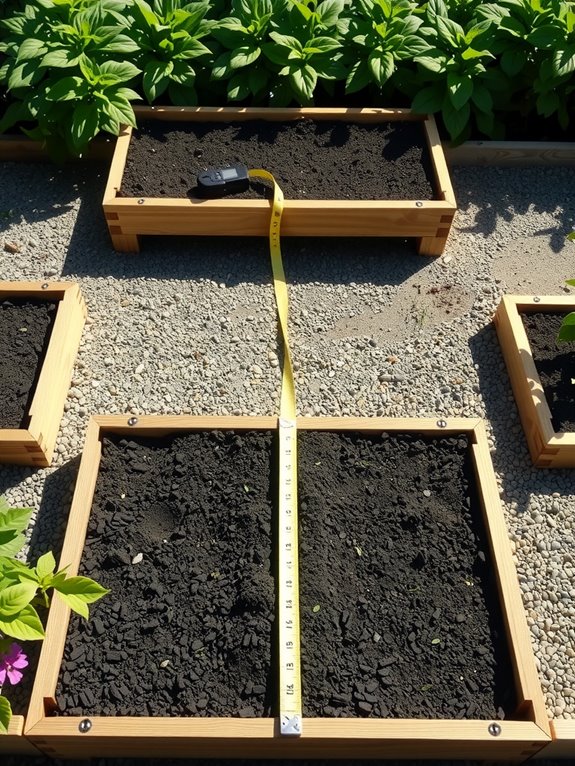
After you pick your raised bed layout, it’s easy to make spacing mistakes that make your garden harder to work in later. I’ve noticed that many gardeners underestimate how much room they actually need between beds. Most people think 12–18 inches is plenty of space, but that’s not quite right.
Here’s what I’ve learned from experience. Plants grow into your paths, and you can’t fit a wheelbarrow through tight gaps. I recommend keeping at least 18–24 inches between beds for basic access. If you’re using a wheelbarrow or dragging a hose around, bump that up to 24–36 inches instead.
There’s another mistake I see all the time. Gardeners forget that they’ll need clearance from all sides for pruning and weeding. You also need to think ahead about future repairs. When you plan your spacing now, you won’t regret it later.