To find how much dirt I need, I measure my bed’s length, width, and depth in feet. Then I multiply these numbers together to get cubic feet. I add 10–20% to that total because the soil settles over time. Next, I divide by 27 to convert cubic feet into cubic yards, which is what soil suppliers use.
I order a 60/30/10 mix for the best results. That means 60% topsoil, 30% compost, and 10% potting mix. Topsoil is the dark, nutrient-rich layer from the ground. Compost is decomposed organic material that feeds plants. Potting mix is a light, fluffy blend that helps with drainage. I try to source these locally because I usually get better prices that way.
If I’m working with rocky ground or already have some existing soil in my bed, I adjust my order accordingly. Rocky soil needs more compost to break things up. Existing soil means I might need less new material overall. These specifics make a real difference in how well my garden beds perform.
Measure Your Raised Bed’s Length, Width, and Depth
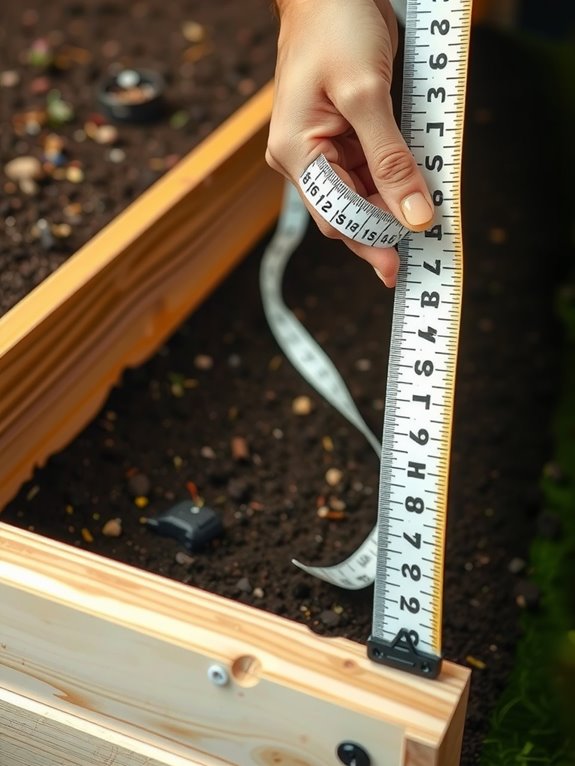
I need to measure my raised bed before I buy soil. Let me grab a measuring tape and write down three key numbers.
For a rectangular bed, I measure the length and width in feet. If I have a circular bed instead, I measure straight across the middle to find the diameter. Then I measure how deep the bed is, but I need to measure this in inches.
Here’s the tricky part—I need to convert that depth from inches to feet. I do this by dividing the inch measurement by twelve. So if my bed is 12 inches deep, that’s 1 foot deep when I do the math.
To convert bed depth from inches to feet, divide your inch measurement by twelve. A 12-inch deep bed equals 1 foot.
Once I have these three measurements, I’m ready to figure out how much soil I actually need to buy.
Calculate Volume in Cubic Feet (and Add 10–20% for Settling)
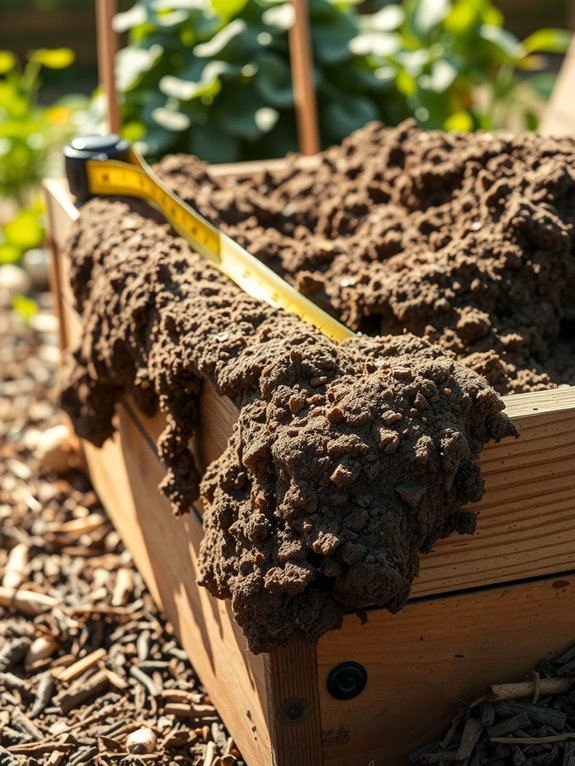
Now that I’ve got my measurements, it’s time to do the math. I’ll multiply length × width × height to get my cubic feet. That’s the volume of soil my raised bed needs.
Here’s where settling compensation comes in. Soil settles and compacts over time, so I add 10–20% extra to keep my beds full and ready for planting. Check this table to see how it works:
| Bed Size | Cubic Feet | Plus 15% | Final Amount |
|---|---|---|---|
| 4×8×1.5 ft | 48 | 7.2 | 55.2 |
| 4×4×2 ft | 32 | 4.8 | 36.8 |
| 3×6×1 ft | 18 | 2.7 | 20.7 |
| 2×2×2 ft | 8 | 1.2 | 9.2 |
For bulk soil purchases, I convert cubic feet to cubic yards by dividing by 27. So if my bed needs 48 cubic feet, that’s about 1.8 cubic yards to order.
Convert to Cubic Yards for Ordering Soil
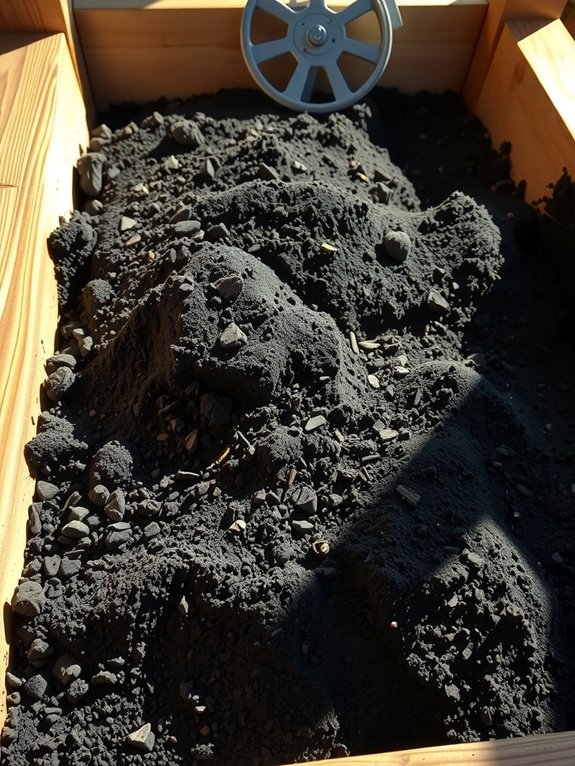
Once I’ve got my cubic feet total, I need to convert that to cubic yards since that’s how soil companies sell bulk orders. I divide my cubic feet by 27—that’s the number to use because one cubic yard holds exactly 27 cubic feet. If my calculator shows something like 0.444 cubic yards, I round up to 0.5 cubic yards. This gives me extra soil to account for settling after I spread it out.
Cubic Feet To Yards
Why does the conversion from cubic feet to cubic yards matter? I’ve calculated my raised bed’s volume in cubic feet, but soil suppliers deliver in cubic yards instead. I need to convert that number so I can order the right amount.
I divide the cubic feet by 27 because one cubic yard equals 27 cubic feet. Here’s how it works. If my raised bed needs 54 cubic feet of soil, I divide 54 by 27. That gives me 2 cubic yards.
When I get a partial cubic yard, I round up to the nearest half. So if my calculation shows 2.3 cubic yards, I’d order 2.5 cubic yards instead. This way I have enough soil without running short on delivery day.
Bulk Soil Ordering Guide
When you’re ready to order bulk soil, you’ll need to convert your measurements from cubic feet to cubic yards since that’s how suppliers sell it. I divide my cubic feet number by 27 to get cubic yards. So if I have an 18 cubic feet raised bed, I divide 18 by 27 and get 0.67 cubic yards.
Most bulk soil suppliers work in half-yard increments, which means they sell soil in 0.5 cubic yard amounts. If my calculation comes out to 0.444 cubic yards, I round up to 0.5 cubic yards. Rounding up helps me avoid running short on soil for the proper bed depth.
Before I place an order, I call my local supplier to ask about their minimum order requirements and delivery fees. These details vary by location and can affect my total cost.
Choose Your Dirt Mix: The 60/30/10 Recipe Explained
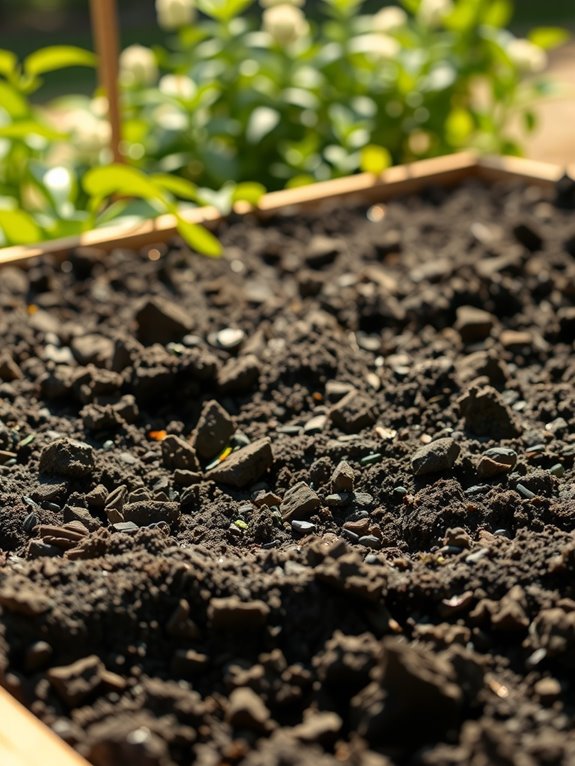
What’s the secret to soil that’ll make your plants thrive? I’m talking about the 60/30/10 mix for raised bed soils. Here’s how I break it down: 60% quality topsoil forms my base. Then I add 30% composted material for nutrients. Finally, I mix in 10% soilless growing mix for drainage and lightness.
Why does this combination work? I get the structure I need without making my bed too heavy. The composted material feeds my plants throughout the season. The soilless growing mix keeps roots happy and water flowing properly.
When I’m calculating soil quantity, I use this ratio as my guide. It balances everything I want: good drainage, plenty of nutrients, and a lightweight structure that won’t strain my raised bed frame.
Break Down Your Component Amounts by Volume
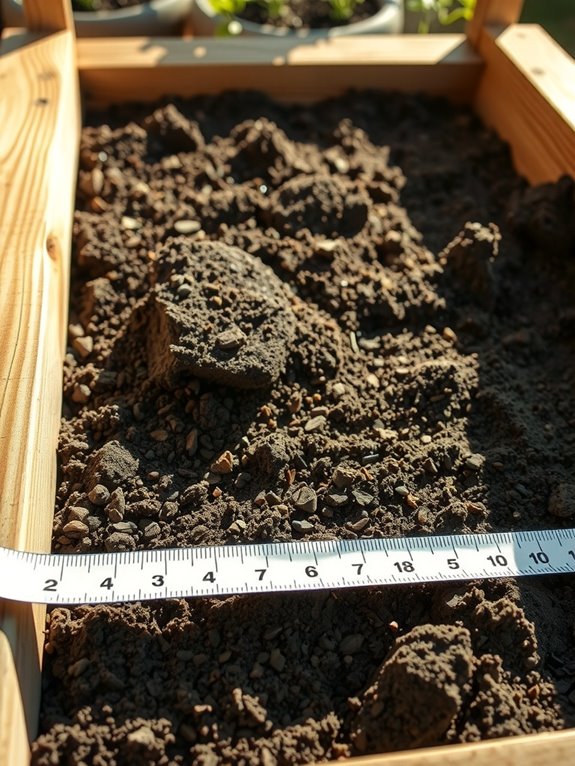
Now that you’ve got your 60/30/10 ratio locked in, it’s time to figure out exactly how much of each component you need. I’m going to walk you through converting your bed’s total cubic footage into specific amounts for topsoil, compost, and soilless mix.
Let’s say your raised bed comes out to 8 cubic feet total. Here’s how to break that down. Multiply 8 by 0.60 to get your topsoil amount, which gives you 4.8 cubic feet. Next, multiply 8 by 0.30 to get your compost, which is 2.4 cubic feet. Finally, multiply 8 by 0.10 to get your soilless mix (that’s the lightweight peat moss or coconut coir blend), which is 0.8 cubic feet.
Most garden centers sell these materials in bags measured in cubic feet. A standard topsoil bag holds 2 cubic feet, so you’d need about 3 bags. For the 2.4 cubic feet of compost, grab 2 bags of 1.5 cubic feet each or 3 bags of 0.75 cubic feet each, depending on what’s available. The soilless mix comes in smaller quantities, so one 2 cubic foot bag will actually give you more than you need, but having extra isn’t a problem.
Once you’ve got all your materials gathered, you can mix them together in the bed or in a large tarp laid on the ground. Start by spreading your topsoil as the base layer. Add your compost on top, then sprinkle in your soilless mix and blend everything together with a shovel. Your bed will be ready to plant once everything is mixed.
Calculate Total Soil Volume
Once you’ve picked your garden bed shape and measured it, you’re ready to figure out how much soil you need. I use the right formula based on my bed’s shape. For rectangular beds, I multiply length × width × height in feet. For circular beds, I use π × radius² × height. For hexagonal beds, I apply the formula (3/2) × √3 × side² × height.
After calculating my cubic feet, I convert to cubic yards by dividing by 27. This conversion helps me understand bulk soil pricing. I round up my final number to practical delivery units like 0.5 cubic yards. Rounding up means I have enough soil without falling short, which saves me money and prevents frustration when I’m ready to fill my raised bed.
Measure Individual Component Ratios
I like to gather all my soil components before I mix them together. This keeps everything organized and prevents mistakes.
Here’s how I break it down. I need 60% topsoil, 30% compost, and 10% soilless mix by volume. Let’s say my raised bed holds 15 cubic feet. I’d measure out 9 cubic feet of topsoil, 4.5 cubic feet of compost, and 1.5 cubic feet of soilless mix.
The reason I measure this way is because the compost and soilless mix add organic matter to my soil. Organic matter is basically decomposed plants and other materials that help soil hold water and nutrients. Getting my ratio right means my plants will grow better throughout the season.
I keep my measurements precise because I want the soil mix to support healthy plant growth. I lay everything out before blending so I can see exactly what I’m working with and catch any issues early.
Convert Dimensions To Quantities
You’ve got your component ratios figured out, so now I need to know how much total soil I’m actually buying. I’ll start by measuring my raised garden bed’s length, width, and height in inches or feet. I convert everything to feet for consistency—I just divide inches by 12.
Next, I calculate my bed volume using the right formula. For rectangular beds, I multiply length times width times height. For circular beds, I use π times radius squared times height. For hexagonal beds, I use the hexagon formula with side length.
Once I’ve got cubic feet, I divide by 27 to get cubic yards. This cubic yards number is my soil quantity—what I’ll actually purchase. I round up any fractions so I’ve got enough dirt for my project.
Source Topsoil, Compost, and Potting Mix Locally
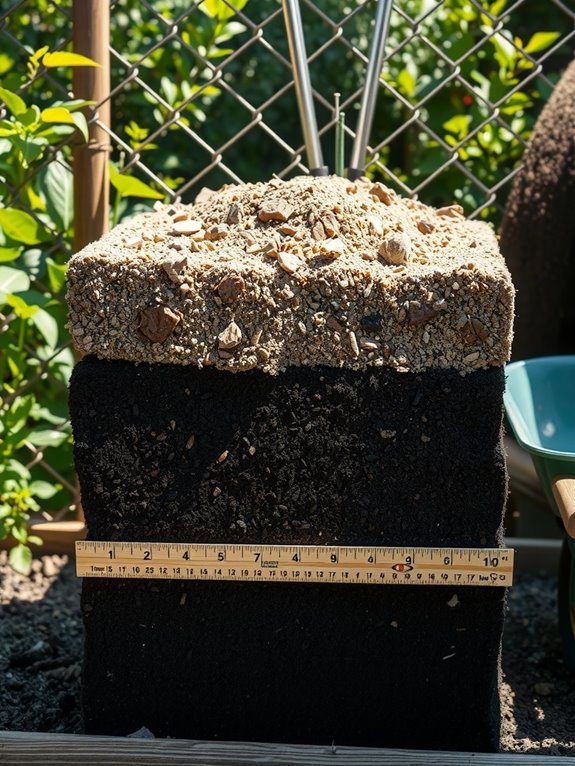
The foundation of your raised bed isn’t just dirt—it’s a carefully balanced blend that gives your plants what they need to grow well. I source three main components locally to build my soil mix. Finding these materials nearby saves money and supports local garden suppliers who know your region.
| Component | Percentage | Amount (3×6 bed) | Purpose |
|---|---|---|---|
| Topsoil | 60% | 9 cu ft | Nutrients and structure |
| Compost | 30% | 4.5 cu ft | Organic matter |
| Potting mix | 10% | 1.5 cu ft | Drainage and aeration |
I visit local nurseries and landscape suppliers to compare prices. They’ll often deliver bulk orders, which makes filling multiple raised beds easier. I look for topsoil that’s rich in organic matter, which means it has lots of decomposed plant material mixed in. I want aged compost that’s dark and crumbly, so it breaks down easily in the soil. I also get quality soilless potting mix for proper drainage and aeration, which means air can move through the soil.
Adjust Your Order for Rocky Ground, Old Soil Reuse, or Native Conditions
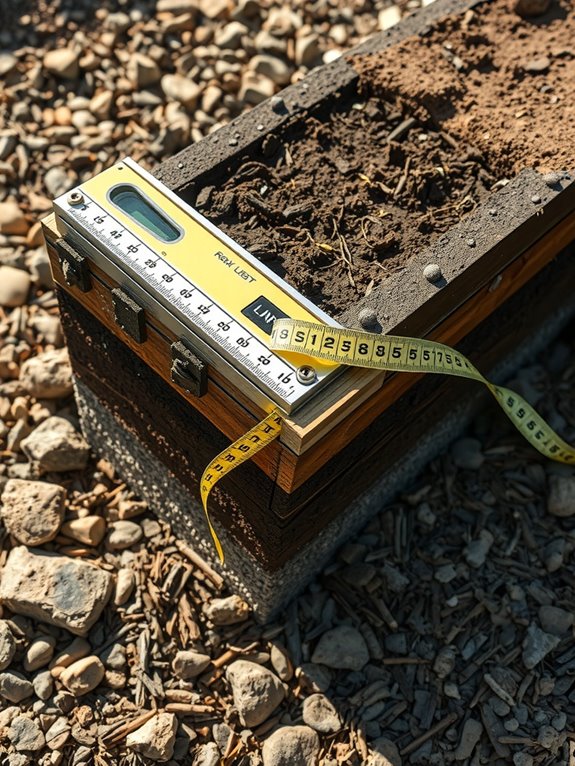
What if your garden spot isn’t perfect dirt to begin with? I’ve faced challenging conditions plenty of times, and that’s when adjusting my soil mix strategy really matters.
On rocky ground, I layer filler rock at the bottom first. Then I add chicken wire to stop critters and create stability. If I’m reusing old soil, I blend fresh soil into the existing mix. I top everything with new planting mix to restore nutrients. For native conditions, I assess what I’m working with. I layer compost directly over existing soil instead of heavy tilling.
When I’m starting with 8–12 inches of depth on hard surfaces, I use a 1:1 ratio of compost to soilless growing mix. That means if I need 10 inches total, I’d use 5 inches of compost and 5 inches of soilless growing mix. These adjustments help my raised beds succeed regardless of what I’m starting with.