A standard 20-pound propane tank gives me about 10 hours of heat when I run my patio heater on full blast at 40,000 BTU per hour.
If I dial it back to medium heat instead, I can stretch that same tank to 12–15 hours. That’s a solid difference worth considering.
Wind is my biggest enemy here. When air moves across the heater, I lose heat and burn through fuel faster. I position my heater in a sheltered spot to keep it from working overtime. Cold temperatures also drain the tank quicker, so I rely on some kind of windbreak or shelter when the weather gets rough.
I keep my burner clean once a month using a wire brush and compressed air. When the burner stays clean, it burns fuel more efficiently and I get longer runtime from each tank.
How Long Does a 20 Lb Propane Tank Last?
A standard 20-pound propane tank holds about 4.7 gallons of fuel. I’ve found that mine keeps my patio heater running for roughly 9 to 15 hours, but the actual runtime depends on the BTU output. BTU stands for British Thermal Unit, which measures how much heat the heater produces.
When I crank my 20-pound propane heater to high settings around 40,000 BTU, I get about 9 to 12 hours of heat. If I run it on lower settings, I can stretch that to 12 to 15 hours instead.
I’ve learned that fuel efficiency depends on more than just the tank size. Wind, cold temperatures, and the heater’s design all affect how long my propane lasts. The colder it gets outside and the windier the day, the faster I’ll burn through my fuel. Understanding these factors helps me plan better and stretch my heating season longer.
Wind and Cold: What Drains Your Tank Fastest?
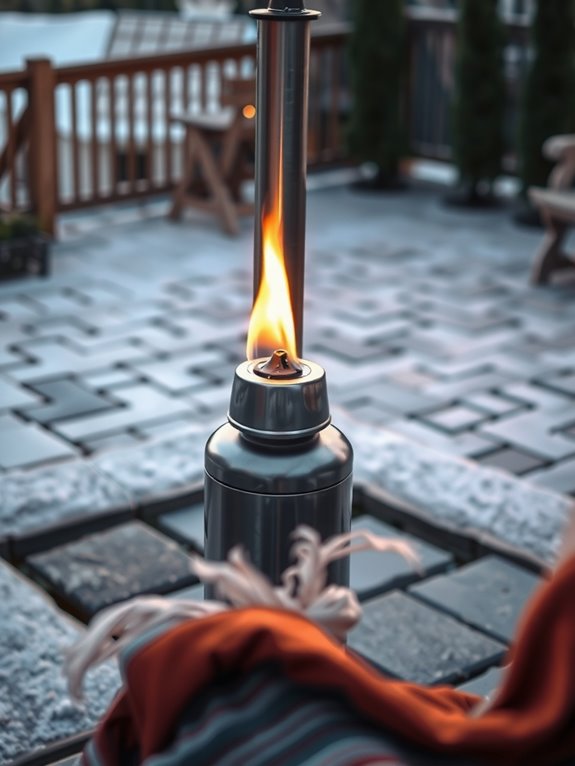
I’ve noticed that windy conditions really speed up how fast my propane tank empties. Wind pulls heat away from my outdoor heater, which makes it work harder and burn through propane quicker. Even when I keep the BTU setting the same, I can see my tank draining faster on breezy days. BTUs are British Thermal Units—they measure how much heat the heater produces.
Cold temperatures make this problem worse. When it’s chilly outside, my heater has to run all the time to keep the warmth I want. I’ve found two ways to help my tank last longer. First, I shelter my heater with a protective enclosure or windbreak to block the wind from blowing heat away. Second, I use a moderate heat setting instead of running it at maximum output during cold, windy weather. These two adjustments help me stretch my propane supply further.
Placement and Settings to Stretch Propane Runtime
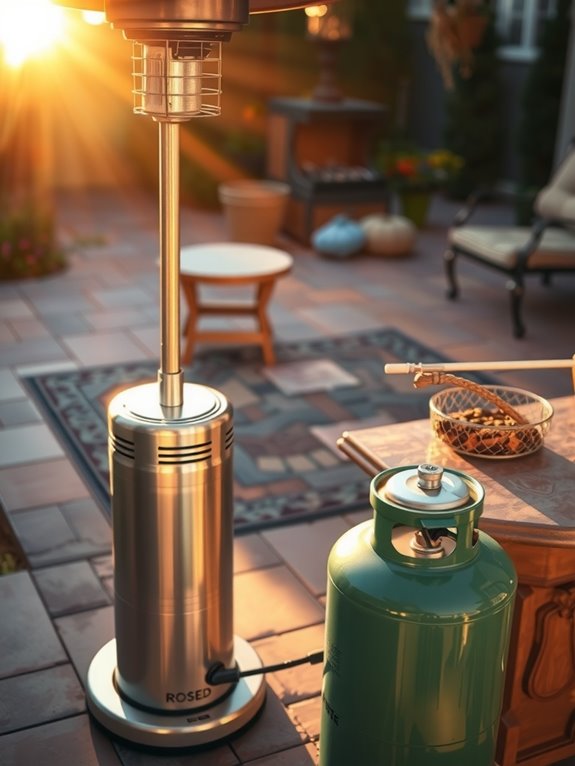
Where you put your patio heater and how you set it matters a lot for propane runtime. I’ve learned that placement makes a real difference in how long your tank lasts.
I position my heater in sheltered spots away from wind. Wind forces the heater to work harder and burns through propane faster. I also use lower or medium heat settings when I don’t need full warmth. This simple adjustment stretches your runtime considerably.
| Strategy | Impact | Benefit |
|---|---|---|
| Sheltered placement | Reduces wind exposure | Extends runtime |
| Medium heat settings | Lowers BTU output | Saves propane |
| Directional heat control | Targets specific areas | Eliminates waste |
| Regular maintenance | Keeps heater running smoothly | Maximizes duration |
| Windbreaks added | Minimizes heat loss | Improves performance |
I invested in a pivot arm for directional heat control. This lets me aim warmth exactly where I need it instead of heating the whole area. I keep my heater running well by cleaning the grids and checking connections once a month. These habits make a real difference in how long my propane tank lasts.
Maintenance to Keep Your Tank Running Longer
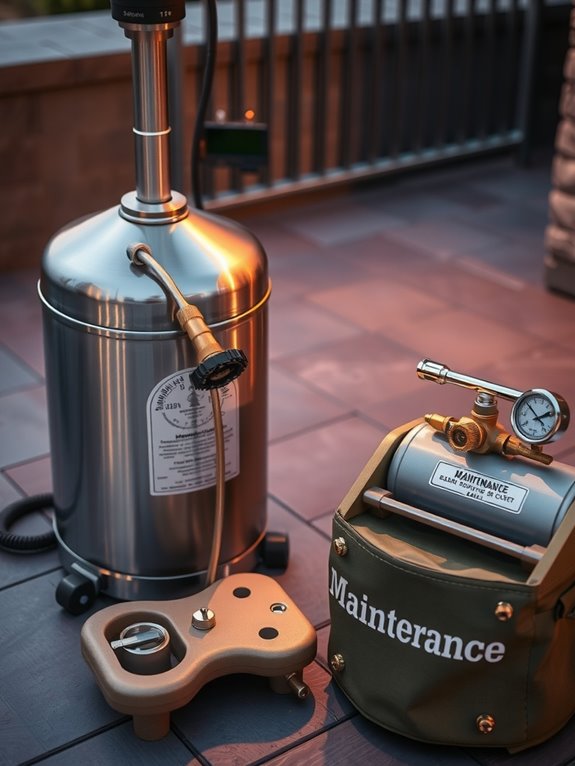
Regular maintenance is how I keep my propane heater running well and stretching my fuel supply. Here’s what I do.
I check my burner cleaning every month. I use a wire brush and compressed air to clean the emitter grid and burn surfaces. This removes buildup that blocks heat output. The process takes about 15 minutes and makes a noticeable difference in how hot my heater gets.
Before each season starts, I do a full inspection. I check all connections, the regulator, and hoses for leaks. I also look for spiders or insects—they can clog small parts and cause problems. If I find any damage, I replace the hose or tighten the connection right away.
When I’m not using my heater, I cover it with a fitted cover. This protects it from dust and debris between uses. Keeping my burner clean and my tank protected means I use less propane overall and get more hours of heat from each tank.
When Should You Upgrade to a Larger Tank?
When should you think about getting a bigger propane tank? I’d consider upgrading when my current setup can’t keep up with my heating needs.
I drain my 20-lb tank during single events or within one day. My propane tank doesn’t last the 9–15 hours I need it to run. I’m hosting frequent gatherings in open or windy areas where heat dissipates quickly.
High BTU/hr usage around 40,000 burns through fuel faster than smaller tanks can supply. If I’m constantly swapping tanks mid-gathering, I know it’s time to upgrade. I find that 30–60 lb tanks work well. They give me longer runtime without being too heavy to move around.
I track my fuel consumption to spot patterns. When my tank runs empty faster than I expected, I can see it’s time to move up to a larger option. This stops me from running out of fuel mid-event.
Heater Type Impact on Tank Duration
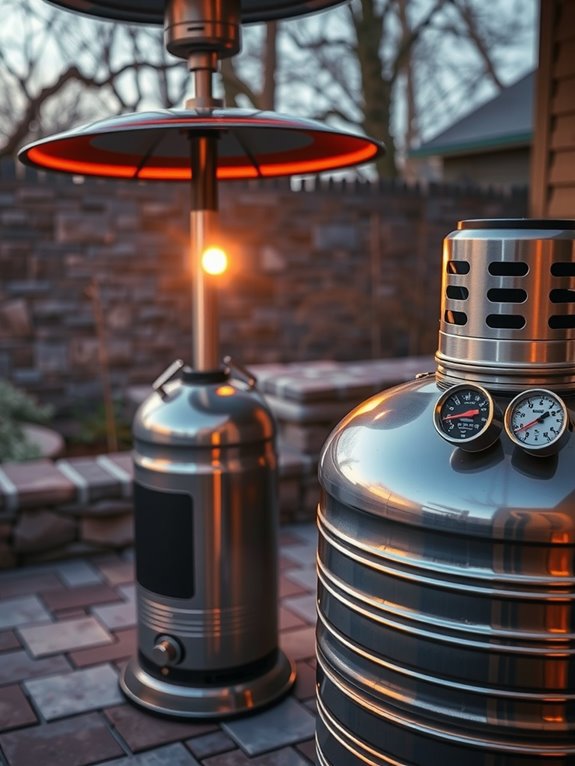
Different heater types burn propane at different rates, and that matters for how long your tank lasts. A standard 40,000 BTU/hr free-standing patio heater will drain a 20-pound tank faster than a wall-mounted model. Standing heaters lose more heat to the surrounding air and wind, so they work harder to keep you warm.
I’d check your heater’s efficiency rating in the manual. Newer models use less fuel while still doing the job, so you might save propane depending on what you’ve got. The BTU output (that’s British Thermal Units per hour—basically how much heat the heater produces) and the efficiency rating tell you a lot about how fast it’ll burn through your tank.
BTU Output And Consumption
How much heat your patio heater actually produces directly controls how fast it burns through propane. Most units crank out around 40,000 BTU per hour. That’s British Thermal Units, which is just a way to measure heat output. Your 20-pound tank holds roughly 430,000 BTUs total, so I’m looking at about 10 hours of runtime at full blast.
Several things affect how long my tank lasts. Running on high drains it much faster than medium or low settings. Wind makes the heater work harder since it pushes the heat around, which increases propane consumption. Colder weather also demands more BTU output to keep things comfortable outside.
I notice the biggest difference when I combine high BTU settings with cold, windy conditions. That’s when my tank depletes quickly. Between seasons, I see a real change in how long my propane lasts.
Efficiency Ratings By Model
Not all patio heaters burn propane at the same rate. I’ve noticed that high-efficiency models like the Bromic Platinum Smart-Heat Gas stretch my propane tank life way longer than standard units. These heaters reduce fuel waste by distributing heat better.
Here’s what I found: a 40,000 BTU/hr unit (BTU means British Thermal Unit, which measures heat output) eats through propane faster than a 30,000 BTU/hr model under the same conditions. Before I buy a heater, I check the efficiency rating to see how much propane it actually uses.
Wind messes with efficiency a lot. Open spaces lose heat quickly, so I pick heaters designed to work better in breezy spots. When I choose a model with good efficiency ratings, I get more run time from each tank. My propane investment stretches further when I pick the right heater for my space.