Yes, I need a support structure like a trellis for my bougainvillea. Without one, the plant just sprawls outward and takes over. I use soft ties spaced about 12 inches apart to secure the stems to the trellis. This guides the growth upward instead of letting it creep across the ground.
I’ve found that a sturdy trellis works better than a tomato cage when my plant gets bigger. The trellis spreads the weight across multiple points so nothing snaps or bends awkwardly. A tomato cage gets cramped pretty fast.
I start training my bougainvillea right when I plant it. I tie the stems regularly and prune back any shoots that go the wrong direction. Getting ahead of it early keeps the whole plant controlled and stable. If I wait too long, the stems get woody and hard to work with.
Does Bougainvillea Really Need Support to Grow?
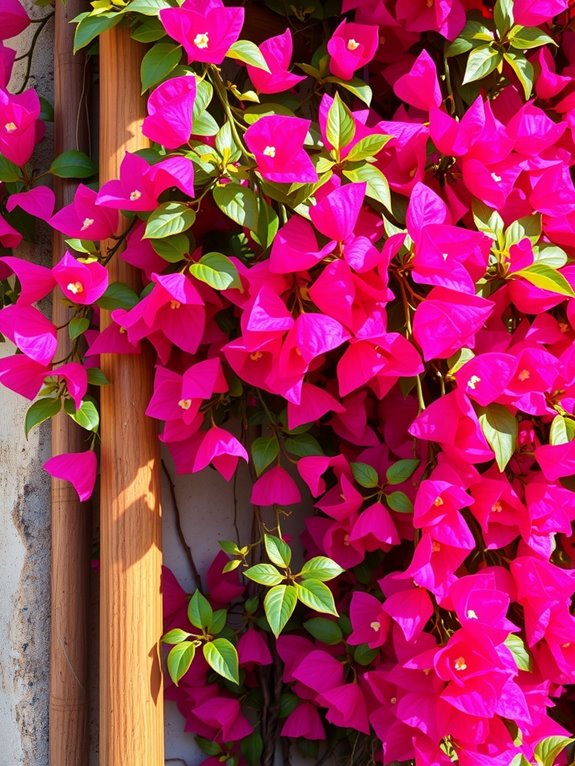
Why does bougainvillea need help to grow upward when other plants don’t? Well, I’m dealing with a vine that can’t support itself. Unlike some plants with sturdy stems, bougainvillea naturally sprawls outward without external support.
I need to provide a trellis or training structure so my bougainvillea grows upward instead of flopping over. Without support, the plant will sprawl across the ground and potentially damage nearby structures. A trellis gives the vine something to grab onto as it climbs.
I’ll also need to tie the stems regularly to guide growth along the support I’ve chosen. I use soft plant ties or strips of fabric to secure the stems loosely to the trellis every 6 to 8 inches. This training process helps shape the plant while keeping it stable and healthy.
Why Bougainvillea Vines Require Training Structures
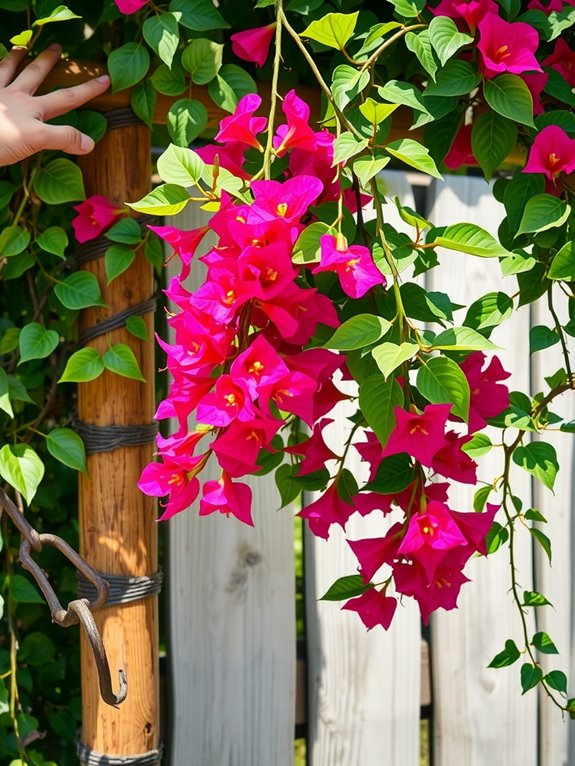
Once I decide my bougainvillea needs support, I quickly realize that picking the right structure matters. I recommend a trellis over a cage because it’s sturdier and lasts longer. My vine’s branches get heavy as they mature, and without proper support, they’ll collapse under their own weight.
I start training early by tying stems to my support structure right at planting time. This guides growth upward instead of letting it sprawl everywhere. As my bougainvillea gets taller, I keep securing new growth to the framework.
I tie stems regularly using soft ties that won’t damage delicate bark. This consistent work shapes my plant while keeping branches stable and organized along my chosen structure.
Trellis vs. Tomato Cage: Which Support Works Best?
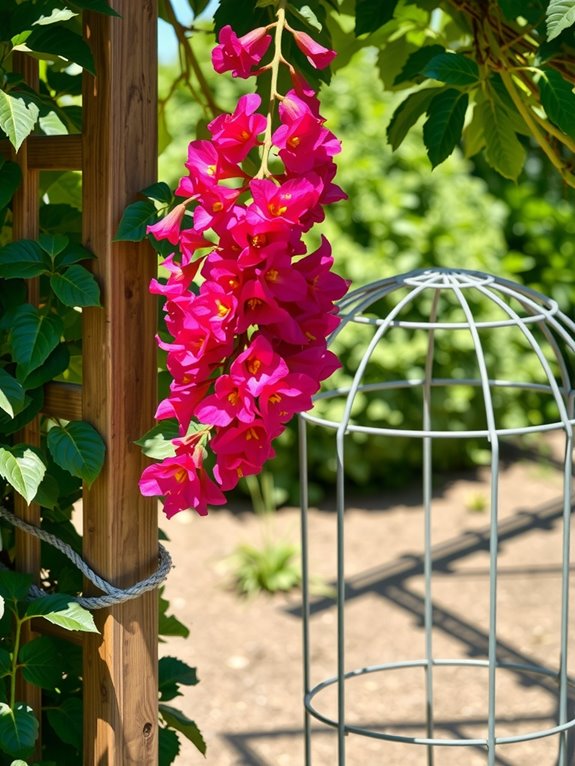
I’ve found that a trellis works better for bigger bougainvillea plants. It’s stronger and lasts longer than a tomato cage. You can use a tomato cage for smaller varieties, but you’ll spend more time tying stems to it as your plant grows. A sturdy trellis will handle the weight and growth without needing constant adjustments, so it’s the better choice if you want your bougainvillea looking good for years.
Trellis For Larger Plants
When my bougainvillea gets bigger than a tomato cage can handle, I switch to a sturdy trellis. The cage just isn’t strong enough once the plant develops thicker, woody stems.
A trellis works better because it spreads the weight across multiple connection points instead of putting all the pressure in one spot like a cage does. I tie the stems to the trellis framework to guide them upward and keep branches from sagging or breaking away from the main structure.
I start this training early with a solid trellis in place. This helps my plant stay stable as it matures and grows heavier. During storms or when the plant puts out a lot of new growth at once, that sturdy design really makes a difference. Without proper support, branches can snap or the whole plant can tip over.
The trellis design is just more robust than a cage. It can handle a larger plant that’s actively growing and putting on weight. I notice my bougainvillea grows with much better stability when I’ve set it up on a trellis from the start.
Tomato Cage Limitations
Two main support options exist for bougainvillea, but I’ve found that tomato cages have real drawbacks as your plant grows. Here’s what I discovered about their limitations:
Height constraints: Standard tomato cages max out around 5 feet tall. Bougainvillea easily outgrows this height, so you’ll quickly run out of vertical space.
Structural weakness: The thin wire collapses under heavy foliage and thorny stems. I had to keep reinforcing mine with extra stakes and ties, which got annoying fast.
Limited training potential: You can’t guide growth up and over structures like you can with a trellis. The cage just holds things up. It doesn’t let you shape the plant the way you might want.
I learned that tomato cages work only for smaller varieties in short-term situations. They won’t handle rapid growth or the weight of mature branches. A sturdy trellis gives me better support options and keeps branches from taking over my pathways. Starting early with the right structure saves me from frustration down the road.
Durability And Long-Term Stability
I learned the hard way that tomato cages don’t work for long-term bougainvillea growing. Once the vines get heavy, those cages just collapse. I switched to a trellis support system and got the durability I actually needed.
Trellises are built with sturdy materials that won’t buckle under weight. My bougainvillea can grow up to 40 feet tall when I train it properly on a solid support. Tomato cages can’t handle that kind of load.
I tie the stems to the trellis regularly, which guides the growth upward and keeps everything in place. The cages required constant retying and still failed me. With a trellis, I set it up once and it handles the job year after year without falling apart.
Choose the Right Support for Your Plant Size
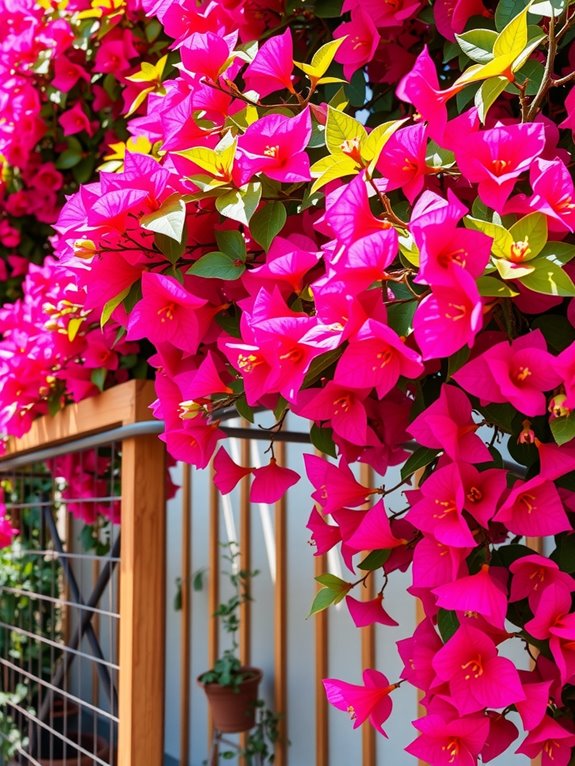
How do I pick the right support structure for my bougainvillea? I need to match what I choose to how big my plant gets.
Match your bougainvillea’s support structure to its mature size for optimal growth and stability.
For smaller varieties, I can use a tomato cage. They’re cheap and simple to set up. I just tie the stems to the cage regularly as the plant grows.
For larger plants, I’d go with a trellis instead. A trellis is stronger and lasts longer. It won’t tip over when my bougainvillea gets heavy and full.
I start training my plant right when I plant it. I use multiple tie points on whatever structure I pick. This helps guide the stems upward and keeps the shape I want.
Tomato cages need frequent tying if I have a bigger variety. A trellis handles the weight better as my plant fills out. Picking the right support from the start keeps my bougainvillea from falling over or breaking branches.
Tying Stems to Your Support Structure
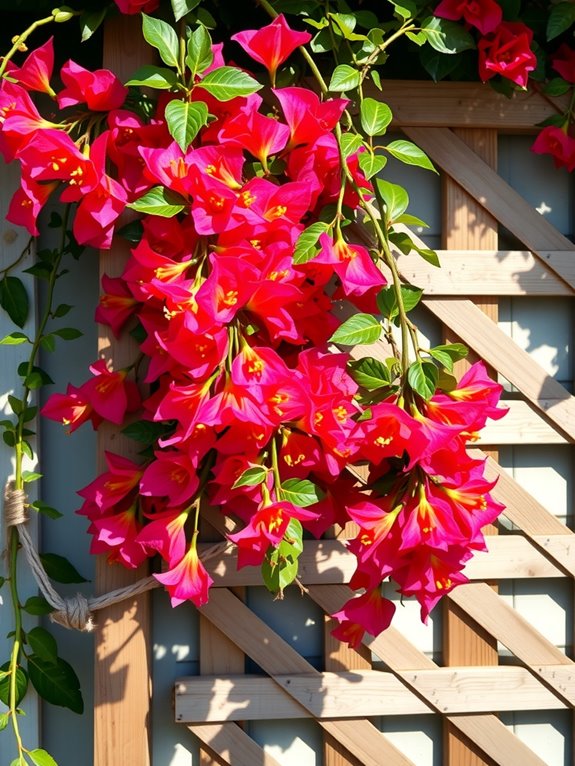
Once your support structure is in place, I start tying the stems down. I secure the main stems to the trellis at multiple points along their length. This guides growth upward and shapes the plant the way I want it.
I use soft ties or garden tape so I don’t damage the delicate stems. I start tying early, right at planting time or soon after. I space my ties about 12 inches apart on each main stem.
Regular tying prevents the plant from sprawling outward. It keeps everything stable and growing upright. The work is straightforward, and I notice it pays off when my bougainvillea grows tall and strong instead of flopping over.
Posts and Arbors: Sturdy Alternatives to Trellises
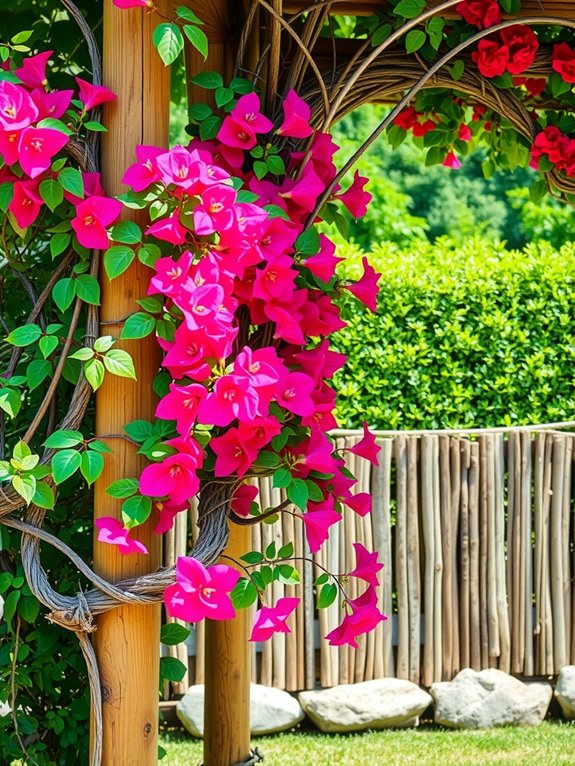
If you want something more solid than a regular trellis, posts and arbors give your bougainvillea the rigid support it needs. Posts work well for training a single main stem straight up. Arbors create a framework that lets you guide multiple branches into an overhead canopy or any decorative shape you want.
Both options let you connect with existing fencing or walls. This means you can build a support system that fits exactly what you have going on in your space.
Posts For Vertical Growth
Posts and arbors give your bougainvillea the heavy-duty support it needs to grow tall and straight. When you secure a main stem upright with proper ties, you’ll see real growth potential.
Here’s what makes posts work so well for vertical growth:
- I space my ties about 12 inches apart up the post to keep everything stable as the plant climbs higher
- Heavy-duty posts prevent tipping and branch breakage that lighter structures can’t handle
- I route branches carefully and trim regularly to maintain the height and shape I’m going for
Posts handle the substantial weight your mature bougainvillea generates way better than flimsy trellises do. I secure the main stem at multiple points using wire or fasteners to guide upward growth. The key is staying on top of trimming so branches don’t poke into nearby areas or get too wild. It takes some work, but the payoff is a bougainvillea that grows exactly how I want it to.
Arbors As Structural Framework
I use arbors to give bougainvillea vines a sturdy framework that guides their growth upward and outward in one smooth motion. I secure the main stems to posts with ties and weave additional branches through the structure to encourage spreading.
An arbor works differently than a basic trellis because it features elevated curved support. This design lets vines climb over walkways or entryways while keeping them away from ground obstacles. I build arbors from heavy-duty materials like pressure-treated wood or metal to handle the weight of large bougainvillea vines and withstand wind loads.
I still need to do regular pruning and tying to maintain the shape and prevent branches from sagging. I check the ties every few weeks to make sure they’re not cutting into the stems as the plant grows. The result is a garden structure that supports your plant while looking intentional in your space.
Comparing Support System Options
When I’m figuring out the best way to support a bougainvillea, I’ve got more choices than just a basic trellis. I can use posts and arbors to create sturdy alternatives that work well for training these vigorous vines.
I start by securing my main stems directly to the post or arbor frame using soft ties. These are special straps that won’t cut into the plant as it grows. Then I intertwine branches throughout the structure to build an internal support system. I distribute the load evenly to prevent tipping or structural damage.
Posts and arbors offer robust support for heavier, larger bougainvillea plants. I tie stems regularly to guide upward growth and encourage the shape I’m going for. These structures handle tall, heavy vines better than lightweight options. When I choose the right support system for my specific plant size, I set myself up for success with my training efforts.
Using Walls and Fences as Built-in Support
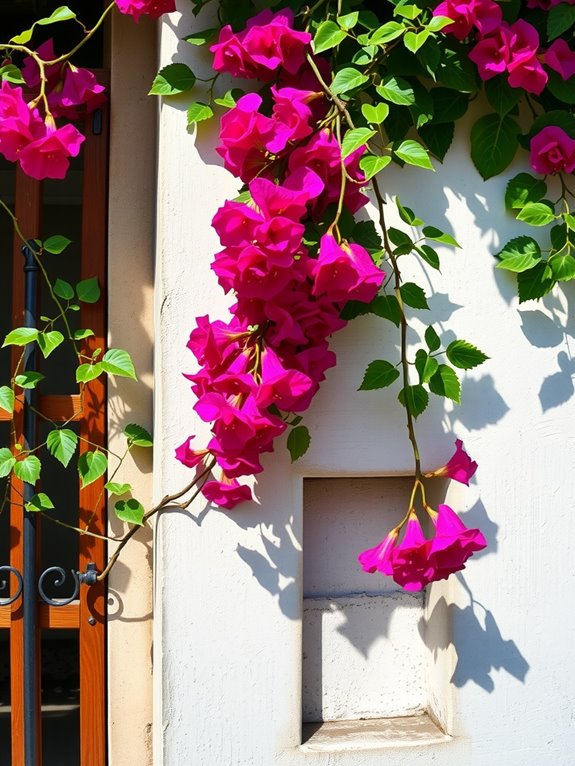
You can skip buying a trellis and use walls or fences you already have around your yard. I train bougainvillea directly onto these structures by interlinking the branches as they grow. Then I tie them regularly with soft ties or garden twine to keep them growing in the direction I want.
Wind shifts the branches around, so those ties really matter. I check them every few weeks and adjust as needed.
Here’s the catch though—walls and fences aren’t perfect long-term. A dedicated trellis gives me stronger, more stable guidance for tall, heavy vines. With walls or fences, I still need regular pruning to stop growth from sticking out too far or damaging the structure. I also need reinforcing ties to hold everything in place. It’s extra maintenance compared to using a proper trellis system.
Why Your Support System Changes Over Time
When I first plant my bougainvillea, a simple bamboo trellis or tomato cage works fine for the young stems. But as the plant grows heavier over the next year or two, I need to upgrade to something sturdier that can actually handle the weight. I’m talking about moving from a basic 4-foot trellis to a 6 or 8-foot wooden or metal structure.
Seasonal changes matter too. Wind and rain during storm season put extra stress on whatever I’m using to support it. Before bad weather hits, I add extra ties using soft plant tape or old cloth strips. I also check for weak spots in the structure itself and reinforce them if needed.
As my bougainvillea goes from a delicate young plant to a thick, woody vine, I’m constantly adjusting. I start with basic training methods like gently tying stems to the trellis with loose knots. Then I gradually move to more heavy-duty setups like sturdy metal frames or reinforced wooden structures. This keeps everything stable and prevents the branches from snapping under their own weight.
Initial Training vs. Mature Growth
Why does your bougainvillea need different support as it grows? When you first plant it, the stems are soft and bendy. You’ll want to start training it right away with a simple setup.
Here’s what happens at each stage:
Early stage: A tomato cage (the kind that’s about 5 feet tall) works for dwarf varieties. It gives your young plant basic guidance without being heavy.
Mid-growth: Your plant will outgrow that cage in a few months. Switch to a sturdy trellis at this point. A 6-foot wooden or metal trellis handles the bigger branches better than a cage does.
Mature stage: A robust arbor or strong trellis becomes necessary. The plant gets heavier and taller, so it needs real structural support to hold all those branches.
I recommend setting up your permanent trellis early instead of switching supports multiple times. Every week or so, tie new stems to the trellis with soft plant ties or strips of cloth. This guides the growth upward and stops branches from spreading out sideways. The tying takes just a few minutes each time, and it prevents the messy tangle you’d deal with later if the plant grows without direction.
Upgrading Support As Plant Expands
Once your bougainvillea’s been growing for a few months, you’ll notice the stems get thicker and the branches spread out heavier. That’s when I need to think about upgrading my support system. A tomato cage worked fine at first, but it won’t handle the weight anymore. I’m swapping it for a sturdy trellis that can actually support what’s coming.
| Support Type | Weight Capacity | Best For | Lifespan | Cost |
|---|---|---|---|---|
| Tomato Cage | Light vines | Young plants | 1-2 years | $15-25 |
| Basic Trellis | Medium vines | Growing plants | 3-5 years | $30-50 |
| Heavy-Duty Trellis | Heavy vines | Mature plants | 5+ years | $50-100 |
| Metal Frame | Very heavy | Large specimens | 10+ years | $75-150 |
| Custom Structure | Maximum load | Established plants | Long-term | $100+ |
As my plant gets bigger, I’ll continue training it with stronger fasteners. I tie the stems securely as they expand, using garden twine or soft plant ties so I don’t damage them. The stems get thicker over time, and heavier branches need better anchoring. I check my ties every month to make sure they’re not cutting into the plant as it grows.
Seasonal Structural Demands Shift
As my bougainvillea grows through the seasons, the weight on my support structure keeps increasing. I’m watching my vines go from delicate stems into thick branches. My trellis needs to handle this changing demand.
Spring growth: New shoots emerge and I need to tie them gently to guide them upward. I use soft plant ties (about 1/2 inch wide) so I don’t damage the tender stems.
Summer expansion: Heavy foliage and blooms add significant weight to my training system. The branches get thicker and heavier. I check my trellis stability every two weeks during this season.
Fall and winter: Established branches become woody and need maximum structural support. The branches don’t bend as easily anymore.
I started with basic training techniques early on. Now my support system must handle mature growth. A sturdy trellis (like a 6-foot metal trellis rated for 50+ pounds) handles this better than lighter options made of thin wood or plastic. I adjust my ties and check stability as seasons change.
Installing Your Support at Planting Time
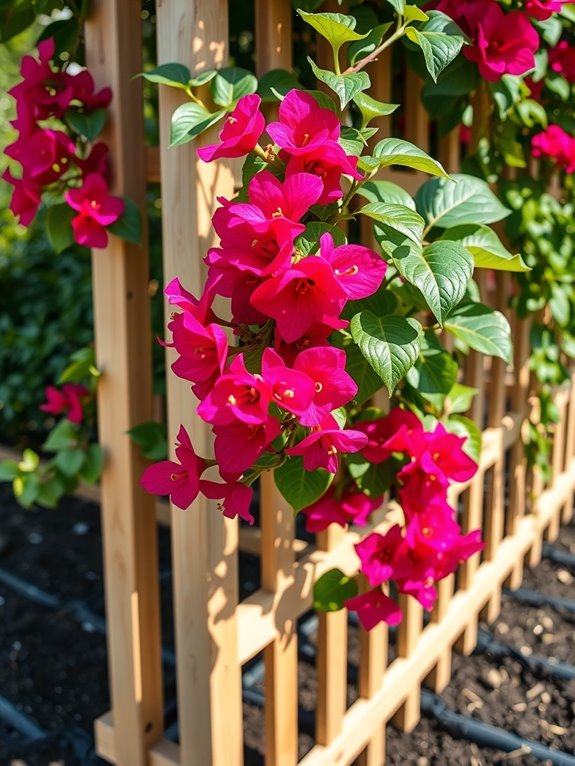
I like to get my bougainvillea’s support set up right when I plant it. I’ll install a trellis at planting time so the plant has something to grab onto from day one. A sturdy trellis works better than lighter options because bougainvilleas get heavy as they grow. I make sure the trellis has strong crossbars and secure fasteners that can handle the weight.
Right after planting, I start tying the stems to the trellis with soft plant ties or strips of cloth. I do this regularly to guide the growth upward and keep branches from snapping under their own weight. If I’m working with a younger plant, I can use a tomato cage as a temporary support. But I know I’ll need to switch to a proper trellis once the plant gets bigger.
Setting things up properly at the beginning saves me work down the road.
Anchoring Young Bougainvillea to Prevent Wind Damage
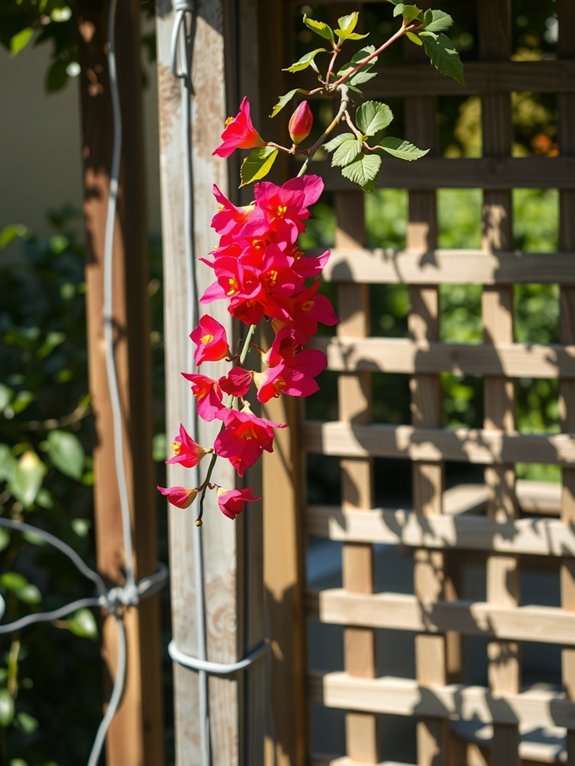
Young Bougainvillea plants need proper anchoring to stay upright as they grow taller and face wind stress. I use soft ties or plant clips to secure the main stem to a trellis at multiple points along the plant. Every few weeks, I check these ties and adjust them as new growth appears. This setup keeps the plant stable and prevents heavy branches from getting damaged or bent over by strong winds.
Securing Young Plants Properly
Why do young bougainvilleas topple over so easily in the wind? These vines don’t have the strength to hold themselves upright on their own. That’s why I anchor them properly right from the start.
When I plant a young bougainvillea, I install a sturdy support structure nearby. I use a trellis, fence, or arbor that’s built to handle weight. Lightweight or decorative structures won’t work because bougainvillea’s heavy, thorny growth will overwhelm them pretty quickly.
Next, I secure the stems using soft ties or wire. I attach these at multiple spots along the stem to prevent the plant from moving around during windy weather. Garden tape or plant clips work well for this.
I check my ties every 2 to 3 weeks as new growth appears. Tightening them keeps the plant stable while it develops. This early support guides the growth upward and prevents the branches from flopping or getting damaged by wind.
Wind Protection Methods
Where I live, strong winds can snap those heavy bougainvillea branches right off if I don’t anchor them properly from the start. I’ve learned that we need sturdy supports and strategic placement to keep our plants safe.
I position my bougainvillea close to walls or install windbreaks to reduce exposure in open spaces. For young plants, I securely tie main stems to a trellis, post, or fence using soft ties or plant tape. This reduces wind-induced whipping and promotes upright growth. I also use guy wires or bracing for tall, flexible canes in exposed areas.
Here’s what works for wind protection:
| Method | Location | Best For |
|---|---|---|
| Wall placement | Near structures | Young plants |
| Windbreak | Open gardens | All sizes |
| Guy wires | Exposed areas | Tall canes |
| Trellis support | Any spot | Training |
I check my ties regularly, tightening them as the vines grow. This prevents the ties from cutting into the stems or becoming too loose to do their job.
Weaving Branches Along Your Trellis
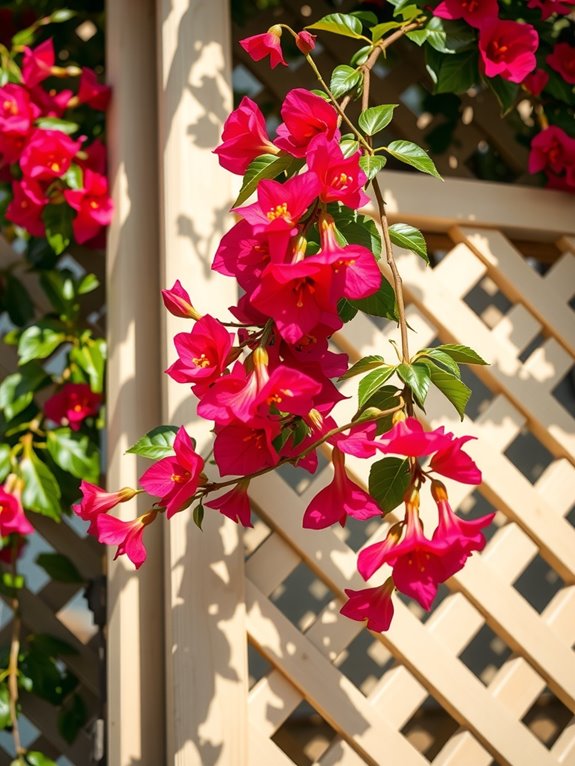
Once your bougainvillea starts growing, I weave those branches onto the trellis right from the start. I’m threading the stems through the trellis framework as they develop. This training method stops the plant from sprawling and creates that vertical display I’m after.
Weave bougainvillea branches onto the trellis early to prevent sprawling and create that stunning vertical display you’re after.
Here’s what I focus on:
- Weave stems horizontally through the lower trellis bars first. I secure them loosely with soft plant ties so they won’t cut into the stems as they thicken.
- Direct new growth upward along vertical supports as the branches lengthen and get stronger.
- Adjust ties monthly to make room for thickening stems.
I’m basically creating a living sculpture with my bougainvillea. By training it early and staying consistent, I’m shaping how the plant naturally grows. The trellis becomes the backbone that holds up those heavy branches. When I pay attention now, I do less work later and get a plant that’ll grow well for years.
How Pruning Prevents Overgrowth on Your Support System
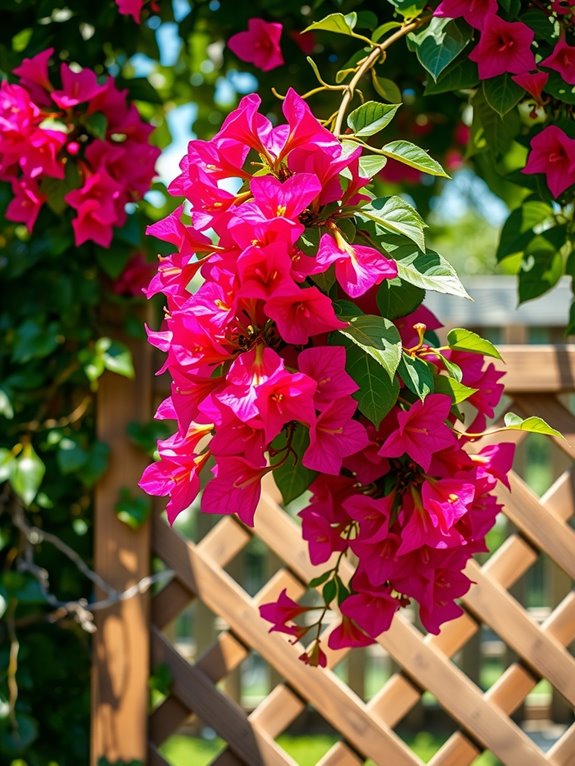
Training your bougainvillea along the trellis gets you halfway there, but pruning is what really keeps the plant under control. I start by removing any dead or damaged wood first. Then I cut back the long, leggy stems that stretch beyond my training system. This focused pruning keeps growth exactly where I want it on the trellis.
I trim regularly to stop the plant from overpowering the support structure itself. As I shape the plant, I remove branches that might damage the frame or block blooms. Regular pruning during training prevents your bougainvillea from sprawling messily and weighing down the supports. Without staying on top of maintenance, the plant will get out of hand and make a mess of things.
Common Mistakes When Supporting Bougainvillea
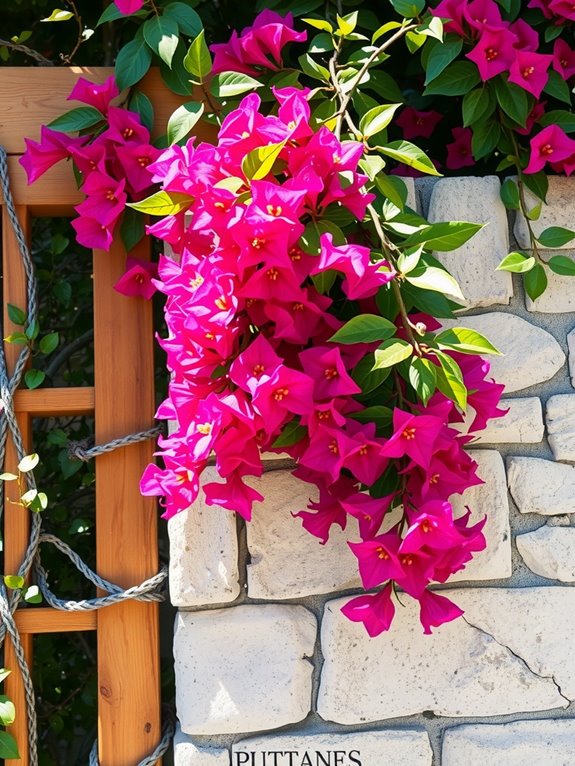
Why do so many bougainvillea growers end up with collapsed trellises and tangled vines? I’ve learned that we often make preventable mistakes that sabotage our support systems.
Many bougainvillea growers sabotage their support systems by making preventable mistakes that lead to collapsed trellises and tangled vines.
I used to install supports that were too flimsy for my plant’s eventual size and weight. A mature bougainvillea can weigh 50 to 100 pounds or more, so I need a sturdy trellis made from materials like pressure-treated wood or metal. Wimpy bamboo stakes or thin wire just won’t cut it.
I also used to let heavy branches flop around because I didn’t tie them adequately to the trellis. Now I secure stems to the structure using soft plant ties or strips of old cloth. I tie them every 6 to 12 inches along the branch. This guides growth and keeps everything upright.
I can’t just set it and forget it. Growth will overwhelm the structure or contact building surfaces if I don’t step in. Wind damage and branch breakage happen when I neglect proper support. I check my trellis system every few weeks during the growing season and add new ties as the plant expands.
Taking time to secure my bougainvillea prevents costly failures. My plant stays healthy and shaped the way I want it.
Protecting Your Trellis From Thorns and Vigorous Vines
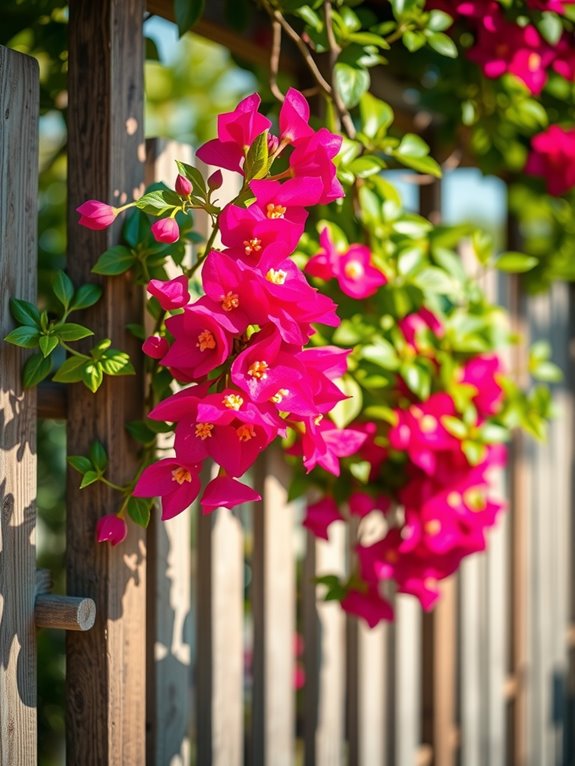
How do you keep those nasty thorns from shredding your trellis and your hands?
I always wear thick work gloves when I’m handling bougainvillea during training. The thorns are sharp enough to tear through skin and fabric, so protection matters here. I inspect my trellis every month for damage like bent crossbars or weakened supports that might fail under pressure from vigorous vines.
For vulnerable spots on the trellis, I wrap them with protective padding. Soft cloth strips or foam tubing work well for this job. The padding absorbs some impact from thick branches moving in the wind.
When I tie stems to the trellis, I use soft plant ties instead of wire. Wire can cut into thorns and damage both the plant and the structure. I make sure my trellis crossbars are sturdy enough to handle the weight of mature branches without bending or breaking. Metal or treated wood that’s at least 1 inch thick works best for supporting heavy growth.
When to Upgrade or Replace Your Support System
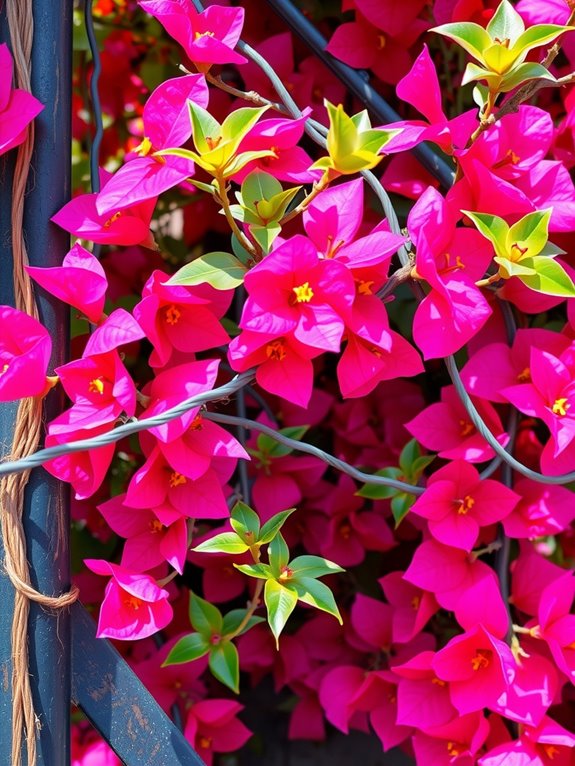
At some point, your bougainvillea’s growth will outpace what your current trellis can handle. Your plant starts thriving and suddenly that little support system isn’t cutting it anymore.
You’ll know it’s time for an upgrade when your stems are bending or breaking under their own weight. You might also notice the ties straining or see the plant looking unstable on windy days. New growth spreading beyond the trellis boundaries is another sign you need something bigger.
When this happens, I upgrade to a sturdier trellis or arch system. A larger wooden or metal trellis offers better long-term stability for mature plants. I carefully untie the stems and reposition them on the new support system. Then I retie and continue my training routine. This keeps my bougainvillea healthy and looking good.