

Most zucchini varieties are bush types that grow fine without a trellis, but I’ve found that using one really helps. A trellis lets air move better around the leaves, keeps the fruit up off the ground so it doesn’t rot, and cuts down on disease problems.
I space my zucchini plants 18–24 inches apart. When I set up the trellis, I dig the legs at least 12 inches deep into the soil so it stays stable. I use soft plant ties (the stretchy kind work best) to secure the vines to the trellis every few days as they grow. I guide the main vines through the openings in the trellis as they get longer.
For the heavier fruits that develop, I make support slings from old fabric scraps or soft cloth strips. I tie these around the fruit and attach them to the trellis so the weight doesn’t snap the vine. There’s more to learn about keeping your trellis anchored properly and timing when you plant to avoid pest problems.
Do Zucchini Plants Actually Need a Trellis?
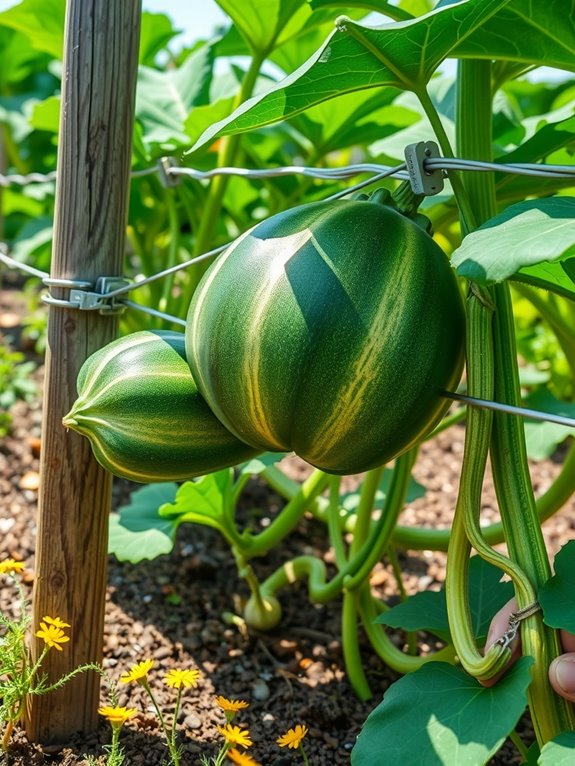
Most zucchini varieties grow as bush-type plants. They’re stocky and compact on their own, so I don’t actually need a trellis for them to do well. That said, I can add one if I want certain benefits.
A trellis gives me better airflow around the leaves, which cuts down on powdery mildew disease. It also keeps my fruit off the ground where it might rot or get damaged by bugs. The downside is that a traditional trellis can crowd my leaves and needs regular upkeep as the plant gets bigger.
I’ve had better luck using tomato cages or stakes instead. These work well for most home gardens like mine without the hassle.
Bush Varieties vs. Climbing Varieties: Which Can You Trellis?
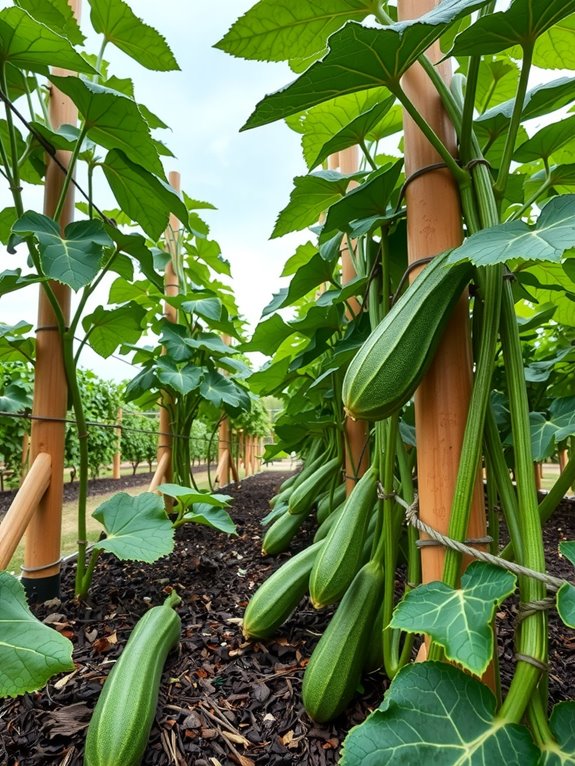
Most zucchini varieties are bush types that grow outward instead of upward. They don’t naturally climb or grab onto supports like pole beans do. I find bush varieties stay compact, which makes them easier for home gardeners like me to manage.
Climbing zucchini varieties exist but they’re harder to find in seed catalogs. I can trellis these climbers successfully because they have the natural instinct to reach upward.
Even with bush varieties, I can add vertical supports for some benefits. Tomato cages or sturdy stakes help improve airflow around the leaves and keep fruit off wet soil. I just need to secure them carefully and watch that foliage doesn’t get too cramped. My choice depends on my garden space and what I’m comfortable managing.
Essential Support Systems for Zucchini: Stakes, Cages, and Trellises
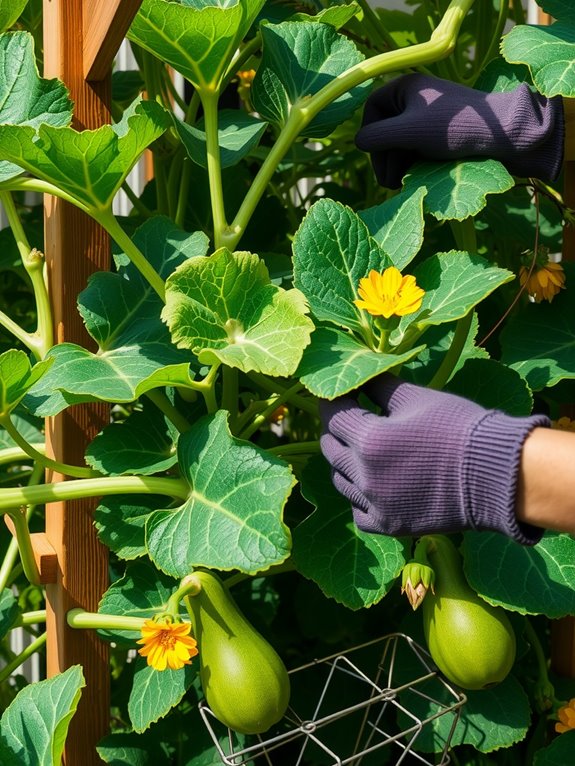
I’ve found that the right support system really makes a difference with zucchini. Let me walk you through the main options: tomato cages, stakes with clips, and wall trellis kits. Each one works differently depending on whether you’re growing bush varieties (compact plants that stay small) or vining varieties (plants that spread and climb).
Once you pick the right system for your setup, I’ll show you how to install it and keep your plants trained as they grow. The key is matching the support to your plant type and your garden space.
Support Methods And Options
So what’s the best way to keep your zucchini plants standing tall and healthy? I’ve got several solid options that’ll work for your garden setup.
| Method | Best For | Key Benefit |
|---|---|---|
| Stake-and-clip | Bush varieties | Simple and affordable |
| Tomato cages | Compact spaces | Quick installation |
| Trellis design | Vining growth | Maximum airflow |
I like the stake-and-clip method when I’m working with bush varieties. I place a wooden stake about 4 to 6 feet tall right beside the plant stem. Then I attach the growing stems with soft clips or strips of cloth so they don’t get damaged. It’s straightforward and won’t cost you much.
Tomato cages work well if I’m short on space. They’re easy to set up and I can slip them over the plant. The downside is I have to watch where the fruit hangs so it doesn’t rest on the ground or rub against the cage.
For vining zucchini, I go with a sturdy trellis that’s at least 6 feet tall. I look for Zn-Al-Mg steel trellises (that’s zinc, aluminum, and magnesium mixed together) because they hold up to heavy fruit without rusting. As the vines grow, I regularly guide them through the trellis openings. This keeps branches from breaking and lets air flow around the leaves so disease doesn’t spread.
Installing Vertical Growing Systems
Why let zucchini vines sprawl all over your garden when you can grow them up instead? I’m going to create a vertical growing system that makes better use of my garden space.
First, I’ll place a sturdy trellis on the north side of my raised bed. This positioning maximizes sunlight exposure on the plants. A Zn-Al-Mg steel wall trellis works well because it resists rust and can handle the weight of heavy fruit. I need to secure the trellis firmly before I plant anything so it stays anchored properly.
Next, I’ll plant my zucchini 18-24 inches apart along the trellis line. If I’m using a raised bed, I’ll space them 12-15 inches apart instead. As the main vine grows, I’ll guide it onto the trellis structure. I’ll use plant ties or clips to secure the stems gently without damaging them. The best time to train vines is in the morning when they’re most flexible.
My trellis setup can support up to 130 pounds of fruit weight, so I don’t need to worry about it failing under a healthy harvest.
How to Anchor Your Trellis Deeply and Securely
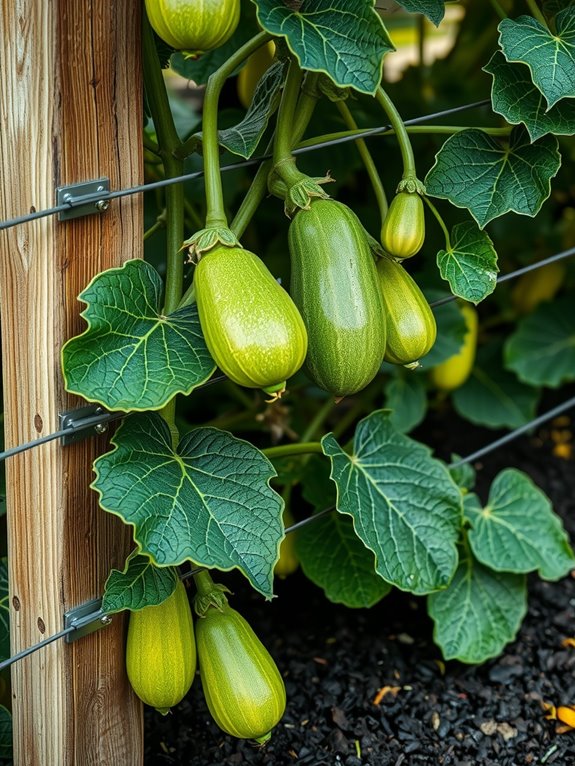
When I’m growing zucchini vertically, I need my trellis to stay in place. Heavy fruit loads put real stress on the structure, so anchoring it properly matters a lot.
I go with steel trellis models like Vegega Zn-Al-Mg, which can handle up to 130 lbs of fruit weight. I drive stakes or anchor points at least 12 inches deep into the soil to keep things stable. If I’m mounting a trellis against an outdoor wall, I use wall kits that drill directly into the structure for a permanent setup.
I’ve learned that shallow anchoring causes wobbling and bent plants. When I anchor deep, my zucchini vines stay secure as the fruit gets heavier. I also position my trellis on the north side of raised beds, which gives me the best stability for the overall structure.
Spacing Zucchini Plants for Vertical Growth Success
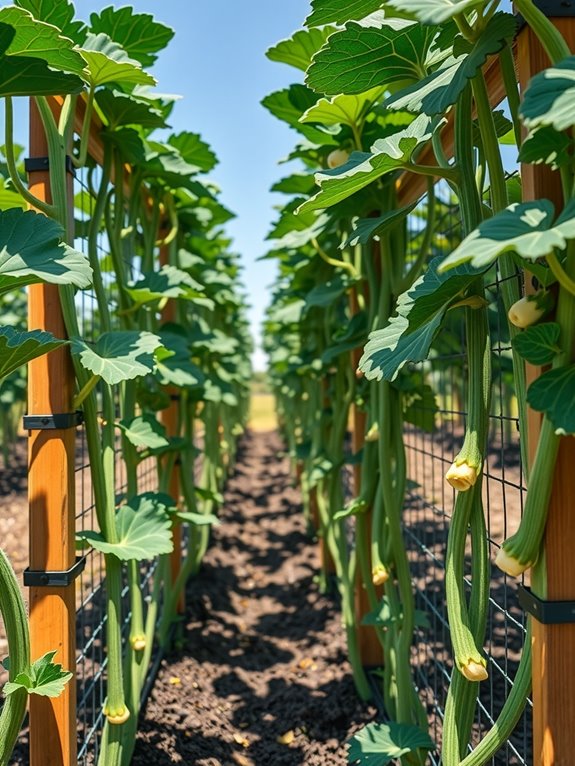
When I’m growing zucchini vertically, spacing really matters. It saves ground space and keeps my plants from competing for water and nutrients. I space my plants 18-24 inches apart along a trellis line in ground gardens or 12-15 inches apart in raised beds. This gives each plant’s root system room to develop without crowding.
Getting the spacing right from the start means I won’t have to untangle vines later. My plants get better air circulation too, which helps them stay healthy.
Ground Space Conservation
How much ground space do you actually need when you’re growing zucchini vertically? I’ve found that vertical gardening saves serious ground space while you still get abundant harvests.
When I plant zucchini in the ground, I space them 18–24 inches apart. In raised beds, I can get away with 12–15 inches between plants. The tighter spacing works in raised beds because the soil is more concentrated and the roots stay healthier.
Proper spacing prevents crowding and competition for water and nutrients. Good air circulation also reduces disease risk, which I’ve noticed happens when plants are too close together.
I like to think of vertical gardening as stacking your garden upward instead of spreading it outward. This means a small backyard gives me room for more plants. I recommend measuring twice before you plant. You’ll appreciate the extra ground space you’ve freed up for other crops or just a place to sit and relax.
Proper Distance Between Plants
Now that you know how much ground space you need, let’s figure out the spacing between plants. I need to space my zucchini properly so they grow well in a vertical setup. Here’s what works for me:
| Setup Type | Spacing | Root Support | Air Flow |
|---|---|---|---|
| Ground beds | 18–24 inches | Strong systems | Better circulation |
| Raised beds | 12–15 inches | Compact growth | Improved airflow |
| Bush varieties | Account for 3–5 ft spread | Adequate room | Prevents crowding |
| Trellis lines | Equal intervals | Reduced competition | Disease deterrent |
When I start seeds, I’ll sow 2–3 seeds per hole and then thin them out (meaning I’ll remove the weaker seedlings) so only the strongest one stays. This gets me to that 18–24 inch spacing I need along my trellis lines. As my vines grow, I’ll keep adjusting them to maintain equal spacing and prevent crowding. Good spacing means better air circulation around the leaves and stems, which helps prevent diseases and lets my fruit grow bigger and healthier.
Root System And Competition
Your zucchini’s root system is the hidden foundation that determines whether your vertical setup thrives or struggles. When I space plants too closely, roots compete fiercely for water and nutrients. This competition limits the energy my plant redirects to climbing and fruit production.
With proper spacing, I get these results:
- Roots spread laterally without crowding neighbors
- Each plant accesses sufficient moisture and nutrients
- Better airflow reduces soil-borne diseases
- Vines grow vigorously up my trellis
I space plants 18-24 inches apart in ground beds or 12-15 inches in raised beds. For my root system, I mix a well-drained soil: 2 parts garden soil, 2 parts compost, and 1 part perlite (a lightweight volcanic material that keeps soil from getting waterlogged). This combination supplies ample moisture without drowning the roots, supporting productive vertical training and healthy fruit development throughout the season.
Train Your Zucchini Stem to Climb
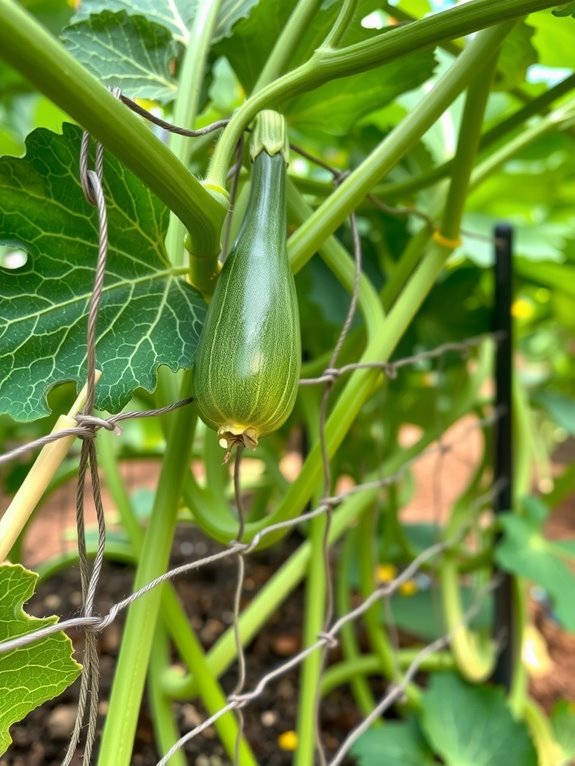
Once my zucchini seedlings reach 12–18 inches, I’m ready to start guiding them up a trellis. I weave the main vine through the structure as it grows. I use plant ties or strips of cloth to secure each section firmly to the trellis. Every few days, I check for stems that are growing the wrong way and adjust them to prevent breakage.
I set up my trellis on the north side of my raised beds. This spot gets good sunlight without the stems overheating during hot afternoons. Growing zucchini vertically gives me several real benefits. The fruit stays off the ground where it stays cleaner and safer from pests. Air flows better around the leaves, which means less moisture sits on them and fewer disease problems. Plus, I can spot ripe zucchini way easier when they’re hanging at eye level instead of hidden under all those leaves.
Tie Stems and Fruit to Prevent Breakage
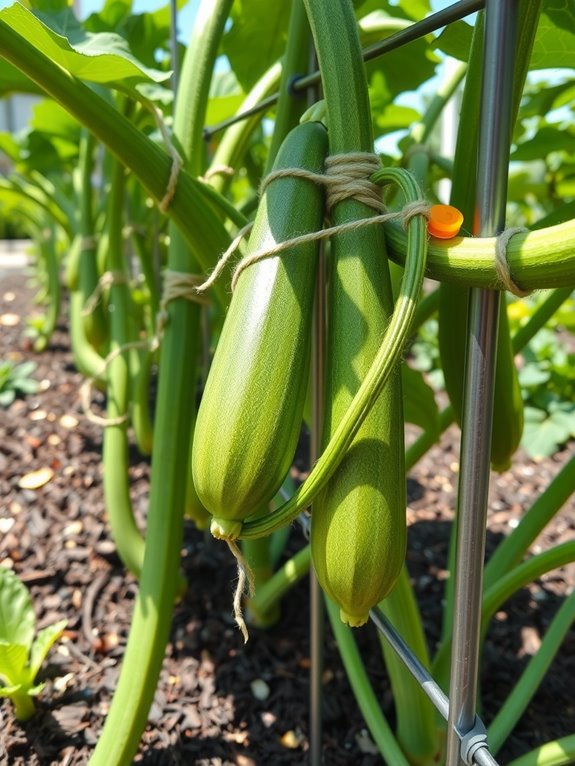
As your zucchini vines grow up the trellis, I need to tie up the stems and fruit so they don’t snap from their own weight. I use soft plant ties, cloth strips, or velcro straps because these won’t dig into the stems as the plant gets thicker. Hard materials like wire or twine will cut right into the tender growth.
I check my ties every few days and loosen them as the stems expand. This keeps the heavy fruit supported and prevents the stems from breaking. When I reposition the ties, I move them slightly higher on the stem to follow the plant’s growth. A good rule of thumb is to tie the fruit when it reaches about 6 inches long, before it gets too heavy for the stem to handle on its own.
Plant Ties and Materials
How do you keep those sprawling zucchini vines from snapping under their own weight? I’ve found that the right plant ties and trellis materials make a real difference. Here’s what I use:
- Soft plant ties – These flexible strips won’t cut into tender stems as they grow
- Garden twine – A gentle option that stretches slightly with new growth
- Velcro strips – Adjustable ties I can loosen as vines thicken
- Fabric scraps – Old t-shirt pieces work well
I attach stems gently without tight constriction. The key is positioning ties so they hold stems securely while allowing continuous upward growth. I adjust my ties every few days as new growth appears. This prevents slipping and damage. For heavy fruit loads reaching 130 pounds, I reinforce ties to prevent breakage. Quality materials and consistent maintenance turn vertical growing from risky to reliable.
Securing Stems Properly
When do those delicate seedlings need their first tie to the trellis? I secure them once they’ve got 12–18 inches of trailing growth. I use soft plant ties or fabric strips to guide the stem onto the trellis without damaging it.
| Growth Stage | Tie Position | Frequency |
|---|---|---|
| 12–18 inches | Lower stem section | Weekly |
| Mid-growth | Every 6–8 inches | Every 5 days |
| Fruiting | Above fruit area | As needed |
| Heavy fruit | Multiple support points | Twice weekly |
| Mature vine | Entire length | Monitor daily |
I attach stems as they grow and adjust ties regularly to keep everything vertical and stable. I position ties just above fruiting areas so they don’t restrict the fruit from expanding. My trellis system keeps the main stem firmly anchored from bottom to top.
I never rely on leaves for support since they’ll collapse under the weight of fruit. Regular adjustments prevent breakage when the fruit gets heavy. I check my ties every few days during the growing season and add more support points when needed.
Supporting Heavy Fruit
Why do zucchini stems snap when fruits get heavy? Those massive fruits can weigh up to 130 lbs total on my trellis. I need to support them properly to keep everything from breaking.
I use plant ties or soft strips to secure stems without cutting into them. I check my ties regularly and adjust them as the plant grows. I also tie developing fruit directly to the trellis for extra support. Pruning lower leaves helps improve airflow around the tied areas.
I’m basically creating a safety net for my harvest. When I tie stems and fruit carefully, I prevent breakage and stress on the main vine. I choose sturdy materials like Zn-Al-Mg steel for my trellis. A well-anchored setup handles the weight without sagging.
I get bigger, healthier zucchini when I invest in proper support.
Prune Zucchini Leaves for Better Airflow
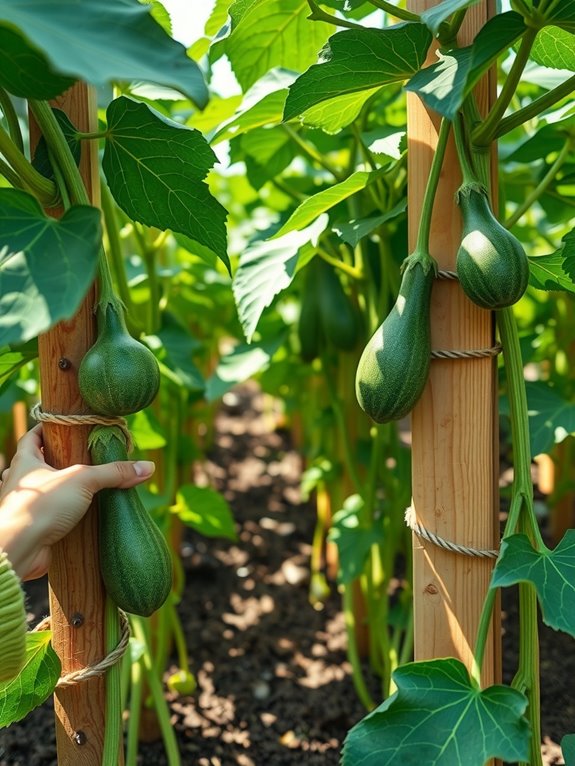
Since zucchini plants get dense and bushy, I remove some lower leaves to let air flow through and reduce disease problems. I start by looking for leaves that touch or lay on the soil. These create moisture pockets where fungal issues thrive.
I prune by removing the lowest 6 to 12 inches of foliage around the plant base. This opens up space and improves air circulation. I don’t strip the plant bare though because that stresses it out. I assess what I actually need based on spacing and existing airflow before I cut anything.
After pruning, I pair this with drip irrigation or soil-level watering. I keep water off the leaves, which really minimizes fungal problems. This simple approach protects my harvest.
Water Your Zucchini at Soil Level
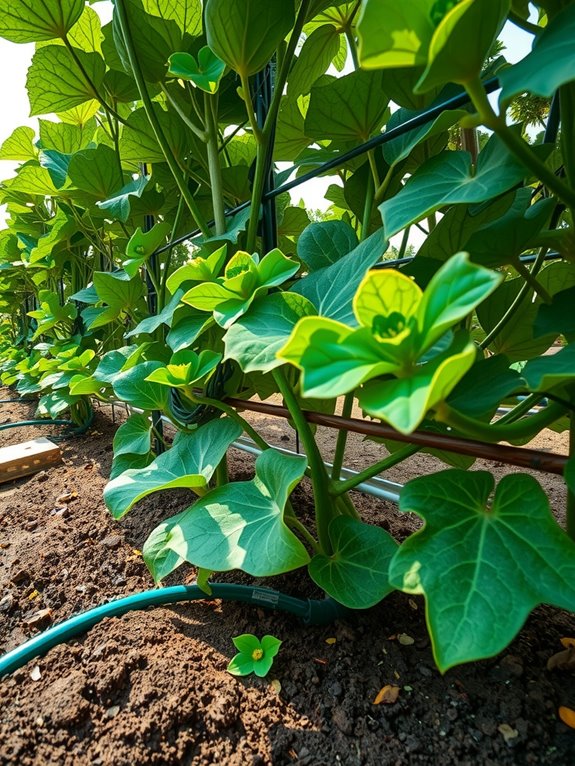
How I water my zucchini plants really does make a difference in keeping them healthy and productive. When I water at soil level, I’m setting myself up for success.
I use drip irrigation or soaker hoses to deliver water directly to the roots where my plants need it most. This method keeps the upper leaves dry, which prevents powdery mildew and other fungal problems that show up when foliage stays wet. It also helps air circulate better around the plants.
I’m aiming for about one inch of water per week to support steady fruit development. During hot conditions, I need to water more frequently to keep up with what the plants are using. When I’m using vertical supports or trellises, I time my irrigation to reach the soil at the plant’s base. This prevents water stress and helps my zucchini develop strong roots consistently.
Use Mulch to Protect Fruit From Wet Soil
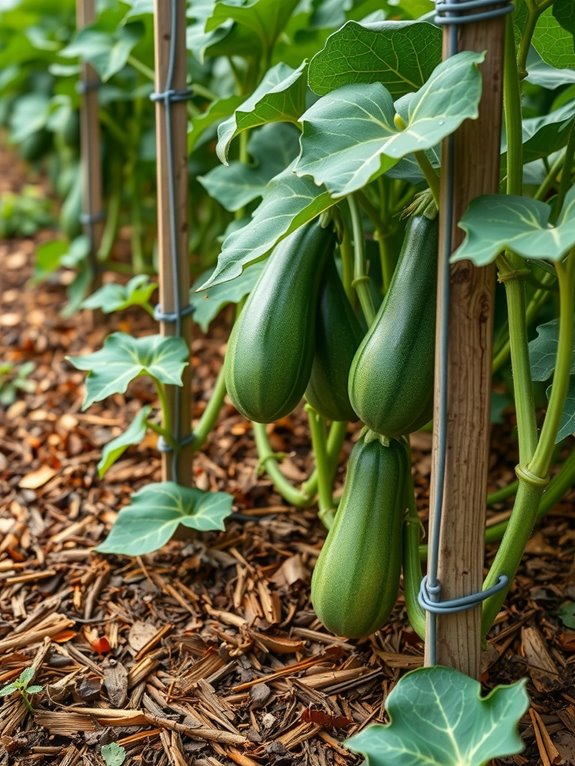
I put 2-3 inches of organic mulch like straw or shredded leaves around each of my zucchini plants. This barrier keeps the soil from splashing onto my fruit when I water or when it rains. Wet soil causes fungal infections and rot, so keeping my zucchinis elevated and dry really matters.
The mulch does a few things for my garden. It stops weeds from growing, which means less competition for nutrients my plants need. It also keeps the soil temperature stable and reduces how much water evaporates from the ground. Since the mulch sits between my fruit and the dirt, my zucchinis stay cleaner and healthier.
I refresh my mulch every 4-6 weeks as it breaks down. I just add more of the same organic material around each plant. This keeps my zucchinis protected from disease throughout the growing season.
Avoid These Zucchini Trellis Mistakes
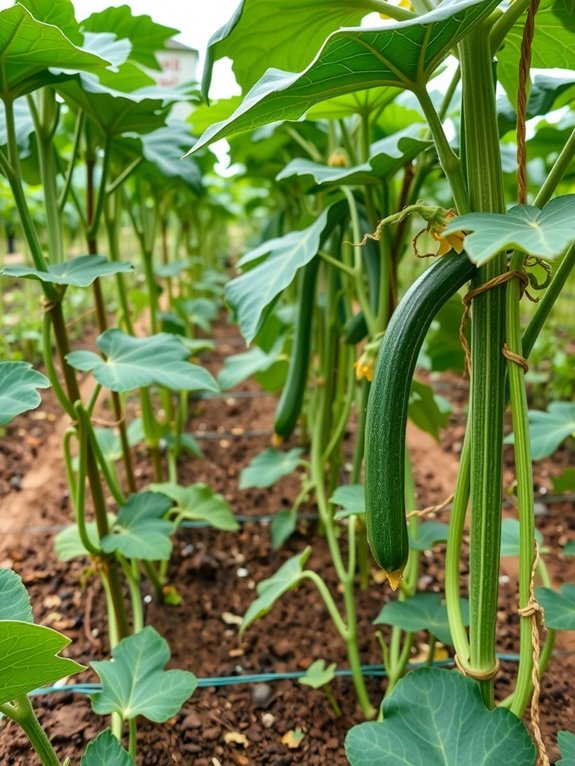
When you’re setting up a trellis for your zucchini, it’s easy to make choices that actually hurt your plants instead of helping them. I get excited about growing zucchini vertically, but mistakes happen fast when I’m not careful.
Here’s what I need to avoid:
Tying vines too tightly, neglecting heavy fruit support, installing heating wires, and failing to maintain airflow—these mistakes invite failure.
- Tying vines too tightly, which cramps leaves and restricts growth
- Neglecting to secure heavy fruit as plants mature and weigh down branches
- Installing wires that heat up and cause leaf burn on contact
- Failing to maintain proper airflow around foliage, which invites disease
I’ve learned that zucchini plants need breathing room. When I give them space and support their fruit properly, they reward me with better harvests. I stay attentive to these details, and my vertical garden does well.
Support Heavy Zucchini Fruit Without Breakage
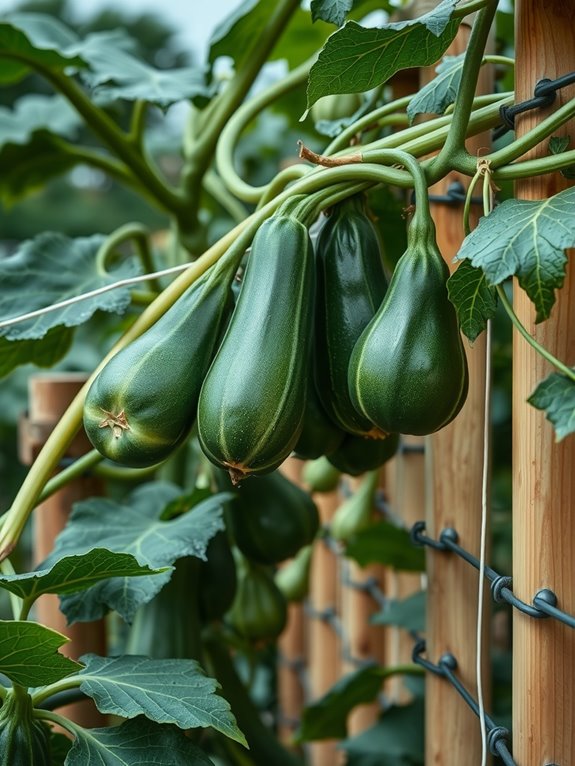
Why do zucchini plants snap and break under their own weight? Heavy fruit pulling downward stresses stems that aren’t properly supported. I need sturdy structures to handle the load safely.
| Support Type | Weight Capacity | Best For |
|---|---|---|
| Sturdy Trellis | Up to 130 lbs | Vining varieties |
| Tomato Cage | Up to 130 lbs | Bush types |
| String Support | Variable | Light fruit |
| Fabric Sling | Up to 130 lbs | Individual fruit |
| Wire Grid | Up to 130 lbs | Multiple stems |
I anchor my trellis deeply into the soil before the vines grow heavy. As fruit develops, I cradle each zucchini in fabric strips or slings. This spreads the weight evenly across my support system. I check regularly for sagging and adjust ties as needed.
When I set up my support, I dig the trellis legs at least 12 inches into the ground. I space the legs 2 to 3 feet apart for stability. Once the plants start climbing, I tie the main vines loosely to the trellis using soft twine or strips of old fabric. Loose ties prevent cutting into the stems as they grow thicker.
For individual fruit, I fashion slings from old t-shirt material or pantyhose cut into strips. I tie each sling to the trellis above the fruit, supporting the zucchini from underneath. This keeps the heavy fruit from snapping the stem where it connects to the plant. I check these slings weekly and tighten them as the zucchini gets bigger.
Preventing breakage means I get to keep my full harvest instead of losing prized produce to snapped stems.
Plant Early or Late to Dodge Squash Bugs
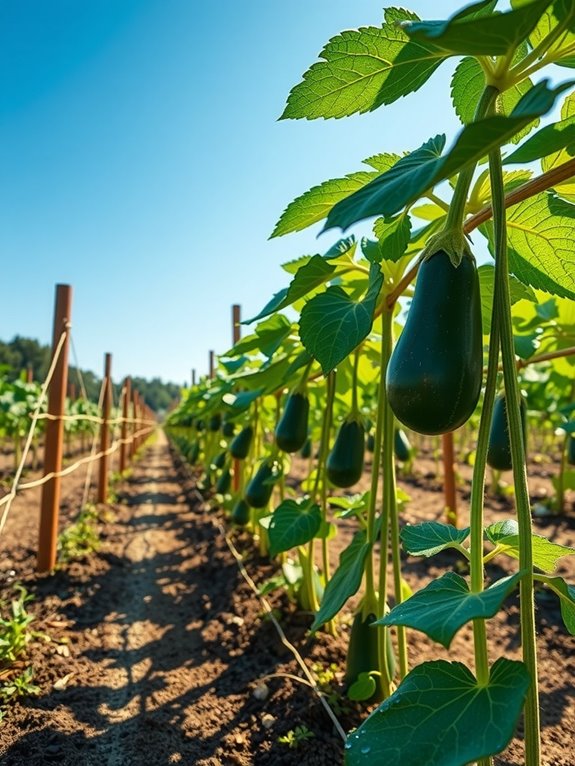
Once I’ve got my zucchini vines secured to a trellis and the fruit safely cradled in slings, I turn my attention to squash bugs. They can wreck my whole season if I’m not careful.
Timing really matters when I’m growing zucchini. I’ve learned that planting early or late helps me avoid the peak squash bug activity that happens in mid-season. Here’s my approach:
I plant in early spring or late summer to sidestep when squash bugs are most active. I also stagger my plantings across the season so I’m not risking everything at once. During the vulnerable periods, I use row covers or insect netting to protect the plants. These are lightweight fabrics that let light and water through while keeping pests off.
I scout my plants regularly for eggs and nymphs on the undersides of leaves. Catching problems early means they don’t get out of hand. I check my zucchini at least twice a week during growing season. This combination of smart timing and regular checking keeps my zucchini healthy without letting squash bugs take over.
How Vertical Growing Prevents Powdery Mildew and Increases Yield
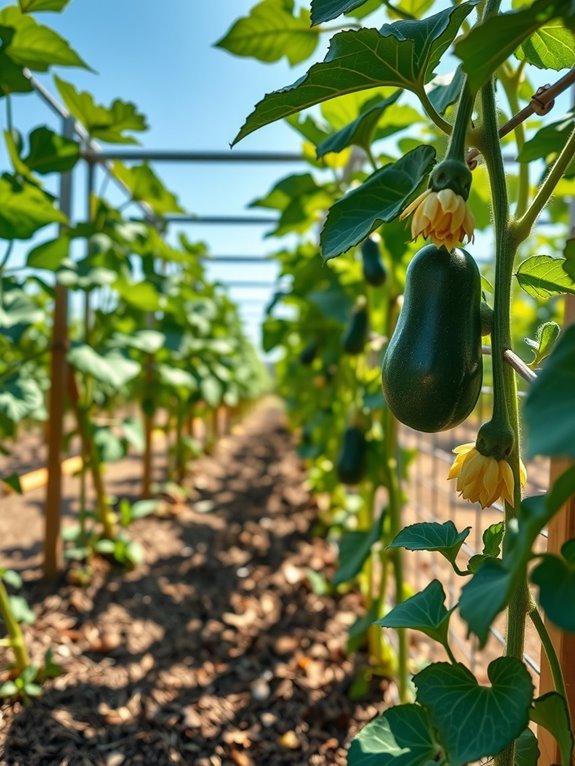
How much of a difference can getting your zucchini off the ground really make? I’ve found it’s genuinely transformative. When I grow zucchini vertically on a trellis, I’m solving two major problems at once.
Better air circulation keeps moisture off the leaves, which stops powdery mildew from taking hold. I’ve noticed this especially matters in humid climates where fungal diseases thrive. The elevated fruit gets more sunlight exposure too, promoting even ripening across the plant. I access developing zucchini easily without bending over, and ground contact disappears entirely—meaning less rot and dirt contamination.
Heavy fruits get continuous support from stakes or cages. I prevent branches from breaking under weight by guiding new growth through the trellis as it expands. This maintains open spaces that keep disease pressure low. My yields increase because I’m keeping the plant healthier and the fruit cleaner and more evenly ripened.
Getting Started: Your First Vertical Zucchini Garden
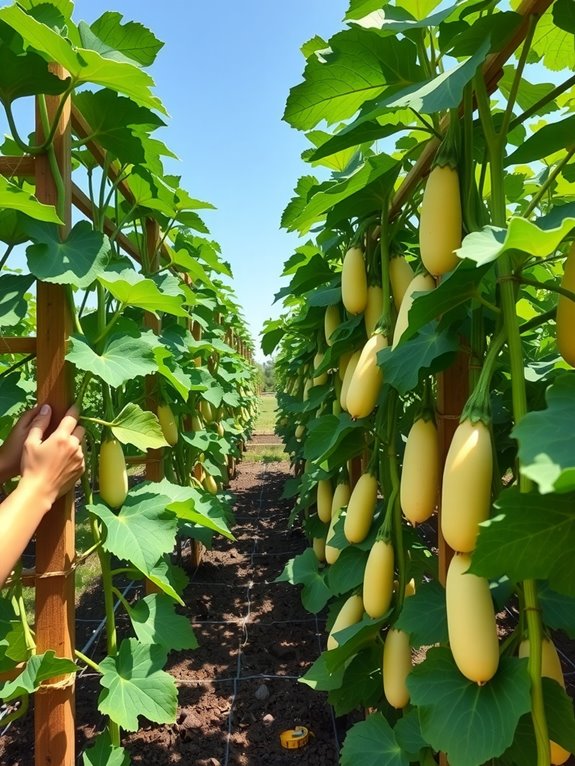
Now that you’ve seen how vertical growing works for zucchini, let’s build your first setup. I’ll keep it simple and focus on the right materials and approach.
First, I need to pick a sturdy trellis support. A Vegega metal trellis or tomato cage works well for this. I’ll anchor it securely because zucchini fruit gets heavy. Next, I’ll position my trellis on the north side of my raised beds. This maximizes sunlight and keeps the trellis from shading other plants.
When planting, I’ll put 2-3 seeds in each hole. Once they sprout, I’ll thin them down to 3 healthy seedlings. Once my main vine reaches 12-18 inches tall, I’ll guide it onto the trellis.
As my zucchini grows, I’ll tie the stems with clips or plant ties. I weave new growth through the trellis and adjust positioning every few days. This prevents the stems from breaking and stops crowding so everything stays organized.