You don’t always need concrete for fence posts. It really depends on a few things like your soil type, how deep the frost line is in your area, and how windy it gets where you live. Concrete does give posts up to seven feet tall good stability, but there’s a catch. It can trap moisture and cause wood rot if water doesn’t drain away properly.
I’ve found that gravel or sand backfill works well as an alternative. Both materials let water drain through and let air flow around the wood, which keeps it healthier. The frost line is the depth where soil freezes in winter. You need to bury your posts at least one-third of their height below that line so frost heave doesn’t push them up and loosen them. Before you start digging, check your local building codes since they often have specific rules about fence post installation.
Your site conditions matter most when you’re deciding between concrete, gravel, or sand. Sandy soil drains naturally, so you might skip concrete there. Clay soil holds water, so you’ll want better drainage options. Once you know what you’re working with, you can pick the method that works best for your fence.
What Determines Whether You Need Concrete: Soil Type, Region, and Wind Exposure
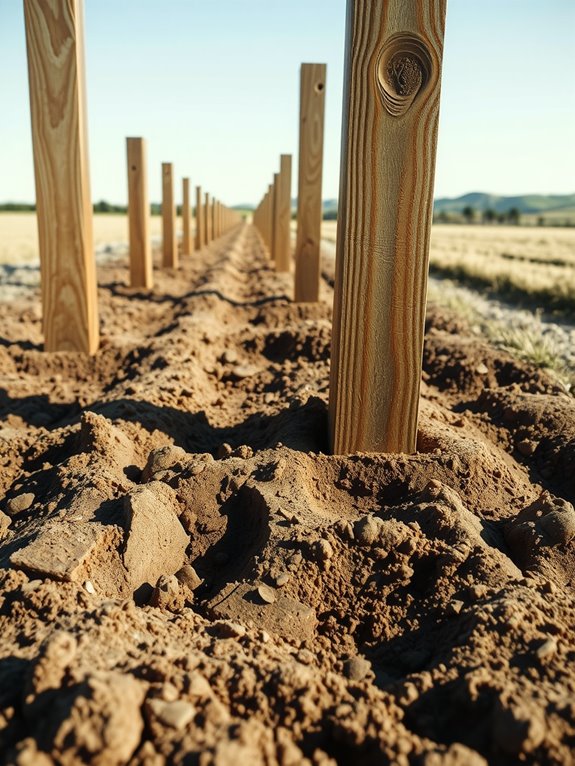
Why do some fence posts need concrete while others don’t? I find that three main factors decide this: soil type, region, and wind exposure.
Three main factors determine whether fence posts need concrete: soil type, region, and wind exposure.
My soil type matters most. Sandy soils drain quickly but shift easily, so I use concrete footers for stability. Clay soils hold moisture and can settle unevenly, which also means I need concrete to keep things solid.
My region’s frost line—that’s the depth where soil freezes in winter—influences my choice. In cold areas, I bury posts below this line. Concrete helps prevent heaving, which is when frozen soil pushes posts upward during freeze-thaw cycles.
Wind exposure is the final piece. I install concrete footers for 6-foot privacy fences in windy zones because they resist movement better than tamped soil alone.
I consider all three factors together when deciding whether I need a concrete footer for my fence posts.
Frost Lines and Local Codes: Why Depth Matters Before You Dig
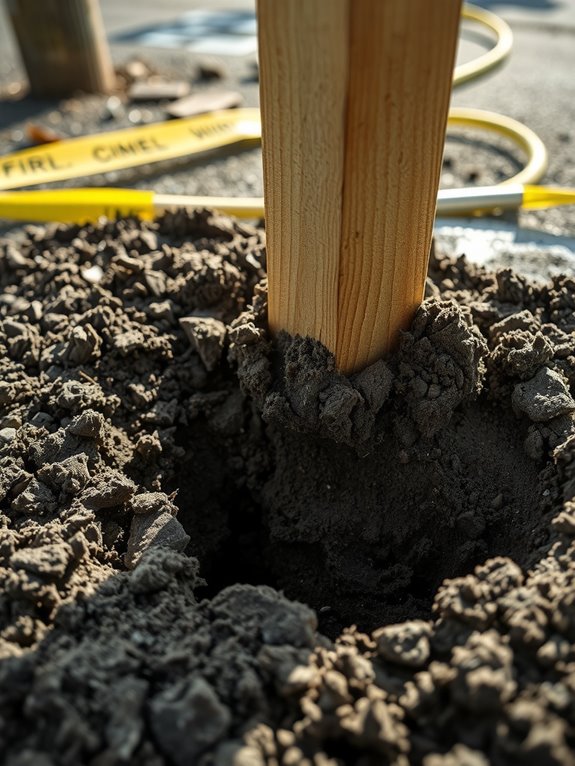
Once I figure out whether my soil and climate need concrete, I’ve got to dig in the right spot—literally. I need to talk about frost lines. These invisible boundaries mark where soil freezes during winter. In Holly Springs, NC, my frost line sits around 10 inches deep. Pittsburgh, PA? That’s roughly 44 inches. When I dig post holes, I must bury my posts below the frost line. Why? Freeze-thaw cycles heave posts upward, and that destabilizes my fence.
Here’s the thing: I can’t guess these depths. I need to check local codes first. My building or zoning authority has exact burial depth requirements for my area. They’ll tell me how deep my post holes should go. A general rule I follow is burying posts about one-third of the above-ground height. Whether I add a concrete footer depends on regional conditions too.
How Deep Should Your Post Hole Be?
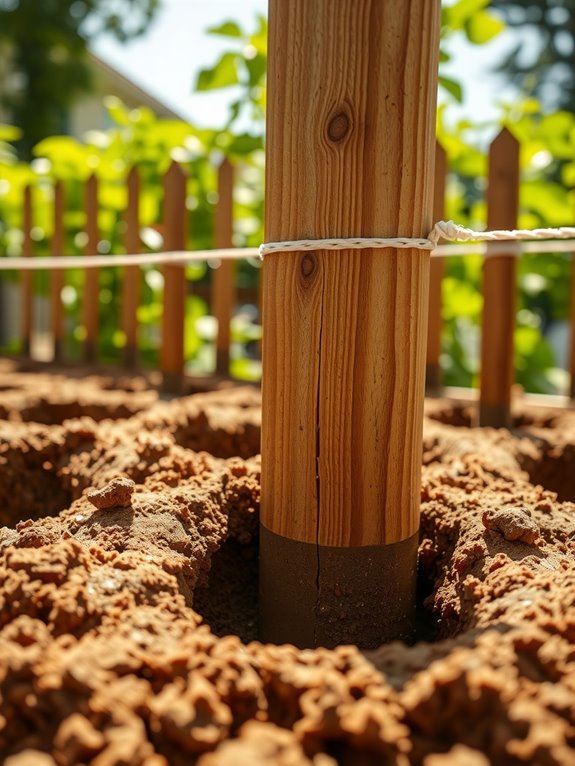
I use the 1/3 rule as my starting point. That means I bury about one-third of the post underground. So a 6 ft fence needs roughly 2 ft in the hole. But here’s the thing—I always check my local frost line first. The frost line is the depth where soil freezes in winter. Posts that don’t go deep enough can shift and heave when the ground freezes and thaws, which messes up your fence.
My local code often requires me to go deeper than the 1/3 rule suggests. So I verify those requirements before I even start digging.
The 1/3 Rule Guide
I follow the 1/3 rule when I dig fence post holes. This means I bury about one-third of the post underground. For a 6 ft finished fence, I dig roughly 2 ft deep. This depth keeps my fence stable and prevents leaning or sagging.
I also check the frost line, which is the depth where ground freezes in winter in my area. Burying my posts below this line stops heaving—that’s when frozen ground pushes up and damages fences. I look up my local building codes too because they often specify minimum hole depth and diameter requirements.
I use concrete at these depths to reinforce stability. Mixing it according to the bag instructions and pouring it around my posts makes the whole project last for years.
Frost Line Requirements
The depth I dig my fence post holes depends on where I live, and that’s where the frost line comes in. This is the depth the ground freezes in my region during winter. Holly Springs, NC has a frost line of about 10 inches, while Pittsburgh, PA reaches 44 inches. That’s a huge difference.
I need to bury my posts below this frost line to prevent frost heave. Frost heave is when frozen ground pushes posts up and destabilizes the whole fence. Before I start digging, I check my local building codes. These codes specify the exact buried depth and diameter standards for my area. I contact my local authority to verify the concrete use and post hole depth requirements specific to my location. This keeps my fence solid for years.
Local Code Compliance
When’s the best time to check your local building codes? Before I dig that first hole. I need to verify what my municipality requires for post depth and diameter.
First, I’ll contact my local building department. They’ll tell me my specific frost line depth and required post burial measurements. The frost line is how deep the ground freezes in winter where I live. This matters because frozen ground can push posts upward and damage the fence—that’s called frost heave.
I should also ask whether my area allows shallower post depths if I use alternative stabilization methods, or if I need to dig deeper. Frost line requirements vary dramatically by region. What works in Holly Springs, NC won’t work in Pittsburgh, PA. Since I’m building something that’ll last years, getting code compliance right from the start makes sense.
Pressure-Treated vs. Cedar: Choosing Wood for Ground Contact
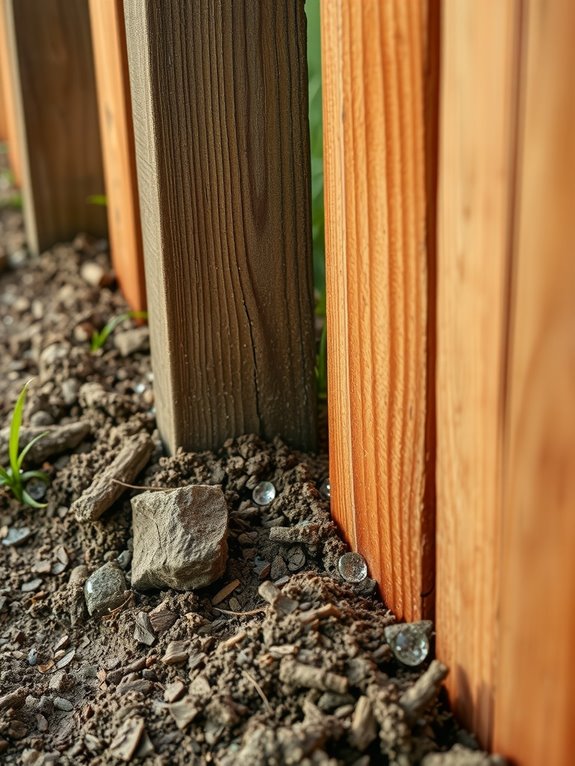
Why does wood choice matter so much when your fence posts touch soil? I’m building something that’ll stand for years, so picking the right material makes all the difference.
Pressure-treated wood is my go-to for ground contact work. I treat it with chemicals that fight rot and pests, keeping costs reasonable while ensuring durability. Cedar looks beautiful and naturally resists moisture, but it’ll cost me more upfront.
Here’s what matters: any wood touching soil needs that ground contact label. The resins in both cedar and pressure-treated lumber help resist decay. I’m really choosing between affordability and appearance. Pressure-treated wins on budget. Cedar wins on looks. Either way, I’m making smart fencing posts that’ll protect my investment.
When Concrete Adds Stability (and How Much You Need)
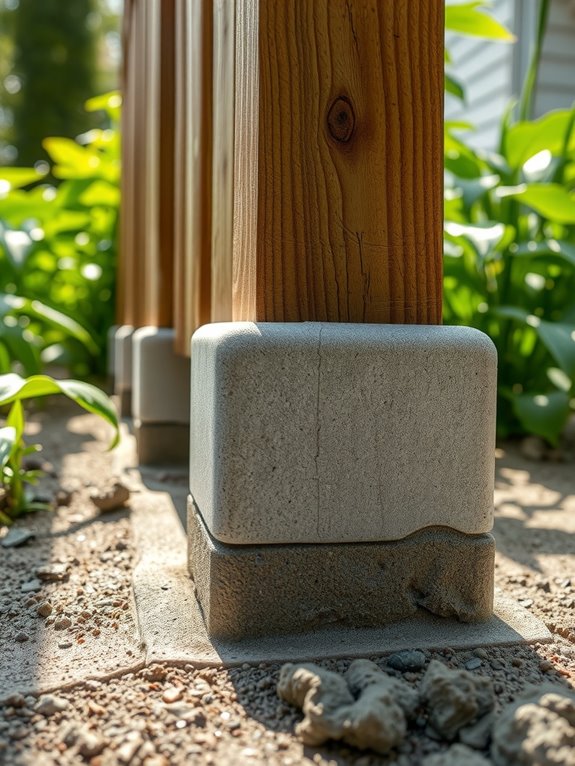
When you’re building a fence in windy areas or unstable soil, concrete keeps your posts from shifting. I’ve found that you’ll typically need anywhere from half a bag to two bags of concrete per post hole. The amount depends on your soil type, how tall your fence is, and how big your posts are.
Getting the right amount matters. Too little won’t hold your posts steady. Too much can actually trap moisture and cause rot faster than you’d expect.
Concrete’s Wind Resistance Benefits
Concrete footings give your fence posts a heavy base and a bigger contact area with the ground. This keeps them standing straight and stops them from moving around when the wind picks up.
I get real wind resistance when I use concrete. Here’s what it does for me:
- Stabilizes posts up to 7 feet tall by preventing leaning and sagging during gusty conditions
- Works best when I bury posts one-third of their length below the frost line (the depth where the ground freezes in winter) for maximum support
- Requires ½ to 2 bags per hole depending on my soil type and post size
The key is proper drainage around that concrete. Poor drainage traps moisture and speeds up rot, which weakens my whole setup. I need to manage water carefully so my investment lasts for years.
Calculating Proper Concrete Amounts
How much concrete do I actually need for each fence post hole? I typically use between ½ bag to 2 bags per post hole when setting fence posts. The exact amount depends on my soil type, fence design, height, and post size.
I calculate hole width at three times wider than my post width. For post hole depth, I dig deep enough for one-third of the post length plus about 6 inches. This keeps the post stable underground.
When pouring, I fill the concrete per post hole until it’s roughly 3 inches below the hole surface. I add water gradually—about one gallon per 50-pound bag mix. The concrete then cures in 4–6 hours to set properly. Getting this calculation right prevents instability and rot concerns.
Why Concrete Traps Moisture and Causes Rot
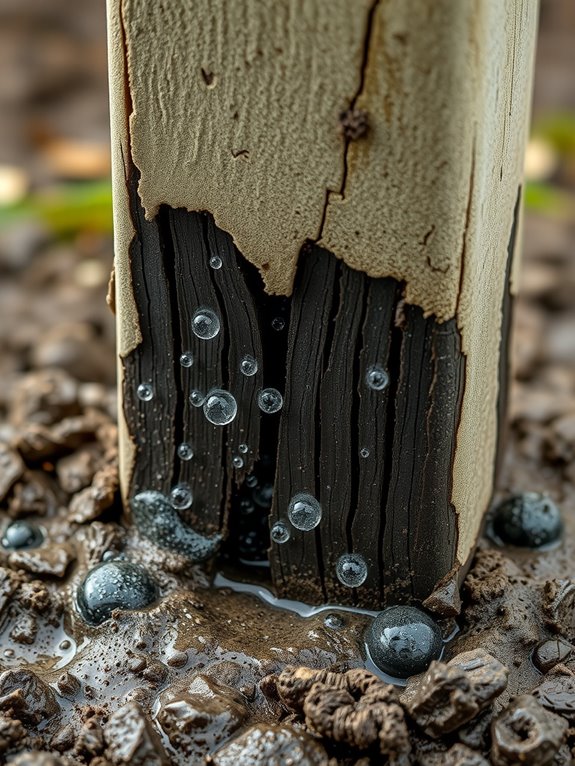
Why does concrete seem like the perfect solution for fence posts when it can actually speed up the very rot we’m trying to prevent?
I’ve learned that concrete creates a moisture-trapping problem around wooden fence posts. Here’s what happens:
- Concrete blocks drainage – Water can’t escape freely around your post. Instead, it pools and creates wet conditions that accelerate rot.
- Moisture gets trapped against wood – The concrete footing seals moisture directly against the post where it contacts soil. This speeds deterioration because the wood stays wet longer than it should.
- Rot develops hidden beneath the surface – Even if I wrap the post with tar or plastic sheeting, rot can still develop underneath where I can’t see it coming.
In high-moisture regions like Jacksonville, FL, I skip concrete altogether. Proper drainage matters way more than concrete when protecting wooden fence posts from rot. I use gravel, sand, or post-hole diggers that let water drain naturally instead of trapping it.
Gravel and Sand: A Concrete Alternative for Drainage
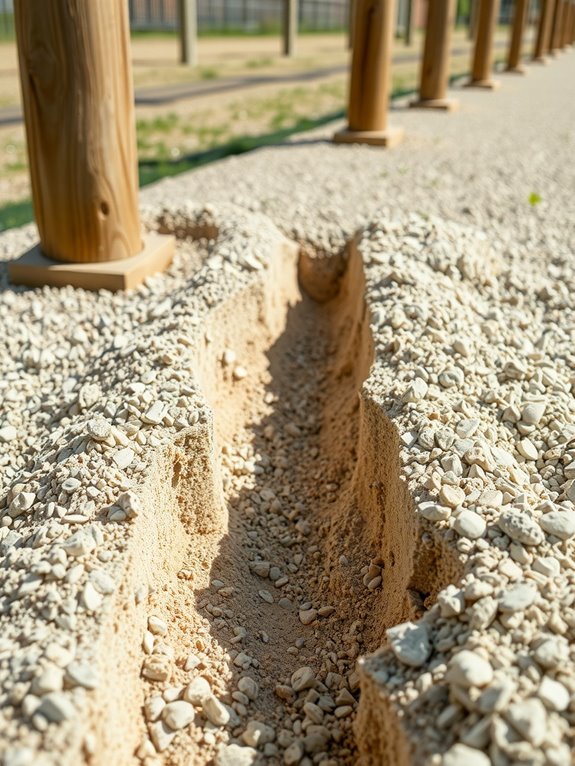
If you’re looking for a way to protect your fence posts without trapping moisture, gravel and sand offer a simple solution that works. I recommend placing gravel at the bottom of your posthole first. This creates drainage that keeps water away from your wood.
Sand fill works too—it wicks moisture downward and promotes airflow below the post. I combine crushed gravel with soil for solid support around the post itself. I compact this mixture in 4–6 inch layers as I fill up the hole.
Neither option requires concrete above ground. My posthole stays dry, my posts stay stronger longer, and I’ve avoided the moisture-trapping problems concrete creates. It’s a straightforward approach that keeps fences standing.
Post-Hole Diggers and Installation: Getting the Hole Shape Right
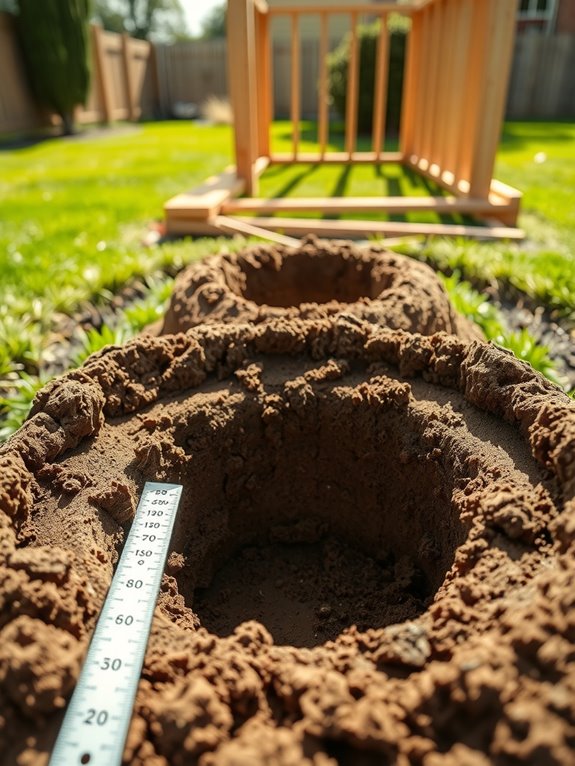
When I’m digging postholes for my fence, I skip the shovel and grab a post-hole digger or auger instead. These tools do the job right.
A post-hole digger creates wide-bottomed holes. Cone-shaped holes from a shovel don’t give me the support I need. I dig the hole about 2–3 times wider than the post itself. This extra space lets me pack backfill material properly so the fence stays solid.
For a 6-foot finished fence, I bury the post at least 2 feet below the frost line. The frost line is how deep the ground freezes in winter where I live. Going below it keeps the post from shifting when the soil thaws and refreezes.
Once I position the post, I compact the backfill in 4–6 inch layers. I use a level to check that the post is plumb, which means straight up and down. This careful setup keeps my fence stable through different seasons and bad weather.