Most strawberry varieties don’t actually need a trellis. They just sprawl across the ground naturally, and that works fine for many growers. But if you’re growing climbing varieties like Skyline or Mount Everest, things get different. These types produce long runners that stretch up to 1.8 meters, and they really do benefit from vertical support.
When I trellis my strawberries, I notice the fruit stays off the soil. That means less rot and fewer pests eating my crop. The air circulates better around the plants too, which keeps them healthier overall. I also get easier harvests since I’m not bending down as much, and I save space in my garden.
Whether a trellis is worth setting up depends on what variety I’m growing and what I’m trying to accomplish. If I want healthier plants and easier picking, a trellis makes sense. If I’m just growing standard strawberries and space isn’t an issue, I can skip it.
Most Strawberry Varieties Don’t Actually Need a Trellis
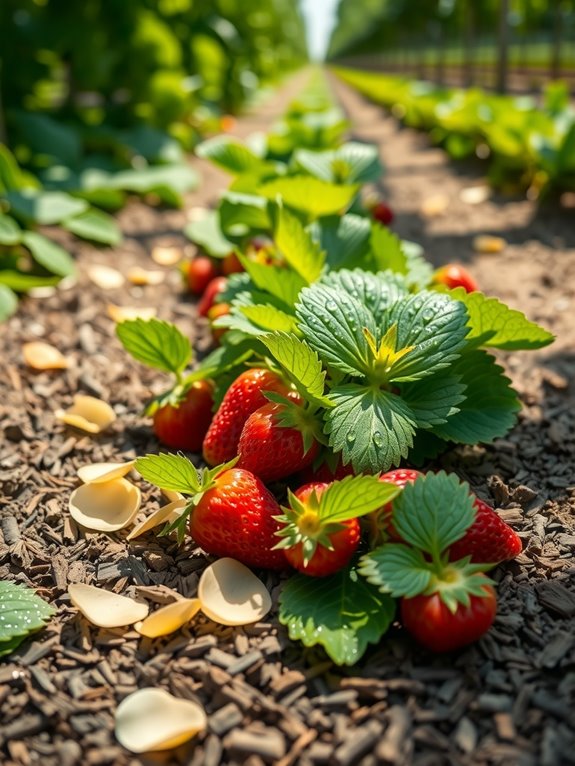
Most strawberry plants won’t climb or need a trellis to thrive. I used to think all strawberry varieties required support, but that’s not actually true. Standard strawberry varieties grow low to the ground with a spreading habit. They stay put without any climbing structure.
Only certain special varieties form long runners that need tying to a support system. These climbing types—like Skyline or Rambling Cascade—are the exceptions. Most strawberries I grow do just fine on their own since they’re naturally built to spread outward rather than upward.
I don’t need extra equipment for typical varieties. A trellis becomes useful only when I want specific benefits like better air circulation or keeping fruit away from soil.
Why Soil Contact Damages Your Strawberries
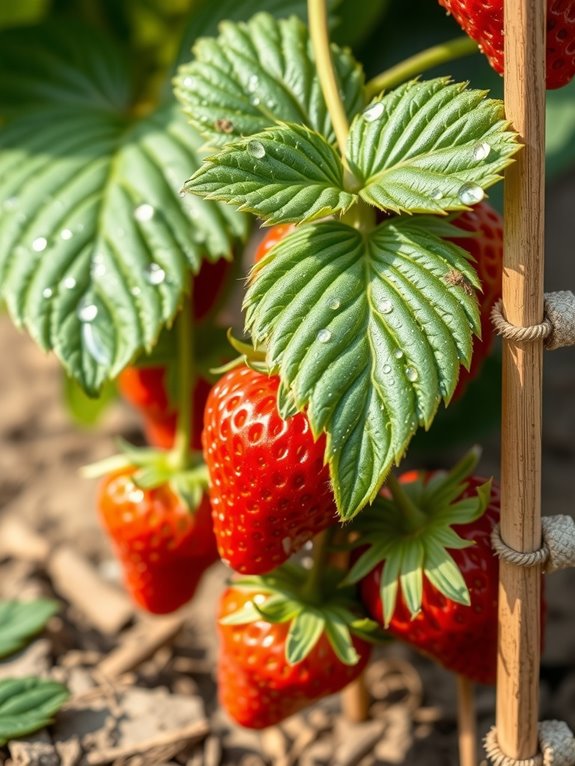
Why do strawberries sitting on soil run into so many problems? When soil splashes onto fruit during watering or rain, it brings pathogens (harmful organisms) and moisture that cause rotting. Your berries also bruise easily from direct contact with the ground.
Sitting on damp soil invites slugs and snails to feast on your crop. Beyond that, plants sprawling on soil don’t get enough air circulation. This means fungal diseases like mildew thrive in the moisture, and your leaves stay wet longer, which creates perfect conditions for infection.
I keep my strawberries off the ground to protect both the fruit and foliage from these soil-borne threats.
Climbing Strawberry Varieties That Thrive on a Trellis
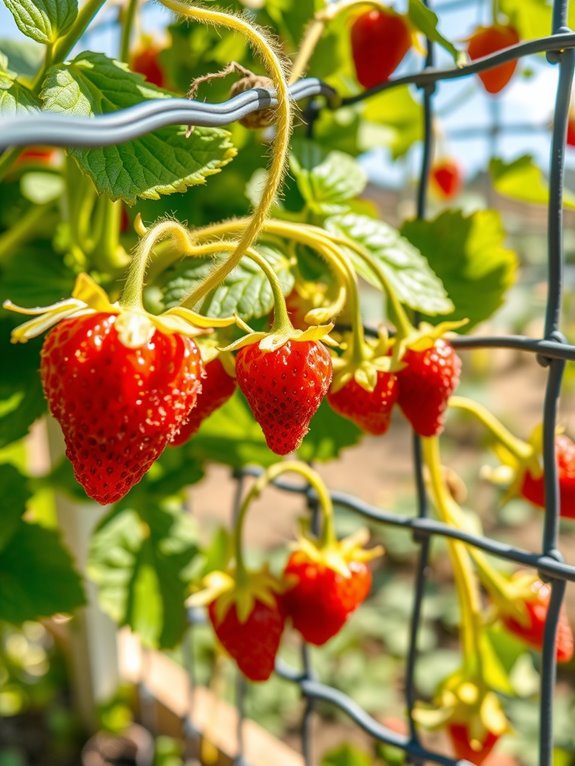
If you want to grow more strawberries in a smaller space, I’ve found that certain varieties work great on trellises. Skyline, Mount Everest, Rambling Cascade, and Mara de Bois are my go-to picks because they produce long runners—those are the vine-like stems that grow out from the main plant. These runners stretch between 1 and 1.8 meters, which makes them perfect for training up a support structure. I plant them as everbearing varieties, meaning they give me fruit throughout the growing season instead of all at once. When I guide their growth along the trellis, I get continuous harvests without needing a lot of ground space.
Popular Climbing Varieties
When I’m ready to grow strawberries vertically, I pick varieties that are actually built for climbing. Skyline, Mount Everest, Rambling Cascade, and Mara de Bois are the ones I go with. These aren’t typical strawberry plants. Their stems produce really long runners that I need to tie manually to a trellis or fence.
I support these plants around 1.5 meters tall, which makes a real difference in my garden. As the runners grow, I direct them upward and secure them there. This way the fruit cascades down instead of spreading across the soil. I get better air circulation around the leaves and stems, and the fruit stays cleaner too.
I plant these varieties in sunny spots with soil that drains well. They’re everbearing, which means I harvest fruit throughout the season instead of just once.
Growth Characteristics And Traits
Climbing strawberries put out long runners that can’t grab onto anything by themselves, so I need to tie them to a support structure. I’d use a trellis, fence, or netting for this. I recommend a trellis that’s about 1.5 meters tall to keep everything stable. As my plants grow, I’ll gradually tie the runners to the vertical structure. This keeps the fruit off the ground and lets air move better around the plants, which cuts down on pests and soil contact.
Varieties like Mount Everest, Skyline, and Rambling Cascade do well with this vertical setup. I can also pinch off early flowers or runners to help the plants get stronger. By moving the strawberries up instead of letting them sprawl on the ground, I save space and reduce problems with disease and bugs.
How Pests and Diseases Exploit Ground-Grown Plants
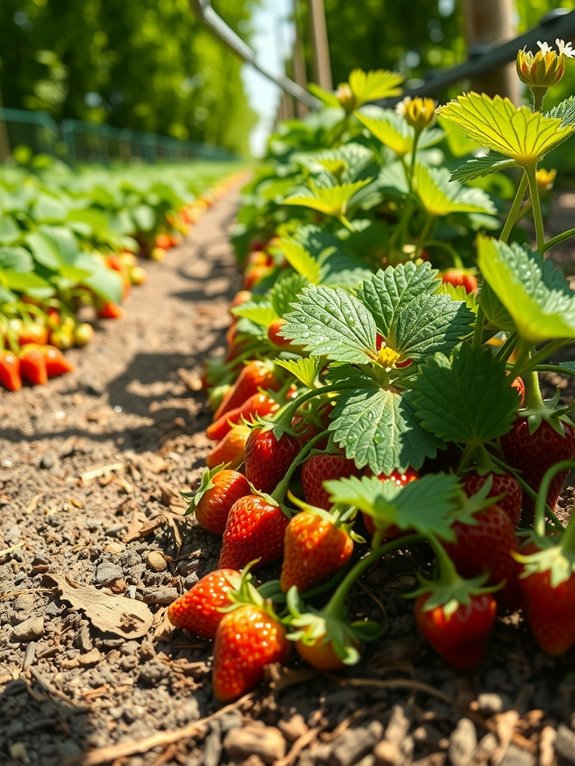
Growing strawberries directly on the soil creates problems I’d rather avoid. When I leave my berries on the ground, I’m basically inviting trouble.
Slugs and snails find ground-touching fruit irresistible and feast on my harvest before I can pick it. Soil-borne diseases thrive in damp conditions around low-growing plants and rot my berries from contact with wet earth. Crawling insects and ground-dwelling pests reach my crop more easily when plants sit low.
I’m also dealing with humidity that gets trapped under the plant canopy. This trapped moisture slows air circulation and creates ideal conditions for fungal diseases, which are plant infections caused by fungi (tiny organisms that spread through air and soil).
When I elevate my strawberries on supports, I reduce fruit contact with the ground. I also make pest inspection much simpler. I’m removing the welcome mat I accidentally laid out for pests.
Why Air Circulation Changes Fruit Quality
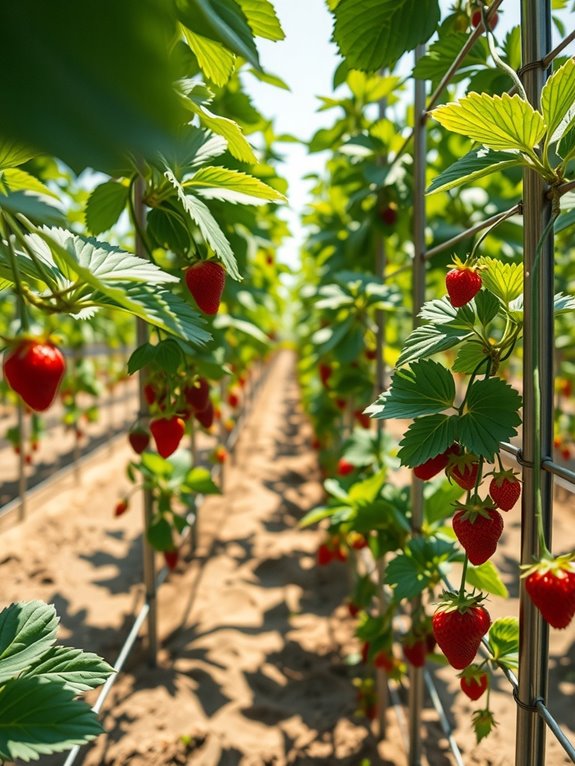
Air circulation makes a real difference in how well strawberries grow. When I use a trellis system, I’m creating better airflow around my plants. That matters because my leaves dry faster after rain or watering. Faster drying means I get fewer fungal diseases like powdery mildew, which is a white coating that shows up on leaves.
Keeping fruit off the soil is another big benefit. When berries sit in soil moisture, they rot or catch soil-borne pathogens—those are disease-causing organisms living in the dirt. By elevating my strawberries on a trellis, I prevent that problem altogether.
| Benefit | What Happens |
|---|---|
| Improved drying time | Fewer leaf spots |
| Less soil contact | Healthier berries |
| Better spacing | Larger berries |
| Lower humidity | Fewer diseases |
On a trellis, my strawberries sit up in better air circulation. My berries don’t sit in moisture, so they get bigger and stay healthier. The spacing between plants also helps me see and reach each berry easier when I’m harvesting.
Choose the Right Support Structure for Your Setup
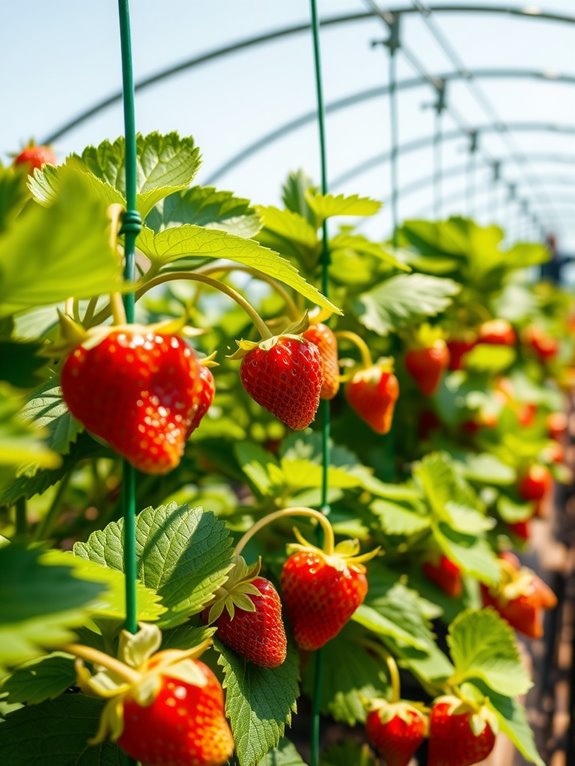
When I’m setting up trellises for strawberries, I need to pick a support structure that works with the climbing varieties I’m growing. Different setups do different jobs, so here’s what I’ve found works:
Trellises or garden fences guide the runners upright and keep the fruit away from the soil. Nets hold the canes steady while letting air move through the plants. Towers that stand 1.5 meters tall let me grow strawberries vertically, which is helpful when I have a small space.
For my smaller setup, I use spiral plant supports or trellis netting to fit more plants in a tight area. As the runners grow, I tie them gradually to the support structure to keep them from getting tangled together.
Save Space by Growing Strawberries Vertically
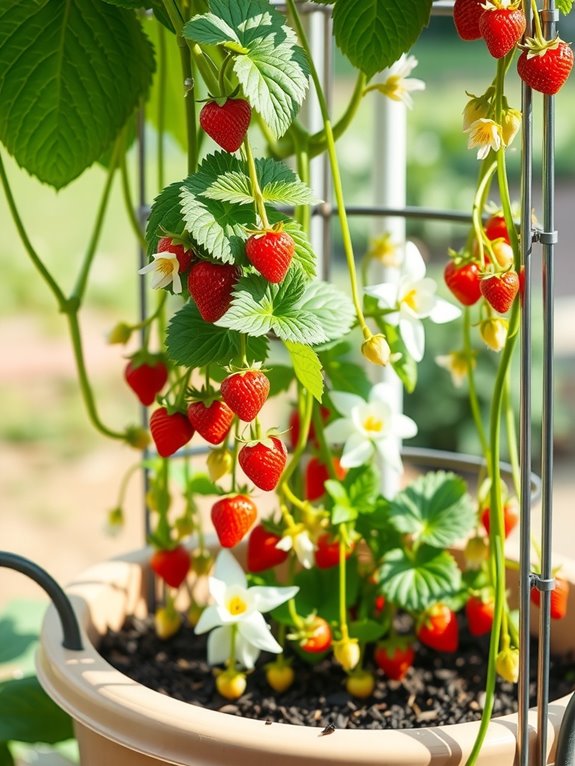
I’ve found that climbing strawberry varieties work really well when I’m working with limited garden space. They produce fruit across multiple seasons because they’re everbearing, which means they keep making berries throughout the growing year.
I set up a trellis about 1.5 meters (roughly 5 feet) tall for my strawberries. The runners—those are the long stems that grow out from the plant—can’t attach themselves to the trellis like some plants do. I have to tie them as they grow using soft garden twine or cloth strips. This keeps the fruit up off the soil where rot and pests cause problems.
Training those runners upward takes some regular work. I check on them every week or two and gently tie new growth to the trellis. The payoff is real though. I get way more strawberries from the same patch of ground compared to letting them sprawl on the soil. The vertical setup lets me fit more plants in a smaller area, and the air circulation around the fruit helps keep it healthy.
Climbing Varieties For Vertical Growth
Want to turn a small garden into a strawberry powerhouse? I can do it with climbing varieties. These everbearing plants produce exceptionally long runners that I train upward on a trellis or netting system.
Here’s what makes climbing varieties perfect for vertical growth:
- Mount Everest, Skyline, Rambling Cascade, and Mara de Bois all thrive when trained vertically
- I tie runners gradually as plants expand, using supports about 1.5 meters tall
- This setup keeps fruit off soil, improves air circulation, and reduces diseases
I’ll experience real change with these climbing varieties. By using a trellis, I save precious garden space while creating a fruit display that works hard. My vertical strawberry garden becomes both productive and visually appealing.
Space-Saving Trellis Setup Benefits
How much space do I really have for strawberries? I can solve this with a vertical trellis setup. When I grow strawberries vertically instead of spreading them across the ground, I’m using my garden’s height. This works well in containers, raised beds, or narrow spaces where I’m short on ground room.
I tie the climbing strawberry runners upward on a trellis to stack my plants efficiently. I gain multiple feet of growing area without making my garden footprint bigger. The vertical setup also keeps the fruit elevated off the soil. This reduces how much moisture touches the berries and lowers rot and pest problems. I get healthier berries and more space for other plants.
Training Runners Upward Effectively
Once your climbing strawberry varieties start growing, you’ll notice they produce long runners—those trailing stems that shoot out from the main plant. Here’s how I train them upward on a trellis.
I tie new runners gently to my support structure as they emerge. I space them evenly along the trellis so they don’t bunch up. I trim any overly long tendrils to keep plants secure and prevent tangled growth. I check my ties regularly so they don’t cut into stems as the runners get thicker.
I’m guiding the plant’s natural growth pattern upward. Climbing strawberries respond well to consistent support. I aim for a trellis around 1.5 meters (about 5 feet) high. As I train the runners, I notice improved air circulation around the foliage. The work pays off through better access to fruit and healthier plants overall.
Train Runners Vertically as They Grow
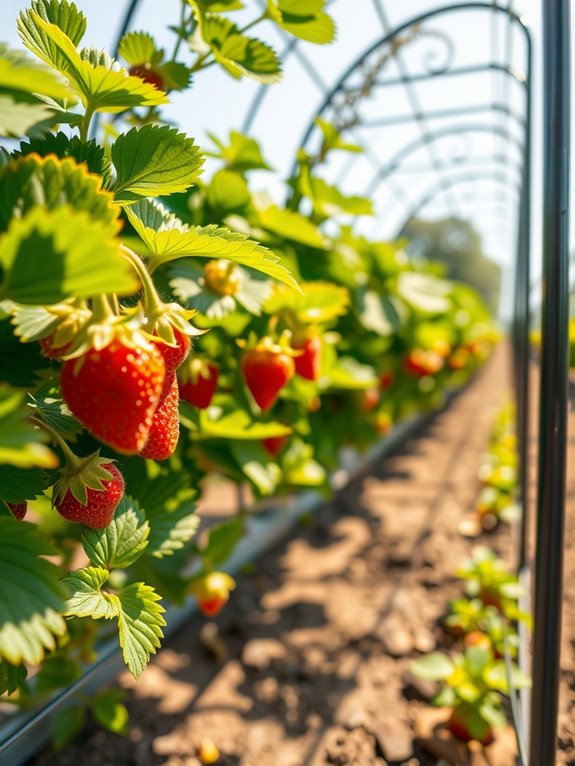
Since climbing strawberry varieties grow long runners that can’t hold onto things on their own, I need to guide them upward. I’ll use a trellis, netting, garden fence, or tower to support them as they grow. As my strawberries develop, I tie the runners to my support system using soft garden ties or clips. I check them frequently so they don’t slip or break when the fruit gets heavy.
Guiding the runners gradually upward keeps my strawberries off the ground. This improves air circulation around the stems and helps prevent disease. The vertical setup also maximizes my garden space and gives me healthier plants with better harvests throughout the season.
Optimal Soil and Sunlight for Trellised Strawberries
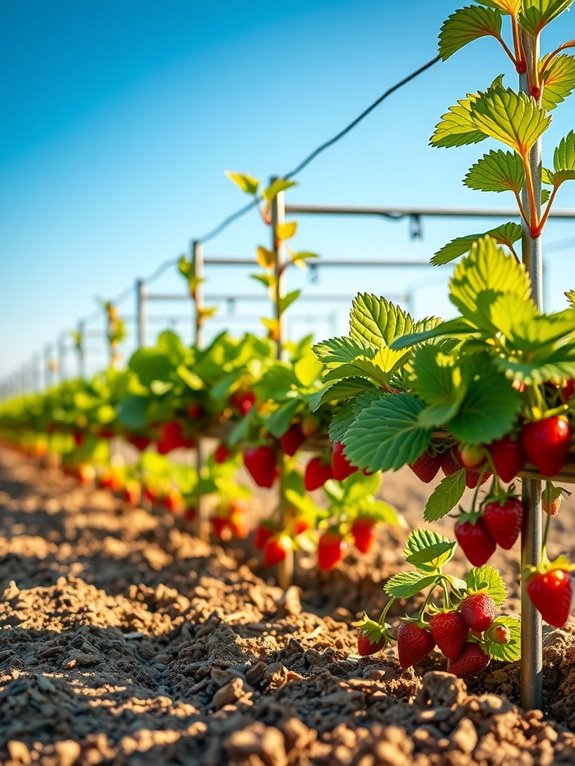
I’ve found that trellised strawberries do best with at least 8 hours of direct sunlight each day. They’ll still grow in partial shade, but you’ll get fewer berries that are a bit less sweet.
For soil, I mix in organic matter to create a loamy blend. Loamy soil is basically a balanced mix of sand, silt, and clay that crumbles easily in your hand. Your pH needs to stay between 6.0 and 6.8, which you can test with a soil testing kit from any garden center. I use raised beds or containers to keep water from pooling around the roots since strawberries hate wet feet.
I spread mulch around the base of my plants using about 2 to 3 inches of wood chips or straw. This keeps the soil moisture steady and stops weeds from poking through. The healthier your vertical setup stays, the more berries you’ll get year after year.
Sunlight Requirements For Success
When I’m growing strawberries on a trellis, sunlight is one of my most important tools for success. Getting this right makes a real difference in how well my crop does.
Here’s what I focus on:
- Aim for 8 or more hours of direct sunlight each day. This maximizes fruit sweetness and color.
- Choose trellis locations away from nearby structures or taller plants. These cast shadows that block light.
- Monitor leaf cover throughout the day. I check to see if my plants are getting consistent sun exposure.
Without enough light, my trellised strawberries struggle. I’ll see fewer fruits that stay smaller and get lower yields overall. Persistent shade actually damages plant quality and growth.
When I place my trellis in a sunny spot, my climbing varieties like Skyline and Mount Everest really do well. That’s when I get the results I’m after.
Soil Preparation And Drainage
Your soil is the foundation for growing trellised strawberries well. I focus on two things: drainage and soil structure. Waterlogging kills roots quickly, so I make sure water moves through easily.
I start by mixing compost into my soil. This improves aeration and drainage at the same time. I aim for a pH between 6.0 and 7.0 since strawberries prefer that range. pH is how acidic or alkaline your soil is.
Heavy clay soils trap water, so I avoid planting directly in them. If my soil is poor quality, I raise my beds or use containers instead. I fill raised beds or containers with quality potting mix like Miracle-Gro Performance Potting Mix or Espoma Organic Potting Mix.
I add organic matter generously—about 2 to 3 inches of compost mixed into the top 8 to 10 inches of soil. This helps water flow through while keeping nutrients available to my plants.
In hot climates, I add 2 to 3 inches of mulch around my plants. Mulch keeps moisture in the soil and prevents the soil from getting too hot. I use wood chips or straw for this purpose.
Water and Feed Trellised Strawberries Effectively
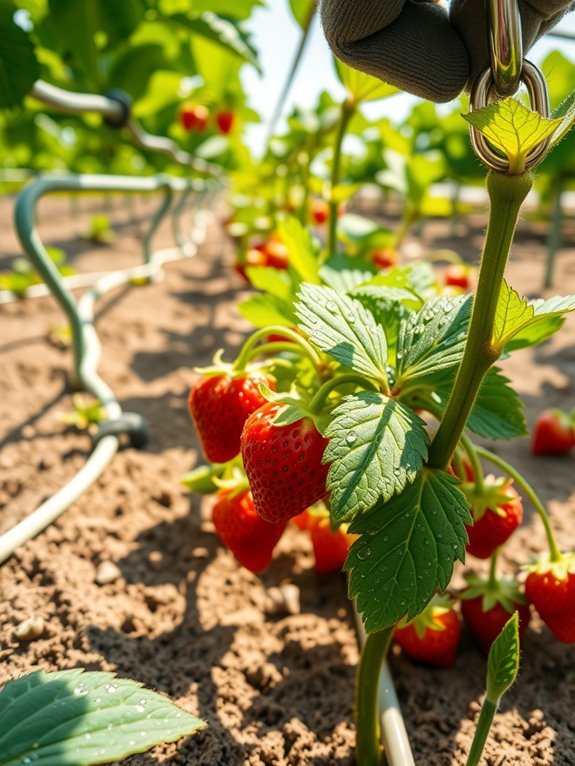
How do you keep trellised strawberries thriving when their roots sit elevated above the ground? I’ve found that consistent care makes the difference for my vertical growers.
Water regularly to prevent dry roots. I check my soil moisture every single day because elevated roots dry out faster than ground plants. The elevated setup means water drains quickly, so I can’t skip days. I water until the soil feels moist but not soggy.
Feed with organic fertilizers every two weeks. I use compost-based blends like Espoma Organic Vegetable Plant Food to meet the higher nutrient demands from vigorous runner growth. I apply fertilizer around the base and along runners where new growth emerges. This helps support heavy fruit loads and prevents nutrient deficiencies.
The routine of daily watering checks and bi-weekly feeding keeps my plants producing abundant berries while staying healthy and strong.
When and How to Prune for Maximum Fruit?
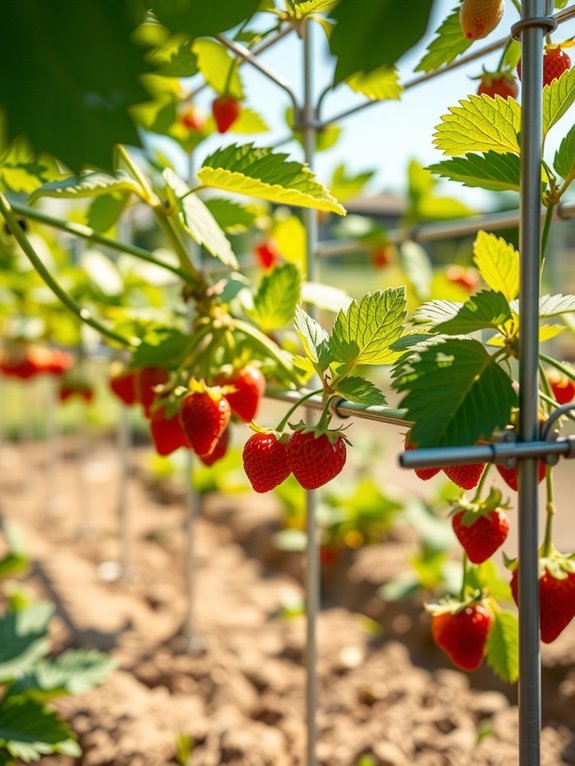
I’ve learned that getting your pruning timing right really does matter for bigger harvests. Here’s what I do with my trellised strawberries.
First, I remove those early spring flowers on young plants. This sounds counterintuitive, but it works. By cutting off the first blooms, I’m telling the plant to put its energy into growing stronger roots and leaves instead. I do this in early spring when the flowers first appear.
Next, I cut runners at the right moment to redirect energy toward fruit. Runners are those long stems that shoot out sideways from the plant. I cut them off in mid to late spring before they take too much energy away from fruit production. I use sharp pruning shears and cut them right where they connect to the main plant.
Finally, I trim back any remaining tendrils in late autumn. Before winter arrives around November, I go through and cut back any loose growth. This helps the plant stay tidy and ready for the next growing season. These three pruning moves work together to keep my strawberries producing solid yields year after year.
Removing First Spring Flowers
When those first flowers pop up on your climbing strawberry plants in spring, I remove them right away. I’ve learned that taking off these early blooms redirects my plant’s energy toward growth instead of making fruit.
Here’s what happens when I do this. My plants develop stronger root systems by the end of May. They establish themselves better in containers or on trellises without spending energy on early fruit production. Once my plants mature, I get much larger harvests later in the season.
I’m making a trade-off here. I skip the small early harvest now and get robust plants ready for a bigger payoff later. This pruning strategy turns weak seedlings into strong, productive plants for my vertical strawberry garden.
Timing Runner Removal Correctly
Now that you’ve removed those first flowers, it’s time to manage the runners your strawberry plants’ll start throwing out. I limit daughter plants to three per summer to keep my plants vigorous.
In late autumn, I trim long tendrils and runners to redirect energy toward the main plant instead of propagation. As new runners grow, I train them to my trellis by tying them gradually to the structure. This creates upward, orderly growth that prevents sagging under heavy fruit loads.
If I skip pruning, I’ll face crowded roots and continuous runner production that wastes the plant’s energy. Regular removal means my plants invest resources into fruit development rather than excessive vegetative growth. In containers, I remove every second or third new runner to maximize fruiting on established stems.
Late Autumn Tendril Cutting
As your strawberry plants finish fruiting in late autumn, I cut back those runners and tendrils. This lets the mother plant focus its energy on next year’s growth instead of feeding new shoots that won’t survive winter.
I start by trimming the long, creeping runners close to the crown using sharp pruners. Then I remove any weak or malformed tendrils—these are the thin stems that branch off from the main runners. Removing them reduces clutter on the trellis and prevents the plant from tangling itself up.
After I finish cutting back the runners, I prune away the spent leaves. These are the old, damaged, or yellowing leaves that the plant no longer needs.
Once I’m done cutting, I apply a 2- to 3-inch layer of mulch around the crown. This protects the plant from cold temperatures and helps the soil hold moisture through winter. I use wood chips or straw for this job.
This late autumn pruning prevents new, tender growth from developing before the frost arrives. Come spring, my trellis-grown plants will have stronger, healthier growth and better fruit production.
Protect Trellised Strawberries From Winter Frost
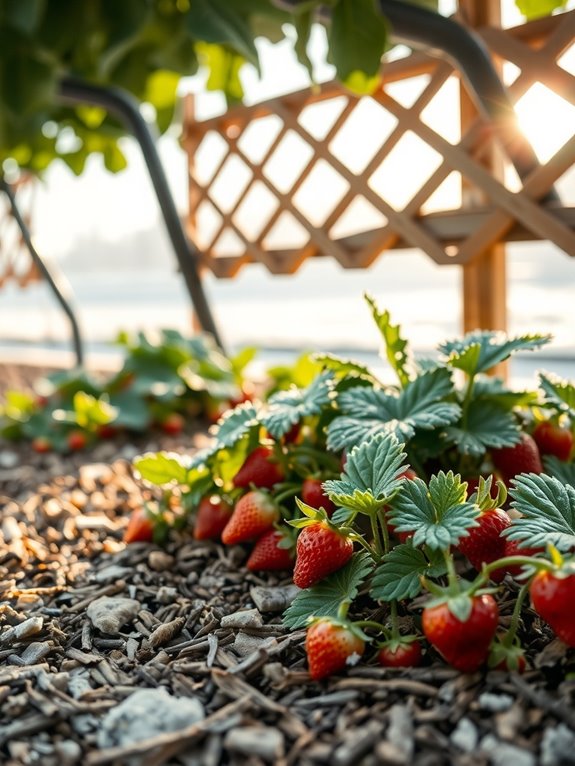
How do I keep my trellised strawberries alive when temperatures drop below freezing? I protect them with winter protection strategies that shield my trellis strawberries from harsh frost damage.
For my potted plants, I wrap the containers in fleece or move them to sheltered, shady spots. For my in-ground beds, I cover the crowns with leaves or straw mulch. These insulating materials act like blankets. They keep roots from freezing solid.
I also remove any remaining tendrils to reduce stress on the mother plant. During winter months, I skip fertilizing entirely. I water occasionally so roots don’t dry out completely. These steps help my strawberry plants survive the coldest season and return strong when spring arrives.
Multiply Your Crop Using Runners
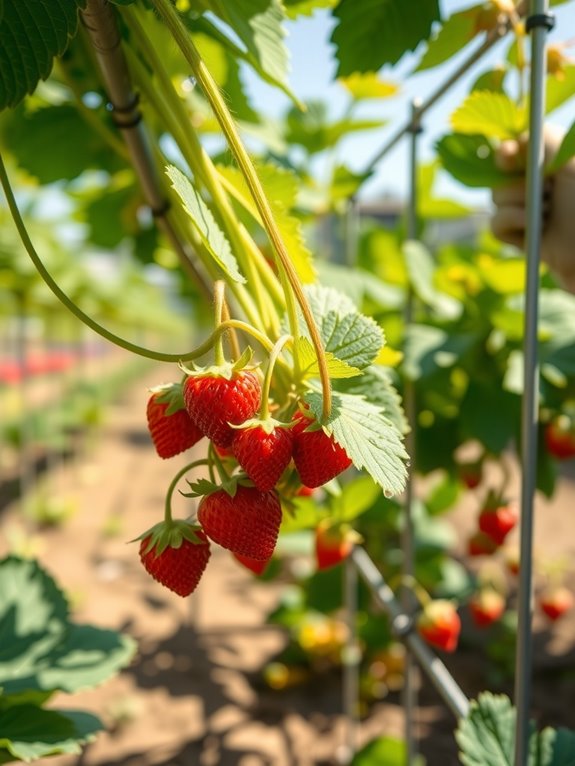
One of the easiest ways to expand my strawberry patch is by propagating runners. These are the long shoots that climbing strawberry varieties naturally produce. I can multiply my crop without dealing with seeds or complex techniques.
Propagating strawberry runners is one of the easiest ways to multiply your crop without seeds or complex techniques.
Here’s how I do it:
- Press the daughter plants (the new plants that form along the runners) from my trellis into pots filled with growing medium.
- Wait about 14 days while roots establish in the soil.
- Cut the runners from the mother plant once roots form.
This method works great for climbing strawberries. I keep my runners tied to the trellis during the growing season so they stay organized and supported. In late autumn, I trim excess runners to push the mother plant’s energy into fall yields instead of making new plants.
This simple propagation technique helps me expand my crop year after year without much effort.
Is a Strawberry Trellis Setup Worth the Work?
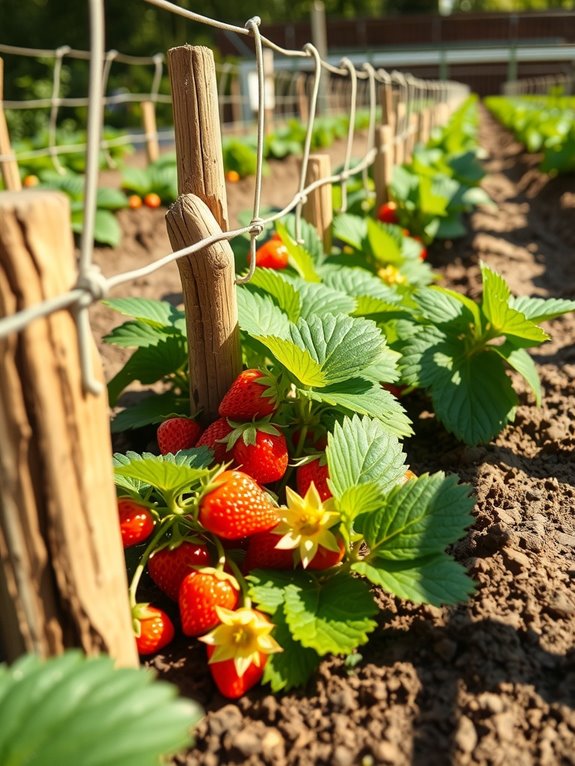
Should you build a trellis for your strawberries? I’d say yes, especially if you’re growing climbing varieties like Mount Everest or Rambling Cascade. Here’s what I’ve found works well.
Vertical growing gives me real benefits. My fruit stays off the soil, which means less rot and fewer pests. Air moves better around the plants too. I save ground space and harvesting gets easier since everything’s at eye level instead of down at ground level.
The work involved is real. I tie runners and train plants as they grow. Sturdier structures made from wood or metal handle heavier fruit loads better than flimsy ones. Structures around 4 to 6 feet tall work well for most climbing strawberry varieties.
The maintenance takes effort on my part. I need to check on plants regularly and adjust ties as needed. But here’s what I get back: healthier plants and more fruit from less space. For climbing varieties, a trellis setup actually makes the whole project worth doing.