If you’re growing tall okra varieties that reach 5 to 8 feet, you’ll need to give them support. Heavy pods and wind will knock them over without it. I’d drive a sturdy stake 6 inches from the plant base once it hits 12 inches tall. Then I tie the main stem with soft cloth strips so it doesn’t get damaged.
You’ve got other options too. I like using tomato cages for a simpler setup. Or if I’m planting okra in rows, I build a trellis with posts spaced 6 to 8 feet apart along the row. This works well if I have a lot of plants.
Dwarf varieties under 4 feet don’t need any support at all. They stay short and sturdy on their own.
Once your support is in place, I check the ties every two weeks. Plants grow fast, and tight ties can cut into the stems and cause damage. I loosen them as needed to give the stem room to expand. The method you pick really depends on what variety you’re growing and how windy your area gets.
Why Tall Okra Plants Need Support to Thrive
Why do okra plants sometimes topple over in your garden? I’ve seen it happen plenty of times. Tall okra plants can reach 5 to 8 feet or more, and that height creates real problems. The heavy pods add serious weight to the main stem. Without proper support, my plants will collapse under that burden.
I use stakes driven 6 inches from the base or sturdy tomato cages to fix this issue. These support systems do more than prevent breakage. They maintain air circulation around my plants. Better airflow means easier harvesting and healthier growth.
Wind damage becomes less likely with proper support. Rain won’t bend my stems to the ground. I also protect nearby plants from falling branches. Adding stakes or a trellis keeps my okra garden running well where my harvest stays safe and accessible.
Do You Actually Need to Support Okra?
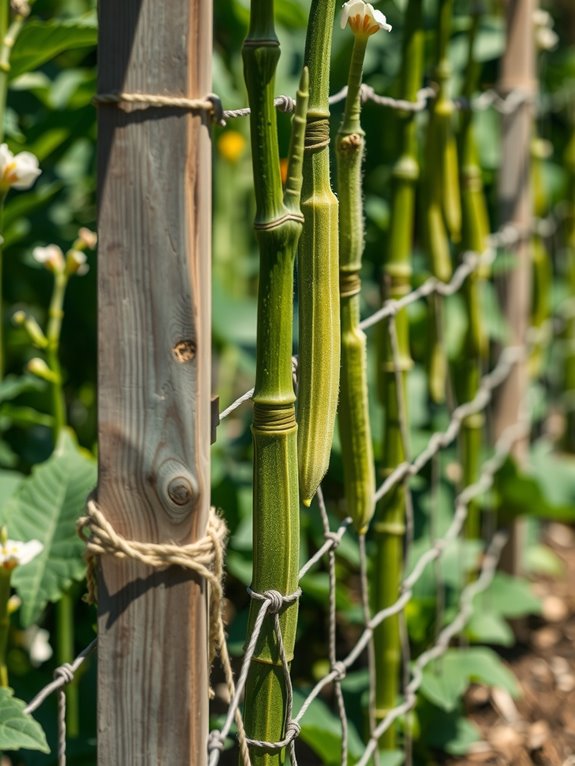
The short answer is it depends on your okra variety and your local weather. If you’re growing shorter varieties under 4 feet tall, you might skip support entirely. But taller plants reaching 5 to 8 feet will almost certainly topple over when heavy pods form and wind or rain hits. I’d rather spend 10 minutes installing support upfront than lose my harvest to a fallen plant.
Height And Toppling Risk
How tall can okra actually get? We’re talking 5 to 8 feet or taller. That’s serious height I need to consider for my garden.
Okra plants get so tall that they become top-heavy. The pods themselves add real weight to the stems. Without support, the plant will bend and fall over. When that happens, it can damage other plants nearby, especially in raised beds.
Wind and rain make the problem worse. A strong storm can knock over an unsupported plant and create a domino effect across my whole garden. I’ve seen one fallen okra plant take out several others around it.
I’ve learned that staking or trellising isn’t optional for me. I drive sturdy stakes 6 inches from the base and tie the main stem with soft ties. This keeps the plant upright and protects my whole garden from damage.
Some dwarf varieties stay shorter and skip this step. But taller varieties almost always need supports. Supporting my okra prevents loss and keeps my garden productive.
Variety-Specific Support Needs
Not all okra varieties need the same level of support, and that makes planning easier.
| Variety | Height | Support Needed |
|---|---|---|
| Clemson Spineless | 6-8 feet | Yes, staking recommended |
| Lee | Dwarf | No staking required |
| Tall varieties | 6-8 feet | Trellis or stakes |
| Dwarf varieties | Shorter | Optional support |
| Standard types | Medium-tall | Sometimes needed |
I’ll break down what I’ve learned from growing different types. Tall varieties like Clemson Spineless grow 6 to 8 feet high. These need sturdy stakes or a trellis because their weight pulls them down without support. Dwarf varieties like Lee stay short and can stand on their own without any staking.
My approach depends on what I’m planting. If I want low maintenance, I pick dwarf varieties and skip the support altogether. When I go with tall varieties, I use sturdy wooden stakes about 6 feet long or build a string trellis. Good air circulation around the plants matters for keeping disease away, so I space each plant 12 to 18 inches apart.
Wind And Rain Damage
When I’m growing okra that gets 5 to 8 feet tall, wind and heavy rain can knock my plants over during storms. I’ve learned I need to set up proper supports to keep them standing.
Here’s what I do:
- I drive sturdy stakes 6 inches from the base of each plant. Then I use soft ties to secure the main stem without crushing it.
- I install tomato cages around my plants for extra support when wind picks up.
- For my tallest varieties, I set up string trellises or robust supports to reduce the risk of collapse.
The right support system keeps my okra standing through heavy weather. Without it, wind damage and rain damage will compromise my harvest.
Compare Stakes, Cages, and Trellises for Your Garden
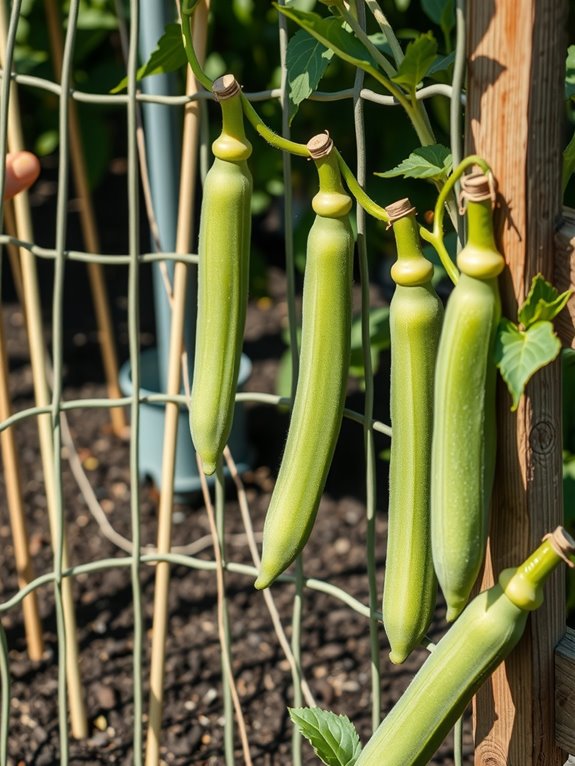
Once your okra shoots up to 5–8 feet tall, I’ve got three solid ways to keep it standing strong.
Once your okra shoots up to 5–8 feet tall, here are three solid ways to keep it standing strong.
I can drive simple stakes 6 inches from the base and tie the main stem with soft ties. This staking method works great for most gardens. I just need to check the ties every couple of weeks to make sure they’re not cutting into the stem as the plant grows.
I can also use tomato cages around taller varieties for all-around support. They’re sturdy and don’t require tie adjustments as the plant grows.
Finally, I can build a string trellis system between two posts to guide growth and keep plants upright as they mature. This method takes more setup but works well if I’m growing multiple okra plants in a row.
Each method prevents toppling from heavy okra pods and wind damage. Dwarf varieties like Lee might skip support entirely since they stay shorter. I’ll choose what fits my space and the height of my okra.
How to Stake Okra: A Simple Step-by-Step Approach
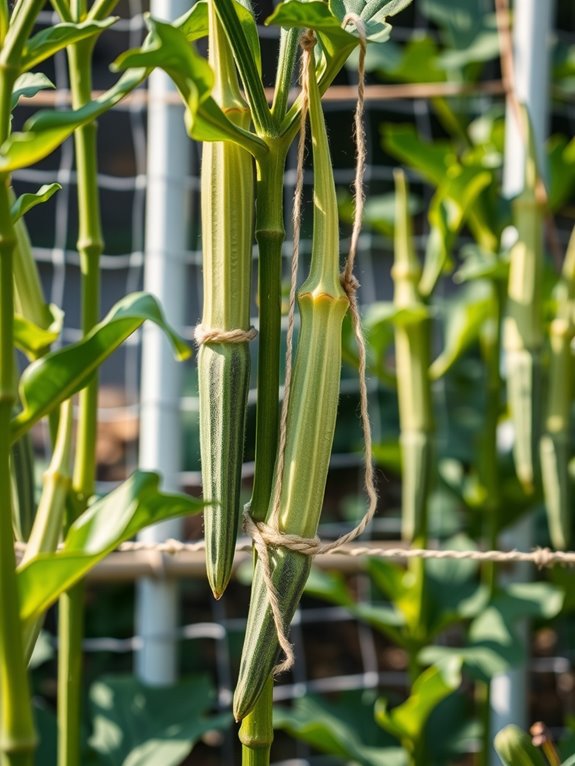
Why does staking matter so much for okra? I’m preventing my plants from toppling over when the pods get heavy or when bad weather hits. Here’s how I stake okra the right way:
- I drive a sturdy stake about 6 inches away from the plant base into the soil.
- I tie the main stem to the stake using soft ties that won’t cut into the plant.
- I check the ties once a month and loosen them as my okra grows taller.
I keep my support method simple but effective. The stakes hold my plants upright as they reach 5–8 feet tall, and I can adjust the ties throughout the growing season as needed. This approach keeps my okra stable and my harvest easy to reach.
Build a Row Trellis System for Easier Harvesting
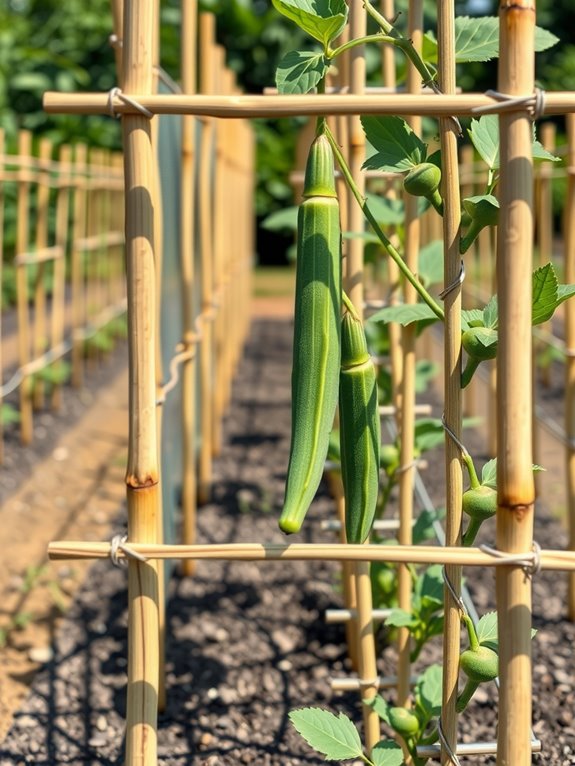
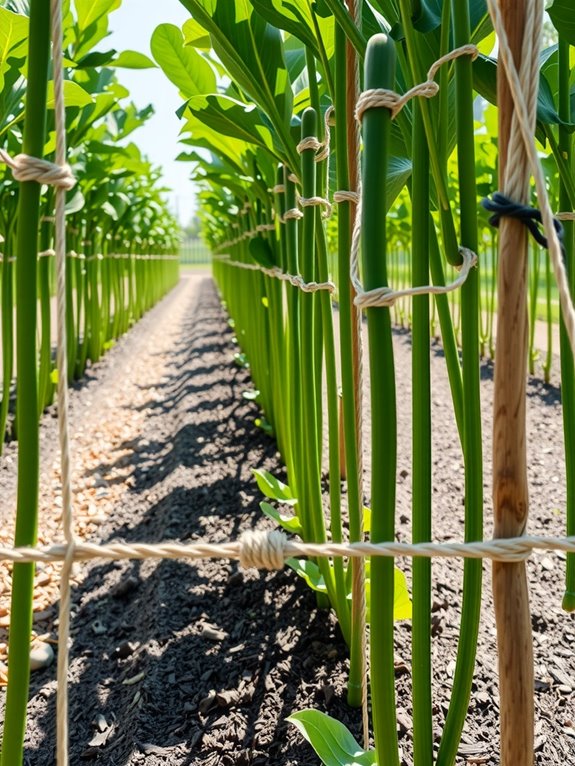
I’ve found that building a row trellis system changes how I harvest my tall okra varieties, especially ones that reach 6–8 feet high. Here’s what I do: I drive sturdy posts a few feet into the ground at the base of each row. Then I run horizontal supports or wire between them to create the framework. As my plants grow, I tie the main stems to the trellis with soft cloth strips. This keeps them upright and makes picking pods at harvest height way easier without bending down as much.
Setting Up Row Posts
How do you keep tall okra plants from flopping over and tangling up your harvest? I drive sturdy posts into the soil along my rows to build a solid trellis system.
I space my posts every 6–8 feet down each row. This spacing gives me even weight distribution as my plants grow heavy. I drive each post deep into the soil so it won’t shift when the plants get tall.
For extra stability in wind, I use two posts per row with cross wires running between them. This setup keeps everything anchored tight.
Once my posts are secured in the ground, I string lines between them. Then I attach my okra stems with soft ties as they climb higher throughout the season. The strong stakes anchored properly keep my tall varieties from toppling over.
String And Support Materials
Once your posts are solid in the ground, you’ve got the basic framework set. Now I need to string the trellis line and gather my support materials.
I use soft ties or cloth strips to secure the main stem without damaging it. These materials won’t cut into the okra plant as it grows taller. Here’s what I grab for this job:
| Material | Purpose |
|---|---|
| Trellis line or twine | Connect posts for support |
| Soft cloth strips | Tie main stem safely |
| Cross-strings | Add stability points |
| Tomato cage | All-around support option |
I adjust these ties regularly as the plant grows. Proper air circulation matters too. It reduces disease risk while keeping my harvest accessible. The goal is creating a sturdy trellis that protects my okra while making harvesting easier.
Harvest Height Accessibility Benefits
Why bend down to pick okra pods when I can bring them up to a comfortable working height? I’ve found that trellising okra really changes how I harvest. Here’s what I like about using a row trellis system:
I tie the main stem to the trellis as the plant grows taller. This keeps it upright throughout the season. Pods then sit at eye level, making 3–4 inch harvests quick and easy to spot. Better air circulation also flows around the plants, which cuts down on disease problems.
I adjust my ties regularly as the okra grows. This keeps plants supported without damaging the stems. The setup works especially well for long-season varieties that produce a lot of pods. My back stays straighter, and I pick faster without crouching down constantly. It’s just smarter gardening that makes the work feel less like a chore.
Space Your Rows for Disease Prevention Without Support
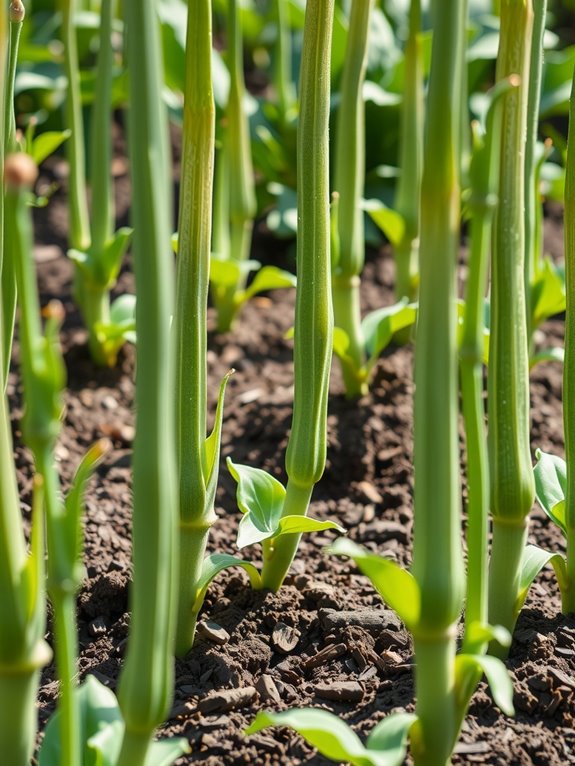
I space my okra rows at least 3 feet apart. This gives me better air circulation around the plants and helps prevent fungal diseases like powdery mildew and leaf spot. When air moves freely between rows, moisture doesn’t hang around on the leaves as much.
Within each raised bed, I position my plants 12 to 18 inches apart. This spacing lets each plant grow wide and bushy without its leaves touching its neighbors. When foliage touches, humidity builds up in those spots, and that’s where fungi love to take hold.
The wider spacing does a few other things for me too. It makes weeding easier because I can actually reach between plants without squeezing through tight spaces. I can also spot pests and early signs of disease faster when I’m not peering through dense foliage. My okra grows tall and strong naturally when it’s not fighting for air and space with neighboring plants.
When to Install Support: The Critical Timing Window
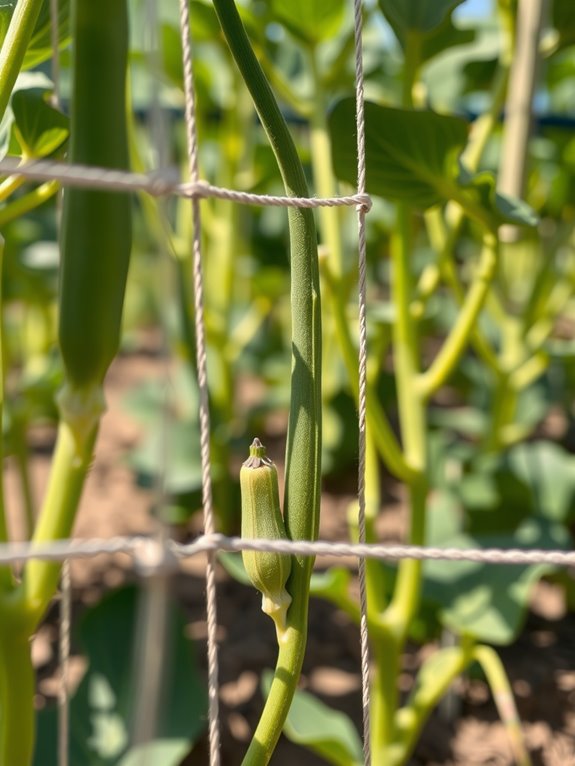
Good spacing keeps your okra healthy, but as your plants shoot up, they’ll need help staying upright. Wind can knock them over, and heavy pods will stress the stems. I install support early to prevent damage.
Here’s when I act:
- Install stakes or a trellis when plants reach 12 inches tall
- Add support before heavy pods develop and weigh stems down
- Adjust tying stems regularly as your okra grows taller
I drive stakes 6 inches from the plant base for quick support. String trellises between posts work great for tall okra varieties that reach 5 to 8 feet. Tomato cages offer around-the-plant support too. The key is timing—early installation prevents stem damage and keeps my plants productive all season long.
Adjust Ties as Your Okra Grows to Prevent Stem Damage
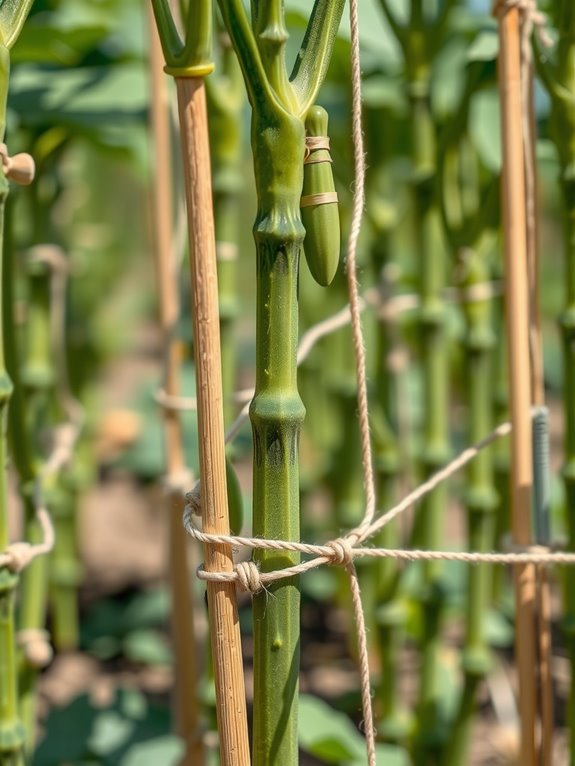
How often should I check my okra ties? I recommend inspecting them every two weeks as my plants grow taller. My okra will reach 5–8 feet in height, so regular adjustments keep the stem safe from rubbing and damage.
I use soft ties or cloth strips instead of harsh materials that can girdle my stem. As new growth emerges, I reposition ties higher up the plant. This guides the main stem toward my trellis support.
If I’m using stakes, I loosen them gradually to prevent constriction. For string trellis setups, I run new ties upward to maintain steady support. Think of it like adjusting a growing child’s clothes—what fit last month won’t work now. These small adjustments prevent costly stem damage later.
Dwarf Okra Varieties: The No-Support Alternative
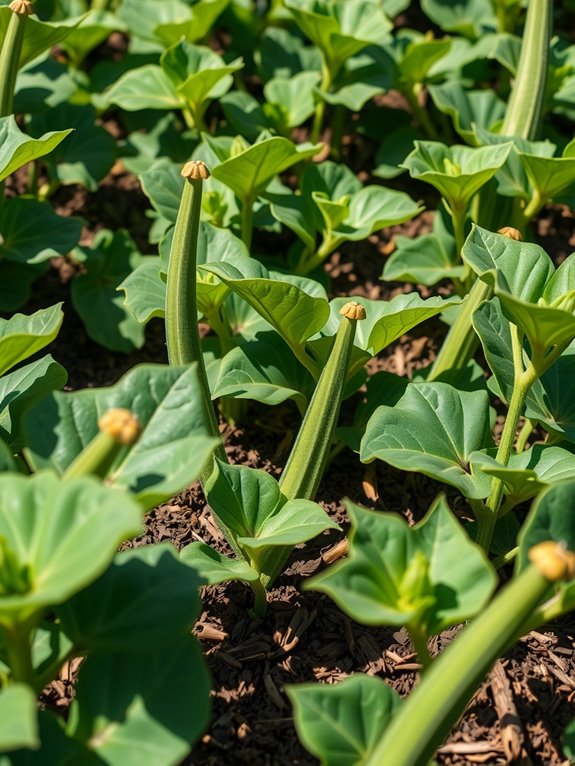
If you want to skip staking and trellises, dwarf okra varieties like Lee work well for you. I like these compact plants because they grow low and sturdy on their own without any support system.
I still follow some key practices to keep my plants healthy. I space my plants 12–18 inches apart so air flows around the leaves and stems. Between rows, I leave at least 3 feet of space. As my plants grow, I prune them occasionally to keep a good shape and make picking the okra easier.
These dwarf varieties let me grow okra without the extra work of building supports. I’m still paying attention to air circulation and spacing because healthy plants produce more okra.