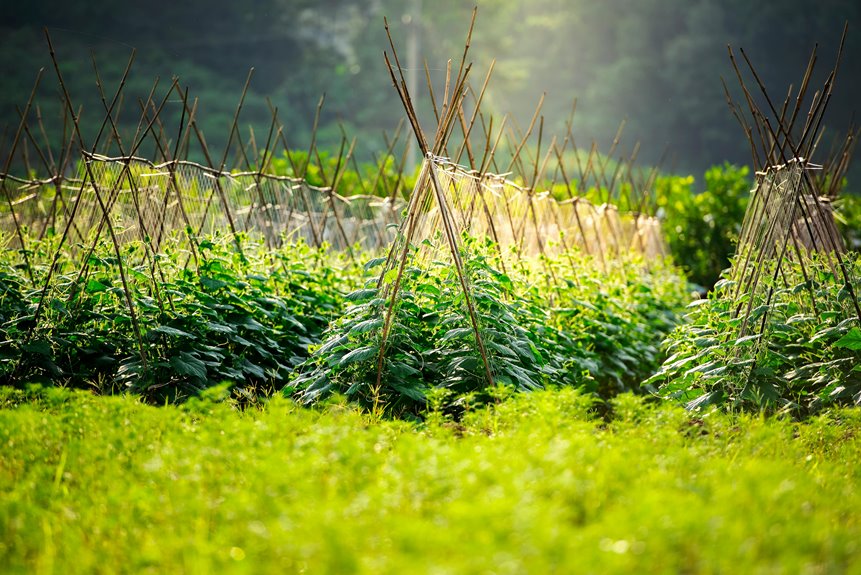
Cucumbers don’t actually need a trellis to grow. They’ll spread out across your garden bed without one. But here’s why I’d recommend getting one anyway.
When I use a trellis, my cucumber plants grow healthier. Better airflow means less disease and fewer problems. The fruit stays off the wet soil, so it stays cleaner and lasts longer. I also get way more cucumbers in the same amount of space since they’re growing up instead of out.
A basic trellis costs between $10 and $100 depending on what style I pick. Metal cages run around $15 to $30. Wooden A-frame trellises cost $40 to $80. String trellises are cheaper at $10 to $20.
Harvesting gets easier too. When my cucumbers grow vertical, the ripe fruit hangs at eye level. I don’t have to bend down or dig through leaves to find them. I can see what’s ready to pick right away.
The payoff becomes clear pretty fast. I notice I’m getting more fruit per plant and using less garden space overall. My harvest lasts longer because the fruit isn’t sitting in moisture. For most people, that’s worth the cost of a trellis.
Do Cucumbers Actually Need a Trellis?
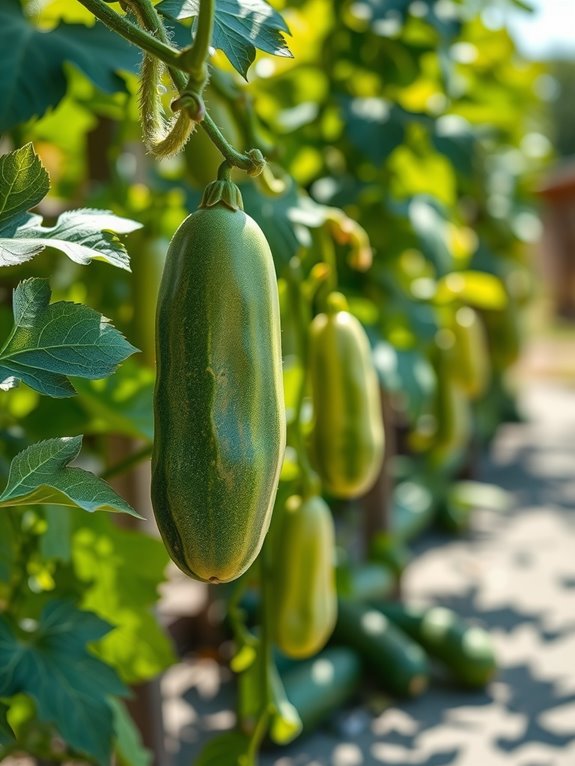
Cucumbers don’t actually need a trellis to grow. They’ll sprawl across your garden bed without any problem. That said, I’ve found that using a trellis gives me real benefits that are worth the effort.
Using a trellis isn’t necessary for cucumbers, but the benefits—better air circulation, straighter fruit, and space savings—make it worthwhile.
When I train my cucumbers vertically, I get better air circulation around the leaves and stems. More airflow means I can reduce fungal diseases like powdery mildew that damage plants. I also end up with straighter cucumbers that stay cleaner and are easier to pick.
Trellising saves me valuable garden space too. Cucumber vines have natural tendrils that grab onto supports, so they’re natural climbers. They take to a trellis pretty easily.
If I skip the trellis, I can still grow cucumbers successfully. I just need to give the plants extra space to spread out on the ground. I can also add arch supports or cages to lift the fruit off the soil and make harvesting simpler.
How Cucumbers Naturally Grow and Climb
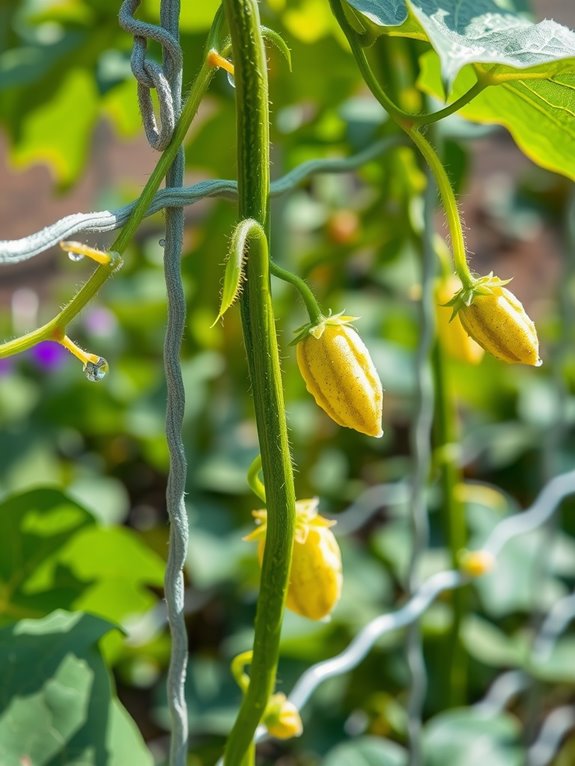
Have you ever noticed those curly, springy parts on cucumber vines? Those are tendrils, and they’re basically nature’s climbing tools. I call them natural climbers because they actively seek out objects to grab onto. When my cucumber vines encounter a fence, string, or trellis, those tendrils wrap around it and pull the plant upward.
Here’s what makes this growth pattern so useful for me as a gardener:
- Tendrils actively grip structures without any help from me
- Vines naturally want to climb toward sunlight and better growing conditions
- A trellis gives them exactly what they’re already trying to find
Understanding how cucumbers naturally grow helps me work with their instincts rather than against them. Once I provide support, vertical growth happens on its own.
The Trellis Advantage: Disease, Airflow, and Cleaner Fruit
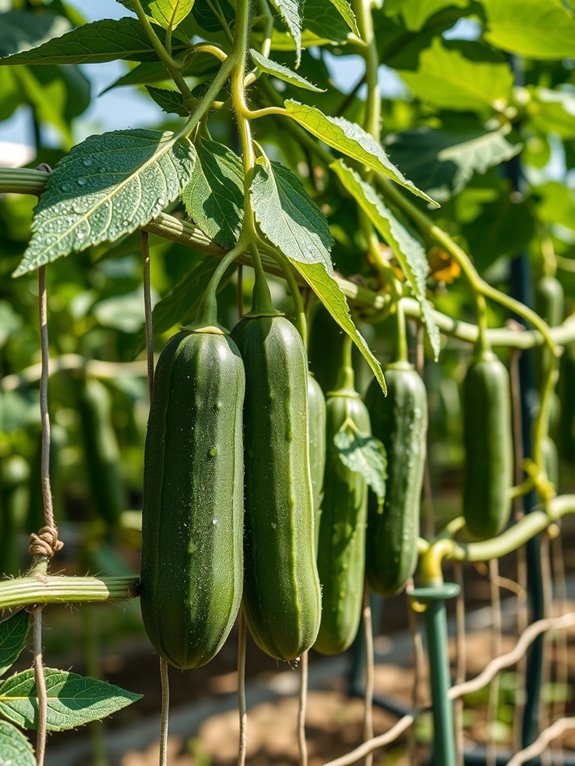
I’ve found that trellising really helps my cucumber plants stay healthy. When I space the vines apart on a trellis, air flows freely around the leaves. This stops fungal diseases like powdery mildew from growing and spreading.
Lifting the fruit off the soil makes a big difference too. My cucumbers stay cleaner when they’re not sitting in damp dirt, and I avoid rot problems that come from ground contact. Since the vines hang openly on the trellis, I can spot pests and disease problems much faster without having to push through dense growth to see what’s going on.
Airflow Reduces Fungal Disease
Why does airflow matter so much for cucumber plants? I’ve found that good air circulation helps stop fungal diseases like powdery mildew. When I use a trellis, I’m creating space between leaves and fruit. That separation lets air move freely around my plants.
Here’s what happens when I get the airflow right:
- Wet leaves dry faster after rain, which cuts down on the moisture that fungi need to grow
- Better airflow stops leaves from overlapping and trapping humidity around my plants
- I can spot disease early when my plants aren’t crowded together
- Healthy transpiration (that’s when plants release water through their leaves) means my plants grow stronger and produce more fruit
I’m basically giving my cucumber plants room to breathe. The difference in plant health is real. Fewer diseases mean cleaner harvests and a healthier garden.
Cleaner Fruit Without Ground Contact
Good airflow stops fungal disease, but there’s another big reason I use a trellis: keeping my cucumber fruit clean and healthy. When cucumbers rest on soil, they pick up dirt and moisture. This ground contact creates spots where rot starts growing. I’ve seen it happen—fruit touching earth just sits there rotting away.
Trellising my cucumbers lifts them up where they stay clean and dry. The fruit hangs above the ground and avoids those wet spots. This means I harvest cucumbers that look better and last longer in storage. You won’t deal with muddy spots or hidden rot problems under the leaves.
Clean fruit also means less washing before eating or selling. That’s why trellis cucumbers stay healthier than ones sprawling on the ground.
Improved Pest Detection and Control
When I lift my cucumber vines onto a trellis, spotting pests becomes way easier. I can inspect leaves and fruits regularly without bending down or pushing dense foliage around. This vertical setup lets me catch problems early before they spread.
Trellising gives me better access for pest detection and control. Leaves stay visible and separated, making insects easier to spot. I can monitor both sides of plants during weekly inspections. Pests like spider mites and aphids stand out against the trellis structure. I reach affected areas quickly for targeted treatment.
When I catch pest problems early, I prevent infestations from taking over. I’m not fighting established colonies anymore. Instead, I’m addressing small issues before they damage my harvest.
Higher Yields in Smaller Spaces With Vertical Growing
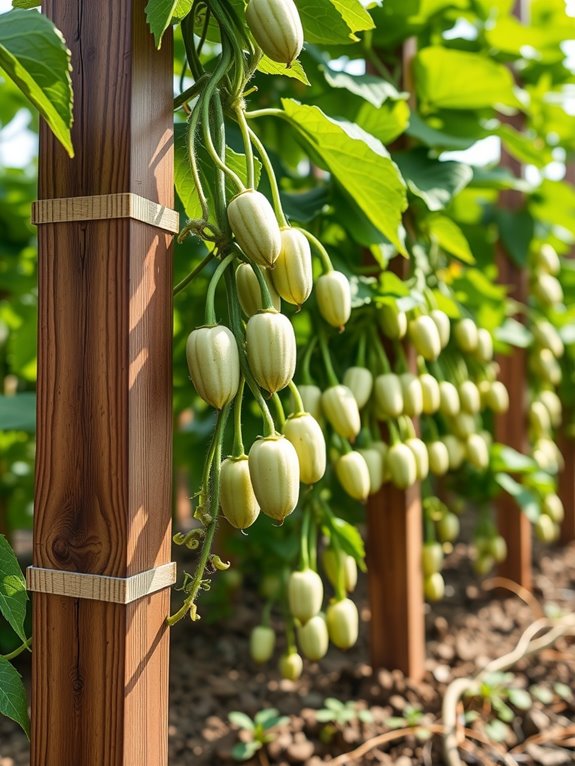
I’ve found that growing cucumbers vertically with trellises lets me fit way more plants in my garden. Instead of letting vines sprawl across the ground, I guide them upward using stakes or netting. This stacking method means I can plant multiple cucumbers in a small footprint and use the freed-up ground space for other crops.
When I train cucumbers upward, the air moves better around the elevated fruit. Sunlight hits more leaves and developing cucumbers directly. I also get straighter produce because gravity pulls the vines down as they grow. The yield per plant increases noticeably because of these conditions.
The daily work gets easier too. I spend less time crawling through sprawling vines on the ground. Pruning, harvesting, and checking for pests all take less effort when the plants are at a better height. I can spot problems faster and pick ripe cucumbers without bending down constantly.
Easier Harvesting and Fewer Pest Problems
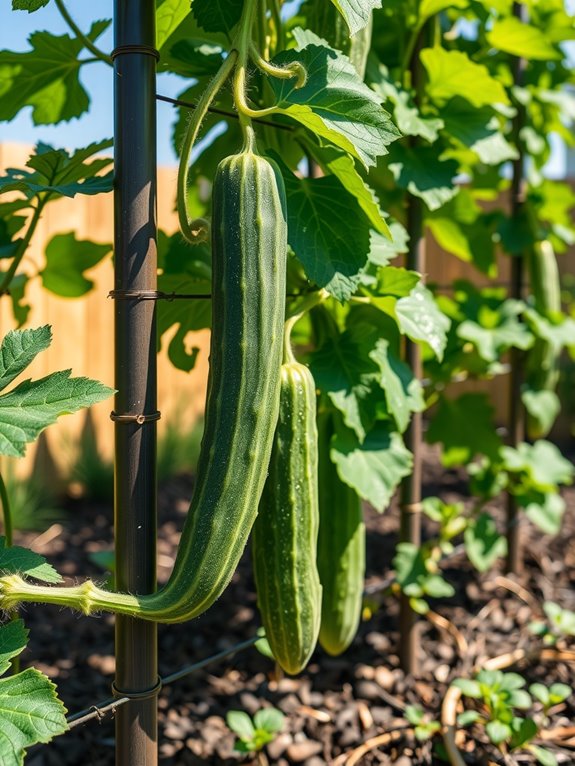
When I grow cucumbers on a trellis, spotting ripe fruit is way easier. The cucumbers hang down from the support structure instead of hiding under leaves on the ground. I can see everything at a glance.
The vertical setup also cuts down on disease and pest problems. Air moves better around the vines when they’re trained upward. Better air circulation stops fungi and bugs from settling in and causing damage. Managing the plants gets simpler too. I just guide the tendrils onto the support as they grow, and the whole plant stays organized.
Spotting Ripe Fruit Easily
Why does a trellis make harvesting so much simpler? When I grow cucumbers vertically, ripe fruit hangs at eye level instead of hiding under dense foliage. I can spot ready-to-pick cucumbers instantly without searching through tangled vines.
A trellis system gives me several advantages. Ripe fruits rise above leaves, so I see them from a distance. I don’t have to hunt through ground-level vines or guess which ones are ready. Instead, I pick cucumbers at peak ripeness and waste less time searching. My vertical garden layout becomes organized and easier to navigate.
When cucumbers dangle from a trellis, I see exactly which ones I need to pick and I pick them faster. This visibility saves me time and frustration during harvest season.
Reducing Disease and Pest Damage
A trellis keeps your cucumber plants healthier in several ways. When I grow cucumbers vertically, they get better airflow around the vines. This air circulation fights off powdery mildew and other fungal diseases that show up on ground-level plants. Powdery mildew is a white coating that spreads on leaves and stems when plants don’t get enough air movement.
I’ve also noticed fewer pest problems since I can check my plants more easily from all angles. When fruit sits on the soil, it rots and picks up soil-borne diseases. Lifting the cucumbers off the ground prevents this damage. I catch problems early because I’m checking my trellised vines regularly. The tendrils naturally grab onto the structure as the plants grow, and this setup keeps my plants healthier throughout the growing season.
Managing Vines With Efficiency
How much easier can harvesting get? When I trellis my cucumber vines, I’m not just saving space. I’m making my harvest way more manageable.
Here’s what I gain:
- Cucumbers hang at eye level, so I spot ripe fruit instantly without bending
- Long vines climb upward instead of sprawling across my garden beds
- Fruit stays elevated and visible, making picking quick and straightforward
- I reduce damage from ground contact that attracts pests
Training vines onto a trellis early in the season means they naturally latch onto the support. I set up a basic wooden or metal trellis about 5 to 6 feet tall in spring. As the vines grow, I gently tie them to the structure using soft garden twine or cloth strips. This keeps my plants organized and my picking routine simple.
I’ll pick straighter cucumbers faster. My garden stays neater. I’m working smarter, not harder, and that’s what makes trellising worth it for me.
Trellis Trade-Offs: When Ground Growing Makes Sense
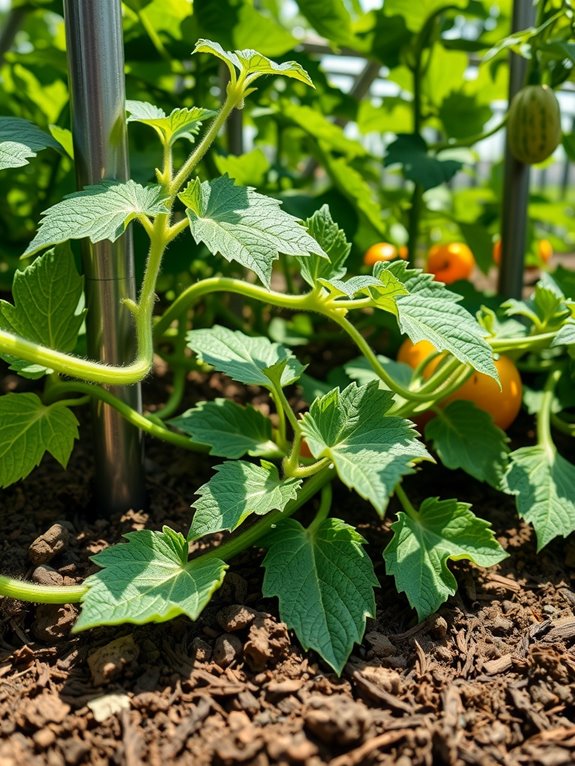
Despite all the benefits we’ve covered, trellising isn’t always the right choice for my garden or my situation. I understand that building a trellis takes time and materials. Sometimes ground-growing works better for me.
If I’ve got plenty of garden space, letting cucumbers sprawl saves me effort. I skip the setup and maintenance hassle. Ground-growing also works when I’m growing shorter varieties that don’t need much support.
The real trade-off is that I accept some downsides. My fruit sits on soil and picks up dirt. My leaves stay damp longer, which invites mildew and pest problems. I harvest less easily since my vines tangle together.
It’s about what fits my situation. Space constraints or time limits might make ground-growing my best option. I focus on practical solutions over perfect ones.
Choosing the Right Trellis for Your Space and Budget
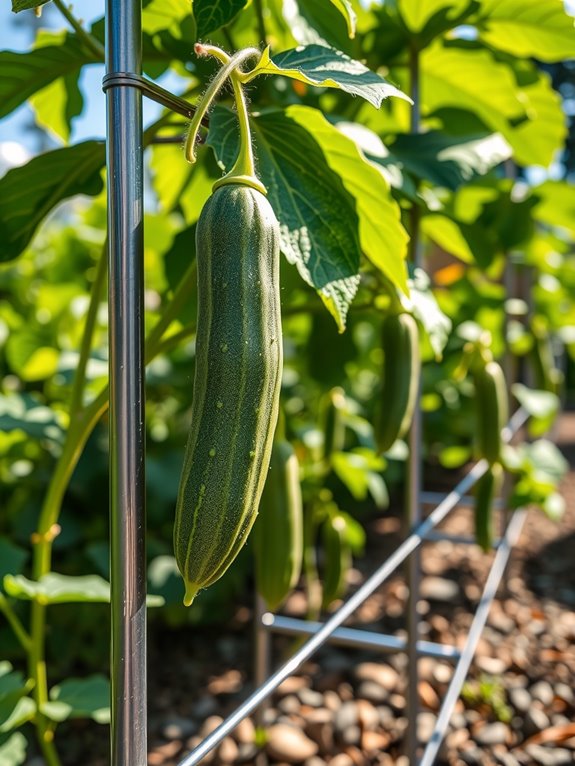
When you’ve decided that trellising makes sense for your garden, the next step is picking a trellis that fits your space and budget. I’ve found options that range from super affordable to pricier setups.
Here’s what I consider when choosing:
- Bamboo poles cost $5-15 and work great for small gardens
- Metal A-frame trellises run $20-50 and provide sturdy, space-saving support
- String trellising systems use twine and cost under $10 for materials
- Cattle panels range $15-30 and handle heavy vines easily
I like starting simple and upgrading later if needed. A basic bamboo setup lets me test whether trellising works for my cucumber variety and garden layout. I can always build something more permanent once I see how my plants perform.
3 Trellis Styles That Work Best for Cucumbers
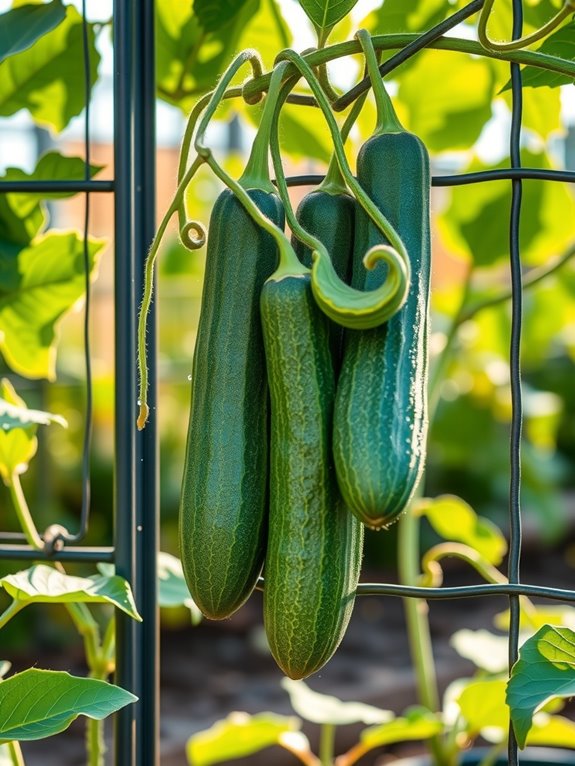
When I’m setting up a trellis for cucumbers, I’ve found that string and netting options work great for saving space. Sturdy arch structures give my vines a beautiful focal point in the garden. Container trellis setups are perfect if I’m growing cucumbers in pots on a patio or balcony.
String trellises use twine or thin rope tied between two posts. I secure the top line about 6 feet high and the bottom line about 12 inches from the ground. Then I weave the cucumber vines through the strings as they grow. This method uses minimal space and costs around $10 to $20 in materials.
Netting trellises are panels made from plastic mesh with 4 to 6-inch holes. I attach the netting to a wooden frame using clips or staples. The vines naturally weave through the holes as they climb. A single netting panel costs about $15 to $30 and lasts several seasons.
Arch trellises are curved metal or wooden structures that stand 6 to 8 feet tall. I place them in the garden bed and train cucumber vines up both sides. This style creates a walkway in my garden and costs $40 to $100 depending on materials. Each style supports your cucumber plants differently, so pick one based on your space and how much you want to spend.
String and Netting Options
Cucumber vines love to sprawl, but I can get them growing straight up with string and netting. I’ll install these lightweight materials early in the season to guide the vines upward and save space in my garden.
I gently wrap the tendrils around the structure as they grow. This secures the vine and keeps it from sagging under its own weight.
String works well for simple setups. I stretch it between two posts to create vertical pathways that the tendrils can grab onto. Netting gives me more anchor points across a wider surface area, which works better if I have multiple vines or limited space.
Installing early matters. When I set up my string or netting before the vines get tangled, I avoid damage and messy growth later. I make sure everything is anchored firmly so it can handle the weight of fruit and wind pressure without shifting.
The payoff comes at harvest time. Vertical vines are easier to pick from, and the fruit stays cleaner since it’s not sitting on the ground. I end up with an organized garden that produces well.
Sturdy Arch Structures
Why grow cucumbers on the ground when you can build them up? I use sturdy arch trellises like cattle-panel arches or fence-panel arches for my cucumber garden. They’re quick and cheap to set up.
These arches give my long vines excellent vertical support so they can climb high. The benefit is better air circulation around the plants and fruit that doesn’t touch the soil. Picking cucumbers is easier when they’re at eye level instead of hidden under leaves. Plus, less soil contact means fewer disease problems.
I’ve found arches work really well in small gardens or entryways where space matters. They let me grow more food in a smaller area. Just make sure you anchor yours securely because those fruit loads get heavy. A cattle panel is typically 4 feet by 16 feet and costs around $20 to $40. You’ll need stakes or metal rods to drive into the ground on both sides to keep it stable.
Container Trellis Setups
Got a small patio or balcony? I can still grow cucumbers in containers with the right trellis setup. Sturdy cage-like or arch-style supports work best for holding those heavy vining varieties.
Here’s what I do:
- Pick tall, stable frames made for containers instead of flimsy stakes
- Attach garden twine, netting, or small wire mesh to guide the climbing vines
- Place the trellis close to my plant so I can train it easily
- Use compact or bush varieties if my space is really tight
I put my container in full sun and water it at the base regularly. As the vines grow, I tie them to the trellis and prune any extra shoots. This keeps the plant productive and saves space. Better air circulation means cleaner fruit that’s easier to reach.
Step-by-Step Setup for Trellising Your Cucumbers
When you’re ready to build upward, I start by picking my spot and getting my structure in place. I find a sunny bed works best for my cucumbers. Next, I install sturdy supports that’ll handle the vine weight before they start climbing.
| Step | Action | Tools Needed |
|---|---|---|
| 1 | Choose sunny location | Measuring tape |
| 2 | Install sturdy support | Posts, brackets |
| 3 | Guide vines upward | Garden twine, clips |
| 4 | Prune shoots regularly | Pruning shears |
I guide new growth up the trellis using garden twine or clips. I tie or clip regularly as stems emerge. Pruning lateral shoots (the side branches that grow out from the main stem) keeps energy focused on fruit production rather than extra leaves.
I maintain consistent moisture and watch for pests throughout the growing season. My trellis-grown cucumbers deliver healthy, productive results.
Weekly Training Tasks: Guiding Tendrils and Pruning Overgrowth
Once your cucumber trellis is set up, you’ll need to guide those climbing tendrils upward every 4–7 days during peak growth. I tie or clip emerging shoots to keep them aligned vertically with the main vine. I also prune crowded lateral shoots—those are the side branches that grow off the main vine—to redirect the plant’s energy toward fruit instead of extra leafy growth.
During these weekly training sessions, I check for pests and diseases right away since they spread fast along the trellis. I rotate new growth at the top to keep the canopy tidy and balanced. This routine helps prevent problems before they get out of hand.
Guiding Tendrils Upward
Because cucumber tendrils naturally reach out to grab onto nearby support, I can use this instinct to guide them upward on a trellis. Each week, I gently wrap new shoots around the structure. I secure them with vine clips or garden twine as they grow taller.
I start training when the vines reach 8–12 inches long. This early start helps establish a strong vertical growth pattern right from the beginning. I use vine clips or garden twine to hold each shoot in place as I wrap it around the trellis framework. Regular weekly training sessions keep my cucumber vines climbing upward instead of spreading across the ground.
The hands-on approach works because I’m directing the vines’ natural climbing ability exactly where I want it. I’m working with how cucumbers grow, not against it. My weekly routine of wrapping and securing shoots becomes part of my regular garden maintenance.
Pruning Lateral Growth
How do you keep a cucumber trellis from turning into an overgrown mess? I prune lateral shoots regularly to direct energy toward fruit instead of excessive foliage. I clip back side branches every few inches as they grow. This pruning step improves air circulation around the plant. Better airflow reduces disease pressure under dense canopies where moisture gets trapped.
I also remove spent blossoms and thin vigorous lateral shoots. This encourages stronger main stems and larger fruit development. I check the trellis weekly for overcrowded growth spots. When I spot tangled vines competing for space, I carefully cut them back.
Think of pruning as a conversation with your plant. I’m telling it where to focus its energy. Strategic pruning takes chaotic growth and turns it into organized, productive vines climbing your trellis.
Routine Maintenance Schedule
Every week, I spend time guiding my cucumber tendrils to wrap around the trellis supports instead of letting them curl back onto the plant stems. This routine maintenance keeps everything growing upward and organized.
During my weekly checks, I focus on several tasks. I guide the tendrils to latch onto the supports so they wrap properly around the structure. I remove lateral shoots and crowded growth to direct energy toward fruit development. I maintain airflow by pruning overgrowth around the vine and foliage. I also inspect the trellis fasteners and connections, tightening anything that’s come loose from the increasing vine weight.
I clip stems that exceed six feet tall to keep growth vertical and accessible. These consistent tasks prevent tangled vines and pest problems. Staying on top of routine maintenance means I harvest more cucumbers and spend less time fixing problems later.
Heavy Fruit and Weak Vines: Quick Fixes
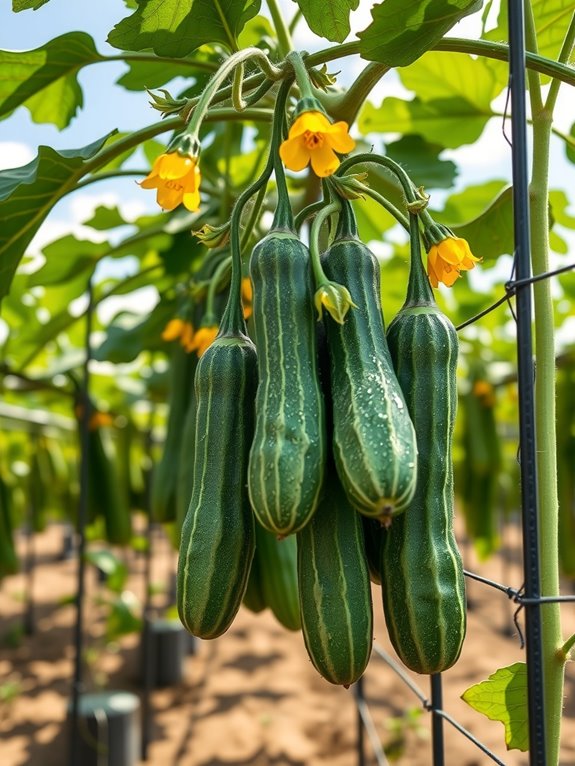
As my cucumber plants get bigger and start producing lots of fruit, I’ve noticed the vines bend and sometimes snap under all that weight. I need to set up sturdy supports to keep everything from breaking.
I install trusses or crossbracing on my trellis first. These are basically extra support bars that run horizontally or diagonally across your main trellis frame. Then I secure the fruit-bearing canes with vine clips or ties early in the season before problems start. For heavy-fruiting varieties, I use durable materials like metal or thick wood because they hold up better.
Install trusses or crossbracing on your trellis, then secure fruit-bearing canes with clips or ties using durable metal or wood.
Next, I anchor my trellis firmly to the ground so it won’t shift when the vines get heavy. I drive stakes about 12 inches deep into the soil and bolt the trellis legs to them. I also regularly inspect and adjust my supports as fruit develops throughout the growing season. Sometimes a tie loosens or a branch shifts, so I check every week or two.
I also prune some branches strategically to redirect energy toward ripening fruit. This means removing a few side shoots that aren’t producing much. Less foliage means less stress on the vines and less chance of damage later on.
Spacing and Planting Density on a Trellis
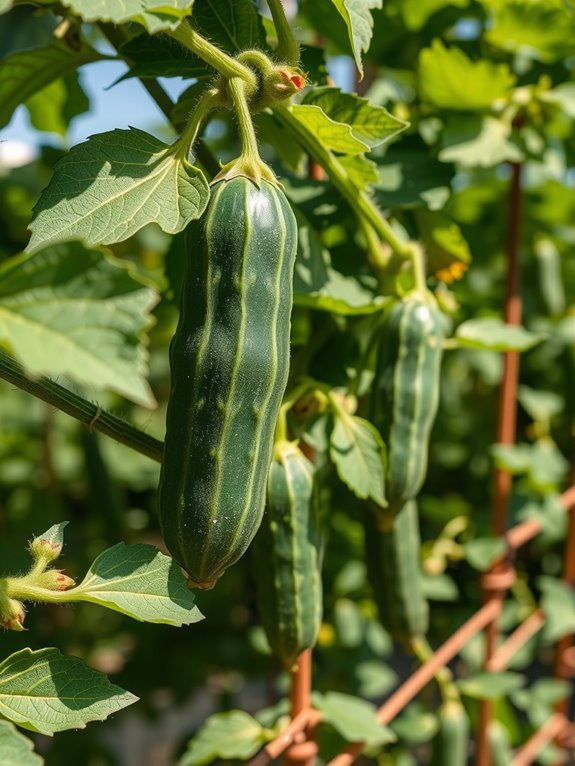
Where you space your cucumber plants on a trellis really matters for how well they grow. I want my vines climbing upward with plenty of air moving around them.
For vining cucumbers, I space them 12 to 24 inches apart within each row. Between rows, I leave 3 to 4 feet so the vines have room to spread and air can flow through. Bush varieties need 12 to 36 inches depending on the specific type I’m growing.
I use a measuring tape or wooden stick to mark exact spots before I plant anything. Each plant needs direct access to the trellis surface so I can train the vines upward early on. Proper spacing prevents overcrowding and keeps disease from taking hold. When I give my plants room to breathe, they stay healthier and produce more fruit.
Bush vs. Vining Cucumbers: Different Trellis Needs
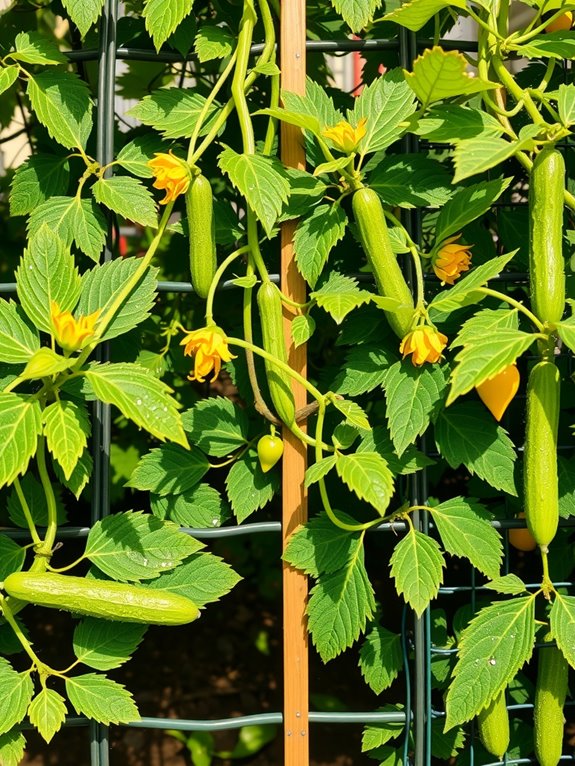
The choice between bush and vining cucumbers shapes how I’ll set up my garden. Vining cucumbers need a trellis to grow well. Bush varieties stay compact and don’t need any support structure.
| Feature | Bush Cucumbers | Vining Cucumbers |
|---|---|---|
| Trellis Needed | Optional | Essential |
| Yield | Lower | Higher with support |
| Space Required | Smaller footprint | Larger vertical area |
| Fruit Shape | Varies | Straighter on trellis |
I’d pick vining cucumbers if I want more fruit. They produce a lot more when I train them on a trellis. Bush types work better when I don’t have much garden space. Either way, I should choose disease-resistant varieties. They’ll hold up better against beetles and fungal problems like powdery mildew.
Trellis Maintenance Checklist: Spring Through Fall
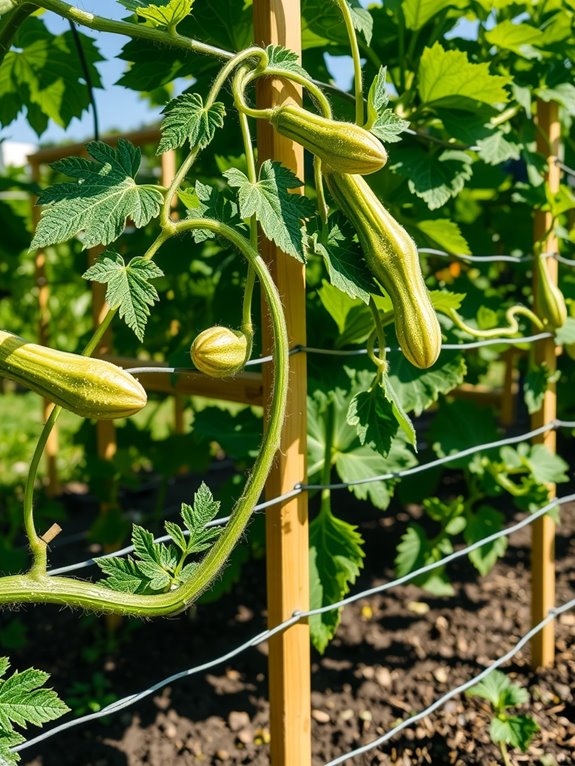
Once you’ve picked your vining cucumbers and built your trellis, the real work starts. I need to keep that structure sturdy and my cucumber plants climbing strong all season long.
I check my trellis monthly. Here’s what I monitor:
- Structural integrity: I inspect for loose bolts, bent panels, or rotting wood that weakens support.
- Vine guidance: I tie or clip new growth upward using soft twine every 1–2 weeks.
- Weight distribution: I space heavy fruit evenly so branches don’t bend or snap.
- Disease prevention: I remove diseased leaves promptly. This keeps air flowing through the vines and stops powdery mildew from taking hold.
Spring through fall, I’m working alongside my trellis. I stake it firmly in spring. I guide vines consistently through summer. I check for damage before harvest season hits. This routine keeps everything standing tall and producing cucumbers.