Cherry tomatoes don’t strictly need a trellis, but adding support really does make a difference in what you harvest. Indeterminate varieties grow tall and vine-like throughout the season. Without support, they sprawl across the ground and pick up diseases from soil contact. I like to use a simple stake, cage, or Florida Weave (twine strung between posts) to keep the fruit up off the ground and easy to reach. Better airflow around the plants also means fewer disease and pest problems down the line. The right support method depends on your space and which cherry tomato variety you’re growing.
Do Cherry Tomatoes Actually Need Support?
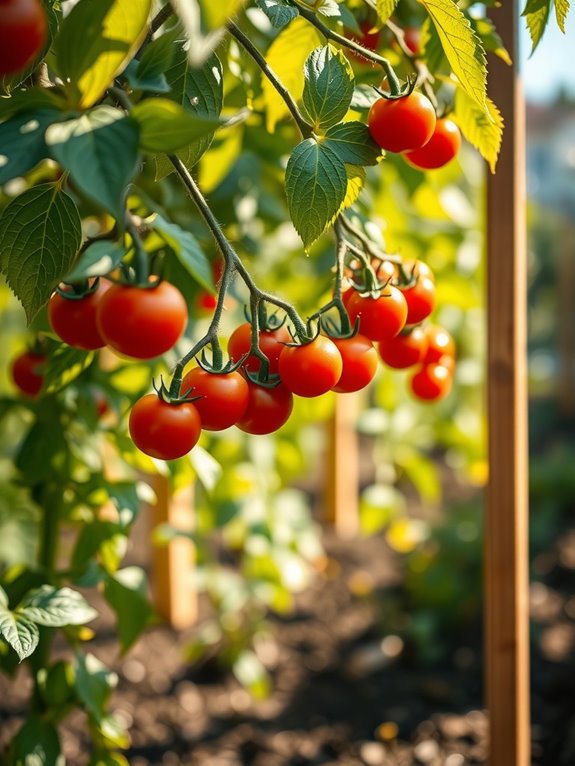
Why do cherry tomatoes need support? Most varieties grow indeterminate. That means they vine and fruit continuously throughout the season. Without stakes or support structures, these plants sprawl across the ground.
This creates real problems for me as a gardener. The vines get tangled and diseased from soil contact. Fruit rots when it touches wet earth. I lose air circulation, which invites pests and fungal issues. Harvesting becomes frustrating because I’m hunting through dense foliage.
Supporting my cherry tomatoes keeps growth upright and organized. It protects my harvest from damage. Better airflow reaches all parts of the plant. I spend less time untangling vines and more time picking ripe fruit.
What Makes Cherry Tomatoes Different From Other Varieties?
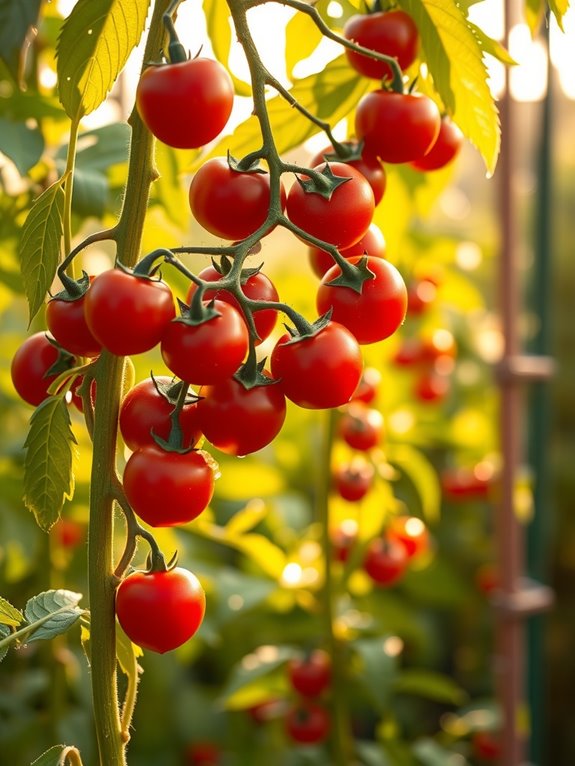
Cherry tomatoes are different from larger varieties like beefsteaks in a couple of key ways. They ripen faster and stay smaller, so they need different support setups than their bigger cousins. I’ve found that some cherry tomato types grow as compact bushes (called determinate varieties like Tiny Tim), while most others keep growing taller all season long (called indeterminate varieties).
The growth pattern of my cherry tomato plant matters a lot because it determines what kind of support I’ll need. For bushy determinate varieties, I can use a small cage. For tall indeterminate varieties, I’ll want a sturdy 8-foot stake or a trellis system to keep the plant upright as it grows throughout the season.
Size And Ripening Speed
Cherry tomatoes grow fast and produce fruit in about 60 to 80 days after I transplant them. Their compact size means I get more branches packed into a small area. That’s why I need to set up a trellis or cage to support all the weight from the ripening tomatoes.
I’ve noticed these plants keep flowering and producing fruit throughout the entire season until frost arrives. The constant growth means my vines sprawl out and need training. A sturdy trellis keeps everything organized so I can actually reach the tomatoes. Even though each fruit is small, the sheer number developing on indeterminate varieties—the ones that keep growing all season—means I really do need proper support structures to handle the load.
Growth Habits And Varieties
When I’m picking cherry tomato varieties, I need to know how each type grows because they don’t all behave the same way. I’ve got two main types to work with.
Indeterminate varieties keep growing and producing fruit until frost kills them. These plants get tall and sprawling, so I need sturdy support like cages or stakes to handle all that growth. They’re heavy producers, meaning they’ll give me lots of tomatoes over the season.
Determinate varieties like Tiny Tim or Micro Tom stay compact and bush-like. I can grow these on patios or in small spaces because they don’t need much support. They’re shorter and bushier than indeterminate types.
The variety I choose changes everything about how I care for my plants. If I pick the right one for my space and what I want to do, I’m set up for success from the start.
Support System Requirements
So why do cherry tomatoes need different support than larger slicing tomatoes? I’ve found that most cherry tomato varieties are indeterminate, which means they grow tall and vine-like all season long. This growth pattern needs more careful support planning than determinate types do.
I can pick between cages and staking based on my variety. For indeterminate cherries, I want sturdy cages or single stem trellises that can handle the plant’s weight as it produces fruit. Determinate varieties grow bushier and shorter, so they work fine with simpler cages or basic staking methods.
The real difference comes down to weight distribution. Cherry tomatoes produce a lot of fruit, so I need support systems that stop the branches from spreading out and spread that weight evenly across the plant. This keeps my plants healthy and makes them easy to reach all growing season.
Cherry Tomato Cages: Simple Support With Real Limitations
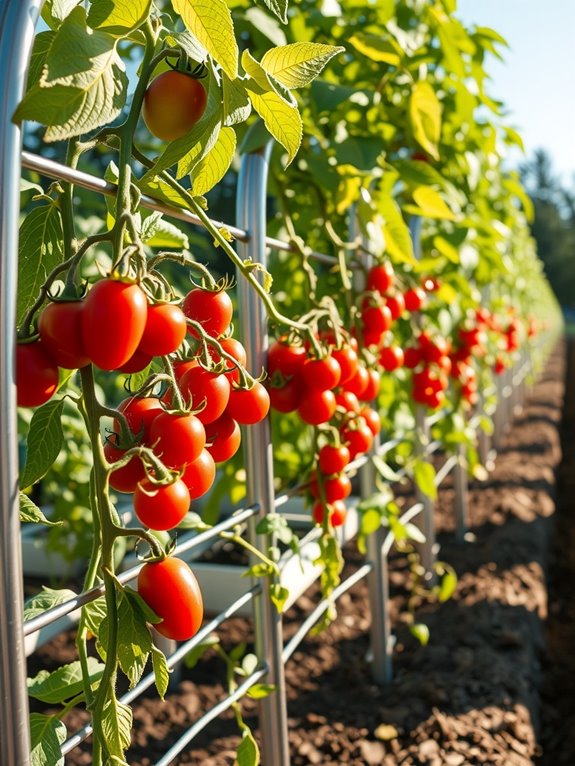
When I’m growing cherry tomatoes, a cage looks like the easiest way to keep my plants standing up straight. I like tomato cages because they cost less than other options and they give support all the way around my vines. I can also drape frost covers over them to protect young plants when cold weather comes.
But here’s the problem. Standard round cages made from basic wire buckle and collapse when indeterminate varieties grow tall and heavy with fruit. Indeterminate means the plant keeps growing all season long instead of stopping at a certain height. I’ve watched cages fold in on themselves mid-season when plants got too big. If I’m using indeterminate cherry tomatoes, I need sturdier cages that are taller or reinforced wire cages built stronger.
The upside is that quality cages last for decades if I pick sturdy ones made to handle the weight my plants will carry. They also cut down on the tying and pruning work I have to do by hand.
The Florida Weave: Economy and Strength Combined
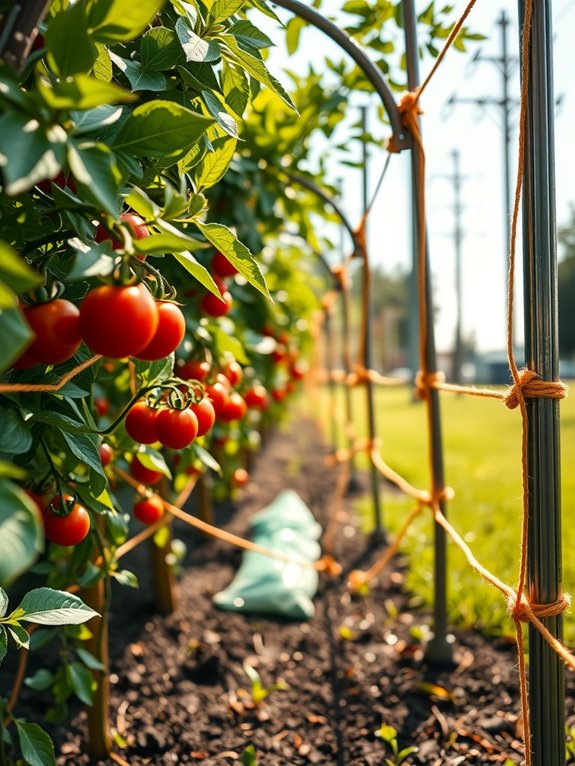
If you’re watching your budget, the Florida Weave works well because you’re only using stakes, twine, and basic knots to hold your plants up. I’ve found it works especially well for determinate cherry tomatoes, which stay compact and don’t need constant maintenance like indeterminate varieties do. The figure-8 pattern between the stake and stem keeps plants stable while letting air flow through your garden, so you’re not wrestling with cages or tying individual stems all season.
Cost-Effective Support System
Why spend money on expensive trellises when you can build a sturdy support system with just stakes and twine? I love the Florida Weave because it’s budget-friendly and effective. I’ll need wooden stakes, natural twine, and my cherry tomato plants. The best part is I can add support gradually as my plants grow.
| Material | Cost Per Unit | Quantity Needed | Total Cost |
|---|---|---|---|
| Wooden Stakes (5 ft) | $2 | 10 | $20 |
| Natural Twine (100 ft) | $4 | 1 | $4 |
| Labor Hours | Free | 2 | $0 |
| Total Investment | — | — | $24 |
I weave twine in a figure-8 pattern between stakes and plant stems. This creates tension that supports growth without rigid structures. My hands stay free during harvest time because the plants aren’t tangled in complicated frames or cages.
Sturdy Performance For Determinate
I use a simple figure-8 pattern with twine to support my determinate cherry tomatoes. It’s called the Florida Weave, and it gives me solid strength without spending a lot of money.
Here’s how I do it. I position wooden stakes about 3 feet tall along my tomato row, spacing them about 4 feet apart. Then I take twine and weave it in a figure-8 between each stake and tomato stem. The pattern loops around the stake, crosses over to the stem, loops around the stem, and crosses back to the next stake. This locks my vines in place and keeps them upright.
I like this method because determinate varieties stay compact. They don’t get too tall or outgrow the support system. The stakes hold firm against wind, and the twine handles heavy fruit loads without snapping. After I practice the weaving technique once or twice, it becomes routine.
My vines stay organized and accessible, so I can harvest easily. The whole setup is sturdy and economical. Once I figured out the pattern, it changed how I manage my cherry tomato plants each season.
Single-Stem Trellis: Maximum Fruit When Space Matters
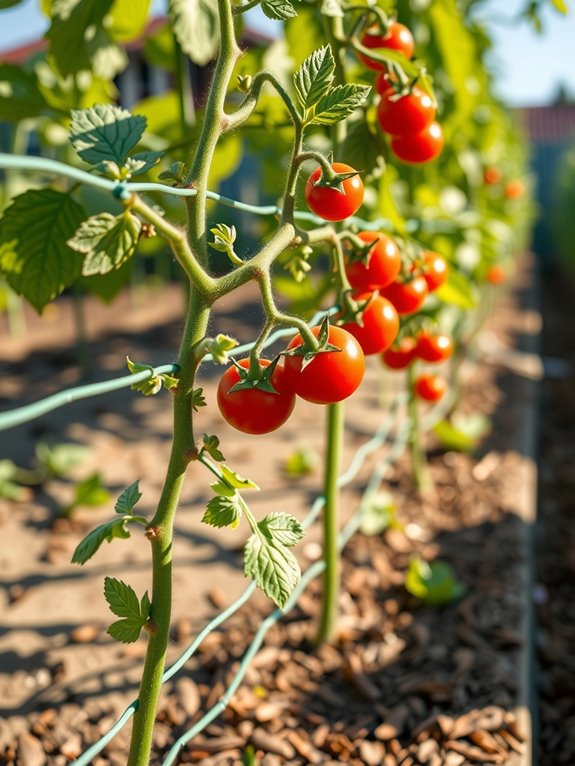
When I’ve got limited garden space and want the biggest, healthiest cherry tomatoes, I use a single-stem trellis. I train the main stem upright to an 8-foot stake while pinching off all side shoots as they appear. This approach maximizes airflow and prevents disease problems that crowd plants together.
I need sturdy supports like T-posts, PVC pipes, or rebar to keep everything stable. As my plant grows, I tie it regularly to the stake using soft plant ties or strips of cloth. This keeps the stem growing straight as it climbs.
Indeterminate cherry tomato varieties work best with this method since they grow tall and produce fruit all season long. Yes, it demands more hands-on maintenance than using cages. But I get easier harvests, better fruit quality, and efficient use of my precious garden space.
Heavy-Duty Tomato Cages: The Long-Term Trellis Investment
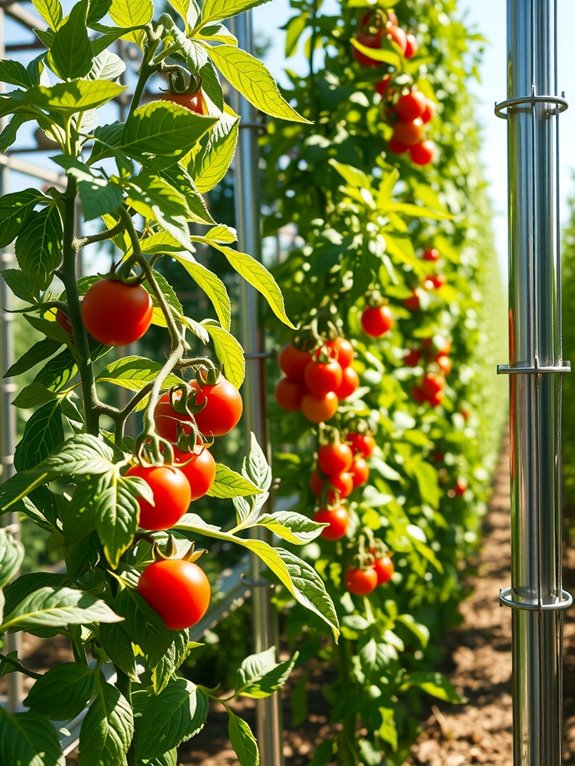
If you’re ready to spend more upfront, heavy-duty tomato cages made from reinforced steel or thick bamboo will last for decades. They handle both determinate and indeterminate varieties without falling apart. I’m going to walk you through picking the right materials, installing them correctly, and maintaining them so they work well for your cherry tomatoes year after year.
The benefit is real when you stop spending time tying plants, pruning branches, and replacing broken cages every season. You’ll notice the difference pretty quickly once you start using a cage that actually holds up under the weight of fruit and branches.
Durability And Long-Term Value
I buy quality tomato cages because they last me decades. Sure, they cost more at the store than those flimsy round ones, but I spread that cost across many seasons. That means I’m actually spending less money per year.
I push the bottom wires deep into the soil and add extra stakes to keep them stable. This keeps my cages from tipping over when the wind picks up. When I’m growing indeterminate cherry tomatoes, that stability really matters because these plants get tall and heavy as they produce fruit.
I don’t have to wrestle with wobbly supports or buy new equipment every year. That’s where I save real money and get peace of mind as a gardener.
Material Selection For Stability
The money I save over time really comes down to what I build my cage from. I’ve found that 10-gauge concrete reinforcement wire—that’s the sturdy metal mesh used in construction—creates tomato cages that last for decades. Store-bought cages often fail after just one season because they bend and collapse under wind or heavy yields. A 5-foot tall reinforced cage costs more upfront, but I’m not replacing it every year like I would with flimsy options.
Here’s what I do to make mine extra stable. I push the cage legs deeper into the soil, about 12 to 18 inches down. Then I add external stakes around the outside of the cage and tie them off with garden twine. This keeps the whole structure from shifting when tomato plants get heavy with fruit or when strong winds hit. The investment in durable materials now means I’m protecting my tomatoes season after season.
Installation And Maintenance Practices
Setting up your tomato cage right from the start keeps it standing strong all season. I anchor mine by removing the bottom wire sections and pushing the cage legs 6 inches into the soil. This gives me a solid foundation that won’t shift around.
I add extra stakes inside the cage for wind resistance. When my cherry tomatoes get heavy with fruit, those internal supports hold everything upright. I space my plants 4 feet apart so they have room to grow up instead of out, and I can reach the fruit easily when it’s time to harvest.
I use cages that stand at least 5 feet tall for indeterminate varieties—the ones that keep growing all season. Once everything’s in place, I maintain the system by pruning the lower leaves. Better airflow around the plant means fewer disease problems. I tie the main stems gently to the cage structure as they grow, just enough to keep them from flopping over.
This setup works because I’m working with how tomatoes naturally want to grow, not fighting against it.
Choose Your Trellis Method: A Decision Framework
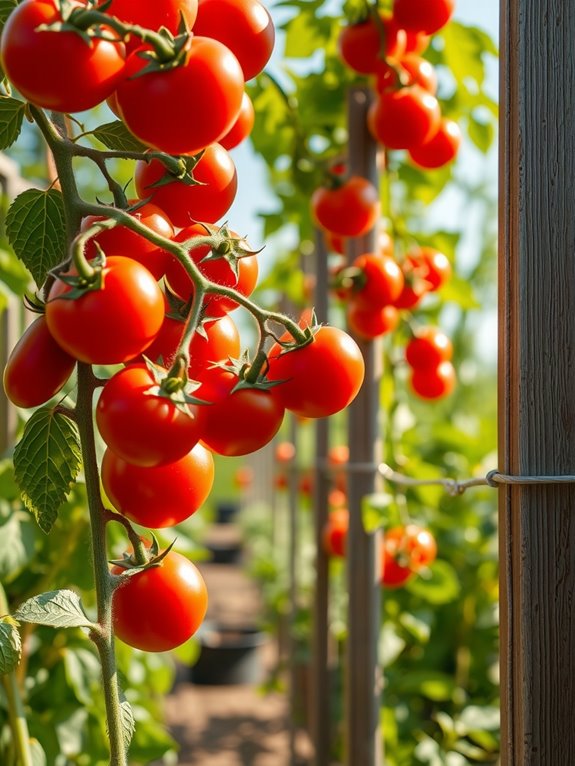
Picking a support system for my cherry tomatoes depends on three main things: what variety I’m growing, how my garden is laid out, and how much time I want to spend maintaining it.
If I’m growing indeterminate varieties (the kind that keep growing taller all season), I need sturdy stakes or a trellis system. Round cages work well for determinate types (the compact varieties that stop growing at a certain height). They’re simple and affordable, though they don’t cost as much upfront as a sturdy cage.
Florida weave is an economical option that uses posts and twine in a figure-8 pattern around the stems. Single stem trellising gives me excellent airflow and saves space when I prune off the sucker shoots regularly.
A sturdy cage costs more upfront but lasts for decades and supports both indeterminate and determinate varieties. I should think about my available garden space, how much time I can commit to maintenance, and what type of tomato I’m growing. The right fit matches my gardening style and what I can realistically handle.
Prune Cherry Tomatoes for Better Results
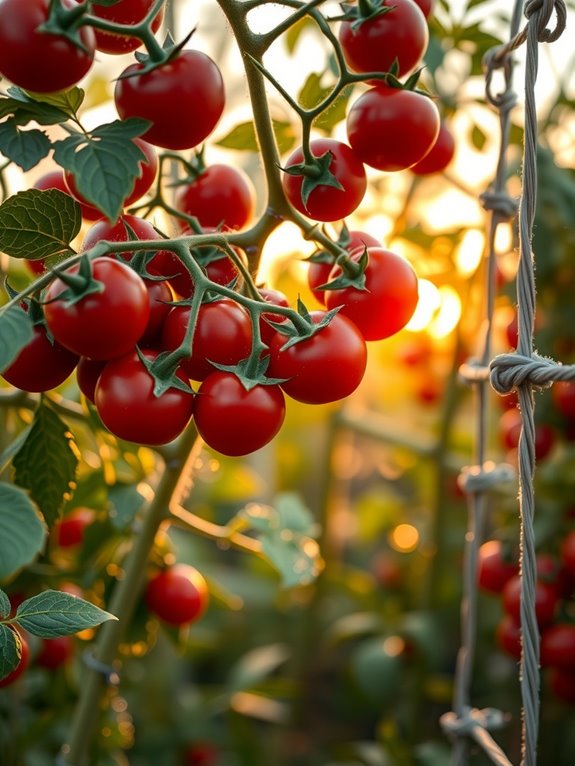
Once you’ve picked your trellis method and got your cherry tomatoes growing upward, pruning becomes your next move. I focus on removing lower leaves and excess suckers to let air flow through the plants. Better airflow means healthier plants and bigger fruit.
Pruning lower leaves and excess suckers improves airflow, leading to healthier cherry tomato plants and bigger fruit.
When I prune, I do these things:
- Remove lower leaves first to reduce disease from soil splash
- Take off diseased foliage right away to stop pathogens from spreading
- Prune suckers (the shoots that grow between the main stem and branches) weekly to keep growth balanced
- Work from bottom to top so the trellis training is easier
I prune about once a week per plant. This keeps my cherry tomatoes manageable and prevents them from getting tangled or overcrowded. When I remove those lower leaves, I’m protecting my investment. The plants respond with stronger stems and more productive branches.
Spacing and Staking Timing to Prevent Root Damage
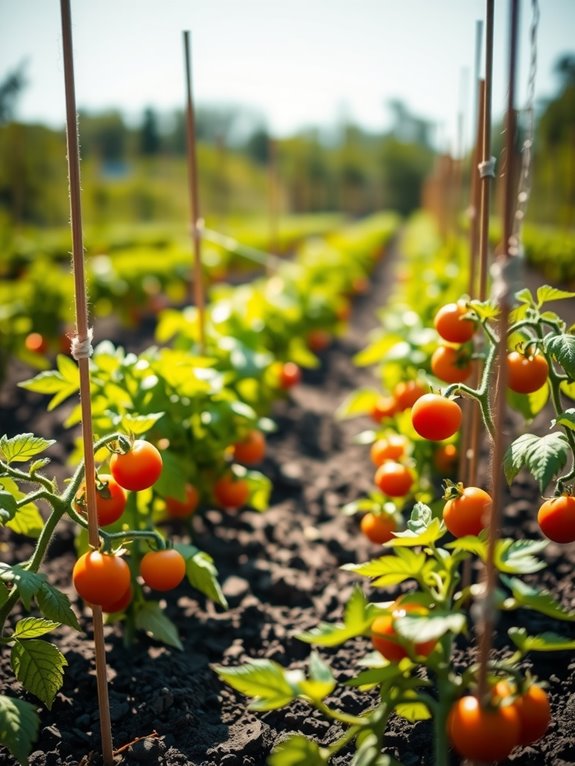
When should you stick those stakes in the ground? I’d recommend installing them right at planting time. Here’s why—if I wait and delay staking, I risk injuring the roots when my cherry tomato plants get bigger and heavier. I’m basically giving those roots time to spread out, then coming in later with a stake and damaging them.
For indeterminate varieties that grow tall, I’ll want 8-foot stakes or trellises to handle all that vertical growth. I’m thinking ahead about how much my plants will sprawl and climb. By getting stakes in early, I protect those developing roots and give my plants proper support from day one.
When to Upgrade Your Support System
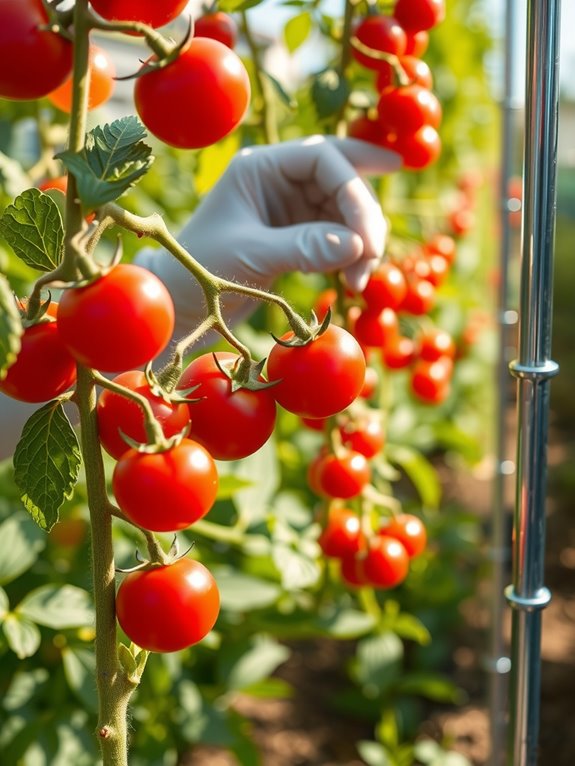
How do you know if your current support system isn’t cutting it anymore? I’ve been there, watching my cherry tomato vines outgrow their stakes or trellis. Here’s when I need to upgrade:
- My vines sprawl across the ground despite existing stakes or trellis support
- Fruit touches soil, inviting disease and pest damage
- Wind damage occurs regularly, bending or breaking stems
- My indeterminate varieties (that’s the kind that keeps growing all season) reach beyond an 8 ft stake’s capacity
I can swap simple stakes for sturdy cages that last decades. Or I can switch to a Florida weave system using posts and twine for flexible support. This method lets me add twine as my plants grow taller. Single stem trellis training concentrates my pruning efforts too. The key is catching these signs early. My garden works better when I match my support system to how my plants actually grow.
Prevent Disease With Better Air Flow
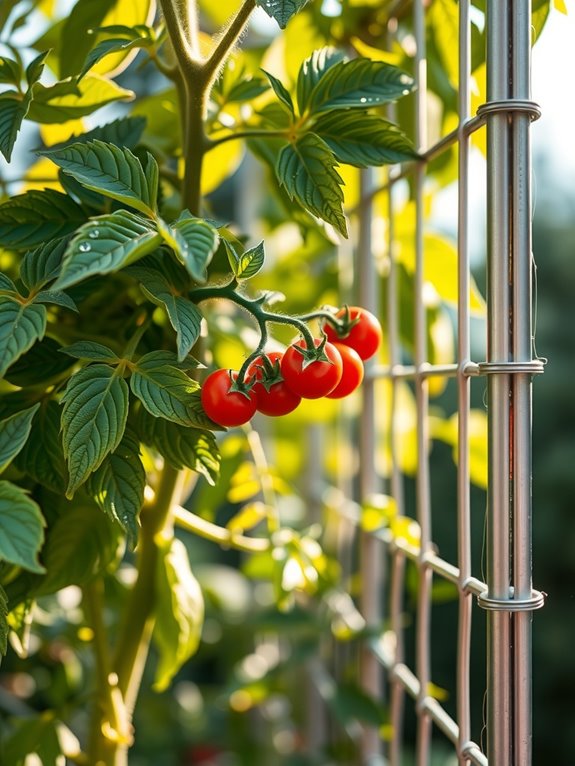
Wet leaves are a problem because they create the perfect conditions for fungal diseases like early blight and powdery mildew. Good airflow dries those leaves fast and stops disease before it starts. That’s why I focus on airflow just as much as I do on the support structure itself.
When I set up a trellis or cage, I space my plants far enough apart so air can move freely around the leaves. I also use taller stakes—around 8 feet high—to keep open channels between the stems. Methods like Florida weave, which uses tied strings instead of solid structures, create natural gaps that let air flow better than dense single-stem setups do.
I prune my lower leaves regularly and remove any foliage that’s shaded from sunlight. This combination of proper spacing, taller stakes, and pruning works together to keep moisture off the leaves and disease away.
You’ll see results pretty quickly. Within a few weeks, your foliage looks healthier and disease problems drop off. That’s when you know your airflow strategy is actually working.
Boost Your Harvest With Smart Training
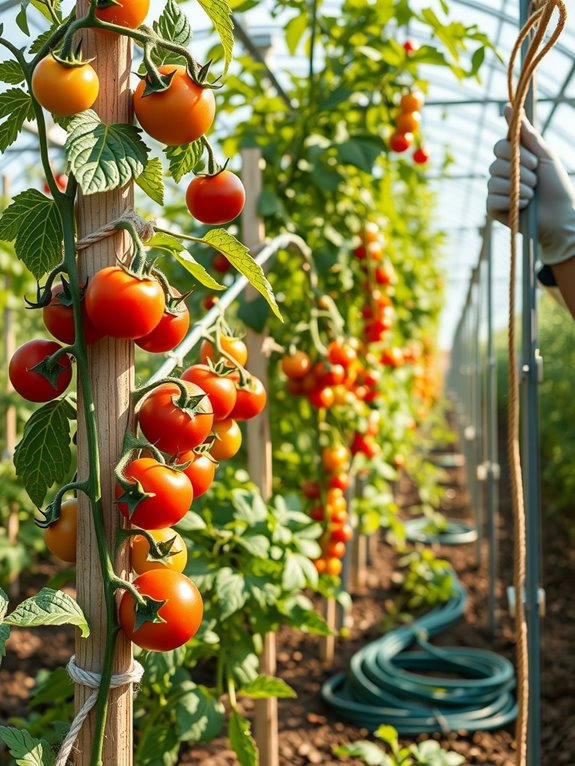
Once I get my airflow sorted out, training my cherry tomato plants is the next step for getting more fruit. I can guide my plants to grow exactly how I want them. This approach gives me better harvests and healthier vines.
Here’s how I train for maximum yield:
- I use a single stem trellis to direct the main stem upward and reduce competition between branches
- I apply the Florida weave technique with stakes and twine for sturdy support that works on both determinate and indeterminate varieties
- I choose tall 8 ft stakes for indeterminate types that produce all season long
- I prune side shoots regularly so energy goes into fruit production instead of extra leaves
Training takes some effort upfront. I’ll spend time guiding stems and tying knots. But the better harvest makes it worth the work.