
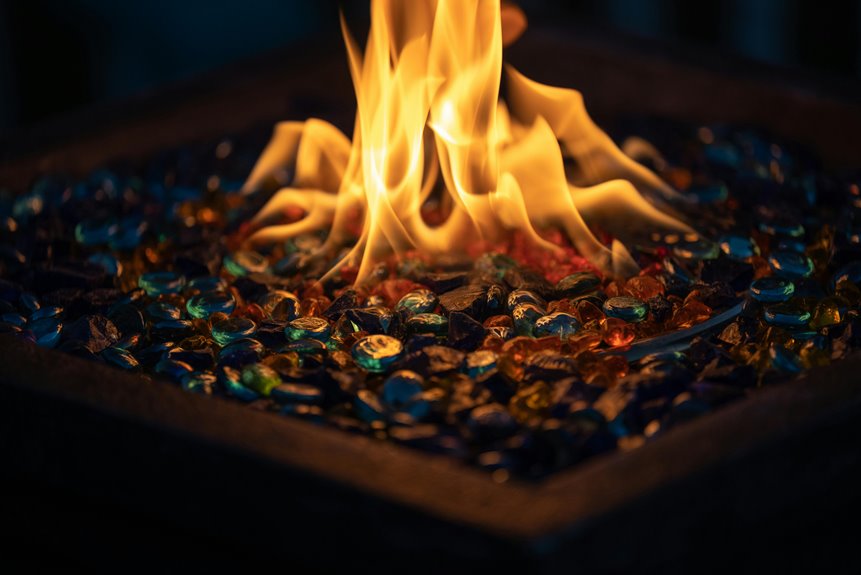
I can put a gas fire pit under my covered patio, but I need to skip wood-burning pits entirely. Wood creates smoke, creosote buildup (that’s the sticky, flammable residue that collects in chimneys), and flying embers that’ll damage my overhead materials. Gas burns cooler and lets me control the flame better.
I need at least 7 feet of clearance between my fire pit and the patio roof. I also need proper ventilation on two open sides so the heat and any fumes escape. My propane tank has to stay outside the covered area completely.
Before I buy anything or start building, I need to contact my local building department. They’ll require permits and can tell me the specific codes for my area. Getting those details locked down first saves me from having to tear things down later.
Yes: But Only Gas Fire Pits Meet Safety Standards
So, can you actually put a fire pit under a covered patio? Yes, but only with a gas fire pit. I can make this work safely when I follow the right steps.
Gas fire pits burn cooler than wood and give me controllable operation. This matters because I need to prevent heat buildup under my cover. I must keep at least two sides of my patio open for airflow to move through.
Gas fire pits burn cooler than wood, offering controllable operation and preventing dangerous heat buildup under covered patios.
I also need to follow safety clearance rules. I’ll keep my gas fire pit at least 10 feet away from walls, ceilings, and overhead materials. My fire pit’s manufacturer instructions will tell me the exact distance I need for my specific model.
Before I buy anything, I should check my local building codes and get a permit. Many cities require permits for outdoor fire pits, even gas ones. I’ll contact my city’s building department to find out what I need.
For protection, I’ll install a spark guard around my fire pit. I’ll also use non-combustible flooring like concrete pavers or gravel instead of wood decking. These materials won’t catch fire if sparks land on them.
When I plan carefully and follow these safety standards, I create a functional outdoor living area.
Why Wood-Burning Pits Don’t Work Under Cover
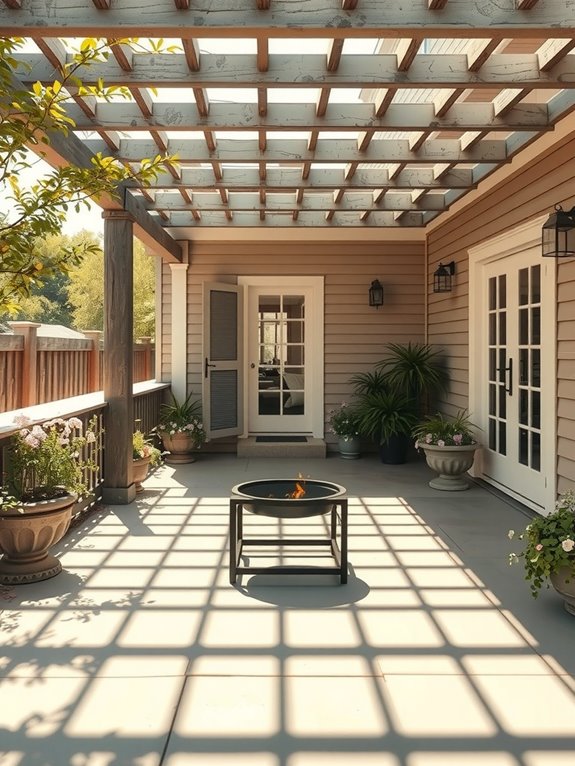
Wood fires create smoke, creosote (that’s a sticky, flammable buildup inside chimneys), and tons of embers. I can’t control where the sparks go, and they’ll damage whatever cover I put overhead or ignite stuff nearby. Since wood-burning pits need open air to let smoke and heat escape safely, they’re just not designed for covered spaces.
Smoke and Creosote Buildup
When I burn wood under a covered patio, I’m creating a real safety hazard. The problem starts with creosote, which is a tar-like substance that builds up on chimney flues and patio structures when smoke gets trapped. A covered patio doesn’t have enough air movement to let smoke and heat escape, so creosote deposits faster and thicker than it would in an open space.
This buildup is dangerous because it’s flammable. The more creosote I have sitting on my patio beams and roof, the higher my fire risk becomes. Sparks and embers from the wood jump out easily and land on nearby materials that can catch fire.
Beyond fire safety, I’m dealing with smoke that lingers in my seating area. The smoke reduces air quality and leaves odors that stick around for days. I’d need to clean the creosote buildup frequently and intensively to keep my patio safe. For a covered space where smoke can’t escape naturally, that kind of maintenance is impractical and costly.
Ember and Spark Hazards
When I’m burning wood in a fire pit, I’m constantly dealing with embers and sparks shooting out in all directions. Those hot particles escape and land on nearby surfaces, and under a covered patio, that becomes a real problem.
Here’s what happens. The embers and sparks can ignite nearby combustibles like cushions, curtains, or wooden beams. They’ll also damage my cover’s fabric or coating. The trickiest part is that sparks escape through ventilation openings and gaps I don’t always notice. I might think I’m protected under my covered patio, but I’m actually creating a dangerous situation.
This is why I keep my wood-burning pit completely open and away from any overhead structures. It’s the safest approach for my backyard setup.
Containment and Control Issues
The problem with wood-burning pits under a covered patio comes down to containment. I can’t control what happens when I light a wood fire in a partially enclosed space. Wood fires produce smoke and creosote buildup (that’s the dark, sticky residue from burning wood) that accumulates overhead. Embers escape unpredictably, making ember control nearly impossible under a cover. The heat and combustion byproducts concentrate, creating serious safety concerns. I need proper ventilation, but covers trap everything inside. Without adequate safety clearance from materials above, fire risk skyrockets.
| Issue | Wood Fire | Gas Fire Pit |
|---|---|---|
| Creosote Buildup | Heavy | None |
| Ember Control | Poor | Excellent |
| Ventilation Needs | High | Low |
| Safety Clearance | Stringent | Flexible |
I’d switch to a gas fire pit. I get better control, cleaner burning, and easier ventilation under my covered patio. Gas fires don’t produce creosote, and I can adjust the flame size with a simple knob. The heat stays more contained, and I don’t have to worry about stray embers landing on my patio furniture or the roof structure above.
Ventilation Requirements for Covered-Patio Fire Pits
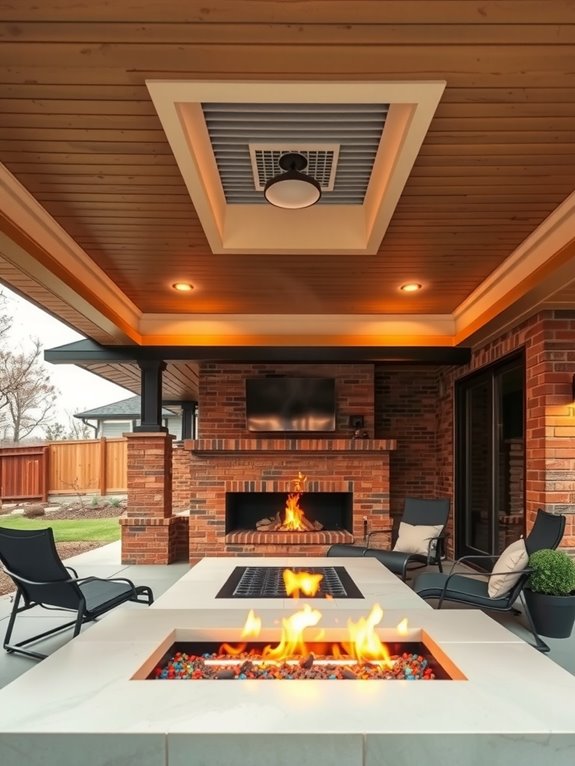
How you ventilate my covered-patio fire pit makes the difference between a safe setup and one that traps dangerous heat and smoke. I need proper ventilation to prevent heat buildup and fumes from accumulating under my covered patio.
Here’s what I should consider:
- I need open airflow under the fire table to disperse heat and fumes effectively
- Glass or vinyl walls trap heat dangerously, so pergolas with good airflow work better
- Crosswinds affect how my ventilation performs, so I need to account for wind patterns in my space
I’ll check my installation manual and local safety codes for required openings. These guidelines specify the ventilation features my covered patio needs. Proper ventilation keeps my fire pit working safely and reliably for gathering.
How High Above Your Fire Pit Must Your Patio Roof Be?
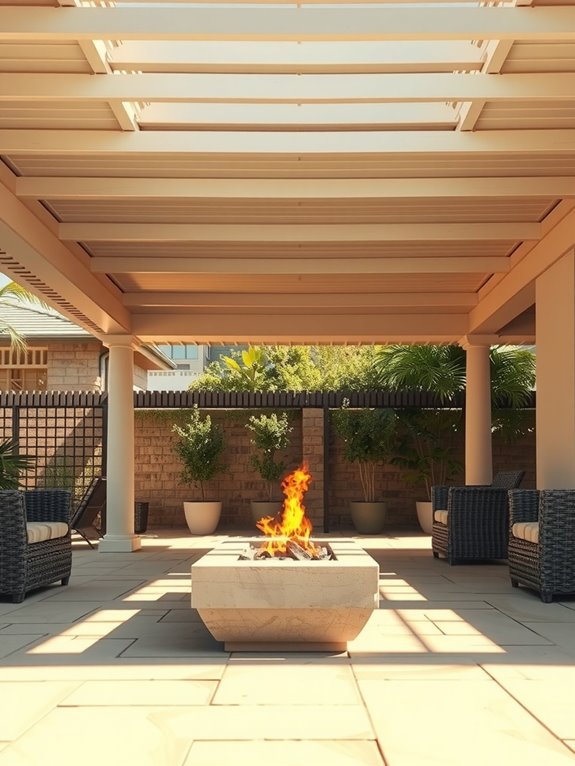
I need at least seven feet of space between the top of my fire pit and my patio roof. This clearance stops heat from damaging the roof and keeps things safe. I should check my fire pit’s manual because some models need even more overhead space.
My patio roof has to be made of noncombustible materials, which means it won’t catch fire easily. It also needs to handle the radiant heat without warping or falling apart. I want to keep that space totally clear of anything like ceiling fans or light fixtures that could get in the way.
My local building codes might ask for more clearance than what the manufacturer recommends. I need to follow both the manual and my local codes to make sure my covered patio works safely while I’m hanging out with friends and family.
Sizing Your Gas Line for Your BTU Needs
Once you’ve locked down your fire pit location under that covered patio, I need to make sure my gas line can deliver enough fuel. This means matching my propane or natural gas line diameter to my BTU needs.
Match your gas line diameter to your BTU needs for safe, consistent flame performance under a covered patio.
Here’s what I’m working with:
- Up to 150,000 BTU → I use a ½ inch line
- Up to 250,000 BTU → I use a ¾ inch line
- Over 300,000 BTU → I use a 1 inch line
The fewer elbows and restrictions I have in my gas line setup, the better. Fewer bends and blockages mean I lose less pressure, so my flame stays consistent and safe. Since I’m working under a covered patio, ventilation (the flow of air) actually matters more than raw BTU power. I always verify my pipe diameter and fittings match my total BTU load before I connect anything.
Adjusting Burner Size for Wind on Your Covered Patio
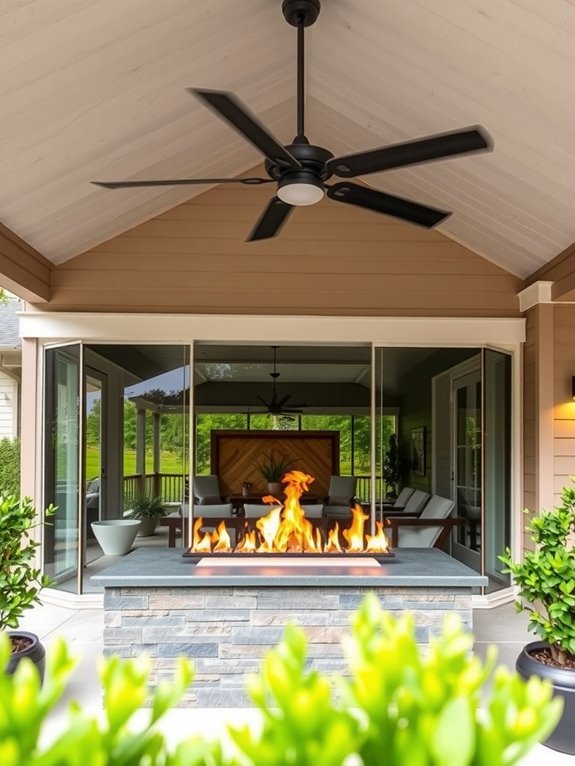
Wind’s going to mess with your fire pit setup more than you’d think, especially under a covered patio where air can funnel through from the sides. When crosswinds hit, they’ll reduce your heat output and mess with comfort levels.
I’d recommend choosing the next burner size up to keep performance steady. If I’m dealing with a 24-inch pit opening, I’d go with a 30-inch burner instead of the standard 24-inch. Adding a wind guard helps stabilize the flame and maintains efficiency.
I need to check that my burner matches the pit opening and meets local clearance guidelines. Most codes require at least 12 inches of clearance from any combustible material above the burner. Proper burner sizing prevents flame blowback and allows for even heating across my covered patio while keeping everyone safe.
Where Your Propane Tank Can and Cannot Go
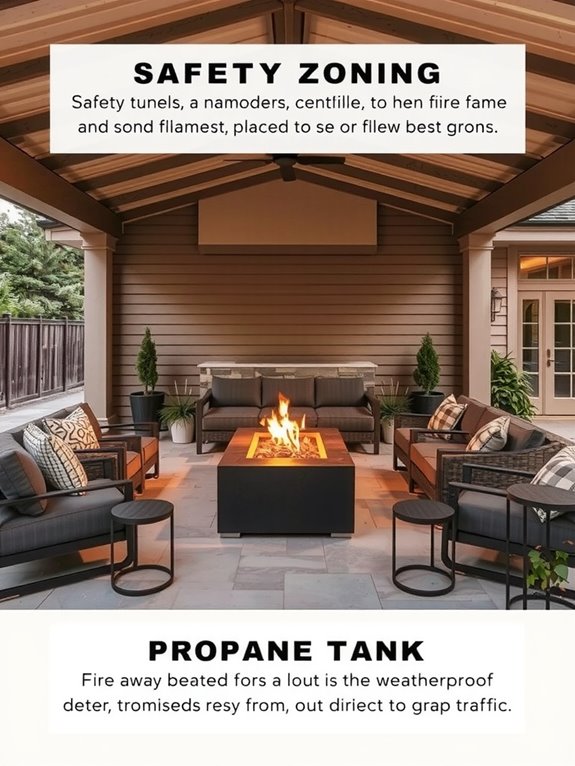
When I’m setting up a fire pit under my covered patio, I need to think carefully about where I put that propane tank. There are real safety reasons for placement rules, and I can’t just shove the tank into an enclosed shed, closet, or under the deck. Those spots trap heat and create dangerous conditions that could cause problems.
My tank needs to stay outside at ground level. It needs good airflow around it so air can circulate freely. I also need clear access to the valve so I can turn it on or off when I need to. The tank should get protection from direct sun and extreme temperatures so it performs the way it’s supposed to.
Tank Placement Rules
Where should I actually put my propane tank when I’m setting up a fire pit under a covered patio? I need to follow strict placement rules to stay safe and legal.
My tank has to stay completely outside the covered area. I can’t store it inside the patio enclosure, even for a short time. This is about outdoor combustible safety.
Here’s what I need to do:
- Position my tank at least 10 feet away from doors, windows, and vents. This maintains proper ventilation and prevents gas leaks from entering my home.
- Keep my tank at least 3 feet away from the fire pit itself and any heat sources or ignition points.
- Mount the tank on a stable, level surface outside my patio structure. This meets code compliance requirements.
I should check my local codes first because requirements vary by area. Following these rules protects everyone at my gathering.
Ventilation and Storage
How you store your propane tank matters just as much as where you place it near your fire pit. I need to keep my tank at least 10 feet away from any ignition sources like the fire pit and heat sources. For covered patios, I want good airflow to stop dangerous gas from building up in closed spaces. I can’t store the tank inside cabinets unless the system is made specifically for propane storage. Instead, I should find a well-ventilated outdoor spot that follows my local codes and regulations. I’ll also keep my tank in the shade and away from direct sunlight and heat. This setup protects me, my family, and my neighbors while keeping my propane tank storage safe and following what the manufacturer recommends.
Pre-Installation Safety Verification: 9 Checks You Must Complete
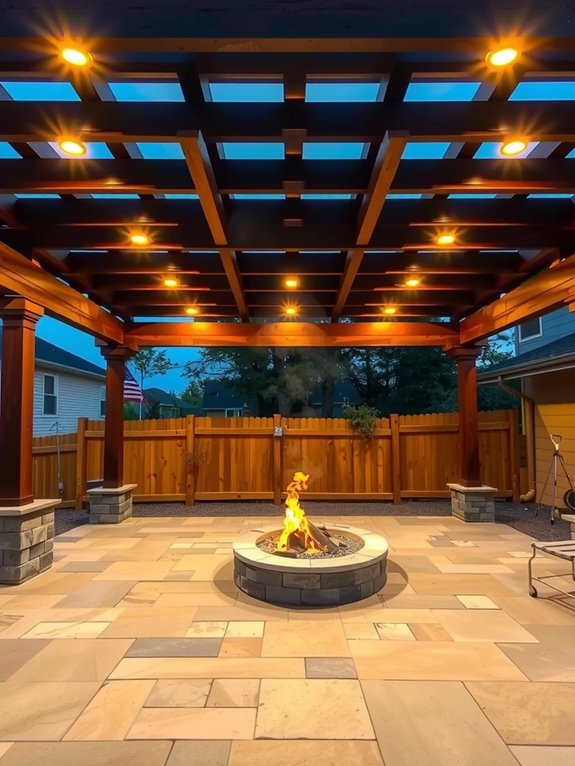
Before you put a fire pit under your patio cover, I need to walk you through nine critical safety checks. These steps keep your setup solid and your family safe.
First, I’ll check the ventilation requirements. I need adequate openings for airflow under the fire table so smoke and gases escape properly. My installation manual tells me I need at least 7 feet of clearance from the pit to any overhead structure like the patio cover itself.
I’ll confirm my gas fire pit meets local building codes. Different areas have different rules, so I check with my city or county first. I also inspect my flooring to make sure it’s made of noncombustible materials like concrete or stone. If it’s not, I install a protective barrier underneath.
For the propane tank, I verify a few things. I need easy access to the shutoff valve so I can turn off gas quickly if needed. I place the tank following manufacturer instructions, which usually means keeping it unobstructed and away from high-traffic areas. I also keep a fire extinguisher within arm’s reach for emergencies.
These checks turn a risky setup into a safe gathering space where everyone can relax.
When a Separate Fire Pit Makes More Sense
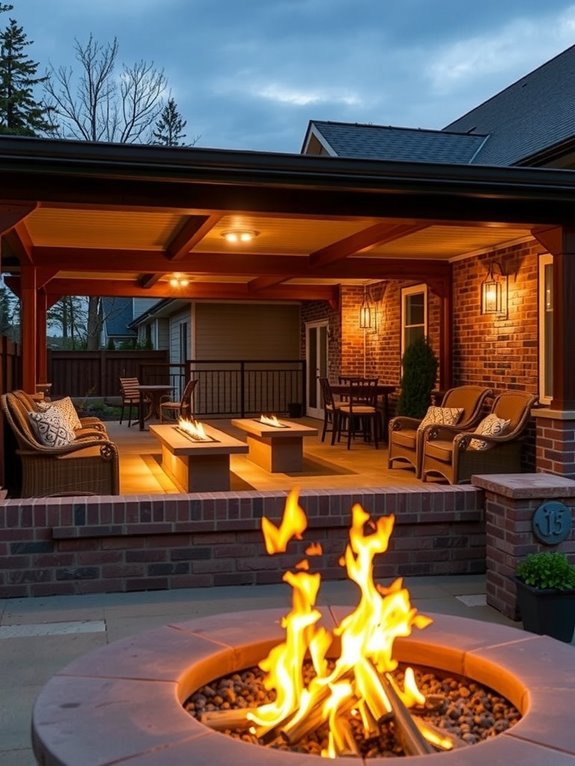
What if you ditched the idea of fitting a fire pit under your patio cover altogether? I’ve found that a separate fire pit works better in most cases. You skip the ventilation headaches and heat damage risks that come with putting one under a covered structure.
A portable fire pit sits right next to your covered patio. I can enjoy the warmth and ambiance when I want it, then stow it away to meet local fire codes. This setup lets me use non-combustible materials like concrete or stone around the pit and maintain proper distance from walls and windows.
Before I position it, I check my local fire codes. Fire pit safety becomes simpler without complex clearance calculations. My covered patio stays protected from embers and heat damage. It’s honestly the easiest path forward for most homeowners like me.