
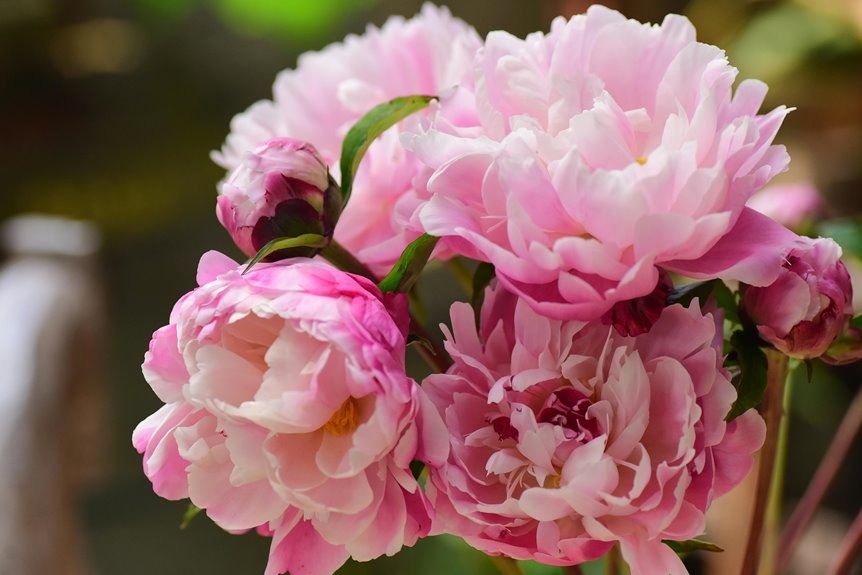
How to Plant Peonies in a Pot (And Keep Them Thriving)
I need a pot that’s at least 18 inches deep with drainage holes at the bottom. Container peonies dry out faster than ones planted in the ground, so the drainage is important for preventing root rot.
For soil, I mix loamy soil with 30% compost and 20% coco peat. This blend gives my peony the nutrients it needs while staying light and well-draining. I want my soil pH between 6.0 and 7.0, which I can check with a simple soil test kit from any garden store.
When I plant the crown, I place it 1–2 inches below the soil surface with the eyes (the little bumps where shoots emerge) facing up. Eyes facing up means the shoots grow toward the light instead of struggling to push through soil.
I water deeply when the top 2 inches of soil feel dry to the touch. I add a 2-inch mulch layer on top to help the soil hold moisture and keep the roots cool. I’ll need to wait 2–3 years before I see the first blooms, so patience is part of the process.
Once the roots fill the pot and start circling the edges, I have two options. I can transplant the peony to the ground where it’ll have more room to spread. Or I can divide it in fall and repot the sections to keep multiple plants going. Either way, my peony will keep producing blooms for years.
Know Why Container Peonies Dry Out Faster and Need Bigger Pots
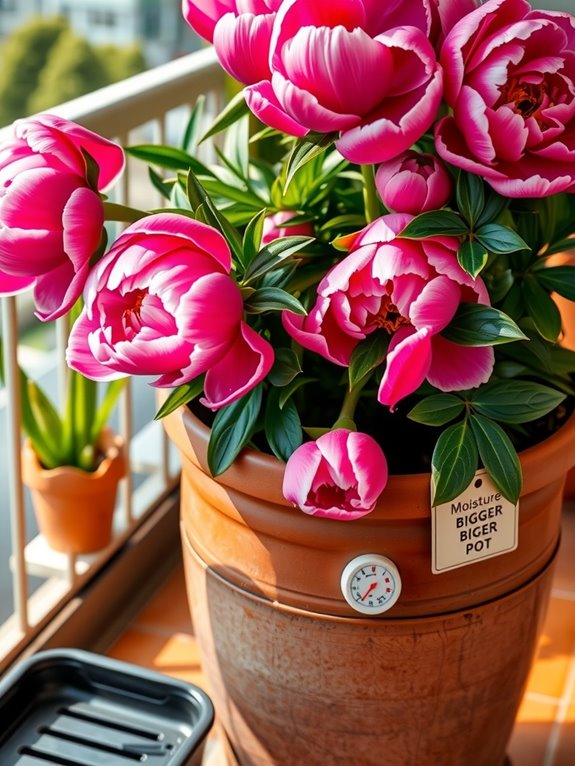
Container-grown peonies need more water than garden peonies because I’m working with limited soil. When I plant peonies in a pot, their roots can’t spread out like they would in the ground. Less soil means less moisture stays around the plant. The exposed sides of the pot also let water evaporate faster than it would in garden soil.
I need to pick a larger pot to hold more soil and keep moisture around longer. I should aim for a pot that’s at least 1.5 feet deep. A bigger container means I’ll water less often during hot months.
I also need to think about what happens over time. Peony roots grow quickly in pots. After three years, the root system can spread three feet across. Starting with a spacious pot from the beginning means I won’t have to transplant the plant later and deal with the hassle of moving it to a bigger container.
Choose a Pot That’s at Least 18 Inches Deep With Drainage Holes
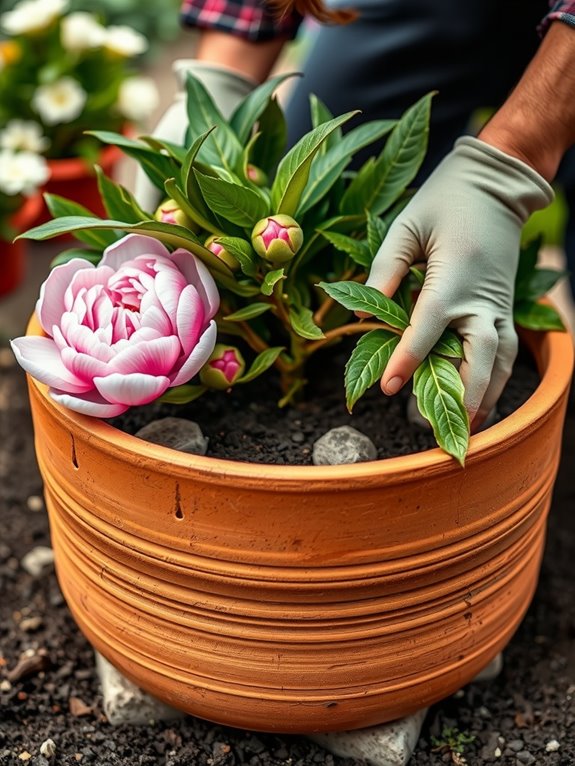
How deep should your peony pot actually be? I’ve learned that pot depth really matters when growing peonies in containers. Here’s what I focus on:
- Get an 18-inch minimum depth so those long roots have plenty of room to spread out
- Add multiple drainage holes to prevent water from pooling at the bottom, which causes tuber rot and kills peonies fast
- Use loamy, well-draining soil that works well with your deep container
When I use shallow pots, I run into problems right away. The roots get cramped and can’t develop properly. Water sits at the bottom instead of draining through. My peonies end up struggling.
A deep pot gives the roots the space they need. I notice my plants get stronger and more stable, which means I need to stake them less often. I also don’t have to transplant as much. Getting the pot depth right from the start makes a real difference in how well my peonies do.
Pick Peony Varieties Suited to Container Growing
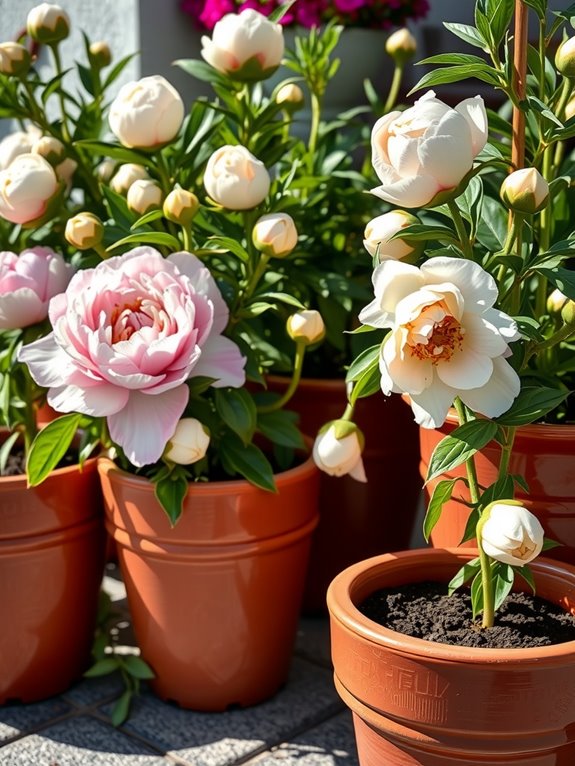
I’ve found that compact varieties like Border Charm work best for containers since they stay small and won’t outgrow your pot. Itoh hybrids and lactiflora cultivars are my top picks because they produce multiple stems with lots of blooms and strong side buds. I skip large or long-stemmed types unless I’m using an extra-large pot with sturdy support, which saves me time and hassle later on.
Compact Varieties Work Best
Since peonies can grow massive root systems, I need to choose compact varieties that won’t outgrow my pot in a couple of seasons. I’m looking at midseason or compact lactiflora and intersectional types. These smaller cultivars fit perfectly in container spaces without overwhelming my setup.
Compact peonies work well for container gardening because they demand less root space. This means I’ll transplant less frequently than I would with larger varieties. Their sturdy stems and multiple side buds create fuller displays even in confined conditions. They’re also forgiving plants that adapt better to pot life than bigger types.
When I pick compact varieties, I’m setting myself up for success. These peonies won’t strain against container boundaries or require constant repotting. They’ll settle in and reward me with reliable blooms year after year.
Itoh Hybrids For Containers
Itoh hybrids are intersectional peonies that combine traits from herbaceous and tree peonies. They grow vigorously and produce way more flowers than standard peony varieties, which makes them excellent for container gardening.
Bartzella is a top choice among Itoh cultivars. I’d plant it in a very large pot that’s at least 1.5 feet deep so the roots have room to spread out. Fill the container with loamy, well-draining soil that’s slightly acidic. Place the pot where it gets full sun—about six hours daily.
Your Itoh needs sturdy staking or grow-through supports because the blooms get heavy. Water deeply and regularly to keep up with the plant’s flower production. The combination of a properly sized pot, good soil, adequate light, and strong support structures will give you way more blooms than you’d get with standard peonies.
Lactiflora Cultivars Offer Abundance
While Itoh hybrids grow with a lot of vigor, Lactiflora peonies work differently. They give you abundance through multiple stems and side buds that create waves of blooms across the whole season.
I like these cultivars for container growing because they’ve got serious strength. The Charm variety shows what’s possible with sturdy stems and countless side buds that bloom in late mid-season. Here’s what makes Lactiflora work in pots:
- You need large, sturdy containers (at least 15-18 inches deep) with excellent drainage to handle the heavy flowering
- They produce pink to white blooms in varied forms, so you can display them different ways
- They’ve got proven vigor and multiple stems that maximize bloom quantity without overwhelming your pot
When you select Lactiflora varieties carefully, you get a transformation that lasts for years.
Mix Loamy, Well-Draining Soil With Added Compost
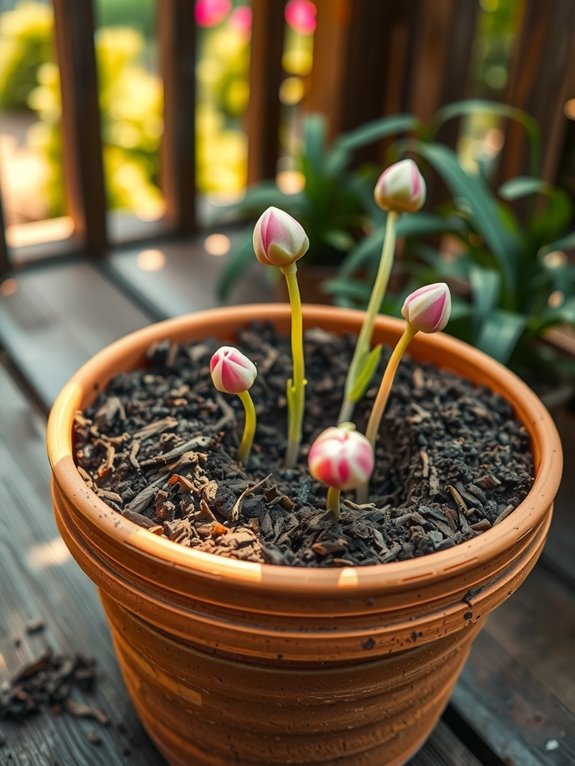
I’ve found that getting the soil mix right is what works best for peonies in containers. I combine loamy soil with compost and coco peat to create a balanced mix that drains well and feeds the roots.
My ratio is 50% loamy soil, 30% compost, and 20% coco peat. This keeps the mix loose so water doesn’t pool around the roots. At the same time, the roots get steady moisture and nutrients from the organic matter.
I aim for a pH between 6.0 and 7.0, which is slightly acidic. This pH range helps your peonies absorb nutrients better. I test my mix before I plant anything and adjust it if needed. You can use a simple soil pH test kit from any garden store to check this.
Soil Composition And Drainage
Want to grow peonies in a pot? I’m going to walk you through getting your soil right.
Start with loamy soil as your base. Loamy soil is a mix of sand, silt, and clay that holds moisture without getting waterlogged. Mix in compost to add nutrients and help water move through better. You’ll need about one foot of this amended soil so the roots have room to develop properly.
If you’re working with sandy soil, I add compost every three months to keep nutrients from washing away. For heavy clay soil, I blend in compost plus Greensand or sand to improve drainage. You’re basically building a home where peony roots can settle in and grow.
Check your soil pH with a test kit from any garden center. You want it between 6.5 and 7 for peonies to do their best. Get these basics down and your peonies will have what they need.
Compost Enrichment Guidelines
Now that your soil base is set, let’s mix in compost to create that ideal loamy texture. I blend compost about one foot deep into bed prep or directly into containers. This step improves drainage and boosts soil nutrients naturally.
For sandy soils, I apply a thin compost top-dressing every three months to replenish nutrients and help the soil hold more moisture. If I’m working with heavy clay, I blend compost with Greensand or sand to enhance drainage without losing fertility.
After planting, I continue using compost as a regular top-dressing. This consistent practice keeps my potted peonies vigorous and healthy season after season.
Lightening Heavy Container Soil
What’s the secret to keeping potted peonies from rotting in their containers? I need to lighten that heavy soil so water drains properly. Here’s what I’m doing:
- I start with loamy soil as my base foundation
- I mix in perlite or pumice to create air pockets and boost drainage
- I blend everything with compost for nutrients and moisture control
Think of it like this: loamy soil holds just enough water, perlite lets excess drain away quickly, and compost feeds my plant. I’m creating the sweet spot where roots stay healthy and nothing gets waterlogged.
When these three components work together, that’s when the change happens. My peonies won’t develop that dreaded tuber rot when I’ve got proper drainage. I’m building a soil recipe that respects what peonies actually need underground. I mix these amendments thoroughly before planting, and I won’t have to worry about root problems later on.
Plant Your Peony Crown 1–2 Inches Below the Soil Surface
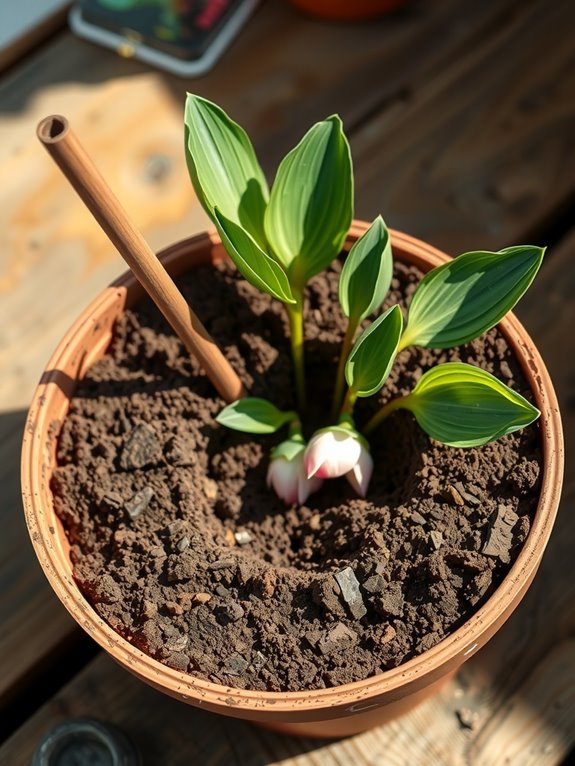
When I’m ready to plant my peony crown, I position it about 1 to 2 inches below the soil surface. This depth helps the roots develop and the buds stay cold enough to sprout properly.
I make sure the eyes (the small bumps where growth starts) face upward just under the soil. This way, the buds form evenly and the plant grows strong all around.
I don’t bury the crown deeper than 2 inches. Too much soil on top actually stops the plant from poking through and makes flowers show up later.
Once I’ve placed my peony crown at the right depth, I gently pack soil around it. Then I water everything well so the soil settles tight against the roots and no air pockets stay behind.
Water More Often Than In-Ground Peonies, Especially in Hot Weather
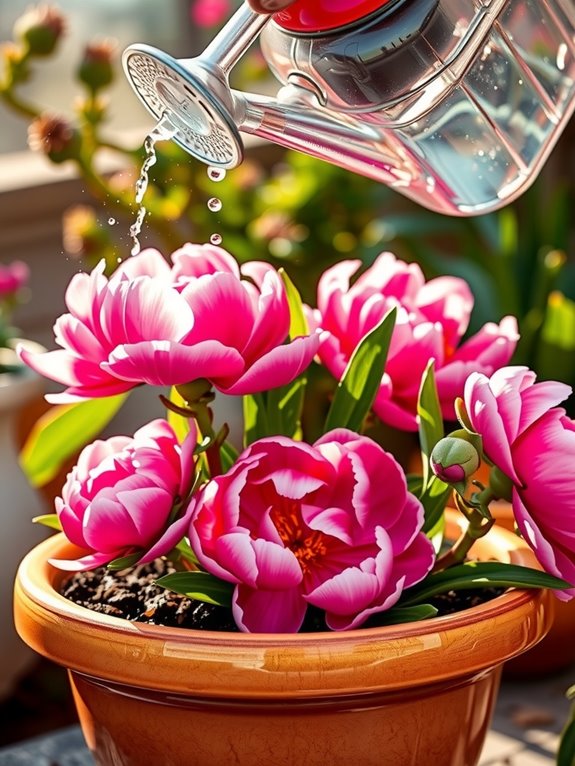
Container-grown peonies dry out faster than in-ground plants because pots don’t hold moisture like soil does. You’ll need to water them more often, especially when it’s hot outside.
I check my potted peonies every day during hot spells. I water them thoroughly until the entire root zone gets soaked instead of just sprinkling the surface. The goal is keeping the soil moist but not waterlogged.
Your watering schedule depends on a few things. Pot size matters because smaller pots dry out quicker than larger ones. Your soil mix also plays a role—a mix with more peat moss or coconut coir holds water longer than sandy mixes. How much direct sun your peony gets makes a difference too. A peony in full sun needs more water than one in partial shade.
Container Drying Patterns
Why do potted peonies need so much more water than their in-ground cousins? Containers dry out faster because soil in pots heats up quickly and loses moisture rapidly through the sides and bottom. We’re working against physics here, and understanding drying patterns helps me keep my peonies thriving.
Here’s what happens in my pot watering routine:
- Surface crusting occurs when soil dries too fast, blocking water from reaching the root zone
- Heat exposure accelerates evaporation from all container surfaces, especially in hot weather
- Poor drainage compounds problems by either waterlogging or drying unevenly
I’ve found that deep, slow watering works better than light sprinkling. Deep watering means I soak the soil until water drains from the bottom holes. Light sprinkling just wets the top inch or two, which dries out quickly.
Adding a 2-inch layer of mulch around the base conserves moisture and stabilizes the root environment. I use wood chips or shredded bark for this. In summer heat, I might water daily to maintain consistent moisture without creating rot conditions. I check the soil by sticking my finger about 2 inches down. If it feels dry at that depth, I water.
Seasonal Watering Adjustments
Once you get a watering schedule going, I adjust it based on what season it is. When summer heat hits and temps climb above 85°F, my container peonies need water more often than peonies planted in the ground. I check my pots every couple of days during those hot spells. I water slowly and deeply so the moisture soaks through all the soil, not just the top layer. This deep watering helps the roots grow stronger and better handle heat waves.
In spring and fall, I water less often since cooler temperatures slow down how fast the soil dries out. Winter is simple—peonies go dormant so they need very little water. I also add a 2 to 3-inch layer of mulch around the base of each pot. The mulch keeps the soil temperature steady and cuts down water loss so I don’t have to water as much.
Monitoring Soil Moisture Levels
How often do you really need to water potted peonies? I’ve found that checking soil moisture regularly is my best defense against problems.
I stick my finger two inches into the soil. If it feels dry, I water right away. I water slowly and thoroughly until water drains from the bottom holes. This soaks the root zone completely.
I check moisture levels every two to three days during hot weather. Pots dry out faster when it’s warm outside. I monitor drainage carefully because wet soil kills roots quickly. Container peonies need consistently moist soil, but not waterlogged conditions (that means sitting in water).
During summer heat, I increase watering frequency. Short dry spells won’t hurt established plants, but extended drought is fatal for potted peonies. Finding this balance makes my watering routine manageable and effective.
Provide At Least Six Hours of Direct Sun Daily
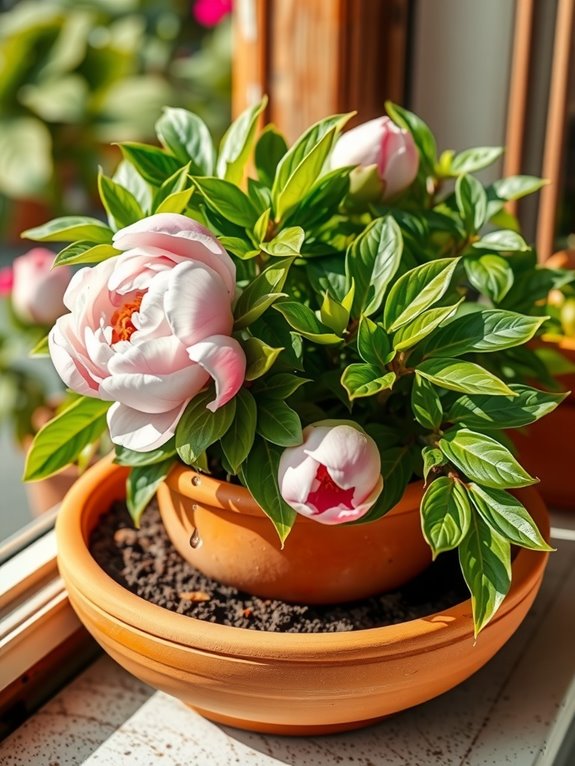
When it comes to growing peonies in pots, light is the main thing I need to focus on. I should give my peonies at least six hours of direct sunlight each day. This amount of sun exposure makes a real difference between plants that do well and ones that struggle.
I’ll position my container in a south-facing spot where it gets uninterrupted sun during the growing season. If my space doesn’t get enough direct sun, I can install supplemental grow lights to make up for the gap. Grow lights are artificial lights made to help plants get the light they need.
When I don’t give my peonies enough light, they produce fewer blooms and weaker stems. That’s why finding a sunny location is worth the effort.
Use Support Rings for Heavy, Full Blooms
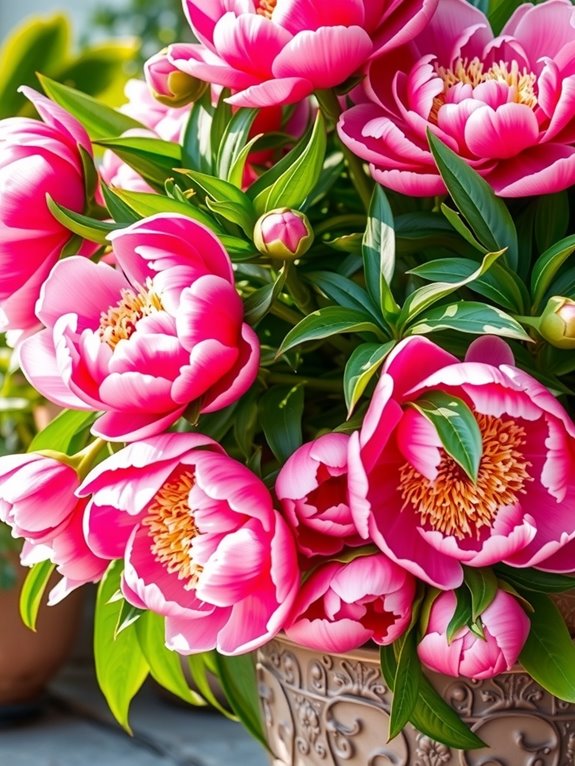
Once your peonies start growing strong from all that sunlight, you’ll notice their buds getting bigger and heavier as bloom season approaches. That’s when I reach for peony support rings. I use sturdy rings with gridded sections and attachable legs to keep those heavy blooms from flopping over.
Here’s what I do:
- Raise the grid and attach the legs as buds begin forming in spring
- Choose rings designed specifically for pot-grown peonies to fit your container securely
- Remove the grid after flowering to improve airflow around the plant
Taller cultivars and those with dense petals really need this support. It prevents damage and keeps the blooms standing upright the way I want them to look. Removing the grid later also reduces disease pressure, which keeps my peonies healthier longer.
Accept That First Blooms May Take Two to Three Years
I’ll be honest—patience is the hardest part of growing peonies in pots. I focus on root establishment first, which means my peonies won’t flower right away. During year one, I’ll see green shoots and foliage development. The first bloom typically arrives in year three, though it might be modest at first.
Year two might show small buds, while year three delivers noticeable flowers. Each year brings improvement as the plant matures. The wait time rewards me with increasingly larger blooms over time.
I plan ahead by choosing appropriately sized containers now. This preparation accommodates the growing root mass (the underground part where the plant stores energy and water) over time. Understanding this timeline helps me embrace the process rather than feel discouraged.
Repot Your Peony Into a Larger Container as Its Roots Expand
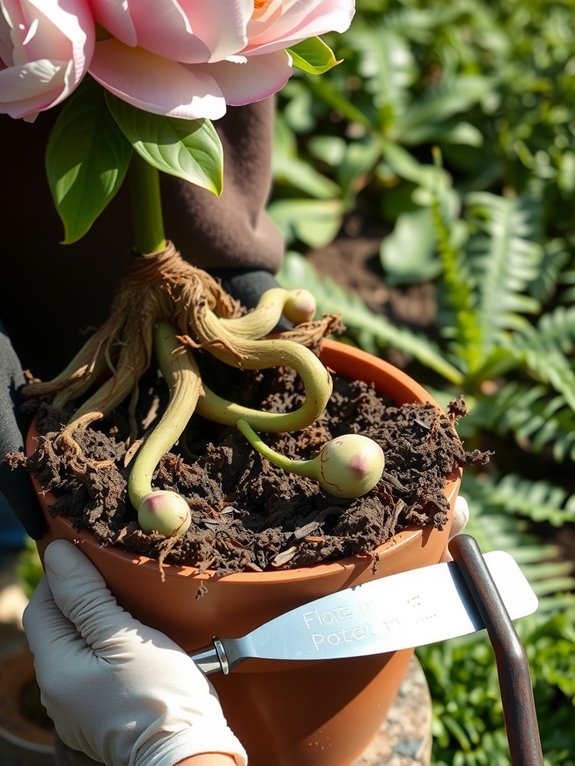
As your peony grows stronger over the first couple of years, its root system spreads underground in ways you can’t see right away. By year three, those roots can spread up to three feet across. That’s when I need to repot my peony into a larger container.
I’ll choose a pot with excellent drainage holes and at least 1.5 feet of depth. I want to move my peony into a noticeably larger container before it becomes root-bound, which means the roots have filled up all the space in the pot and have nowhere else to grow. When I repot, I’ll keep the eyes (the small bumps on the root where new shoots grow) slightly below the soil level.
I’ll use fresh, well-draining loamy soil (a mix of clay, sand, and organic matter that lets water flow through easily). This type of soil supports strong growth and prevents root-bound conditions that can delay flowering. I need to monitor my peony’s root expansion regularly and increase the container size gradually as the roots expand. This approach keeps my peony healthy and flowering strong year after year.
Transplant to the Ground or Divide When the Pot Becomes Too Small
What happens when my peony’s roots completely fill up its container? I need to make a decision. After three years, roots can stretch three feet across. My pot won’t work anymore. I’ve got two solid options.
| Option | Timing | Effect on Blooming | Best For |
|---|---|---|---|
| Transplant to ground | Fall | Encourages spring blooms | Long-term growth |
| Divide the plant | Fall | May delay blooming | Vigor and health |
Fall replanting minimizes transplant shock. I place the eyes (the small buds on the roots) facing upward with roots sitting about two inches below soil level. This matters because peonies grow from those eyes.
Dividing the plant helps me keep it healthy and vigorous for years. When I split a peony, I cut the root into sections with at least three to five eyes on each piece. Either choice beats watching roots break through the drainage holes at the bottom of the pot. My peony gets the room it needs to keep growing strong.