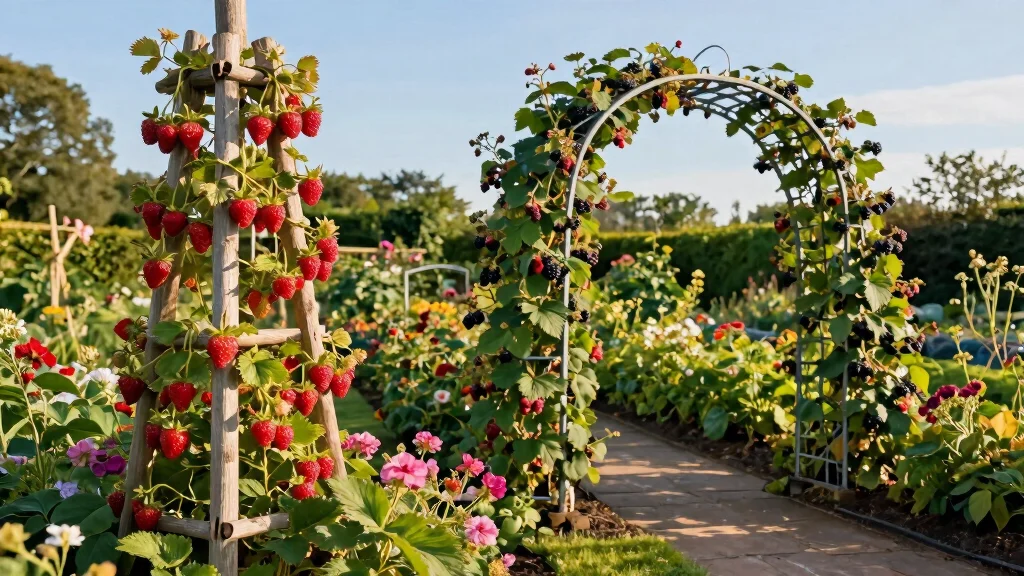
Creating a garden filled with lush, juicy berries is a dream for many gardening enthusiasts. If you’ve ever found yourself longing for a tidy and productive garden space, you’re not alone! That’s why I put together this post—because vertical berry gardening has become a game-changer for maximizing space while keeping your plants healthy and organized.
If you’re a gardener who wants to cultivate beautiful berry plants without sacrificing too much ground space, this one’s for you. Whether you’re a seasoned pro or just starting out, I’ve gathered a dozen berry trellis ideas that are not only functional but also visually appealing. You’ll discover DIY trellis designs that can transform your garden into an efficient and charming berry haven.
From rustic wooden structures to creative pallet designs, each trellis idea offers unique benefits. You’ll find tips on how to support your berry plants while conserving space, making your garden not just neat but also highly productive. Let’s dig in and explore these fun and useful ideas that can help you enjoy a fruitful harvest!
Key Takeaways
– Discover 12 unique berry trellis ideas that maximize vertical space in your garden. – Learn about DIY trellis designs that are budget-friendly and customizable to your style. – Explore practical tips on providing optimal berry plant support for healthier growth. – Uncover space-saving gardening techniques that fit perfectly into smaller yards or urban gardens. – Get inspired by creative solutions that enhance both the productivity and aesthetics of your garden.1. Rustic Wooden A-Frame Trellis
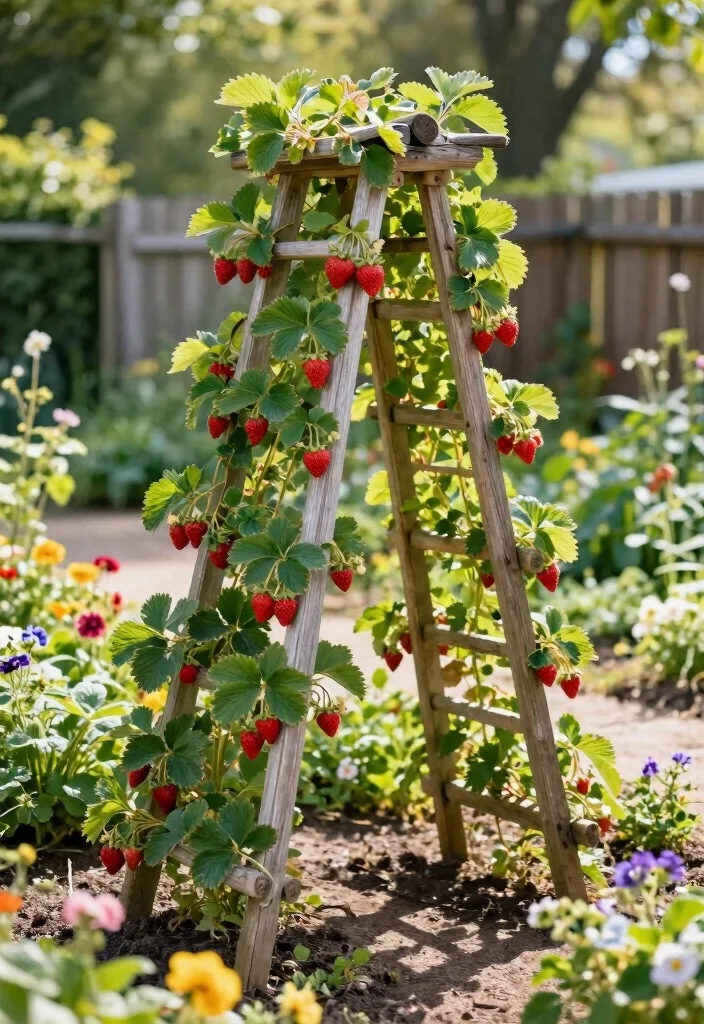
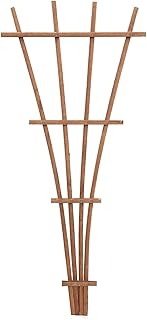
Looking to add charm to your garden while supporting your favorite climbing berries? A rustic wooden A-frame trellis does just that! This design combines aesthetics with functionality, ensuring your plants enjoy ample sunlight and air circulation for healthy growth. Using reclaimed wood not only enhances the rustic appeal but also promotes sustainability in your outdoor space. Editor’s Choice
To elevate the natural look, consider intertwining climbing vines or colorful flowers alongside your berries for a beautiful display.
Ingredients:
– Untreated wood (for a natural finish)
– Nails or screws
– Sandpaper
– Optional: Paint or stain (for durability)
Instructions:
1. Cut two long wooden pieces to create the A-frame sides.
2. Connect them at the top using a crossbar.
3. Attach horizontal slats on the sides for berry support.
4. Secure the frame firmly in the ground.
5. Plant your berries at the base and watch them climb!
Don’t forget to regularly check for pests and prune your plants to improve airflow.
FAQs:
– How long will the wood last? With proper care, untreated wood can last for several years.
Rustic Wooden A-Frame Trellis



2. Vertical Pallet Trellis
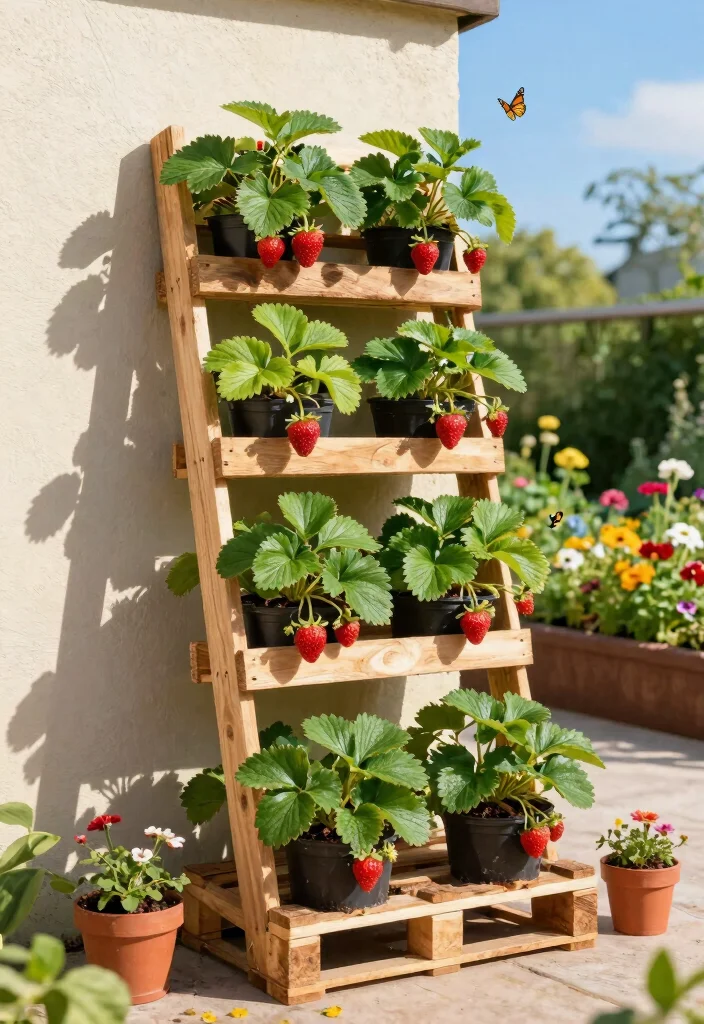
Have an old wooden pallet lying around? Turn it into a stunning vertical trellis that saves space and looks fantastic! This clever DIY idea is perfect for small gardens or patios, allowing you to grow strawberries, raspberries, or blueberries in a compact area. Simply lean the pallet against a wall or fence, and voilà—you’ve got an instant vertical garden!
Not only is it cost-effective and eco-friendly, but it also adds a unique rustic vibe while being easy to install and maintain.
Ingredients:
– Old wooden pallet
– Soil
– Berry seeds or seedlings
Instructions:
1. Clean and sand the pallet to remove rough edges.
2. Place the pallet vertically against a sturdy wall or fence.
3. Fill the gaps with soil and plant your berry seeds or seedlings.
4. Water regularly and watch your berries flourish!
For best results, ensure the pallet is in a sunny spot and monitor water levels closely.
FAQs:
– Can I use treated pallets? It’s best to use untreated pallets to avoid chemicals leaching into the soil.
Even tiny patios can yield real berries with berry trellis ideas—just lean an old pallet against a wall and let gravity do the work. It’s inexpensive, easy to maintain, and suddenly your strawberries, raspberries, and blueberries are up, not crowding your floor.
Vertical Pallet Trellis
Editor’s Choice



3. Classic Arch Trellis
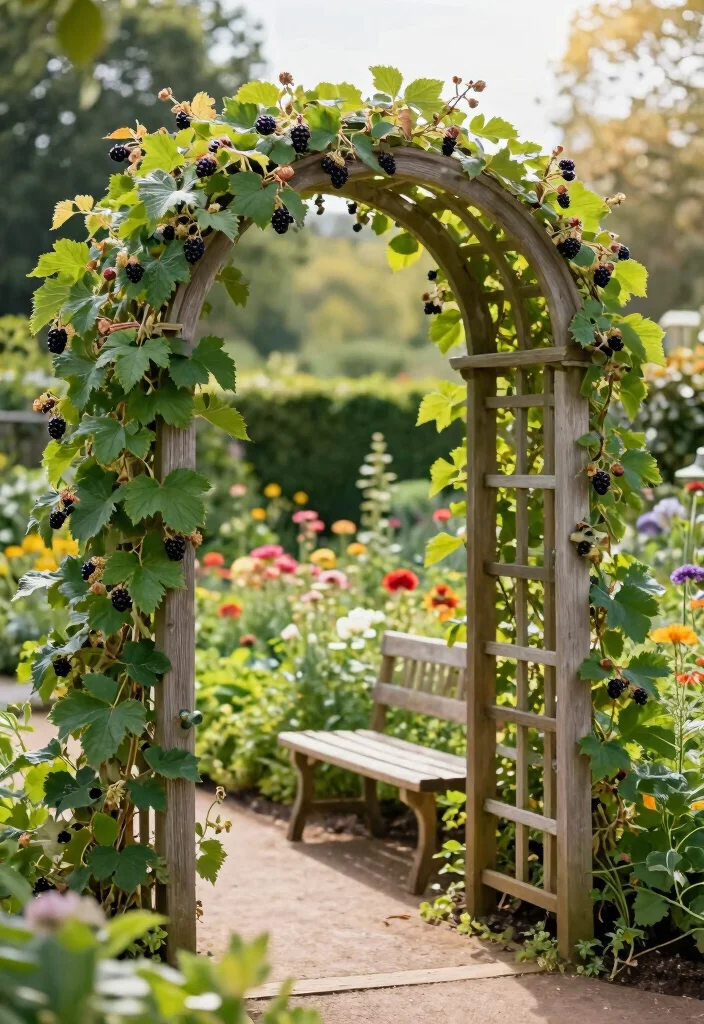
Dreaming of an elegant focal point in your garden? An arch trellis creates a stunning entryway while providing support for your climbing berries. This design not only guides your plants upward but also adds vertical interest to your landscape. Made from metal or wood, an arch trellis can even be adorned with flowering vines for an extra touch of beauty.
The benefits are plenty: it creates a captivating pathway, supports multiple plants, and serves as a beautiful backdrop for seasonal decorations.
Ingredients:
– Wood or metal rods
– Nails or screws
– Optional: solar lights
Instructions:
1. Choose your materials, preferably wood or metal rods.
2. Create two curved sides that meet at the top to form the arch.
3. Secure the base into the ground for stability.
4. Plant your berries at the base and encourage them to climb!
Consider adding solar lights along the arch for a magical evening glow.
FAQs:
– How tall should I make the arch? Aim for about 6-7 feet for easy access and impressive growth.
📹 Related Video: How to Build An Arched Trellis for 30 Dollars | Vertical Gardening
4. Wire Trellis for Berries
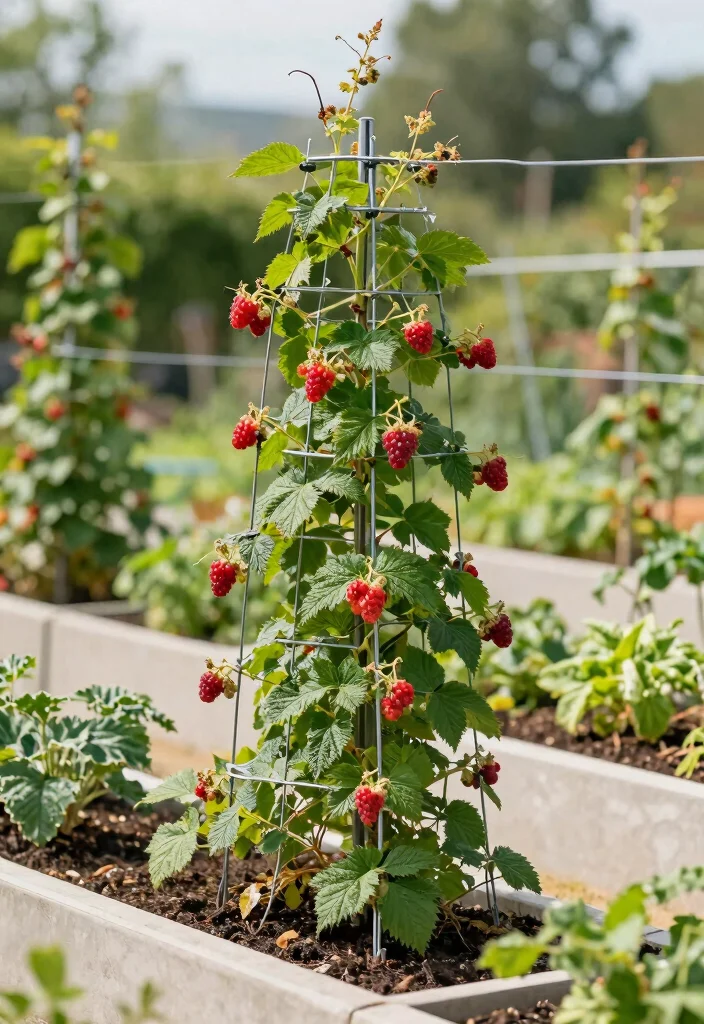
Looking for a modern solution to support your berry plants? A wire trellis system is an excellent choice! This design uses thin wires strung between posts, taking minimal space while maximizing fruit production. It’s particularly effective for taller varieties like blackberries and raspberries, ensuring they grow strong and healthy. Editor’s Choice
With a minimalist design, it’s easy to adjust and maintain, allowing for better airflow and reducing disease risks.
Ingredients:
– Two vertical posts
– Galvanized wire
– Optional: anchors for stability
Instructions:
1. Install two vertical posts in the ground, spaced according to your garden layout.
2. Attach horizontal wires at multiple heights, securing them tightly.
3. Plant your berries at the base and guide them to the wires as they grow.
Regularly check the tension of the wires to ensure robust support.
FAQs:
– What materials should I use for the wires? Galvanized wire is ideal for outdoor use as it resists rusting.
Wire Trellis for Berries


5. Container Berry Tower
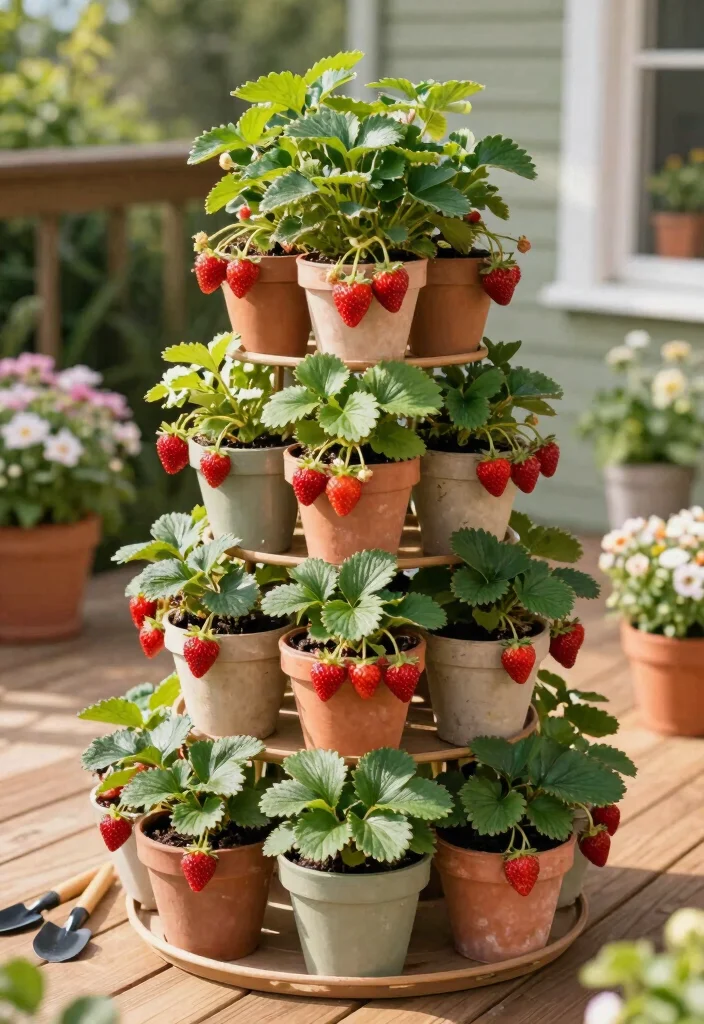
Want to grow berries in style while saving space? A container berry tower is a fantastic solution! Perfect for patios or small backyards, this idea allows you to stack containers to create a visually appealing tower, maximizing your growing area without sacrificing aesthetics. Editor’s Choice
It’s easy to manage and maintain, making it ideal for limited spaces while ensuring easy access to all your plants.
Ingredients:
– Containers of various sizes
– Potting soil
– Berry plants
Instructions:
1. Choose containers that fit within each other.
2. Fill the bottom container with soil and plant your berries.
3. Stack the containers, making sure drainage holes are clear.
4. Water regularly and provide support as the plants grow.
Mix soil and compost for optimal nutrients.
FAQs:
– What berries work best in containers? Strawberries and dwarf varieties of raspberries are excellent choices.
Container Berry Tower


How To Choose the Right Berry Trellis for Your Garden
When it comes to vertical berry gardening, selecting the right trellis is crucial for supporting your plants and maximizing your garden’s productivity. Here are some key factors to consider when making your choice: 1. SizeThe size of your trellis impacts how many berry plants you can grow. Consider the height and width based on your available space. A taller trellis works well for climbing plants like blackberries and raspberries, while a shorter one is best for strawberries. Ensure the structure is sturdy enough to support the weight of mature plants and their fruit. Aim for a height of at least 5-6 feet for climbing varieties, and about 3 feet for bush types.
2. Material
The material of your trellis affects its durability and visual appeal. Common options include wood, metal, and PVC. Wooden trellises offer a rustic charm but may require regular maintenance to prevent rot. Metal options are often more durable but might not blend as well with garden aesthetics. PVC is lightweight and resistant to weather, making it a low-maintenance choice. Choose a material that fits your garden’s style and your personal maintenance preferences.
3. Design
The design of your trellis should cater to the specific growth habits of the berry plants you choose. A classic A-frame trellis provides ample support and is easy to build for beginners. Vertical pallet trellises are great for saving space and add a unique touch. Ensure that the design allows for good air circulation and light exposure, which are essential for healthy berry production.
4. Stability
Stability is key, especially in windy conditions. Make sure your trellis can withstand the weight of growing plants and any potential environmental stress. Secure your trellis in the ground with concrete footings or stakes to prevent tipping. If you live in an area with strong winds, consider anchoring your trellis to a fence or wall for added security. Check that the structure is firmly anchored, so it won’t collapse under heavy fruit loads.
5. Budget
Consider how much you are willing to spend on your trellis. DIY options can be cost-effective, allowing you to create a custom design using affordable materials. Store-bought trellises vary in price depending on size and material, so have a budget in mind before shopping. Keep in mind that investing in a quality design can save you costs in maintenance and replacement in the long run.
6. Maintenance Requirements
Think about how much time you are willing to dedicate to maintaining your trellis. Wooden trellises may need regular sealing or painting, while metal options could require occasional rust prevention. Choose a design that suits your desired level of upkeep. If you prefer low maintenance, opt for materials that weather well naturally.
Pro Tip: Before making a purchase or starting a DIY project, sketch out a layout of your garden. This will help you visualize where the trellis will go and how it will fit with your plants, ensuring you maximize space and productivity. With these criteria in mind, you’ll be well-equipped to choose the right berry trellis that not only supports your plants but also enhances the beauty of your garden. Happy gardening!
6. Trellis with Reclaimed Materials
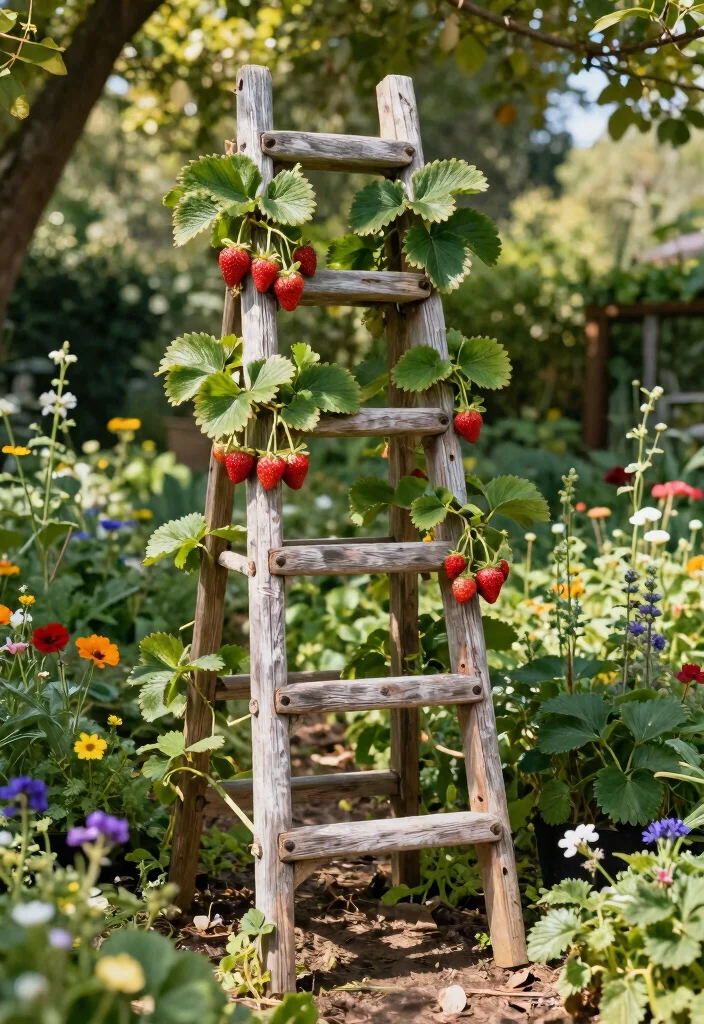
Embrace sustainability and creativity by using reclaimed materials for your berry trellis! Old ladders, fences, or gates can be transformed into unique structures that provide excellent support while adding character to your garden. This eco-friendly approach not only saves money but also reduces waste.
The benefits are significant: a unique aesthetic, support for environmental sustainability, and easy customization to match your style.
Ingredients:
– Reclaimed wood or metal pieces
– Nails or screws
– Sandpaper
Instructions:
1. Source reclaimed materials that inspire you.
2. Clean and sand them as needed.
3. Construct a trellis shape that suits your style preferences.
4. Secure it in your garden and plant your berry plants.
Be creative! Mixing different materials can lead to a stunning design.
FAQs:
– How long will reclaimed wood last? With proper treatment and maintenance, it can last many years.
7. Simple PVC Pipe Trellis
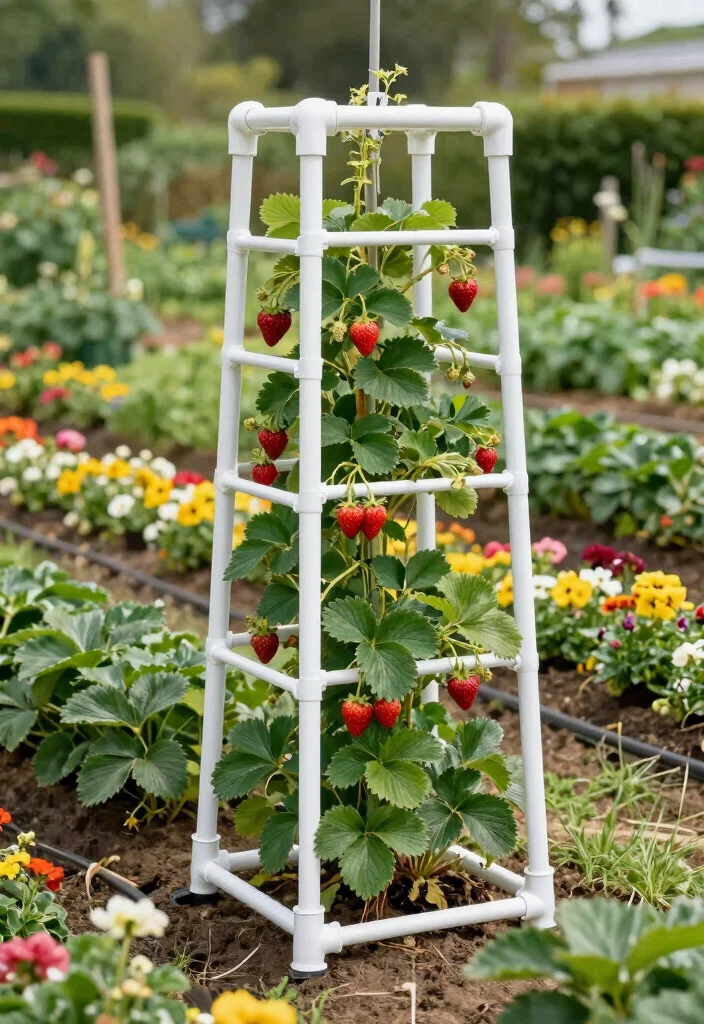
Looking for a lightweight and cost-effective solution for your berry plants? A simple PVC pipe trellis is just the answer! This design is incredibly easy to install and can be customized to fit any garden layout, ensuring your plants receive the support they need while being resistant to rot and pests.
You’ll love the inexpensive materials, lightweight structure, and the ability to adapt it to your garden’s specific needs.
Ingredients:
– PVC pipes
– T-joints
– Ground anchors (optional)
Instructions:
1. Cut PVC pipes to your desired lengths.
2. Create a frame using T-joints to connect the pipes.
3. Secure the frame in place using ground anchors.
4. Plant your berry plants and guide them up the PVC supports.
Consider painting the pipes for a decorative touch.
FAQs:
– Will PVC leach into the soil? Generally, it is safe for gardening, but avoid direct contact with edible plants for prolonged periods.
8. Living Wall Trellis
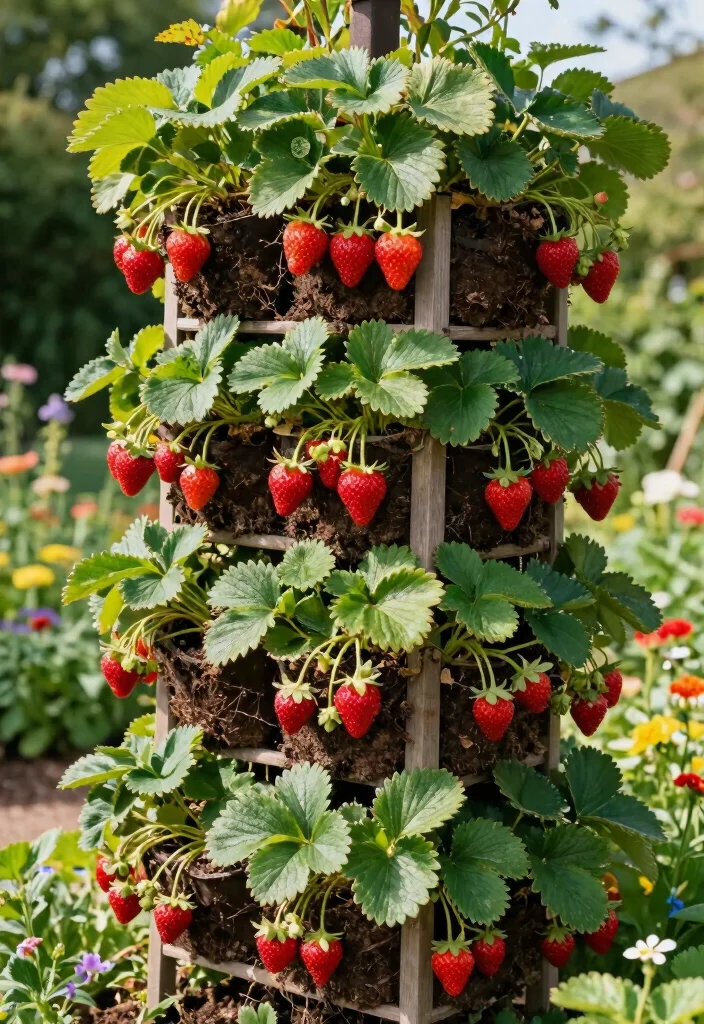
Ready to elevate your vertical gardening game? A living wall trellis offers an exciting way to grow berries while creating a beautiful vertical display. This structure, covered with soil and felt pockets, not only saves space but also enhances air quality and adds an aesthetic touch to your garden.
You’ll enjoy the benefits of maximizing vertical space, promoting biodiversity, and improving overall air quality in your outdoor area.
Ingredients:
– Suitable frame for the living wall
– Felt pockets or planting containers
– Soil
Instructions:
1. Build or buy a suitable frame for your living wall.
2. Attach felt pockets or planting containers to the frame.
3. Fill the pockets with soil and plant your berry seedlings.
4. Water regularly and maintain with proper care.
Choose a variety of berries for an eye-catching display.
FAQs:
– How much sunlight do the berries need? Most berry plants thrive with at least 6-8 hours of sunlight daily.
9. Gothic Style Trellis
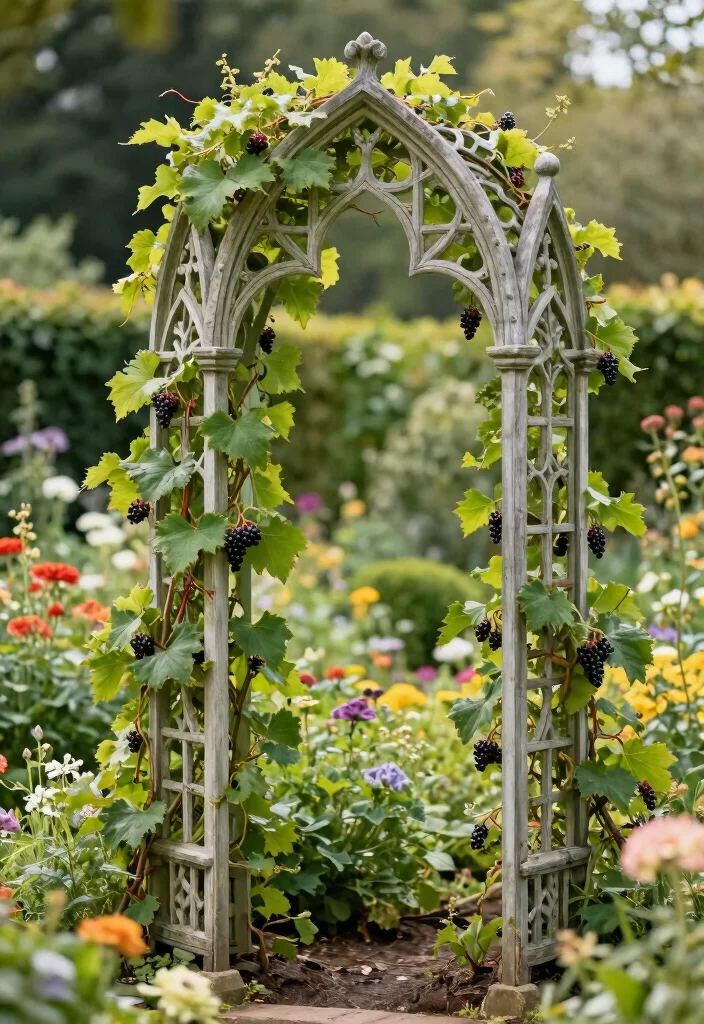
Want to add whimsy to your garden? A gothic-style trellis features pointed arches and intricate details, providing a stunning visual effect while supporting climbing berries. This unique design can serve as a backdrop for events or an architectural feature in your outdoor space.
With its eye-catching design and strong support for climbing plants, this trellis is both functional and decorative.
Ingredients:
– Wood or metal for the frame
– Nails or screws
– Optional: Paint or stain
Instructions:
1. Sketch your desired design and measurements.
2. Cut wood or metal to fit your design specifications.
3. Assemble the frame securely.
4. Plant your berries and watch them flourish!
Experiment with paint or stains to enhance the gothic aesthetic.
FAQs:
– Can I use this for other plants? Absolutely! It’s versatile for many climbing plants.
Fun fact: Gothic Style Trellis turns berry trellis ideas into drama—those pointed arches boost airflow and sun exposure for climbing berries, often boosting fruiting by up to 25%. It’s both a standout backdrop and a practical support rack for your garden.
10. Vertical String Garden
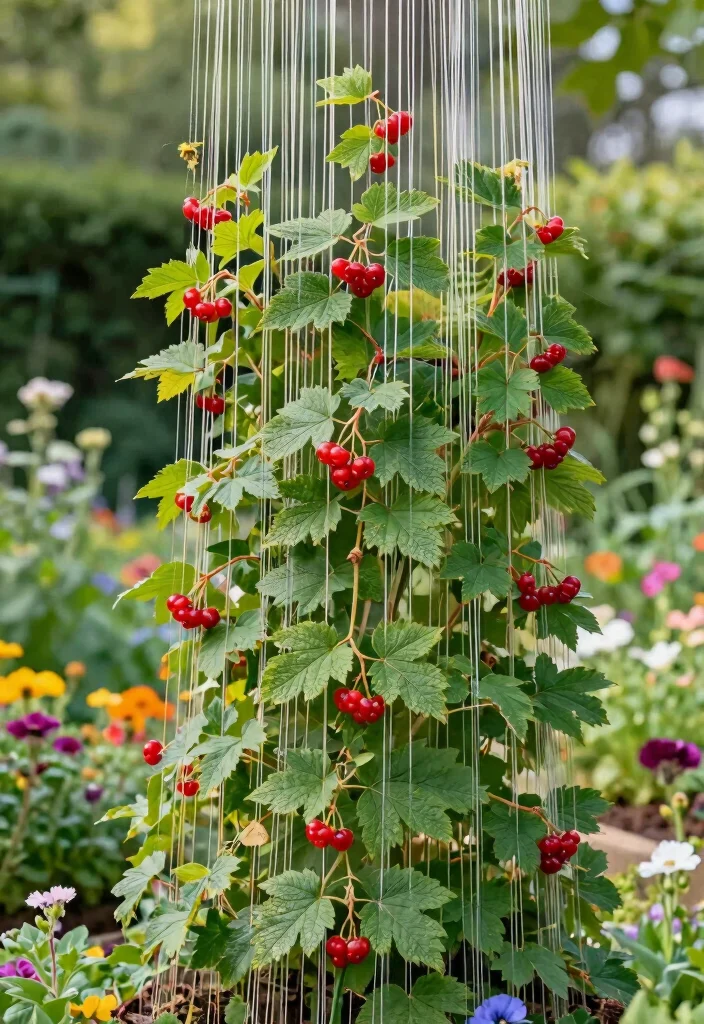
Looking for a creative way to grow berries? A vertical string garden is an artistic solution that adds flair to your outdoor space. By using sturdy twine or wire strung vertically between two posts, you can encourage your berry plants to grow upwards while creating a beautiful display.
With simple and inexpensive materials, this method allows for easy harvesting while enhancing your garden’s aesthetic.
Ingredients:
– Two vertical posts
– Sturdy twine or wire
– Berry seeds or seedlings
Instructions:
1. Secure two vertical posts in the ground.
2. Tie sturdy twine or wire between the posts at intervals.
3. Plant your berries at the base and guide them along the string as they grow.
Use bright string for added visual interest.
FAQs:
– How do I support the plants? Gently tie the plants to the string as they grow.
11. Bamboo Trellis
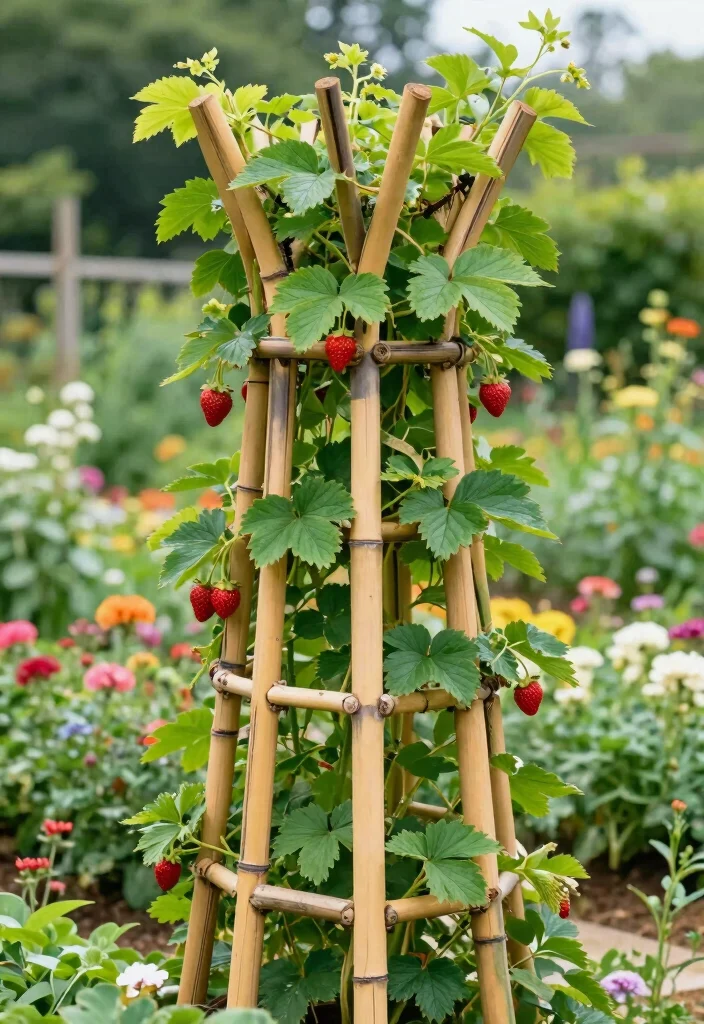
Seeking an eco-friendly option to support your berry plants? A bamboo trellis offers a natural aesthetic that’s both strong and sustainable! Bamboo is lightweight yet durable, making it perfect for various garden designs, and can be easily shaped to meet your needs.
This renewable resource provides a rustic look while being biodegradable, making it a great addition to any garden.
Ingredients:
– Bamboo poles of similar height
– Twine or rope for tying
Instructions:
1. Gather bamboo poles and cut them to your desired lengths.
2. Tie the poles together using twine or rope to create a frame.
3. Secure the frame in your garden and plant your berries.
Regularly check for stability and adjust as needed.
FAQs:
– How long does bamboo last? With proper care, bamboo can last several years.
Fun fact: bamboo regenerates quickly, so you can harvest strong poles for berry trellis ideas in just 1 growing season. Lightweight yet sturdy, a bamboo trellis is eco-friendly, easy to shape, and keeps berries tidy and productive.
Bamboo Trellis
Editor’s Choice


12. Trellis with Shade Cloth
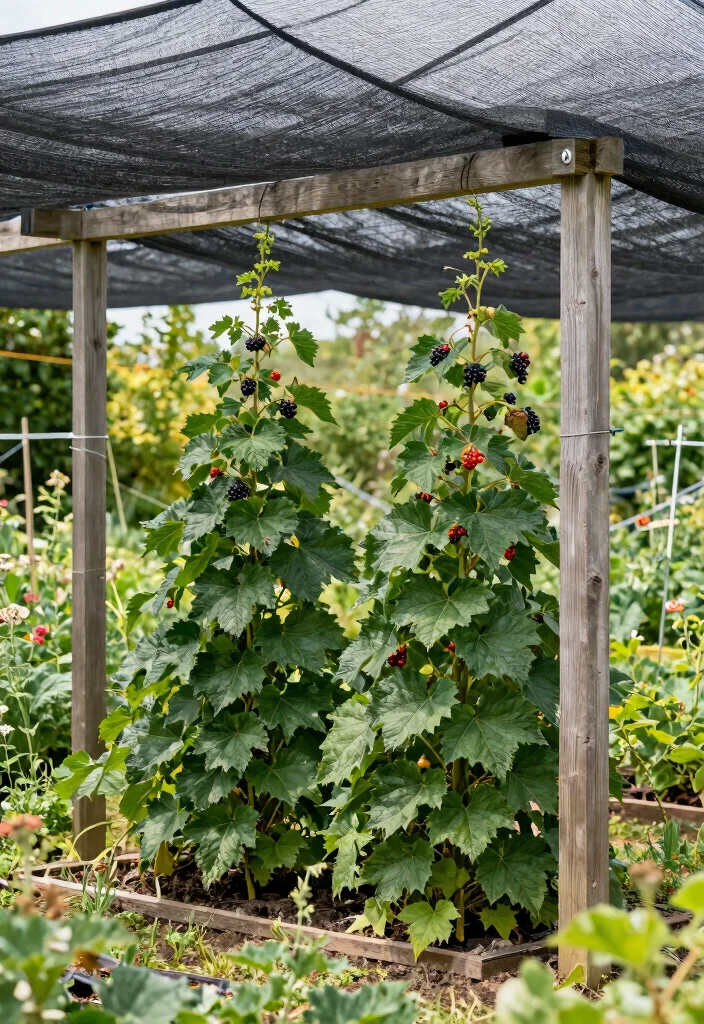
Want to protect your berry plants from harsh sunlight? A trellis with shade cloth is a smart solution! This setup provides necessary support while also offering crucial shade, allowing your berries to thrive in various climates, especially in hotter regions where excessive sun can be damaging.
The benefits include regulating temperature and moisture levels, protecting berries from sunburn, and easy customization for different plants.
Ingredients:
– Wood or metal for the trellis frame
– Shade cloth
– Berry plants
Instructions:
1. Construct a sturdy trellis frame using wood or metal.
2. Attach shade cloth across the top of the trellis.
3. Plant your berries underneath and water regularly.
Choose a shade cloth that allows some light to pass through for optimal growth.
FAQs:
– How much shade do berries need? Most berries prefer partial shade during the hottest parts of the day.
Conclusion
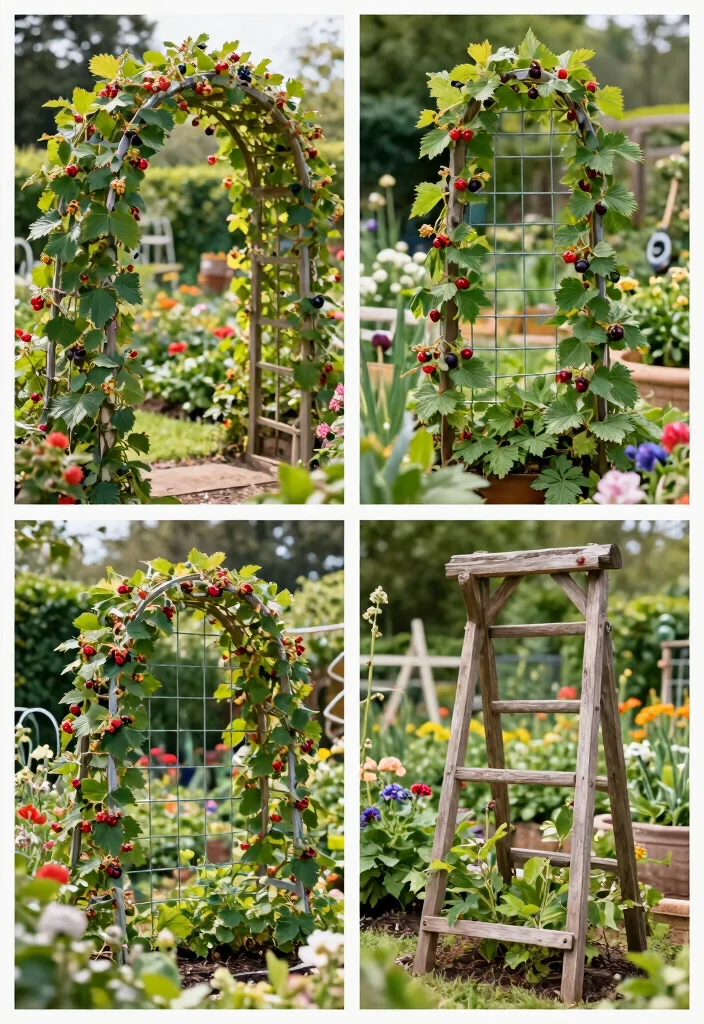
Exploring different berry trellis ideas inspires us all to create more productive and beautiful gardens. Whether you opt for rustic wooden designs, modern wire setups, or playful DIY projects, each option enhances your growing space while maximizing yield. So, get inspired and elevate your gardening game with these innovative trellis ideas that not only support your plants but also add charm to your outdoor oasis. Note: We aim to provide accurate product links, but some may occasionally expire or become unavailable. If this happens, please search directly on Amazon for the product or a suitable alternative. This post contains Amazon affiliate links, meaning we may earn a small commission if you purchase through our links, at no extra cost to you.
Frequently Asked Questions
What are the top berry trellis ideas for small spaces to maximize your harvest?
Looking to grow berries in a tight area? Here are top berry trellis ideas that fit small spaces and boost productivity.
1) A vertical lattice against a sunny wall—perfect for strawberries, blueberries, or raspberries—train runners upward to keep fruit clean and easy to pick.
2) A freestanding A-frame or teepee trellis using durable timber or metal stakes—great for mobility and space-saving vertical gardening.
3) A simple wire or netting system stretched between posts—works with balcony or garden beds and is quick to install.
4) An arch or curved trellis for dramatic effect and extra berries in one line. Each design should start with sturdy posts, weatherproof materials, and soft ties to guide canes. With these berry trellis ideas you’ll improve berry plant support and airflow, making harvests neater and more productive.
How can I build DIY trellis designs for berry plants without special tools?
Getting started is easier than you think. With common supplies you can craft several DIY trellis designs that support berry plants and save space. Example: a simple stake-and-twine system—drive two posts, string tight lines between them, and train canes along the line. Or install a panel trellis from inexpensive garden netting fixed to a lightweight frame. For sturdier crops like blackberries, add cross braces and thicker wire. All designs prioritize berry trellis ideas that fit space-saving gardening goals and keep berries clean and easy to harvest.
What materials work best for berry trellis ideas and berry plant support?
Durable, weather-friendly materials pay off. Consider cedar or treated wood, powder-coated metal posts, and galvanized wire for long life. Use garden netting or lattice panels to realize flexible DIY trellis designs. Soft plant ties or velcro wraps protect canes and helps with berry plant support. For strawberries, lighter nets are fine; for raspberries, go with stronger posts and thicker wire. With these materials, your vertical gardening stays strong year after year.
How does trellising affect yield, fruit quality, and garden cleanliness?
Vertical trellising can boost sun exposure and airflow, reducing disease pressure and improving fruit quality, while keeping berries off the soil for cleaner harvests. Train and prune according to berry type, and use the trellis to organize fruit into neat lines—that’s productive garden tips in action. A tidy system also makes space-saving gardening easier and harvests more manageable.
What maintenance tips help keep a vertical berry garden productive all season?
Create a simple yearly rhythm: in spring, train new shoots, tie them to the trellis, and prune away dead wood; in summer, monitor irrigation, mulch, and adjust ties as plants grow; in fall, remove old fruited canes and secure the rest; in winter, inspect trellis for damage and replace worn parts. Regular checks on netting and supports prevent sagging. With a steady routine, your berry trellis ideas stay productive garden tips and keep your vertical gardening thriving.