
I’ve looked into Hoyas for my cat, and the good news is they’re safe. These plants don’t have any toxic compounds in their stems, leaves, or flowers. So if my cat decides to nibble on them, I don’t have to worry about poisoning.
That said, eating a lot of Hoya leaves might cause some mild digestive issues. My cat could get vomiting or diarrhea if she goes overboard. The waxy leaves have a texture that seems to appeal to curious cats, so I understand why mine might want to munch on them.
Small bites won’t hurt my pet. But I’ve found the best approach is to keep my Hoyas out of reach. I put them on high shelves or in hanging baskets where my cat can’t easily access them. This way I protect both my plant and keep my cat from any potential stomach upset.
Are Hoyas Toxic to Cats? The Quick Answer
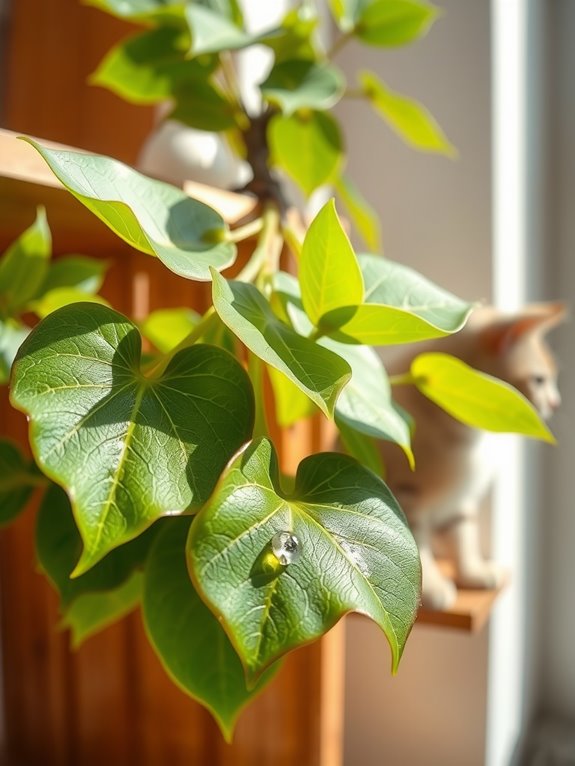
Good news if I own a cat and love Hoyas. These plants won’t poison my feline friend. The ASPCA lists Hoya plants as non-toxic to cats, so I can breathe easy. There aren’t any toxic compounds hiding in the stems, leaves, or flowers.
That said, I should still watch my cat around these plants. If my cat eats large amounts of Hoya, mild digestive upset might happen. I’m talking vomiting or diarrhea. If my cat shows serious symptoms, I should call my vet right away.
My best approach is keeping Hoya plants out of my cat’s reach. This way, I don’t have to worry about accidental nibbling or stomach issues.
What’s in a Hoya Plant (And Why It Matters for Cats)
Now that I know Hoyas won’t poison my cat, I want to understand what’s actually inside these plants. Hoyas have waxy leaves and fibrous stems. They produce flowers with minimal toxicity concerns. The plant’s composition lacks the harmful chemicals that typically cause serious poisoning in cats.
Here’s the thing about toxicity—it depends on what’s present in the plant material itself. Hoyas don’t have toxic compounds concentrated in their leaves or stems. But the plant’s texture and taste might still tempt my curious cat to nibble on them. That’s why I monitor my pet around them anyway.
Understanding what makes up a Hoya helps me feel confident about keeping one nearby. I can appreciate these plants while staying cautious about my cat’s behavior around them.
Symptoms: What to Watch If Your Cat Eats Hoya
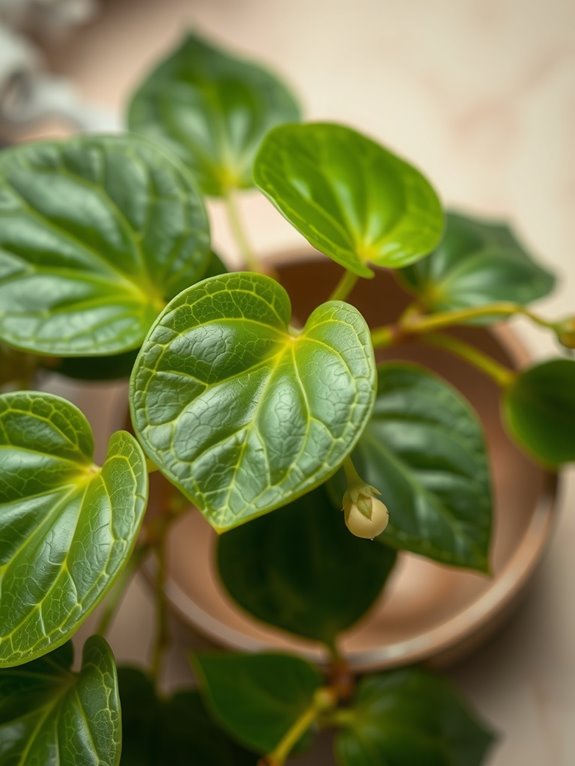
If your cat nibbles on a Hoya plant, watch for mild digestive upset. I’m talking about vomiting or diarrhea. You’ll also want to notice if your cat loses their appetite, has stomach pain, drools a lot, or seems weak.
I’d call your veterinarian right away if you see any of these signs. You can also contact the ASPCA Animal Poison Control Center. They help with poisoning cases and can give you specific advice for your cat.
Keep your cat away from the plant going forward. I’d monitor their behavior closely over the next few days since some reactions show up later.
Cat Ingestion Warning Signs
What should I actually watch for if my cat nibbles on my Hoya plant? While Hoyas aren’t toxic to cats, eating large quantities can cause mild digestive upset. I need to monitor for these specific warning signs.
| Warning Sign | What It Means |
|---|---|
| Loss of appetite | My cat won’t eat normally |
| Abdominal pain | My cat seems uncomfortable or hunched |
| Excessive drooling | Mouth irritation from plant material |
| Vomiting or diarrhea | Digestive distress from ingestion |
Small nibblings don’t require panic. I just watch closely for these symptoms. If my cat shows multiple signs or they get worse, I contact my veterinarian immediately. The ASPCA Animal Poison Control Center is also available if I suspect my cat ingested the plant. Quick action keeps my cat safe.
When To Contact Veterinarian
I should watch my cat pretty carefully after it eats a plant. If my cat munches on a poisonous plant, I need to look for signs like loss of appetite, belly pain, lots of drool, vomiting, or diarrhea. Breathing problems or severe symptoms mean I should call my vet right away.
I’d also call if my cat ate a big chunk of the plant or keeps going back for more bites. Even if my cat seems fine, I should ring up my vet or the ASPCA Animal Poison Control Center. They can tell me if my cat needs to be checked out. Cats are sneaky about hiding when they feel sick, so getting advice early helps me catch problems faster.
How Much Hoya Did Your Cat Eat? Why It Matters
The amount your cat ate from your Hoya plant really does matter. If your cat just nibbled a leaf or two, you’re probably fine. Hoyas aren’t toxic, so I don’t need to worry about minor nibbling.
If your cat consumed a large portion of the plant, that’s different. Larger amounts might cause mild digestive upset like vomiting or diarrhea. I’d monitor my cat for signs such as loss of appetite, drooling, or weakness.
If my cat ate a significant amount, I should contact my veterinarian or the ASPCA Animal Poison Control Center right away. They’ll give me specific guidance based on how much plant material my cat actually ingested.
Why Your Cat Might React When Others Don’t
Why does your cat get sick from Hoya while your friend’s cat nibbles it without problems?
We all have different bodies. My cat’s stomach might be more sensitive than theirs. Several factors change how our cats react to the same plant.
Individual sensitivity levels vary between cats. Age affects how strong their digestive system is. Overall health determines how bad a reaction gets. Diet quality influences how well their stomach handles things. Previous plant exposure builds up or reduces sensitivity over time.
When my cat ingests a large amount of Hoya, their system struggles more than another cat’s might. Your friend’s cat could have a tougher digestive tract. My cat might have a more delicate system instead. That’s why I need to monitor my specific pet. I know my cat best.
Should You Call the Vet? Signs That Need Immediate Attention
I want to tell you what symptoms mean your cat needs to see a vet right away if it eats a Hoya plant. Watch for breathing difficulty, severe weakness, or excessive drooling. These signs point to a real problem that needs professional help immediately.
If your cat shows loss of appetite, vomiting, or diarrhea, I’d monitor at home first. Contact your vet or the ASPCA Animal Poison Control Center if symptoms get worse or don’t improve within a few hours. Don’t wait if your cat seems to struggle breathing or acts extremely weak.
Recognizing Distress Symptoms
How do I know if my cat ate too much Hoya and needs help? I need to watch for specific toxicity symptoms. Here’s what I should monitor:
- Loss of appetite
- Diarrhea or vomiting
- Excessive drooling
- Weakness or lethargy
- Unusual behavior around plants
Most cats showing these signs experience mild digestive upset. I’m talking about stomach discomfort rather than severe poisoning. But I shouldn’t ignore what I’m seeing. If my cat displays breathing difficulties or shows severe symptoms, that’s when I call the vet right away. I also need veterinary guidance if my cat ate a large amount of plant material. When something feels off, I reach out to my vet promptly.
When To Contact Vets
Once I spot distress signs in my cat, I need to know when calling the vet actually matters. Here’s what I’m dealing with: if my cat shows loss of appetite, weakness, or breathing difficulties after eating Hoyas, I should call right away. Even though Hoyas don’t have any known poison in them, eating a lot of them might upset my cat’s stomach and cause vomiting or diarrhea.
I shouldn’t wait and hope the symptoms go away on their own. I need to contact my veterinarian or the ASPCA Animal Poison Control Center the moment I notice these warning signs. They can walk me through what’s going on with my cat’s health and tell me what to do next. When I’m unsure about whether something is serious, calling beats waiting around.
How Hoya Compares to Other Toxic Plants for Cats
When I’m picking houseplants for my cat’s safety, I need to know which ones are actually risky. I found that Hoya plants are way less toxic than other common houseplants I bring inside.
Here’s what makes Hoyas different from the others:
- Lilies have compounds that damage cat kidneys badly
- Sago palms cause liver failure in cats
- Philodendrons contain calcium oxalates that burn mouth tissues
- Dieffenbachias make cats’ throats swell and drool
- Pothos plants lead to serious digestive issues
These differences matter. If my cat eats a lot of Hoya, I might see mild vomiting or diarrhea. Those other plants though? They’re genuinely dangerous to my cat. That’s why I consider Hoyas a safer option for my home. I still keep any plant away from my cat’s curious nibbling habits.
5 Cat-Proofing Strategies for Hoya Placement
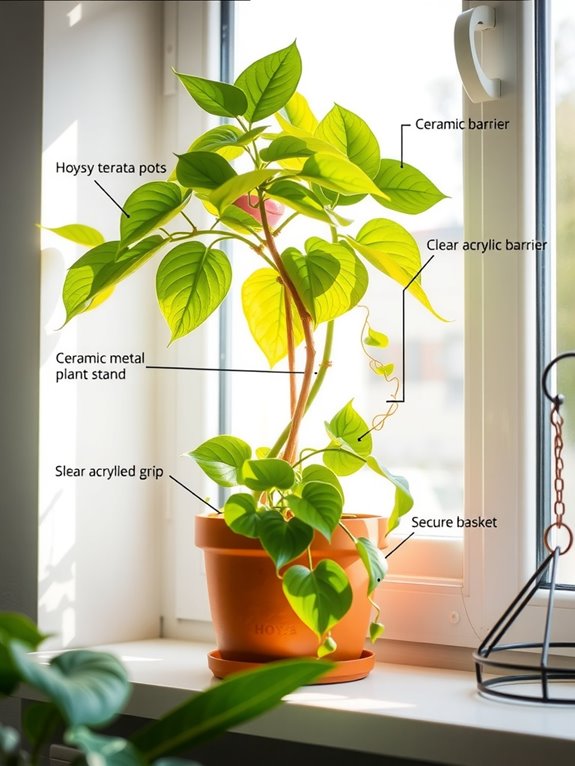
My cat chews on everything, so I had to figure out where to put my Hoya plants safely. The good news is that Hoyas aren’t toxic to cats, but I still need to keep them away from curious teeth. I’ve learned that putting physical barriers between my cat and the plants really helps.
| Strategy | How It Works |
|---|---|
| High shelves | I mount shelves 5-6 feet up on the wall where my cat can’t jump |
| Glass cabinets | I use clear display cases that lock closed to block access |
| Room barriers | I keep plants in rooms I can close off from my cat |
| Hanging baskets | I hang plants from ceiling hooks that are completely out of reach |
| Plant stands | I use tall 3-4 foot stands and put a fence around them |
I basically create walls and distances between my cat and my plants. This way my cat stays healthy and my Hoyas stay safe. The key is picking whatever method works best for my home setup.
Hoya Varieties: Which Are Safest for Curious Cats?
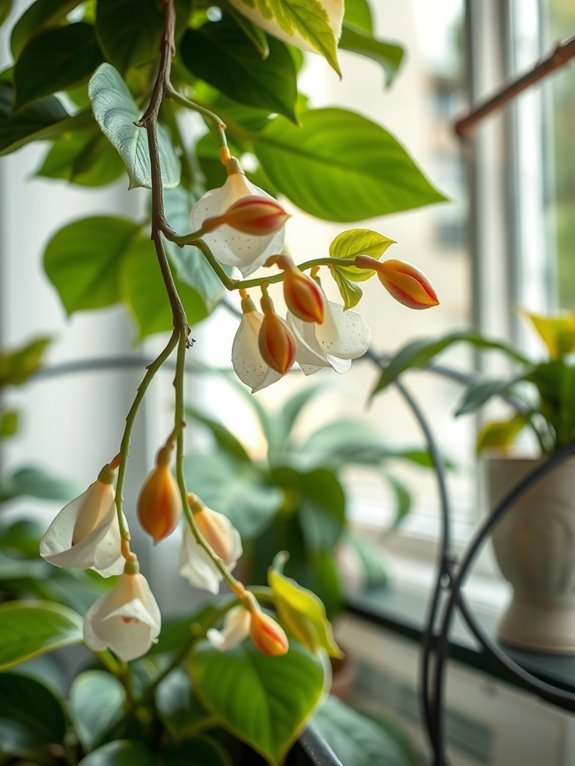
Most Hoya varieties turn out to be safe for cats, but I need to tell you what I’ve learned about the different types.
I found that Hoya carnosa is the most popular and widely studied variety. Hoya pubicalis shows no toxic compounds in research databases. Hoya linearis appears safe based on ASPCA listings. Hoya kerrii, also called the sweetheart plant, hasn’t shown toxicity issues. Less common varieties need individual verification before you bring them home.
Here’s the thing though. Toxicity can sometimes vary between varieties, so I still check each specific cultivar I’m considering. I call my vet’s office or look at the ASPCA database to confirm whether my chosen Hoya works for my household. This extra step protects my cat from any surprises.
How to Cat-Proof a Hoya Plant Display
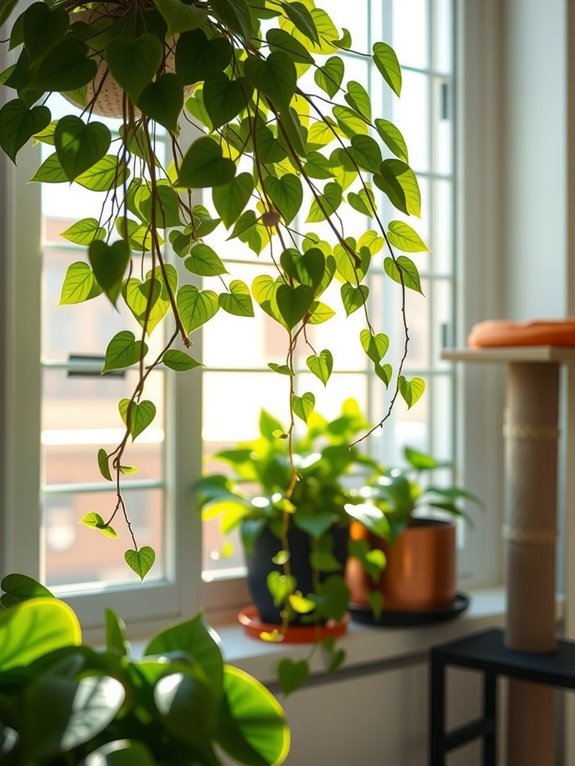
I’ve found that keeping my cat safe around Hoyas comes down to three main strategies. First, I place my plants on high shelves or hanging baskets at least 4-5 feet up, where my cat can’t reach them. Second, I use physical barriers like plant stands with enclosed sides to add extra protection. Third, I watch my cat’s behavior to spot any nibbling habits early on.
I observe whether my cat shows interest in the plant during different times of day. Some cats get curious when they’re bored or playing, so I pay attention to when my cat hangs around the Hoya most. I notice if she stares at it, swats at the leaves, or tries to climb nearby furniture.
Strategic Placement and Elevation
How do you keep your Hoya safe from a curious cat? I’m going to use strategic placement and elevation to create an environment where my cat stays away from the plant.
I place my Hoyas on tall plant stands that are at least 5-6 feet high. Most cats can’t jump that high, so this creates a real barrier. I also install wall-mounted shelves beyond my cat’s jumping reach. These shelves let me see my plants while keeping them out of danger.
For pots that sit on lower surfaces, I use weighted plant pots that won’t tip over easily if my cat jumps nearby. I hang baskets with secure hooks and chains to add another layer of protection.
I rotate my plant displays between rooms every week or so. This helps minimize how much my cat becomes fixated on any single plant location. Combining multiple strategies works better than relying on just one method. By using tall stands, wall shelves, weighted pots, and rotating placements, I protect both my Hoya and my cat’s health.
Creating Physical Barriers
Beyond just moving your plants higher up, I want to create actual physical barriers that stop my cat from reaching or climbing to my Hoyas in the first place. I can install decorative plant caddies with under-plant guards to block climbing access. Clear acrylic shields work well too. I’ll mount my Hoyas on wall shelves using secure brackets rated for the weight of my pots. I need to make sure cords and strings stay completely out of my cat’s reach.
These barriers matter because even non-toxic Hoyas can cause stomach upset if my cat nibbles constantly. I’m building a protective zone around my plants where my cat and Hoyas can coexist peacefully. The investment in barriers prevents any toxicity concerns and keeps my plant displays intact.
Monitoring Feline Behavior Patterns
Most cat owners don’t realize their pet’s behavior around plants tells them everything they need to know about keeping Hoyas safe. I’ve learned that watching my cat closely helps me spot warning signs early.
Here’s what I watch for:
- Loss of appetite or sudden disinterest in food
- Excessive drooling or lip smacking near the plant
- Vomiting or diarrhea after plant exposure
- Unusual lethargy or hiding behavior
- Repeated attempts to reach or nibble the leaves
Catching these behaviors early makes a difference for my cat’s safety. If I spot any of these signs after my cat contacts a Hoya, I contact my vet right away. I’ve found that regular monitoring combined with physical barriers works best for protecting my pet. I use barriers like plant stands placed on high shelves or plant cages that keep my cat from reaching the leaves while still letting light in.
When to Call Your Veterinarian About Plant Ingestion?
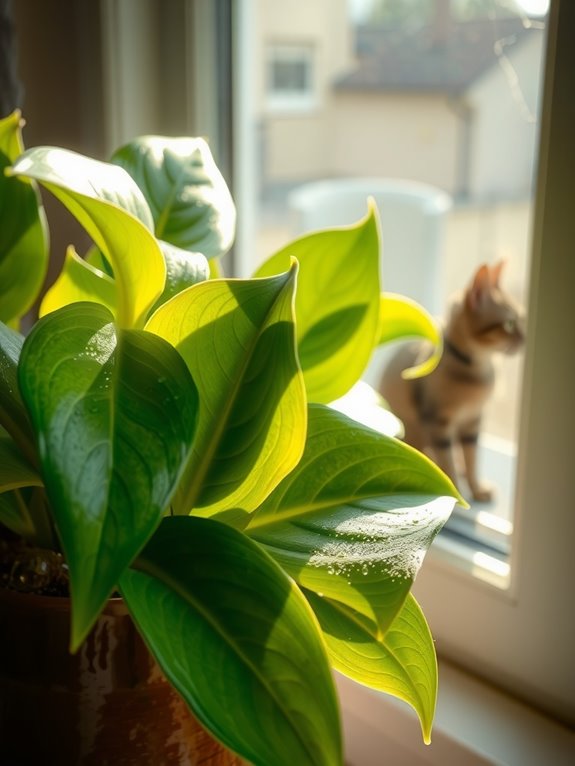
When should you reach out to your vet if your cat’s been munching on your Hoya plant? I call my vet right away if I notice certain warning signs. Catching problems early makes a real difference for your cat.
Here’s what I watch for:
| Symptom | Action |
|---|---|
| Loss of appetite | Contact vet same day |
| Vomiting or diarrhea | Call vet promptly |
| Drooling excessively | Seek veterinary care |
| Weakness or lethargy | Contact vet immediately |
| Large quantity ingested | Call poison control |
I know Hoyas are non-toxic plants overall, but eating large amounts can cause mild digestive upset. If my cat ate a substantial portion, I don’t wait around. The ASPCA Animal Poison Control Center offers guidance for suspected poisoning cases. I’d rather be safe than sorry when it comes to my cat’s health.
Beyond Hoya: Other Cat-Safe Houseplants to Consider
I want to expand my indoor garden without stressing about my cat getting sick. I’ve found several plants that work well in homes with pets.
Here are the options I’m considering:
- Pilea peperomioides (Chinese Money Plant) does well in diffused light, which means bright light that’s filtered through a sheer curtain
- Areca Palm (Dypsis lutescens) gives my space a tropical feel
- Parlour Palm (Chamaedorea elegans) grows with moderate watering, so I water it when the top inch of soil feels dry
- Calathea orbifolia has patterned leaves with light and dark stripes
- Peperomia spp. stays small and is easy for beginners like me
I water all of these regularly but not excessively. I skip misting the leaves with a spray bottle because my cat gets curious around water and it stresses her out. These plants are safe to have around since my cat roams through my rooms freely. I don’t have to worry about her getting sick if she chews on or brushes against any of them.
Creating Your Complete Pet-Safe Plant Collection
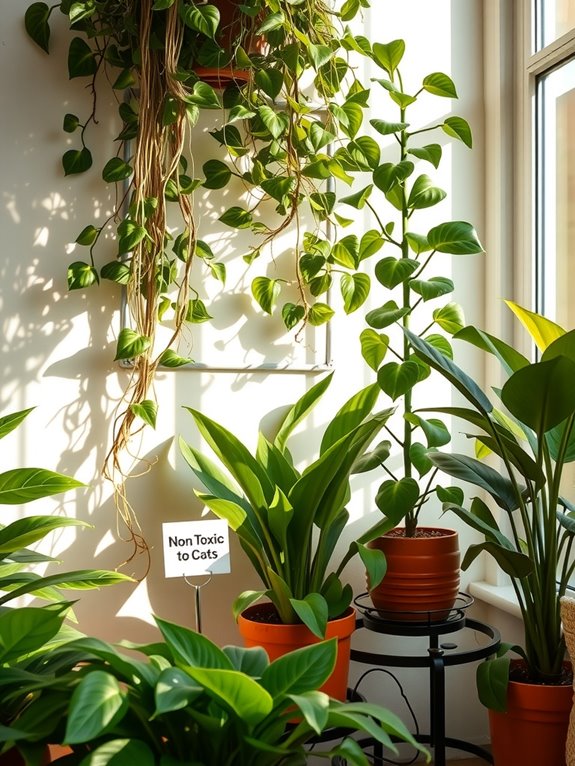
Now that you have Hoyas, Pileas, and Palms in your home, you can add more pet-safe plants with confidence. I like to create different zones throughout my house where my cats can safely roam around.
Create safe plant zones throughout your home where cats can freely explore without worry.
I start by grouping 3 to 5 pet-friendly plants together in areas where foot traffic stays low. Since nibbling can cause mild digestive upset, I watch my cats around all houseplants, even the safe ones. If my cats show a lot of interest in leaves, I move plants to elevated shelves where they can’t reach them as easily.
I keep a written list of every plant I own and check each one in the ASPCA database. This database is a free online tool that tells me which plants are toxic to cats and which ones aren’t. Having this record helps me remember what I have and catch any problems early.
This approach lets me grow an indoor garden while keeping my cats healthy. I know which plants are in my home and where they’re located, so I can act fast if something seems off.